

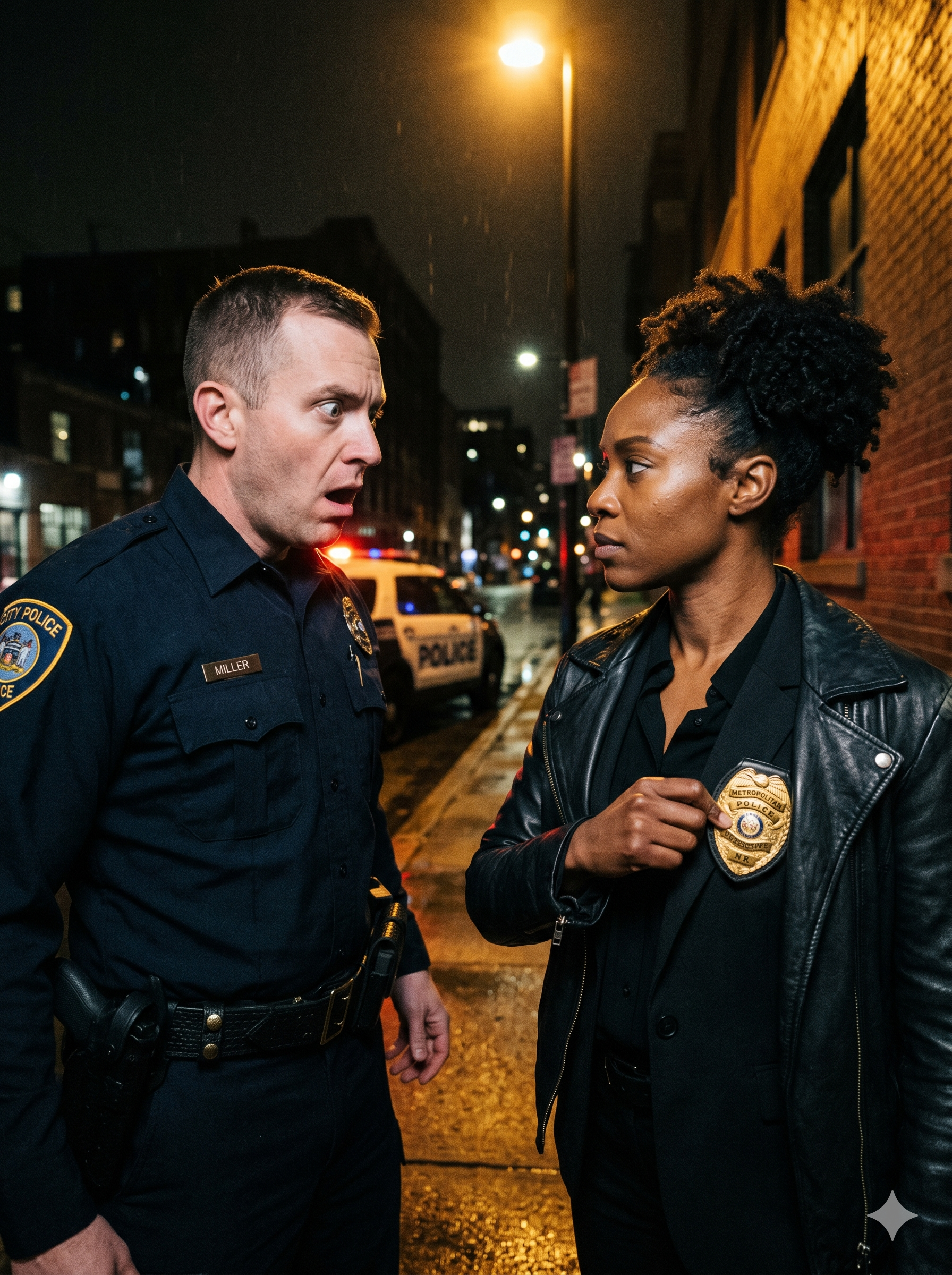
The officer formed his conclusion the moment he saw her.
It had nothing to do with how she acted. She wasn’t running. She wasn’t shouting. She wasn’t breaking any law. She was simply walking—calm, focused, unhurried—down Jefferson Avenue as the sun dipped behind the skyline and the city settled into its evening rhythm.
Cars passed by. Shop lights flickered on. Music floated from a moving car. It was a typical night on a typical American street.
But to him, she didn’t belong.
A Black woman, flawlessly dressed, blazer tailored to precision, heels tapping the pavement with quiet assurance. Phone in hand. Leather bag at her side. She carried herself like someone certain of who she was—and exactly where she belonged.
That certainty made him uneasy.
He stepped straight into her path.
“Stop,” he said, his tone sharp and commanding. “You’re under arrest.”
The words split the air.
She stopped.
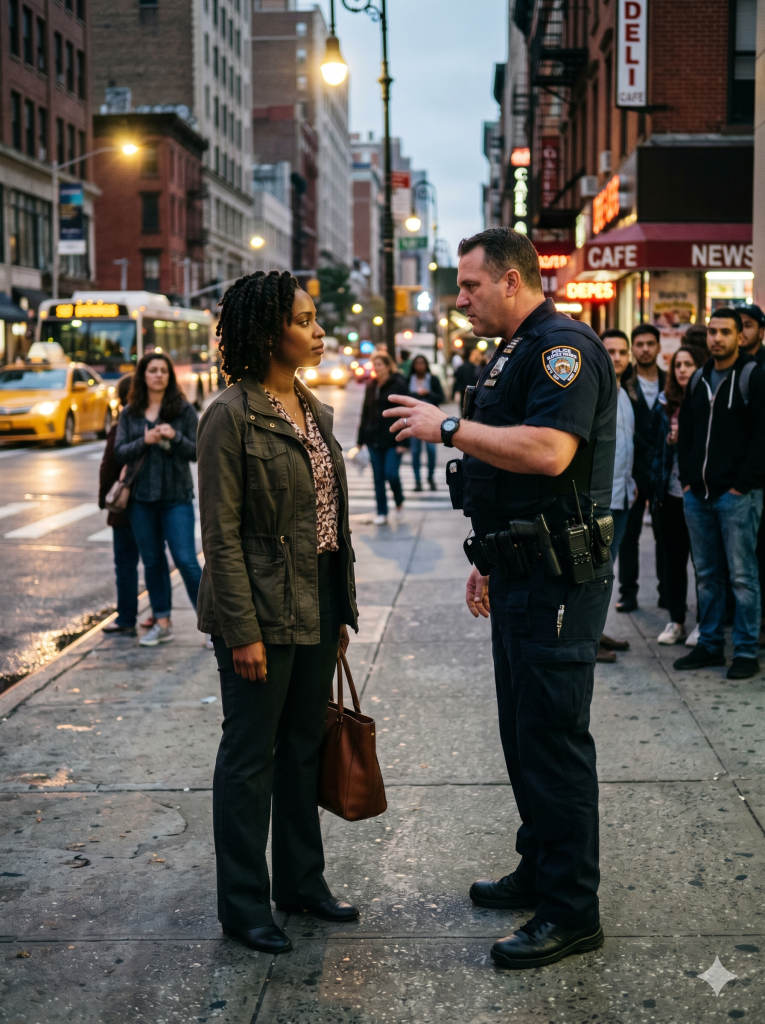
Not abruptly. Not anxiously. But with measured calm, as if to show she had nothing to conceal and nowhere to run.
“For what reason?” she asked.
Her voice was steady. Almost curious.
That wasn’t what he anticipated.
His gaze moved over her again, as though searching might uncover the wrongdoing he had already decided was there. Tailored clothes. Poise. Composure.
Confidence.
He leaned in slightly, lowering his voice—the way authority sometimes disguises itself as closeness.
“You don’t belong here,” he said under his breath. “Hands behind your back.”
The street seemed to go still.
A couple at the bus stop fell quiet. A man walking his dog slowed. Across the street, someone raised a phone—not hidden, not obvious, just enough.
In this country, moments like this carried weight. Everyone knew it. Everyone felt it.
She didn’t raise her hands.
Instead, she held his gaze.
“Say that again,” she said.
His frustration showed. “Don’t push me. You’re being detained.”
Detained.
A word woven into generations of stories. Detained for walking. For driving. For existing with too much confidence, too much freedom.
Her chest tightened—not from fear, but from restrained anger.
She thought of headlines. Of names. Of videos that never showed the full story. Of explanations that explained nothing.
Officer feared for safety.
Suspect failed to comply.
Incident under investigation.
“You don’t know who I am,” she said calmly.
He smirked. “I know enough.”
That was the problem.
She reached into her jacket.
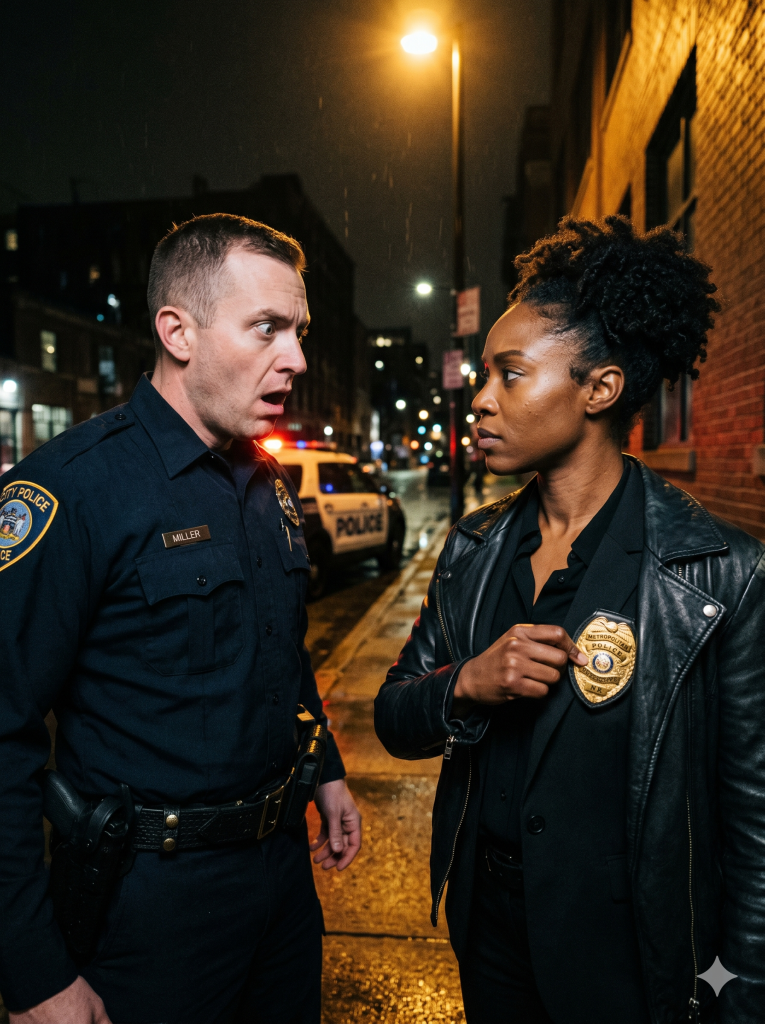
His posture tensed immediately.
“Don’t move,” he snapped, his hand drifting toward his weapon. “Hands where I can see them.”
The tension stretched, ready to break.
Slowly—deliberately—she pulled out a badge.
Gold. Official. Undeniable.
She lifted it under the streetlight, letting it catch the glow.
The officer froze.
His authority vanished in an instant. The color drained from his face. His hand dropped from his belt.
For a moment, everything paused.
Then the city exhaled again.
Traffic noise returned. Someone whispered, “Oh—” Phones lifted higher, no longer hesitant.
She tucked the badge away and looked at him evenly.
“Finished?” she asked.
He stumbled over his words. “I—I didn’t realize—”
“No,” she interrupted calmly. “You didn’t bother to.”
The words landed heavier than any shout.
She straightened her jacket, her voice steady, composed, unmistakably professional.
“That’s unfortunate,” she added. “Because this mistake has consequences.”
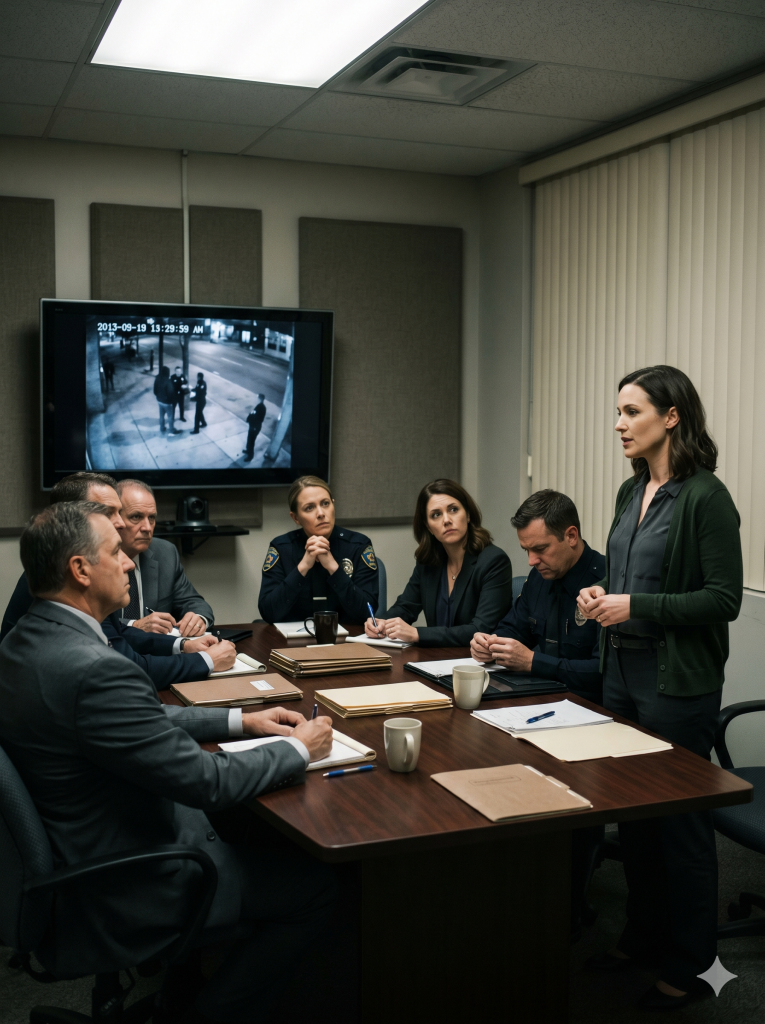
The precinct conference room carried the smell of burnt coffee and tension.
Internal Affairs sat along one side of the table, folders neatly stacked, faces serious. Across from them sat a civil rights attorney, tablet glowing faintly.
