

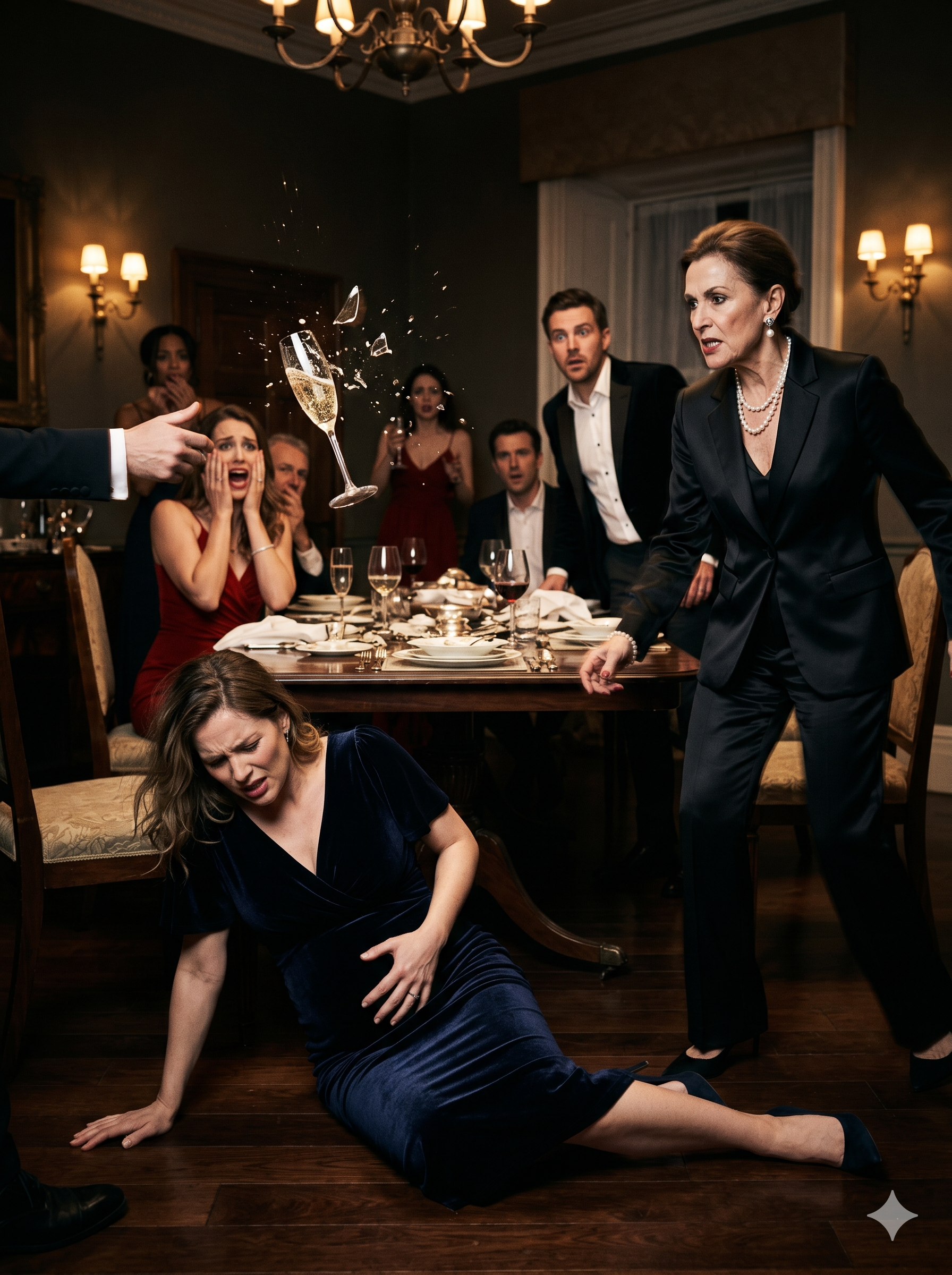
At my husband’s birthday party, I lifted my glass and smiled. “I’m pregnant,” I said, certain it was the right moment. His mother’s laughter sliced sharply through the room. “Liar. You’re doing this for attention.” I tried to calm my breathing. “Please—stop.” But she moved closer, her eyes icy… then brought her heel down into my stomach. In the hospital, the ultrasound screen flickered—one image, then another. The doctor went silent. Everyone did. And that was when I understood… the truth was worse than anyone had imagined.

At my husband’s thirty-fourth birthday gathering, I stood in the center of his mother’s dining room with a champagne flute raised in my hand and a smile I had practiced all afternoon. The suburban Denver home glowed with warm light, filled with his relatives, coworkers, and longtime family friends. My husband, Ethan, stood beside me in the navy shirt I had bought him the week before, one hand resting gently on my back. For the first time in months, I believed things might be getting better between us. We had argued less. He had promised to establish boundaries with his mother. And I was carrying the child we had both wanted.
“I have something to share,” I said, my nervous laugh fading as the room quieted. Ethan looked surprised, then curious. I took a breath. “I’m pregnant.”
A few people gasped. Someone clapped. Ethan’s eyes widened. But before he could speak, his mother, Linda, let out a sharp laugh that cut through the room.
“Liar,” she said.
The silence turned brittle.
I stared at her. “What?”
Linda moved away from the buffet table, still holding her wineglass. “You’re doing this for attention. On his birthday? You couldn’t let him have one night?”
My mouth went dry. “That’s not true.”
She laughed again, louder now, pulling others into her disbelief. No one joined her, but no one stopped her either. Ethan stood frozen beside me.
“Please,” I whispered. “Stop.”
Instead, Linda stepped closer. Her expression stayed unnervingly calm, almost disgusted, as though she were brushing something foul from her mind. “You always do this,” she said. “Every holiday, every dinner, every event. Drama.”
“I said stop.”
Her gaze dropped to my stomach. A horrible pause followed, the kind that feels small until it changes everything. Then she moved—sudden and fast.
The pointed heel of her shoe drove into my lower abdomen.
I collapsed immediately, the glass slipping and shattering as screams broke out around us. Pain ripped through me so violently I couldn’t cry out at first. Then I did. Ethan reached me too late. Blood spread across the hardwood beneath my knees. Someone called 911. Someone shouted at Linda, who kept insisting, “She’s faking. She’s faking.”
By the time the ambulance doors closed, I could barely keep my eyes open. At the hospital, bright lights flickered overhead as they rushed me into imaging. A doctor studied the ultrasound, his expression tightening. The screen flickered—one image, then another. He went silent.
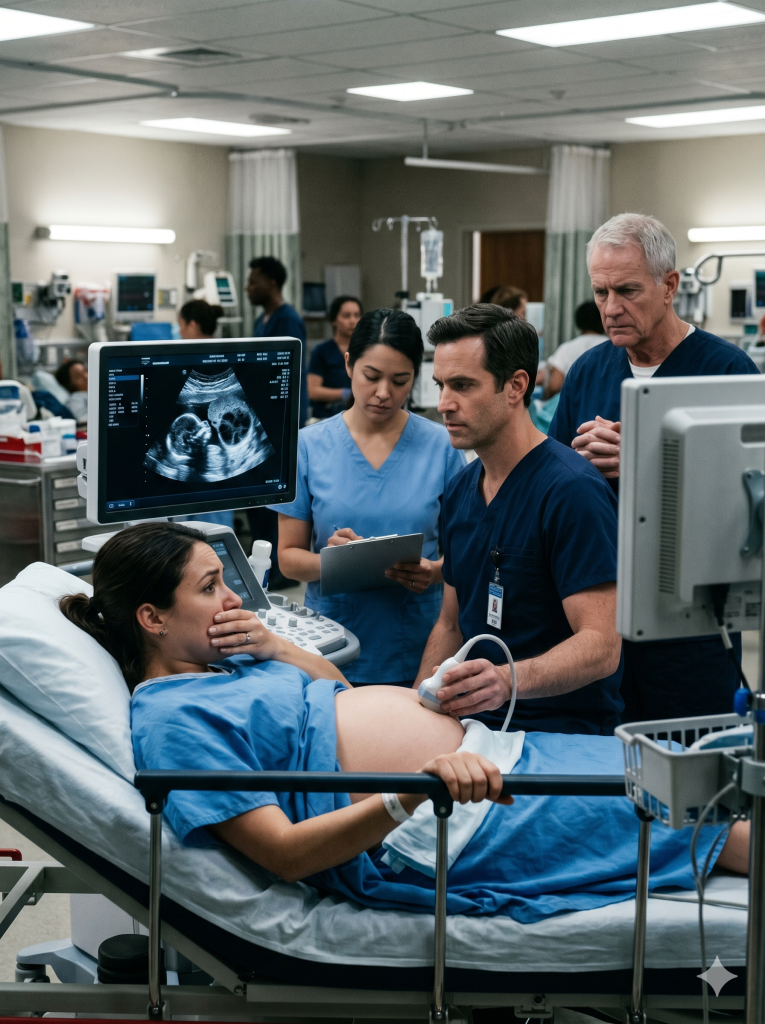
Everyone did.
And in that awful quiet, I understood whatever he had found was worse than anything we had imagined.
When I woke again, I was in a curtained hospital room with an IV in my arm and a deep ache through my body. Ethan sat in the chair beside the bed, pale and still, elbows on his knees. He looked up when I opened my eyes, but didn’t reach for me. That scared me more than the pain.
“Where’s the doctor?” I asked.
He swallowed. “On the way.”
I turned my head and saw a police officer near the doorway, speaking quietly with a nurse. My heart began to race. “The baby,” I said. “Tell me about the baby.”
Ethan closed his eyes.
Moments later, Dr. Patel entered holding a chart, her expression carefully controlled in that way doctors use when everything is about to change. She explained that the impact had caused internal bleeding and severe trauma, but the pregnancy was still viable—for now. Relief hit me so hard I nearly broke.
Then she continued.
“There was something else on the scan,” she said. “Something unrelated to the assault.”
She pulled up an image on the monitor beside my bed. Even through the haze, I recognized my uterus. And next to the small pregnancy sac was a shadowed mass, larger than it should have been, irregular and deeply embedded.
“We believe it may be a fast-growing tumor,” Dr. Patel said gently. “You likely would not have known yet. It requires immediate follow-up.”
I stared at the screen, then at her. “Are you saying I have can:cer?”
“We can’t confirm without further testing,” she said. “But we are concerned enough to act quickly.”
The room tilted. Hours earlier, I had gone to a birthday party thinking I was announcing new life. Now I was in a hospital bed, bruised by my mother-in-law, under police watch, being told something inside me might k:ill me.
Linda had been arrested that night. I learned it from the officer after Ethan stepped into the hallway. Assault, he said. Potential aggravated charges depending on the pregnancy and medical results. Several guests had given statements. One had recorded part of it on a phone. Linda’s voice was clear. So was mine, begging her to stop.
Ethan returned an hour later and finally spoke the words I had been waiting for. “I’m sorry.”
I wanted comfort. I wanted anger on my behalf. Instead, what came out of me was colder. “Why didn’t you move?”
He opened his mouth, then shut it again.
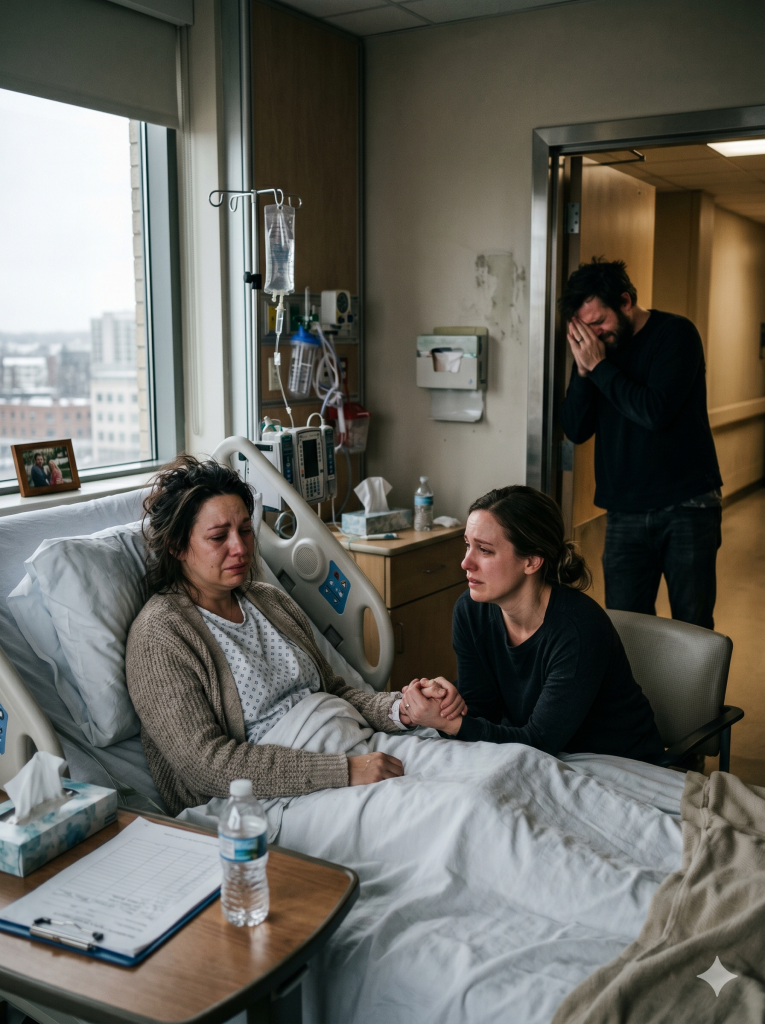
That silence said everything. His mother had spent years insulting me under the guise of jokes, concern, and control. Ethan had always minimized it. Tonight, when it mattered most, he had done the same.
Nothing.
The biopsy was done two days later. My sister, Megan, flew in from Phoenix and held my hand through every form, scan, and long silence. Ethan stayed, but something in us had already broken. I saw it in the way he stayed at the edge of decisions, the edge of responsibility, the edge of my pain.
The pathology results arrived on a gray Thursday morning.
The mass was malignant.
And suddenly, the worst truth was no longer what Linda had done to me.
It was that her violence had exposed an illness that might have ended my life before I ever became a mother.
Cancer forced everything into harsh clarity. Within a week, my life split into appointments, legal consultations, treatment planning, and decisions that felt impossible. The oncology team at the University hospital worked alongside maternal-fetal specialists to map out what came next. Because of the tumor’s position and how aggressive it looked, delaying treatment greatly increased the danger to me. Continuing the pregnancy while waiting could cost me time my doctors said I didn’t have.
I sat through all of it with Ethan on one side and Megan on the other, but by then I already understood who was truly there for me.
What followed was the hardest decision of my life. I won’t soften it with careful wording or easy framing. I grieved. I still do. But I chose treatment. I chose the chance to stay alive, even if it meant carrying a heartbreak I could never fully explain to anyone outside that room.
After the procedure, I asked Ethan not to come back to the hospital.
He cried. He said he loved me. He said none of this would have happened if he had just stepped in. For once, he was right. But love without protection had already cost too much. When I was discharged, I left with Megan, not him.
The case against Linda moved more quickly than I expected. The video, witness statements, and medical records were overwhelming. Her lawyer tried to paint her as emotional, overwhelmed, confused. But a woman doesn’t “accidentally” drive a heel into her pregnant daughter-in-law’s stomach after calling her a liar in front of a room full of people. She accepted a plea deal before trial. She avoided prison, but received probation, mandatory counseling, and a permanent restraining order. The court also ordered restitution for part of my medical costs. It wasn’t complete justice. Nothing could undo what was lost. But it was truth, on record, where no one could dismiss it as a family misunderstanding again.
Ethan asked for another chance months later, after my second round of treatment. By then I had lost my hair, my routines, and the version of myself that once mistook endurance for love. But I had also gained something stronger: a refusal to stay where I was unsafe. I filed for divorce that same month.
A year later, my scans finally came back clear.
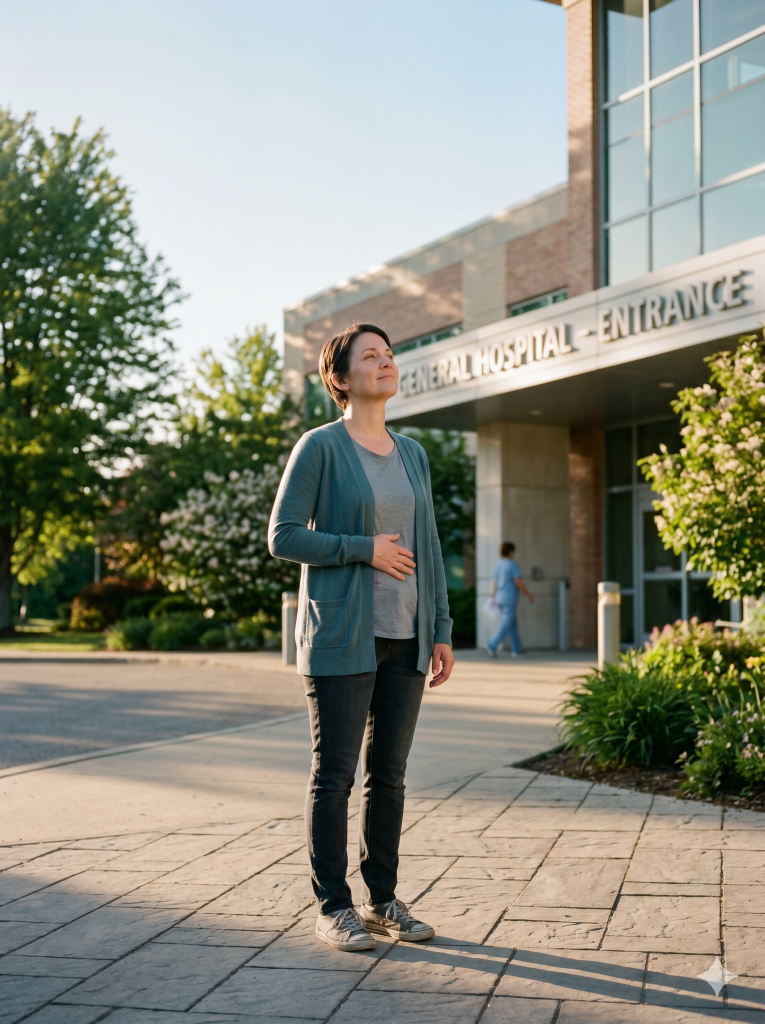
The first person I called was Megan. The second was myself, in a way. I stood outside the clinic in the cold sunlight, my hand resting over my scarred stomach, and let the air fill my lungs as if I had earned it. Because I had. I had survived a woman who tried to break me, a man who failed to protect me, and a diagnosis that entered my life like a sentence. Yet somehow, it became an awakening.
I used to think the worst night of my life destroyed everything. The truth is, it revealed everything. It showed me who would hurt me, who would stand by, who would stand with me, and who I had to become in order to keep living.
If this story hit you hard, that’s because real life often does. And if you’ve ever had to choose yourself after betrayal, illness, or silence from the people who should have protected you, then you already understand the ending. Sometimes surviving isn’t the end of the story. Sometimes it’s the moment the real story truly begins. If you know that feeling, you already know why this one needed to be told.
