

What occurs when a police officer with a dominance mindset crosses paths with a woman who outranks him in every meaningful way? It began late on a Wednesday night, just after 11:00 p.m. A time when Toledo, Ohio streets are nearly deserted, save for the occasional worker heading home or someone like Lieutenant Colonel Adrienne Wallace passing through.

After concluding a base meeting two hours south, she was traveling in her government-issued black SUV. Tinted windows, nothing extravagant—just clean, understated, and composed, much like her. Adrienne had been on the road for a while, softly humming along with the rhythm of the tires on the pavement, her thoughts already drifting toward home. She wasn’t speeding, wasn’t weaving, wasn’t doing anything out of line.
But Sergeant Daniel Mercer saw something different from his position off Reynolds Road. Parked in his usual spot, he sat sipping lukewarm coffee while scrolling his phone, restless and bored. The shift had dragged on with no calls, no incidents. Then an unfamiliar vehicle appeared. He tossed his cup aside and stepped out.
His patrol lights activated before Adrienne even realized she was being followed. She eased off the accelerator, blinked once, and pulled over calmly and methodically, just as she had been trained. The cruiser door slammed shut with force. In her side mirror, she watched a tall man approach, one hand on his holster, flashlight in the other.
He didn’t approach her passenger side. He went straight to hers. “License and registration,” he said. No greeting. Adrienne kept her hands visible and lowered the window halfway. “Officer, may I ask why I’m being stopped?” Mercer narrowed his eyes, shining the light directly at her face. “You were drifting between lanes. You didn’t signal. Looked like you might have been under the influence.” She raised an eyebrow. “I wasn’t.” “License and registration,” he repeated more firmly.
Adrienne complied without argument, moving slowly and deliberately to retrieve her documents from the glove compartment. As she handed them over, she added, “That’s a government vehicle. I’m a federal employee.” Mercer glanced at the ID but said nothing at first. “You military?” “Yes.” He smirked slightly. “Doesn’t mean you’re above the law.” “I never said I was.”
His demeanor shifted, becoming sharper. “Step out of the vehicle for me.” Adrienne blinked. “Excuse me?” “I said step out of the car. I’m conducting a sobriety check.” Her jaw tightened, though she remained controlled. “On what grounds? I complied. I haven’t been drinking. I’d like to know the reason.” Mercer stepped closer. “Now you’re refusing a lawful order.” Adrienne stayed still. “No, I’m asking for clarification.”
He didn’t appreciate that response. He opened her door himself. “I need you to exit the vehicle now.” That’s when she calmly activated her phone camera and began recording. “Just so we’re clear,” she said. “This interaction is being documented.” Mercer glanced at the phone. A brief hesitation appeared, but he didn’t retreat.
“Out of the car.” Adrienne stepped out with steady posture—firm, not confrontational. No yelling, no resistance. Yet her presence alone shifted the tone. Mercer studied her more closely, and for a moment a doubt surfaced in his mind: “What am I dealing with here?” But his ego overruled it.
He proceeded with field sobriety testing, making her walk a straight line under the streetlights as if she were a careless driver. She passed flawlessly—no imbalance, no hesitation, no impairment. Still, he issued a citation for failure to maintain lane. Adrienne accepted it silently, giving him only a steady look before returning to her vehicle and driving away into the night.
Mercer had no idea that ticket would later surface in court and change everything.
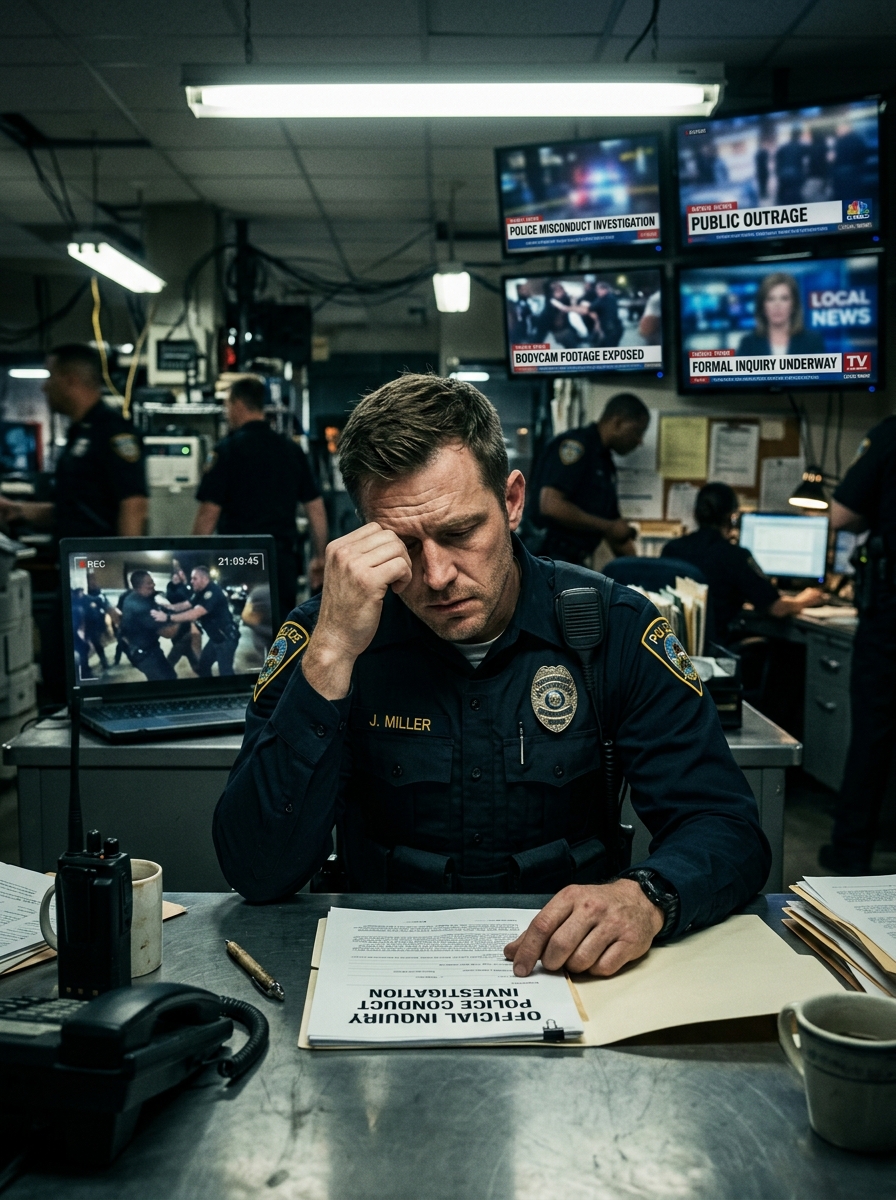
Sergeant Daniel Mercer was not inexperienced. Fifteen years on the force had hardened his features and reinforced his self-image. He had handled standoffs, crashes, and tense encounters. Over time, he built a reputation that made younger officers straighten up when he entered a room.
He preferred it that way. Mercer didn’t question; he commanded. In his mind, the badge meant authority, control, and final judgment. Whether it was a teenager arguing or a frustrated driver, he never backed down and never apologized.
His west Toledo precinct knew exactly who he was—a reliable officer who showed up, completed reports, and rarely hesitated. But they also knew he could be sharp, forceful, and quick to escalate. Still, no one challenged him. Not until that night.
When he returned to the station, he barely mentioned the stop. He filed the citation quickly: failure to maintain lane, possible impairment, no arrest. He placed the body cam in the charger like always. The footage sat untouched for two days.
Later, he joked in the breakroom. “Woman tried to pull rank on me,” he said to Officer Diaz. “Flashed her government ID like that was supposed to impress me.” Diaz frowned. “Wait, she was military?” Mercer shrugged. “So she claims. Some federal worker with attitude.” “What was her name?” Mercer leaned back. “Wallace. Adrienne Wallace.”
Diaz reacted immediately. “You mean Lieutenant Colonel Wallace?” Mercer paused. “How would you know that?” “She spoke at the academy last year,” Diaz replied. “She’s senior military. Logistics command at Fort Wayne. Bronze Star. Two deployments.” Mercer dismissed it. “Don’t care who she is on the road. I’m the authority.”
But Diaz’s tone lingered in his mind. Still, he didn’t review the footage or reconsider the citation. To him, it was finished.
But it wasn’t. Wallace filed a formal complaint the next morning with Internal Affairs and the Inspector General’s office. The video she recorded was already in legal review and circulating through military channels.
Mercer remained unaware. He continued his routine, acting as though he was untouchable. For years, the system had reinforced that belief. Supervisors overlooked issues, complaints were dismissed, and union protections shielded him. He believed the rules applied differently to him.
But this time, someone on the other side was documenting everything, following procedure, and making the right calls. She had evidence.
Mercer only realized something was wrong when a formal inquiry landed on his desk.
Adrienne Wallace was not someone who pursued conflict unnecessarily. She wasn’t dramatic or reactive. After 22 years of service and two deployments, she had seen enough to know better.
But this time, it wasn’t just personal. It was about every soldier she had mentored, every civilian treated unfairly, every woman who had been forced into silence to avoid escalation.
Back at Fort Wayne, she reviewed the incident the next morning. She hadn’t slept—not from anger alone, but because the encounter replayed in her mind. His tone, his hand near his weapon, the attempt to provoke her response. She understood the risks of escalation, even with cameras rolling.
Her aide informed her: “Ma’am, you have a call from Legal Affairs.” She answered. The lawyer confirmed: “We’ve reviewed the video. We can proceed if you’re ready.”
“I am,” she said.
She submitted a detailed written statement, requested body cam footage, and sent everything to multiple agencies. Within 48 hours, the story broke in local media: an Army officer had filed a complaint against a Toledo officer.
Mercer dismissed it as attention-seeking at first. But when the body cam footage went public, perception shifted immediately.
The video showed restraint on her part and unnecessary escalation on his. No aggression from her. No justification for his conduct.
Internal Affairs opened an investigation. Mercer was placed on desk duty. The certainty he once had began to erode.
Three weeks later, the courtroom hearing began.
Adrienne stood in uniform—calm, precise, composed. Mercer sat across in civilian attire, visibly diminished. The judge opened proceedings without delay.
Both sides presented arguments. Mercer’s defense claimed routine procedure. Wallace’s team argued abuse of authority.
Then the footage played. The courtroom stayed silent. Every detail was visible—tone, posture, escalation, and compliance.
Adrienne testified clearly. Mercer testified after.
When asked why he escalated, he hesitated. “I probably would have handled it differently,” he admitted upon learning her rank.
That moment carried weight.
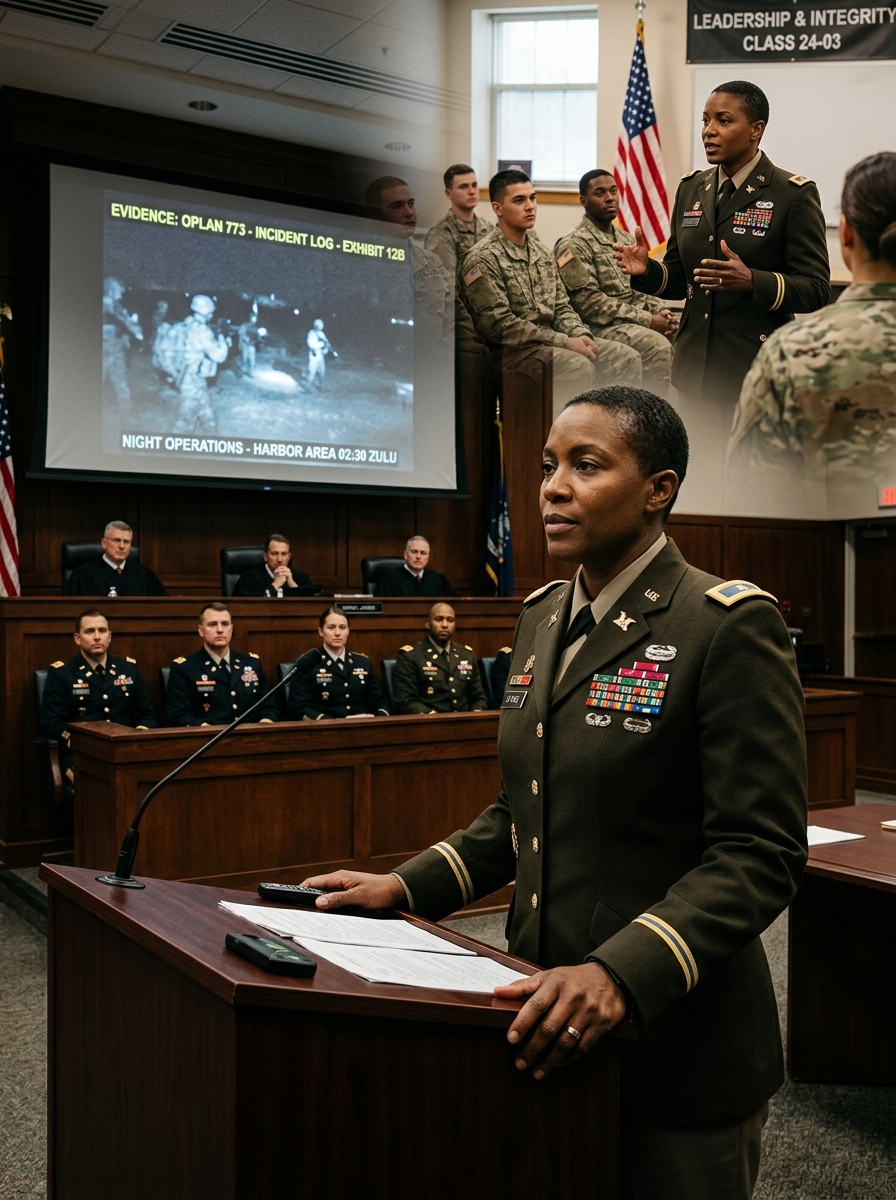
After deliberation, the jury ruled in Wallace’s favor. The court confirmed unlawful stop and violation of rights. Damages were awarded. No applause followed—only silence.
Mercer left the courthouse under media attention, avoiding cameras. Wallace left without ceremony.
A week later, Mercer was placed on administrative leave. His authority no longer felt absolute.
Adrienne returned to duty. No interviews, no spotlight. Just work.
Later, she addressed recruits in Fort Wayne. She spoke not about conflict, but responsibility.
“Respect isn’t something you’re owed. It’s something you prove every day.”
She continued, emphasizing discipline over authority, integrity over rank.
“When I was stopped, I didn’t react with anger. I documented. I followed process. I told the truth.”
“The difference isn’t the uniform. It’s character.”
She closed her remarks and stepped down—not for recognition, but because her message was complete.
Authority without accountability is just weakness in disguise. Courage is what prevents silence from becoming complicity.
