

The word “lucky” had followed me for months, spoken with a smile that never quite reached Sarah’s eyes. I was “lucky” to recover in my son’s mansion, lucky to be surrounded by marble floors and spotless counters, lucky to live under a roof that shone like a promise. But luck does not spend hours under harsh white lights with an aching spine, carefully stirring soup as if even breathing might crack something. Luck does not teach a person how to become smaller.
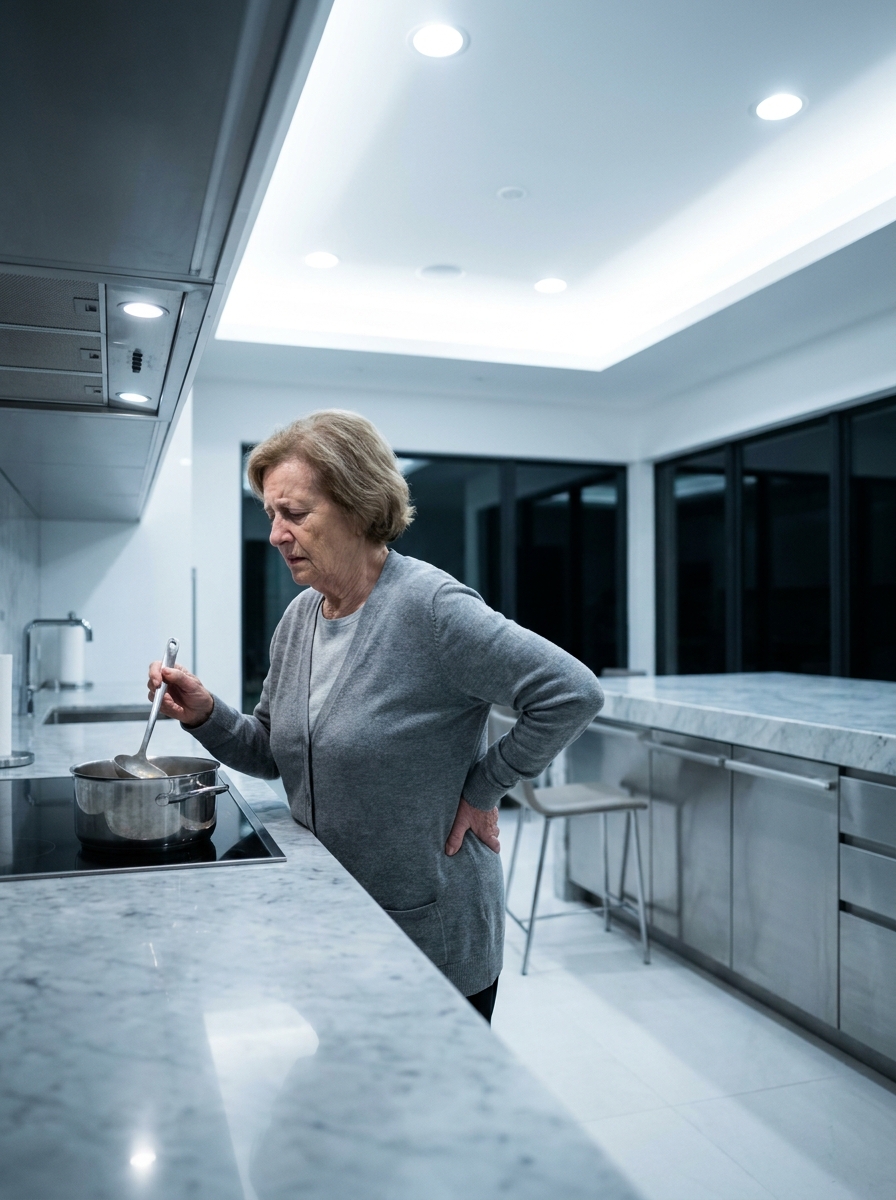
The kitchen in Julian’s house felt less like a home and more like an operating room—too bright, too exact, too cold to forgive errors. I stood by the stove, tasting the sauce again, lowering the heat, measuring the time until Sarah’s guests arrived. My hip still ached from surgery, every movement slow and intentional. Pain had become my shadow, but in that house, pain was only allowed when no one could witness it.
Outwardly, I was helpful. Inwardly, I was permitted to be fragile.
Sarah had not stated the rules at the beginning. She didn’t need to. Women like her don’t give orders—they reorganize. She reshaped everything around me until I fit into the gaps of her comfort. I wasn’t a mother-in-law. I was a quiet responsibility, dressed in family guilt and unpaid labor.
Julian was always away—Zurich, London, Tokyo. He built his life in airports and boardrooms, convinced he had given his mother peace and his wife perfection. He never saw the long stretches between leaving and returning.
And I made sure he never did.
I told myself it was protection. That I was keeping his world steady. But silence, I would learn, is not protection. It is participation.
Sarah walked into the kitchen with a glass of wine she barely intended to drink. Her silk dress caught the light as though it belonged more than I ever could. She leaned on the counter, watching the stove as if the meal itself had wronged her.
“The soup is cold,” she said.
“It’s resting,” I answered quietly. “The guests aren’t here yet.”
Her eyes sharpened at once. “So now you’re correcting me?”
“No. I’m finishing.”
She came closer, her presence arriving before her words—perfume, wine, and something colder beneath it. “You move like a burden, Elena. Do you understand that? Everything about you slows this house down.”
I didn’t respond at first. Years earlier, I had worked three jobs after my husband died, hands split open, feet swollen, pride buried under survival. Back then, humiliation had a purpose. It built something.
This didn’t.
“I said I’m finishing,” I whispered.
What came next didn’t feel real until the pain hit.
She seized the cast-iron pot from the counter and swung it into my back. The impact knocked the air from my lungs. I stumbled, struck the stove, and collapsed against the cabinets as the world flared white and distant. The pot hit the floor with a crash that sounded like something far deeper than metal breaking.
“Get up,” she snapped. “Stop performing.”
I couldn’t answer. My breath was gone. My body shook against the cold tile.
She stood above me, already composed again, as though cruelty were just another ability she had perfected.
Then the front door slammed.
Sarah turned first.
I followed her line of sight and saw Julian at the kitchen entrance, still wearing his coat, briefcase hanging at his side. He wasn’t due back for three days.
For one suspended moment, everything seemed to hold still.
“Julian,” Sarah said brightly. “Thank God. She slipped and ”
He walked right past her as if she wasn’t there.
He knelt beside me, his hand shaking as it touched my shoulder. That gentleness alone nearly broke me. His eyes dropped to my back, where the mark was already forming.
When he stood, something in him had changed.
I had seen my son angry before.
But this wasn’t anger. This was judgment.
“I saw you,” he said quietly. “Through the glass. Every second.”
Sarah gave a brittle laugh. “Then you saw an accident.”
“No,” he said. “I saw assault.”
He pulled out his phone, never taking his eyes off her. “Your accounts are frozen. Your cards are deactivated. You have one hour to leave this house.”
Color drained from her face. “You’re not serious.”
“I am completely serious. And if you’re still here when my mother sits down to eat, I’ll send the footage to the police.”
For the first time, Sarah looked afraid.

But fear didn’t make her truthful. It made her dangerous.
“Julian, listen,” she said quickly, stepping forward with tears. “Your mother hates me. She provoked me. She fell, and now she’s exaggerating ”
She turned to me, and behind the tears was control.
“Tell him. Tell him it was an accident.”
For years, I had said nothing.
Nothing when she mocked me.
Nothing when she erased my husband’s memory.
Nothing when she turned my recovery into confinement.
Silence had become my habit. My shield.
My prison.
Julian looked at me not as a businessman, not as a public figure, but as my son.
And I understood then.
If I lied now, I would not protect him. I would destroy him.
“It wasn’t an accident,” I said. “And it hasn’t been for a long time.”
Sarah’s face twisted. “You bitter old woman.”
Then, frantic, she reached for her final weapon, placing a hand on her stomach.
“Julian… I’m pregnant.”
The room went still.
But I knew it was false. I had seen too much. Cleaned too much. Hidden too much.
Julian stared at her in silence.
Then he opened his briefcase and set a thick envelope on the counter.
“I was going to wait,” he said. “But I hired auditors. And an investigator.”
Sarah stopped crying.
He tapped the envelope.
“Three million dollars missing. Shell charities. Hotel records. Your assistant Marcus sharing rooms on your ‘fundraising trips.’”
Her lips parted, but no sound came out.
“You’re not leaving because of tonight,” Julian said. “You’re leaving because everything you built here is a lie.”
The doorbell rang.
Guests.
Perfect timing.
Sarah looked toward the foyer as if salvation had arrived.
“Please,” she whispered. “Not in front of them.”
Julian didn’t hesitate.
“You wanted an audience,” he said. “You have one.”
Security arrived within seconds. Her voice rose—rage, denial, desperation—but it no longer carried weight. The house had already rejected her.
We moved into the foyer.
Julian opened the doors.
A row of elegant guests stood frozen, smiles fading as confusion spread.
“Good evening,” Julian said calmly. “Dinner is canceled. My wife is leaving.”
Shock moved through them.
“She’s lying!” Sarah cried, trying to push forward. “He’s destroying me!”
Julian didn’t move.
“She has been removed from all accounts and all foundation activity pending criminal investigation.”
Phones appeared. Eyes shifted.
The same people who had admired her now stepped back, distancing themselves from collapse.
As security led her away, Sarah turned to me, stripped of everything she had worn before.
She knew.
She knew I had spoken.
When the car disappeared, silence returned.
I thought it was over.
It wasn’t.
That night, Julian sat in his study, the city glowing behind him. Papers covered his desk, the envelope open, truths spilling faster than they could be contained.
“She won’t stop,” he said.
I knew he was right.
Sarah knew too much.
And beneath everything—the foundation, the money, the empire—there was a truth I had buried for decades.
The wealth that built Julian’s future had come from his father’s crimes.
Blood had touched those accounts long before charity ever cleaned their surface.
Within two days, Sarah began her revenge.
Reporters. Prosecutors. Headlines.
The Sterling name fractured overnight.
Julian panicked—not like a criminal, but like a man who still believed money could repair truth once exposed. He reached out to a fixer named Victor.
I recognized the path instantly.
It was his father’s path.
And I had already chosen mine.
Three weeks earlier, before the kitchen, before everything broke, I had contacted the authorities.
Quietly.
Carefully.
I told myself I was saving him.
Victor wasn’t a fixer.
Victor was federal.
When they came, there were no sirens. Only quiet authority. A warrant. Handcuffs.
Julian looked at Victor.
Then at me.
Understanding hit him all at once.
“You,” he said.
I didn’t deny it.
“Yes.”
The pain in his eyes wasn’t anger.
It was something worse.
Faith collapsing.
“I was trying to save you,” I whispered.
He gave a hollow laugh. “No. You were burying him through me.”
Maybe he was right.
Maybe love and ruin had become the same thing long ago.
Julian was sentenced to ten years.
Everything else followed.
Assets frozen. Foundations dissolved. The mansion turned into evidence.
Sarah disappeared into survival, trading secrets for freedom.
And me—
I left with one suitcase.
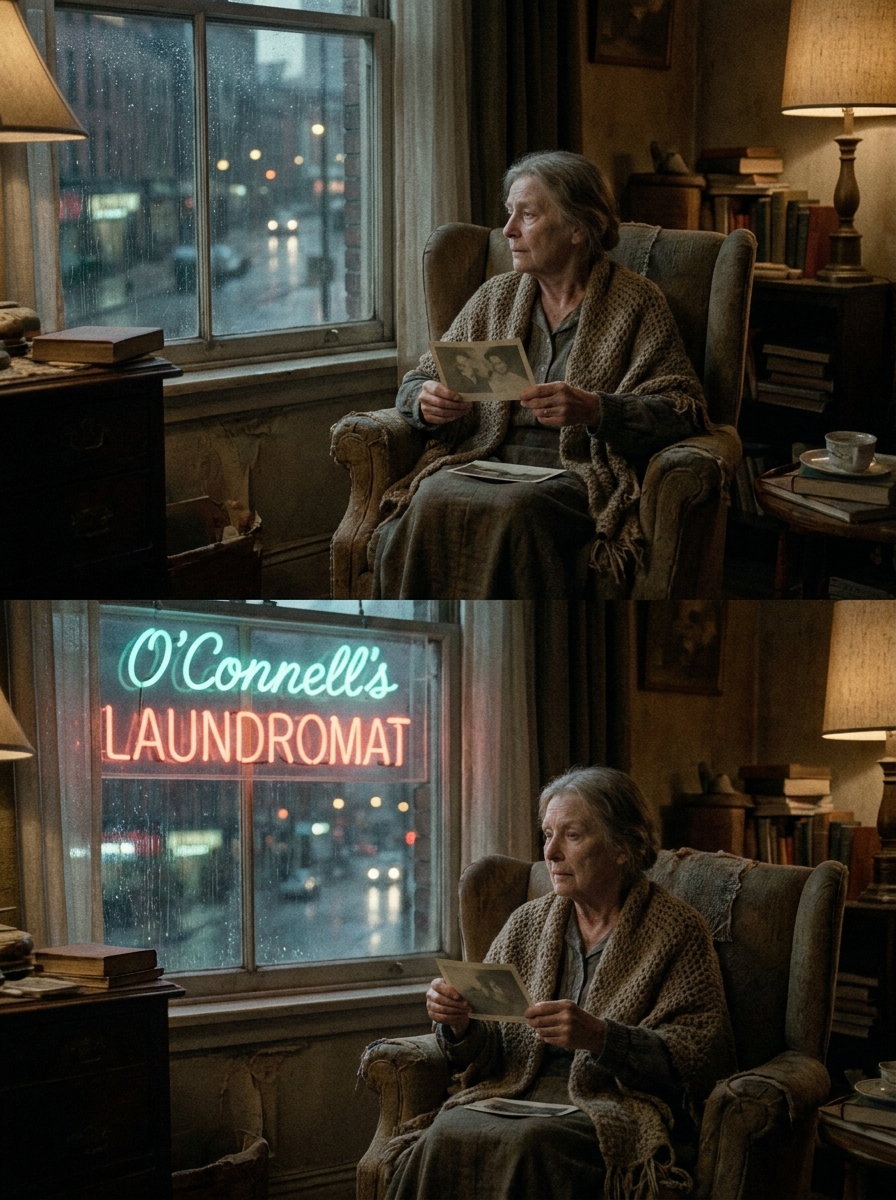
Now I live above a laundromat. I buy my own food. I teach English three afternoons a week. When people ask my name, I say Elena.
Nothing more.
At night, when the radiator hisses and the city hums outside my window, I think about that kitchen.
The bright lights.
The cooling soup.
The pot on the floor.
The moment silence finally broke.
That was the night Sarah lost her palace.
That was the night Julian lost his empire.
And that was the night I lost the right to call my silence love.
I still don’t know if I saved my son.
Or if I simply destroyed him before the world could.
But I know this:
Power does not protect the people inside it.
It only teaches them how long cruelty can hide behind clean floors and polished glass.
And when the glass finally cracks,
it does not only reveal the monster.
It reveals everyone who helped keep it alive.
