

Part 1 — The Moment Everything Changed
For almost nine months, I was convinced I was giving my twin brother the best gift I could ever offer him.
I believed I was helping him and his wife finally complete the family they had longed for and prayed over for years.
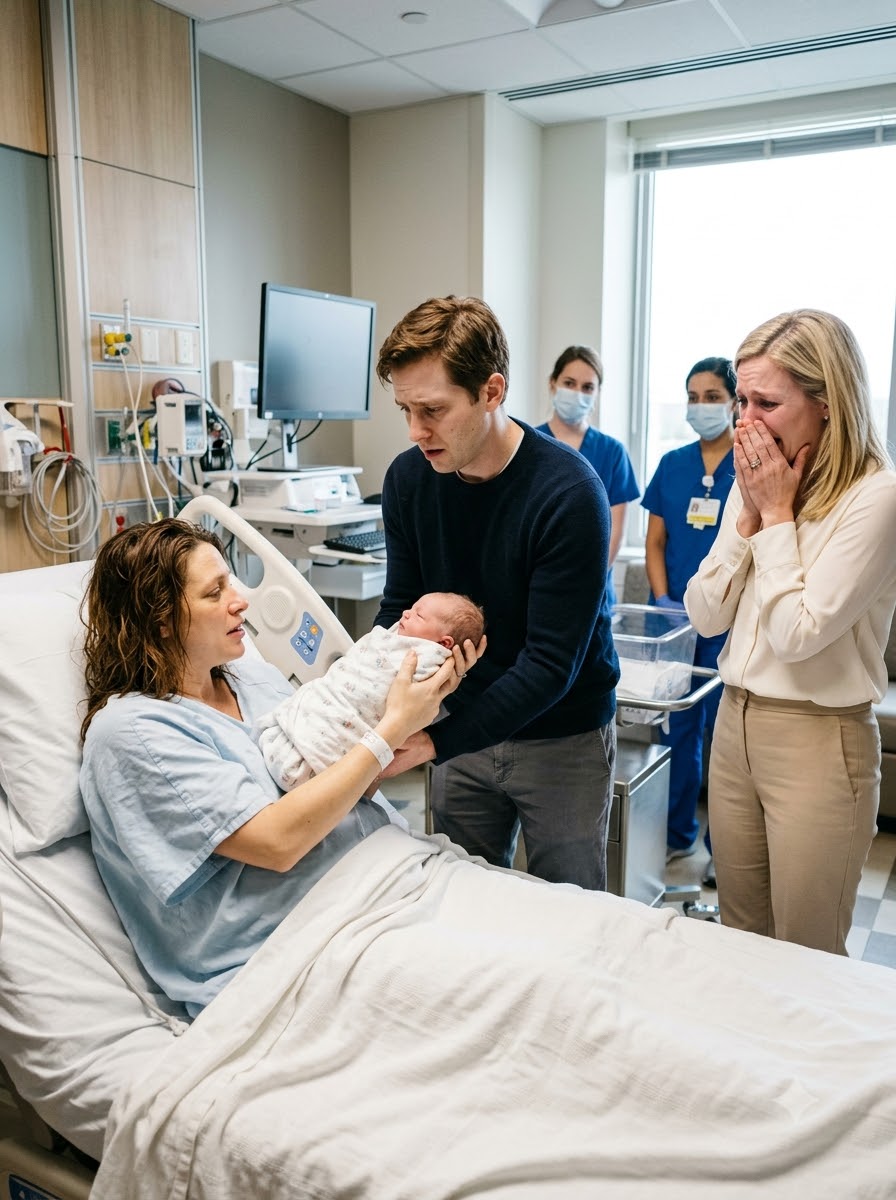
I never once imagined that mere minutes after their daughter arrived, my brother would look down at her, go white, and say something that would break all of us apart.
“I can’t take her home.”
Even now, every detail of that hospital room stays vivid in my mind.
The overhead lights were harsh and blinding. My hair clung to my forehead with sweat, my whole body was shaking, and I felt like I’d emptied out every last bit of strength I had.
Then the nurse laid the newborn gently on my chest.
She was so small.
Flushed pink.
Wrinkly.
Utterly beautiful.
For a single flawless moment, nothing else existed.
Just her small weight resting against me and the delicate sound of her first cries.
At the end of the bed, my sister-in-law, Melissa, pressed both hands to her mouth.
Tears streamed down her cheeks.
“She’s here,” she breathed. “Ryan… she’s actually here.”
I glanced over at my brother.
Ryan was standing right beside his wife, but something felt off about him.
He didn’t smile.
He didn’t cry.
He just stared.
At the time, I couldn’t make sense of what I was witnessing.
To understand why his reaction cut so deep, I need to go back further.
Ryan wasn’t just my brother.
He was my twin.
My closest friend.
My anchor for nearly my whole life.
I was thirty-six, raising my seven-year-old son, Gabriel, alone. He was loud, curious, always affectionate, and had a way of turning any dull room into a little adventure.
It had been just the two of us since he was a toddler.
Through it all, Ryan had never left my side.
Five years before, when we lost our parents suddenly in a car crash, Ryan camped out on my couch for nearly a month because I couldn’t stand being alone at night.
That year had taken so much from us.
And maybe that’s part of why I agreed so fast when he and Melissa came to me for help.
They’d spent six years trying to conceive.
There had been treatments.
Two IVF cycles.
And then a miscarriage at eleven weeks that left Melissa quietly carrying grief she almost never mentioned.
So when they had me over for dinner one night and Ryan started stumbling through what they wanted to ask, I already knew where it was going.
He hadn’t even gotten the whole sentence out.
“Yes,” I said.
He blinked at me.
“Ivy, you don’t have to—”
“I know.”
I reached across the table for his hand.
“But yes.”
Melissa started crying right away.
I got what they were yearning for, because I had Gabriel.
I knew what it meant to love a child so completely that a world without them felt unthinkable.
If I had the chance to give my brother that same love, I wanted to take it.
I thought it would help heal all of us.
I had no idea how hard it would test us before that happened.
Part 2 — The Little Signs I Chose to Ignore
Ryan and Melissa showed up to every single appointment.
Not just most.
Every one.
Melissa kept a notebook and jotted down nearly every word the doctor said.
Ryan sat next to me during blood draws and held my hand, since he’d always known how much I dreaded needles.
At every ultrasound, they watched their daughter growing.
The first heartbeat.
The tiny hands.
The shape of her face.
Every new milestone seemed to make Melissa light up a little more.
When we found out the baby was a girl, she laid her palm on my stomach and shut her eyes.
For a few seconds, she said nothing at all.
Then she murmured, “Thank you, Ivy.”
Her voice broke.
I laughed, because I knew if I let myself cry, I wouldn’t stop.
“Don’t start,” I told her. “I actually put on mascara today.”
She laughed through her tears.
Those were the memories I clung to.
The good ones.
Maybe that’s why I brushed past the others.
Two months before she was born, Ryan and Melissa asked me over to see the nursery.
The walls were a gentle green. A white crib sat against one wall, a mobile of small felt stars hanging above it.
Melissa pulled open drawer after drawer.
Tiny pajamas, socks, blankets, and little dresses lay folded in neat piles.
“I know I went overboard,” she admitted, smiling. “I couldn’t make myself stop buying things.”
I smiled back at her.
Then I spotted Ryan.
He was standing in the hallway.
He leaned against the doorframe, smiling, but never actually walked in.
At the time, I figured the weight of becoming a father was simply overwhelming him.
There were other small things too.
Melissa would sometimes text late at night, asking if the baby had been moving enough.
Ryan grew quieter at appointments.
At a few ultrasounds, I caught him glued to his phone.
Whenever Melissa looked his way, he angled the screen out of view.
Once I asked if something was going on at work.
“Everything’s fine,” he said.
Then he switched topics so quickly it caught my attention.
Still, I told myself it was just nerves.
After everything he and Melissa had gone through, maybe happiness itself scared him.
Near the end of the pregnancy, during our last ultrasound, the technician ran the wand slowly over the baby’s back.
Then she stopped.
Only for a beat.
Barely long enough to notice.
Her face stayed calm. She finished the exam and told us everything looked fine.
Melissa relaxed instantly.
Ryan didn’t.
He kept staring at the screen with a look I couldn’t quite place.
On the ride home, he barely said a word.
I remember gazing out the window, thinking I should ask him again what was wrong.
I never did.
Later, I would replay that silence over and over in my head.
Part 3 — “I Can’t Take Her Home”
Labor wore me down completely.
By the last push, I was squeezing Nurse Bianca’s hand so hard I kept apologizing between contractions.
“One more,” she urged. “You’re almost there.”
I pushed.
And then the room filled with crying.
The baby’s cries.
My niece’s cries.
Relief flooded through me so hard I started laughing and crying at once.
When the nurse set her on my chest, I looked over at Ryan.
“Go meet your daughter,” I told him.
The nurse bundled her carefully and passed her to him.
For months, I had pictured that exact moment.
I pictured Ryan in tears.
I pictured Melissa throwing her arms around both of them.
I pictured my brother gazing at his daughter the way I had gazed at Gabriel the first time I held him.
Instead, Ryan went completely rigid.
He stared down at the baby.
Then his face began to shift.
The warmth drained out of it.
His shoulders dropped.
His lips moved, but nothing came out.
“Ryan?”
He didn’t respond.
Melissa was still dabbing at her tears.
“Let me hold her,” she said softly.
Ryan repositioned the baby.
Then he tilted her slightly and looked at her lower back.
That’s when real fear crossed his face.
“Ryan,” I said again. “What’s wrong?”
He swallowed hard.
For a long moment, he just looked at the floor.
Then he looked up at me.
“I can’t take her home.”
At first I thought I’d misheard.
My whole body was still trembling from labor.
“What?”
Melissa’s smile vanished.
“Ryan, what are you talking about?”
He looked back and forth between us.
Then, more firmly: “I can’t do this. I can’t take the baby.”
And before I could even process it, my brother placed his newborn daughter back into my arms.
I stared at him.
“She’s your daughter.”
My own voice sounded strange and thin.
Melissa stood up.
“What do you mean you can’t take her? Ryan, explain yourself.”
He wouldn’t look at her.
Instead he said quietly, “Look at her back.”
My stomach clenched.
I loosened the blanket and turned the baby carefully.
Near the base of her spine was a small, reddish, raised patch.
It wasn’t big.
But I remembered reading about possible complications during the pregnancy.
The second I saw it, fear shot through me.
“Spina bifida,” I whispered.
Melissa’s reaction broke my heart.
“No.”
Then again, louder.
“No. They said everything was fine.”
Her voice climbed until it turned into a sob.
“They told us she was fine!”
Nurses hurried back into the room.
Ryan stood frozen for another moment.
Then he turned.
And walked out.
He just left.
I watched my own twin brother disappear through the hospital door while Melissa sank into a chair.
I was drained, shaking, still hooked up to monitors, holding a newborn whose parents had spent years begging for the chance to raise her.
I looked down at her small face.
Her eyes were shut.
Her tiny mouth opened and closed as she settled against me.
Something fierce stirred inside my chest.
I bent my head close to hers.
“You aren’t being abandoned,” I whispered. “Not while I’m here.”
In that moment, I meant it completely.
Part 4 — Three Days Later
Over the next three days, everything about my life shifted.
The doctors sat down with us to discuss Hope’s condition and what treatment might look like.
That’s the name I’d started calling her.
Hope.
Because after all that had happened, I needed her name to carry meaning.
Melissa was shattered and could hardly bring herself to speak to Ryan.
Ryan had checked out emotionally the moment he left the hospital.
Meanwhile, I went home to a recovering body, a newborn’s schedule, and far more questions than answers.
Three days after she was born, Ryan finally turned up at my house.
Hope was napping in a bassinet by the window.
Gabriel was down the hall under his favorite dinosaur blanket.
I stood in the kitchen in sweatpants, hair yanked into a messy knot, running on almost no sleep.
Ryan still looked like he hadn’t recovered from the hospital.
I crossed my arms.
“You don’t get to walk into my house like nothing happened.”
“I know.”
“No, I don’t think you do.”
“Ivy, please. Just let me explain.”
I stared at him.
“Explain what? I’ve spent three days feeding and comforting the daughter you spent six years praying for, because you handed her to me and walked away.”
He flinched.
Part of me was glad.
I wanted him to feel the full weight of what he’d done.
Ryan dragged both hands over his face.
“The doctors brought up surgery,” he said. “Therapy. Specialists. Maybe braces. Years of appointments.”
“And?”
“I panicked.”
“She’s your child.”
“I know.”
“Do you?”
My anger broke loose before I could stop it.
“You held her for a few seconds, Ryan. A few seconds. Then you acted like someone had handed you something you never asked for.”
His eyes closed.
“I know how it looked.”
“How it looked?”
I stepped closer.
“The doctor called. Hope has a real shot at a healthy, active life. She might need surgery and therapy, but she’s still your daughter. And the second you heard there could be complications, you walked out.”
“That’s not why.”
I stopped.
“Then tell me why.”
Ryan sank onto one of the kitchen stools.
His shoulders caved inward.
Suddenly he didn’t look like the brother who had always looked out for me.
He looked scared.
Ashamed.
Almost small.
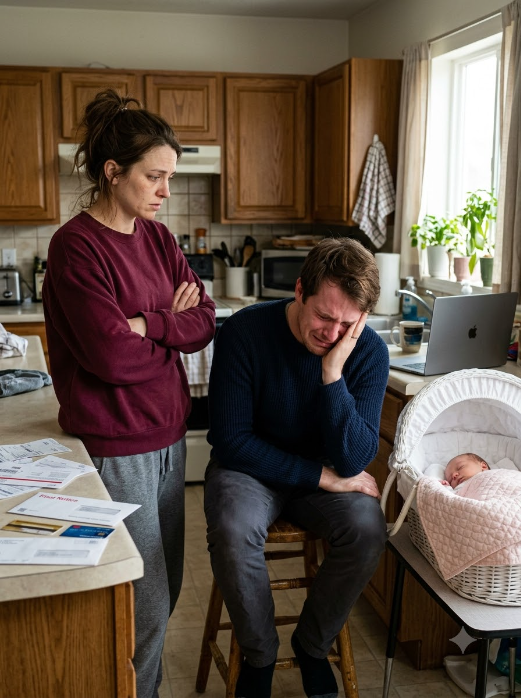
Then he whispered, “I lost my job.”
For a second I thought I’d misheard him again.
“What?”
“Four months ago.”
I stared at him.
“Four months?”
He nodded.
“Right after the second-trimester scan.”
My anger gave way to confusion.
“Melissa knows?”
His silence was the answer.
“Oh my God, Ryan.”
“Every morning I get dressed like I’m heading to the office. I leave the house. Then I sit in a coffee shop applying for jobs until it’s time to go home.”
I couldn’t speak.
“I’ve had two interviews,” he went on. “Neither one went anywhere.”
“The nursery,” I said.
The crib.
The clothes.
The little felt stars.
Ryan looked away.
“Credit cards.”
My stomach dropped.
“She thinks we still have savings.”
“You don’t?”
“No.”
I pulled out a chair and sat.
Suddenly, pieces of those strange moments clicked into place.
The phone at appointments.
The distracted look.
Him refusing to step into the nursery.
The silence after the ultrasound.
“You were job-hunting during the appointments.”
He nodded.
Anger rose in me again, tangled up with heartbreak.
“So when the doctors started talking about treatment…”
“All I heard was money.”
His voice cracked.
“Bills. Specialists. Surgery. Everything I couldn’t give her.”
I stared at him.
“And that’s what made you walk out on your daughter?”
“No.”
He swallowed.
“It gave me a way out.”
Those words chilled me.
Ryan glanced toward the bassinet.
“I figured if everyone thought I couldn’t accept her condition, Melissa would be angry at me for that. But she’d never know I’d already failed her months earlier.”
My hands clenched into fists.
“You were willing to let your wife believe you rejected your own baby, just so you wouldn’t have to admit you lost your job?”
“I thought I was shielding her.”
“From what?”
“From me.”
I shook my head.
“No, Ryan. You were shielding yourself from telling the truth.”
Part 5 — The Lie Beneath the Fear
Hope shifted in the bassinet.
A small sound slipped out of her, somewhere between a sigh and a cry.
We both turned toward her.
Neither of us moved.
I studied the man across from me.
My twin.
The one who had held me together after we lost our parents.
The brother who had picked me back up when Gabriel’s father left.
The man who had always insisted that family meant you didn’t run when things got hard.
And now he had done exactly that.
“I don’t know what I’m supposed to feel toward you right now,” I admitted.
Ryan’s eyes welled up.
“Neither do I.”
“I love you.”
He nodded.
“But I’m furious with you.”
“I know.”
“No. Stop saying that like it fixes anything.”
He dropped his eyes.
I took a slow breath.
“After Mom and Dad died, I spent years trying to hold onto whatever family we had left. When you asked me to carry your child, part of me hoped this could bring something good out of all that loss.”
My voice shook.
“I carried your daughter for months, Ryan. I turned my whole life upside down. I went through pregnancy again because I trusted you. Because I believed I was placing Hope into the arms of two people who wanted her more than anything in the world.”
A tear slid down his cheek.
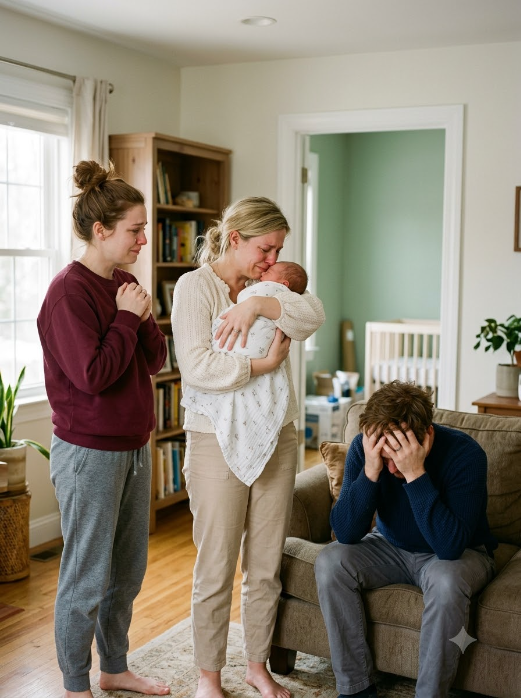
“And instead you handed me your fear.”
He covered his mouth.
I kept going.
“You used your daughter as a way out.”
Ryan slowly nodded.
“Say it.”
He looked at me.
“Ivy—”
“Say what you did.”
His face crumpled.
Finally, the words came out.
“I used Hope as a way to escape, because I was drowning and too ashamed to tell Melissa.”
The kitchen went silent.
It was ugly.
But it was honest.
And honesty, even the painful kind, was the first genuinely useful thing he’d given any of us in months.
I stood.
“You’re telling Melissa.”
His eyes went wide.
“Ivy—”
“Tonight.”
“She’ll leave me.”
“Maybe.”
He stared at me.
I didn’t back down.
“Maybe she will. Maybe she won’t. But that’s not your decision to make for her.”
“I was trying to protect our marriage.”
“No. A marriage held together by lies isn’t protected at all.”
Ryan looked down.
“You tell her about the job. The credit cards. The coffee shop. Every interview. Every lie. And you tell her exactly why you walked out of that hospital room.”
He was openly crying now.
“I don’t know if I can.”
“Then I’ll do it.”
His head jerked up.
I grabbed my keys.
“You get one chance to tell your wife the truth yourself.”
He looked at me for a long moment.
Finally, he nodded.
“Okay.”
“I’m coming with you.”
Part 6 — Melissa Learns the Truth
That evening, I carried Hope up the walkway to Ryan and Melissa’s house.
I’d pictured walking up to that door with the baby dozens of times while I was pregnant.
In every version, it was joyful.
Balloons.
Photos.
Family gathered around.
Maybe tears — but happy ones.
Instead, I approached the front door with my stomach in knots.
Ryan opened it.
He looked like someone bracing for a verdict he already knew he’d earned.
Melissa was sitting on the couch.
She looked worn out.
Her expression changed the instant she saw Hope in my arms.
Pain.
Love.
Longing.
All of it at once.
I turned to Ryan.
“Tell her.”
He sat down across from his wife.
For several seconds, nothing came out.
Then he started.
“I lost my job four months ago.”
Melissa just stared at him.
Ryan kept going.
“I never told you. Every morning, while you thought I was heading to work, I was sitting in a coffee shop. I’ve been applying everywhere.”
Melissa didn’t move.
“The savings are gone. Most of the nursery went on credit cards.”
Her face drained of color.
“You lied to me for four months.”
“Yes.”
“Every day?”
Ryan nodded.
Melissa looked toward Hope.
Then back at him.
“And the hospital?”
Ryan’s breathing turned ragged.
“When I saw Hope’s back, I panicked. Then the doctors started talking about surgeries and specialists, and all I could think about was money.”
Melissa’s eyes filled.
“I thought if I walked away because of her condition, you’d be angry at me for that.”
She looked at him, stunned.
“But not know the real reason?”
Ryan lowered his head.
“I was ashamed.”
Melissa got to her feet.
Her hands were trembling.
“You thought I’d rather lose my daughter than find out you lost your job?”
“No.”
“You thought I cared about that house? That nursery? The furniture?”
Her voice cracked.
“Ryan, I would have sold every last piece of furniture we own.”
He started crying.
“I would have taken a second job. We could have downsized. We could have asked for help. We could have started fresh.”
She pressed her hand to her chest.
“But you never gave me that choice.”
Ryan had nothing to say.
“You didn’t trust me enough to fail beside you.”
Those words seemed to land harder than anything I could have said.
“I know,” he whispered.
Melissa shook her head.
“This was never really about losing your job.”
She wiped her tears away.
“It was about you deciding I couldn’t handle the truth.”
Then she turned to me.
Or rather, to Hope.
Her face softened instantly.
She crossed the room slowly.
“Can I hold her?”
I didn’t hesitate.
I placed Hope gently into her mother’s arms.
The moment Melissa held her daughter close, she broke down.
Not the desperate crying from the hospital.
This was different.
Grief, relief, love, anger, and gratitude, all tangled together.
She kept kissing Hope’s forehead, over and over.
“My baby,” she whispered.
I gave them a moment before speaking.
“Dr. Patel called me earlier.”
Melissa looked up.
“He said Hope’s case looks mild. She’ll likely need surgery in her first few months and some follow-up therapy. But she has an excellent shot at a full, active life.”
Melissa shut her eyes and pulled Hope in tighter.
Across the room, Ryan buried his face in his hands and sobbed.
For a few minutes, no one said anything.
Eventually Melissa looked over at him.
Her expression wasn’t gentle.
But it wasn’t empty either.
“I need time,” she said.
Ryan nodded.
“I know.”
“I can understand panic.”
Another nod.
“I can understand being afraid.”
She looked down at Hope.
“What I can’t live with is silence like this again.”
Ryan raised his head.
Melissa held his gaze steady.
“If we’re staying a family, we face things together. You lose your job, you tell me. You’re scared, you tell me. We’re broke, you tell me.”
Her voice trembled.
“You don’t get to decide on your own that shutting me out is somehow protecting me.”
Ryan slowly stood.
“I understand.”
“No more pretending.”
“No more.”
“No more disappearing into coffee shops and fake workdays.”
“No more.”
“And never again use our daughter as a reason to run from something you’re too afraid to face.”
Ryan started crying again.
“I won’t.”
Melissa didn’t forgive him right away.
And I was glad she didn’t.
Some wounds don’t heal from a single apology.
Some trust has to be earned back one honest day at a time.
But she didn’t ask him to leave, either.
That part was theirs to work out.
Part 7 — What Hope Gave Back to Us
I stood near the doorway, watching them.
Melissa sat with Hope held against her chest.
Ryan had eased himself down beside her.
He wasn’t holding the baby yet.
He looked almost afraid he hadn’t earned that right.
Then Melissa glanced his way.
Slowly, she shifted Hope toward him.
Ryan hesitated.
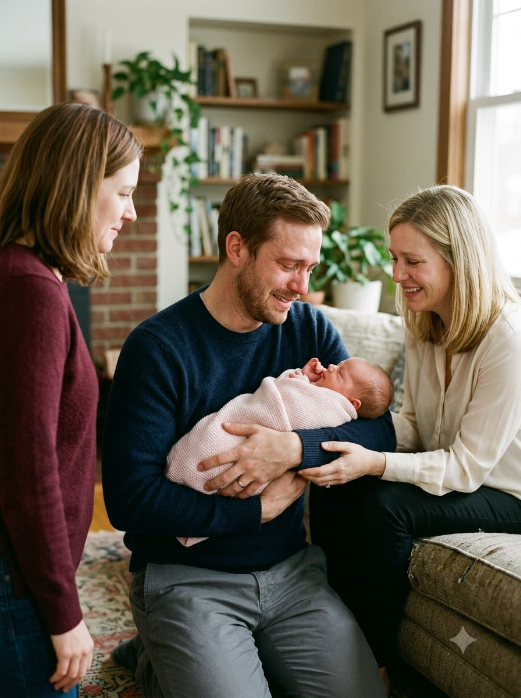
Finally he reached out.
His hands shook as Melissa placed their daughter into his arms.
This time, he wasn’t looking at her diagnosis.
He was looking at her face.
Really looking.
Hope’s eyes opened briefly.
Ryan let out a sound somewhere between a laugh and a sob.
“Hi,” he whispered.
His tears fell onto the blanket.
“I’m your dad.”
I looked away for a second because my own eyes were stinging.
For months, I thought being a surrogate simply meant carrying a baby.
I learned that sometimes you carry far more than that.
We carry other people’s dreams.
Their fears.
Their expectations.
Sometimes even their secrets.
But eventually, love asks us to set down what was never ours to carry in the first place.
I could carry Hope for nine months.
I could hold her when Ryan walked out.
I could shield her for three days while everything around her fell apart.
But I couldn’t carry my brother’s shame for him.
And I couldn’t build his marriage on a lie just because the truth might hurt.
That part was his to carry.
I walked over to Melissa and pressed a kiss to Hope’s forehead.
Her skin was warm.
Her tiny hand curled near her cheek.
For the first time since the delivery room, my body finally relaxed.
Ryan looked at me.
There was still so much between us that needed mending.
Anger.
Disappointment.
Love.
History.
But underneath all of it, he was still my brother.
And now, at last, he was facing what he should have faced months before.
The truth.
I didn’t know exactly what would happen to Ryan and Melissa’s marriage.
I didn’t know how hard Hope’s surgery or therapy would be.
I didn’t know if my brother would land a job the next week or months down the road.
But I knew this much.
Hope wasn’t unwanted.
She wasn’t a mistake.
She wasn’t a burden.
She was a little girl who had come into the world surrounded by frightened, flawed people who needed to learn that love isn’t measured by having it all figured out.
Sometimes love means admitting you don’t.
Sometimes it means asking for help.
Sometimes it means staying, even when your first instinct is to run.
And sometimes it means telling someone a hard truth, because letting them live inside a comfortable lie would hurt them even more.
As I headed for the door, Melissa said my name.
I turned back.
She was still beside Ryan, one hand resting over Hope’s blanket.
“Thank you,” she whispered.
Months earlier, she had thanked me for carrying their daughter.
This time, I understood she meant something more.
I smiled through my tears.
“Take care of her.”
Melissa looked down at Hope.
“We will.”
Ryan met my eyes.
“We will,” he echoed.
Outside, the evening air felt cool on my face.
I stood on the walkway a moment before getting into my car.
Through the front window, I could see the three of them together.
They weren’t magically fixed.
They weren’t suddenly a perfect family.
But they were finally standing inside the same truth.
And sometimes, that’s where healing has to start.
For the first time since Hope had been born, I let myself believe that maybe we really would be okay.
Not because nothing had gone wrong.
But because, at last, nobody was running anymore.
