

The Ring He Came to Buy for Love, Not Status
The jewelry store went quiet the instant she laughed.
It wasn’t a loud laugh.
That made it worse.
It was the kind of clipped sound people make when they mistake humiliation for expertise.
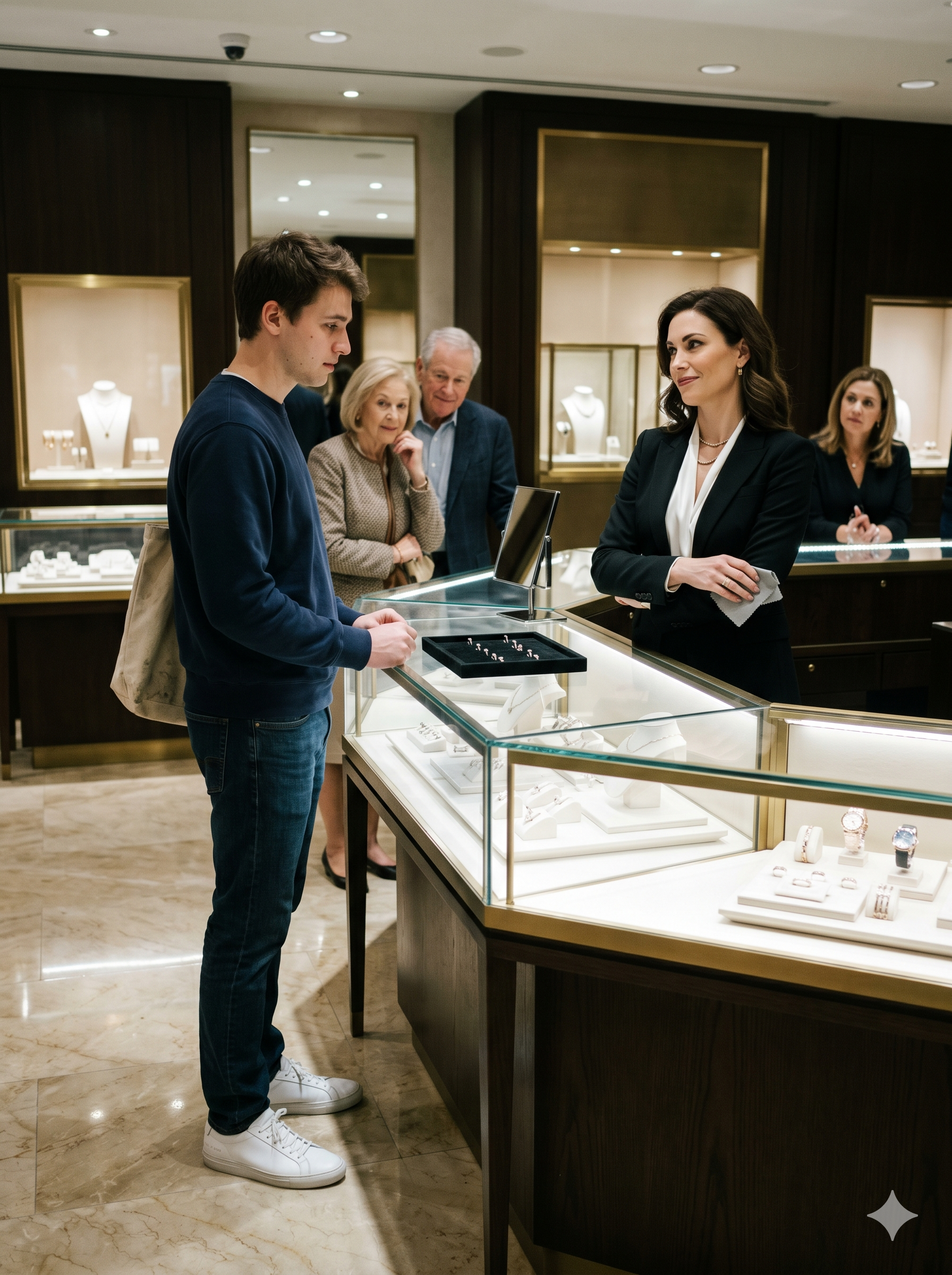
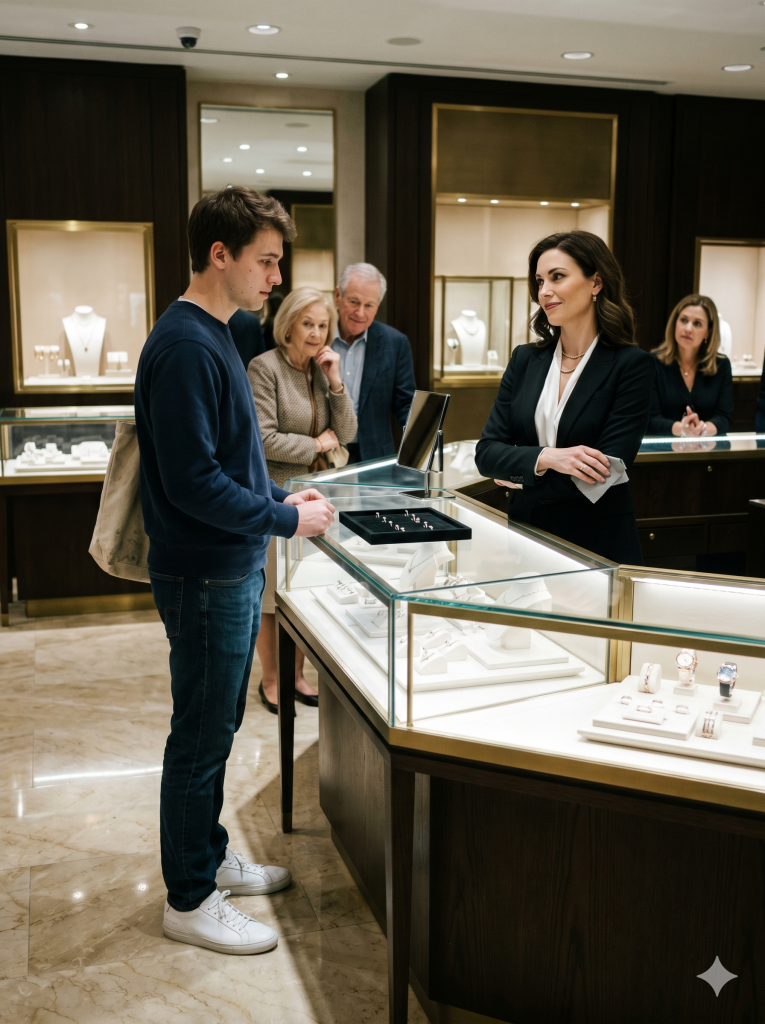
The young man at the counter wore jeans, white sneakers, and a navy sweatshirt with the sleeves pushed up. No watch worth noticing. No designer label. No bodyguard. No polished arrogance. He looked like the sort of customer the sales clerk had already decided didn’t deserve her smile.
He hadn’t asked for diamonds.
Hadn’t asked for the centerpiece in the display.
Hadn’t asked for a custom platinum setting.
He had simply pointed to a modest white-gold wedding band in the center case and said, politely:
“I’d like to see that one, please.”
The clerk gave him a slow once-over.
Then smirked.
“Do you really think you can afford anything here?”
The words struck the room so hard that even the pianist drifting from the atrium outside seemed to fade for a moment.
A mother browsing earrings paused.
A man by the watch counter glanced up.
Two teenage girls near the glass entrance froze mid-step.
The young man didn’t flinch.
If anything, his smile softened.
“I’m not looking for the most expensive one,” he said. “Just the right one.”
That only made her laugh again.
“These aren’t bargain pieces,” she said loudly. “Why don’t you try a kiosk downstairs?”
The silence grew heavier.
People shifted uncomfortably.
Someone murmured, “Wow.”
But no one intervened.
The man looked at the ring once more through the glass.
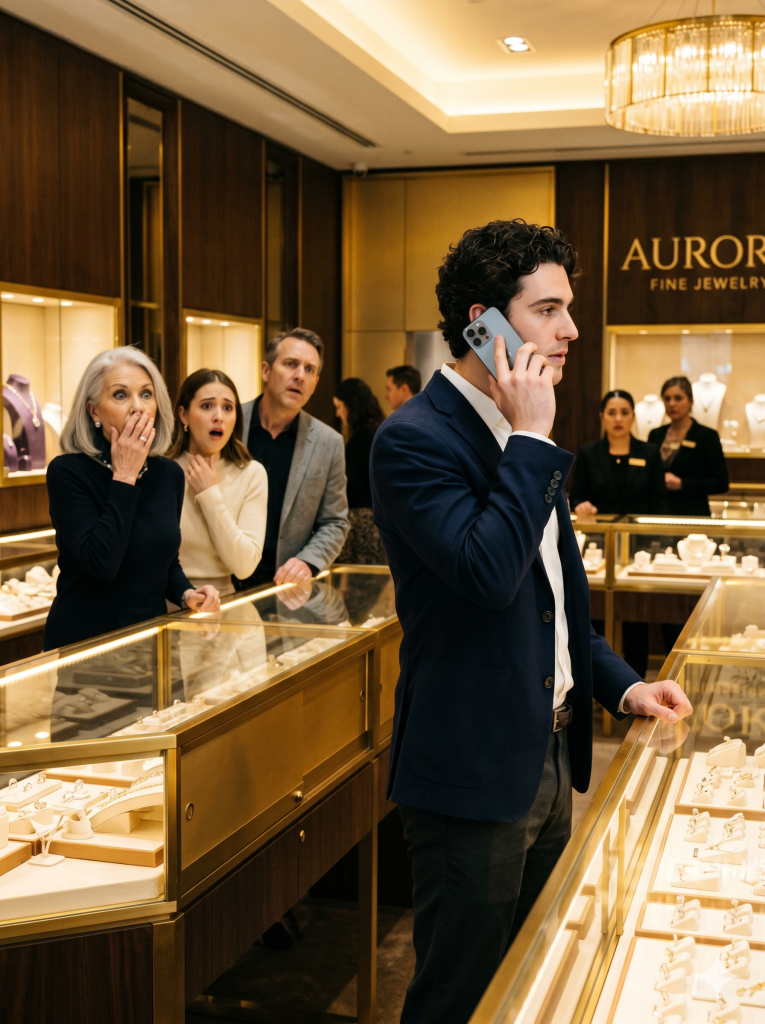
Then he slipped a hand into his pocket, pulled out his phone, and made a call.
“Dad?” he said evenly. “I’m at your mall. You might want to come down.”
The clerk’s smile lingered for about two more seconds.
Then it began to fade.
The Ring He Refused to Replace With Something Flashier
His name was Julian Mercer.
Most people in the city recognized the name Mercer because of the mall itself.
Mercer Plaza was one of those polished downtown landmarks people used as a meeting point even when they had nothing to buy. Three levels of glass, marble, luxury boutiques, private lounges, and quiet old-money elegance. It had belonged to the Mercer family for thirty years.
What most people didn’t realize was that Julian Mercer disliked being identified by it.
He had grown up in the back offices and service corridors of that building because his father, Daniel Mercer, believed children should understand what makes elegance run. Julian spent Saturdays helping janitors move supplies, listening to food-court cashiers vent, and watching his father stop to greet security guards by name.
The lesson had been simple:
You can tell what kind of business someone runs by how they treat the person they think doesn’t matter.
Julian never forgot it.
That was why he dressed the way he did when he came to the mall alone.
That was why he avoided the executive elevator.
That was why he never introduced himself unless it was necessary.
And that was why, on the day he came to buy a wedding band, he wanted no spectacle.
He was buying the ring for Nora.
Not a model.
Not a socialite.
Not the kind of woman who cared whether a diamond announced itself before she entered a room.
Nora was a public school music teacher with ink stains on her fingers and a habit of tearing up at supermarket flower displays because she believed carnations were underrated. When Julian proposed, she laughed first, then cried, then said yes while still holding the bag of takeout noodles they had planned to eat.
When he asked what kind of ring she wanted him to wear, her answer came immediately.
“Nothing flashy. Just something that means you chose it.”
So Julian came for the simple white-gold band because it looked like something he would still cherish at eighty. Plain. Genuine. Enduring. The kind of ring you live in, not show off.
The irony was almost amusing.
The one item in that store made for real commitment was the very piece the clerk believed he had no right to touch.
The Five Minutes Before Everything Changed
The clerk’s name was Vanessa.
Julian only noticed because the store had fallen so quiet he had time to read the small gold badge pinned to her chest while waiting for his father to arrive.
Vanessa tried to regain control quickly.
Not with an apology.
With disdain.
She crossed her arms and wore the kind of smile people use when they still believe they’re untouchable.
“Oh, I see,” she said. “You’re one of those.”
Julian tilted his head slightly.
“Those?”
“Boys who call someone important when they don’t get their way.”
A few customers flinched.
That was when the store manager finally stepped out from the back office.
Tall.
Impeccably dressed.
Too late.
“What seems to be the problem?”
Vanessa answered before Julian had the chance.
“This customer is making a scene because we won’t hand him merchandise he clearly can’t afford.”
Julian glanced at the manager.
Then at the wedding band.
Then back at Vanessa.
“I asked to see a ring,” he said. “That’s all.”
The manager’s eyes swept over Julian’s outfit in the same unpleasant way hers had.
Not blatantly cruel.
Just dismissive enough to disguise cruelty as procedure.
“We reserve the right to refuse service when appropriate,” he said.
That hit harder than Vanessa’s laughter.
Because now it was formal.
Polite.
Packaged.
Designed to sound justified.
Julian gave a slow nod.
“Good,” he said. “That makes this easier.”
Vanessa frowned.
The manager’s jaw tightened just a little.
And then the atmosphere outside the store shifted.
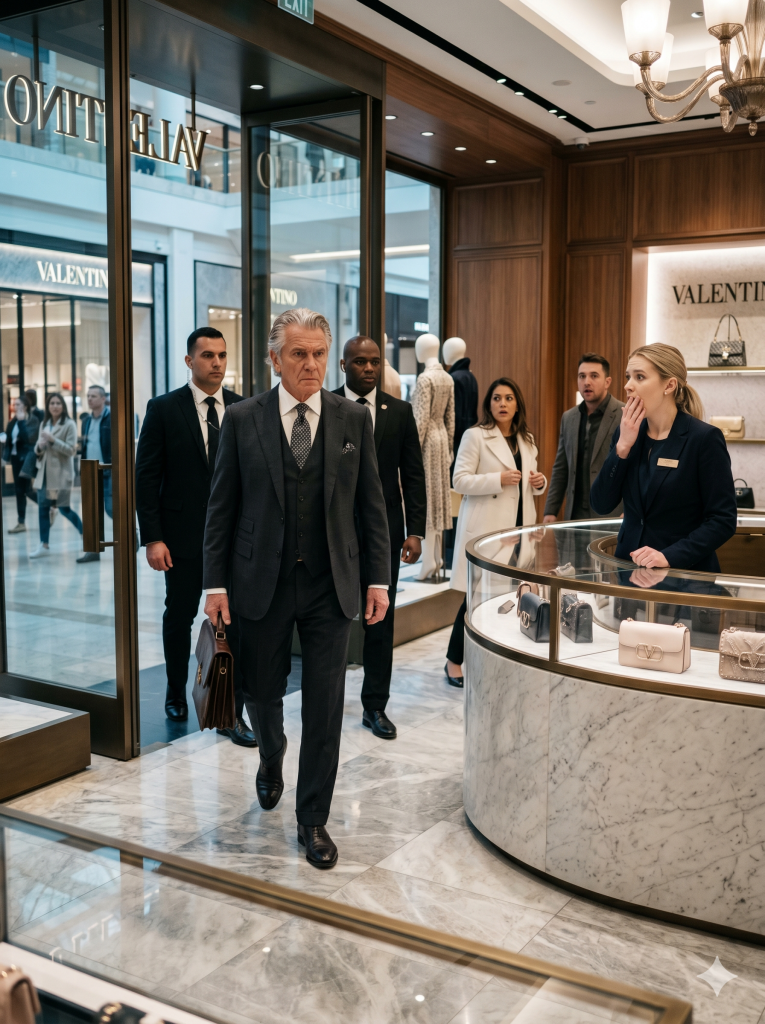
You could always tell when senior building security moved through Mercer Plaza. Not because they were loud, but because everything around them snapped into place too quickly. Shoulders squared. Radios crackled. Staff suddenly remembered their posture.
Three security officers stopped at the entrance.
Behind them came the general operations director.
Then the head of tenant relations.
Then Daniel Mercer himself.
He wasn’t a man who hurried often. That was what made his steady approach to the counter so unsettling. Calm. Precise. Controlled in a way that made even anger seem costly on him.
The entire store froze.
Vanessa’s face drained of color.
The manager stepped back once.
Julian slipped his phone back into his pocket.
“Thanks for coming,” he said.
His father glanced at him briefly, then at the display case.
“Which store?”
Julian gestured to the logo above the wall display.
“This one.”
The Son She Thought Wasn’t Worth Her Time
Daniel Mercer did not begin by asking what happened.
That was what truly unsettled them.
He turned to Vanessa.
“What did you say to him?”
Her mouth opened.
Closed.
She looked at the manager as if he might step in.
He didn’t.
At last, she forced out, “I—I didn’t know who he was.”
Daniel’s expression stayed the same.
“That is not what I asked.”
The entire store felt colder.
Julian leaned lightly against the counter and stayed silent. He didn’t need to speak. The room itself was speaking now. The staring customers. The hush. The security at the entrance. The sickened look on the manager’s face as he realized this was no longer a complaint.
It was an audit—with witnesses.
Vanessa swallowed hard.
“I told him… we don’t carry low-cost items.”
Julian spoke for the first time since Daniel arrived.
“She told me to try a kiosk downstairs,” he said. “Then she asked if I really thought I could afford anything here.”
A woman near the entrance raised her hand slightly.
“I heard that,” she said.
Another customer nodded. “So did I.”
The manager looked like he wanted the floor to open beneath him.
Daniel turned to him.
“And you?”
The man straightened on instinct.
“I was informed there was a disruption.”
Julian’s tone remained calm.
“You said they reserve the right to refuse service when appropriate.”
The manager fell silent.
That was answer enough.
Daniel looked to his operations director.
“Pull the complaint history for this tenant.”
The director was already working on her tablet.
She frowned within seconds.
“There are seven customer complaints in the last three months involving profiling, refusal of service, and discriminatory language.”
Julian briefly closed his eyes.
Of course there were.
Places like this rarely humiliate only once.
Vanessa started to tremble.
The manager made one last attempt.
“With respect, Mr. Mercer, this was a misunderstanding.”
Daniel turned fully toward him.
“No,” he said. “A misunderstanding is confusing a ring size. This was contempt.”
The Store That Failed the Test It Didn’t Know It Was Taking
Julian could have ended it right there.
Public humiliation.
Firings.
A story for the crowd to carry with them to dinner.
But the truth was harsher, and he understood that.
He hadn’t only come to buy a ring that day.
He had come because of the complaints.
Not officially, not with a clipboard or a legal team—but quietly. Privately. The kind of visit his father had taught him to make if he ever wanted to see what a business really was when the door opened to the wrong shoes.
The ring had been genuine.
The test had been too.
He straightened and looked at the manager.
“How many customers have you decided weren’t ‘appropriate’ for this store?”
The man said nothing.
Julian continued.
“How many women in work uniforms?”
“How many older couples asking for repairs instead of diamonds?”
“How many men who looked like they saved for months just to buy one honest thing?”
Still nothing.
The silence itself became an answer.
Daniel turned to the director beside him.
“Freeze their POS access. Lock inventory movement. Pull camera footage for the last thirty days and every complaint record tied to this location.”
The manager actually stumbled a step forward.
“You can’t shut us down over one conversation—”
Daniel didn’t raise his voice.
“Watch me.”
There it was.
The store’s fate, decided in a single sentence.
Security moved immediately. One officer stepped behind the counter. Another took position by the office door. The operations director called legal.
Vanessa began to cry then.
Not from regret.
From fear.
“I’m sorry,” she said, now looking at Julian. “I didn’t know.”
Julian held her gaze.
“That’s the whole problem.”
Because the people who humiliate strangers in public almost always reach for the same excuse afterward.
They didn’t know.
They didn’t know the person mattered.
Didn’t know they had money.
Didn’t know they had power.
Didn’t know they were connected.
As if dignity were a privilege unlocked only by status.
Julian had no patience left for that kind of apology.
The Ring He Bought Anyway
When the paperwork began and the tenant owners started calling from wherever they had disappeared, Julian finally turned back to the display.
The white-gold band still rested there beneath the lights.
Quiet.
Unassuming.
Exactly right.
He pointed to it.
“I’d still like to see that ring.”
No one moved for a brief second.
Then Daniel himself asked the operations director to open the case.
She did, carefully, as if the room had become ceremonial.
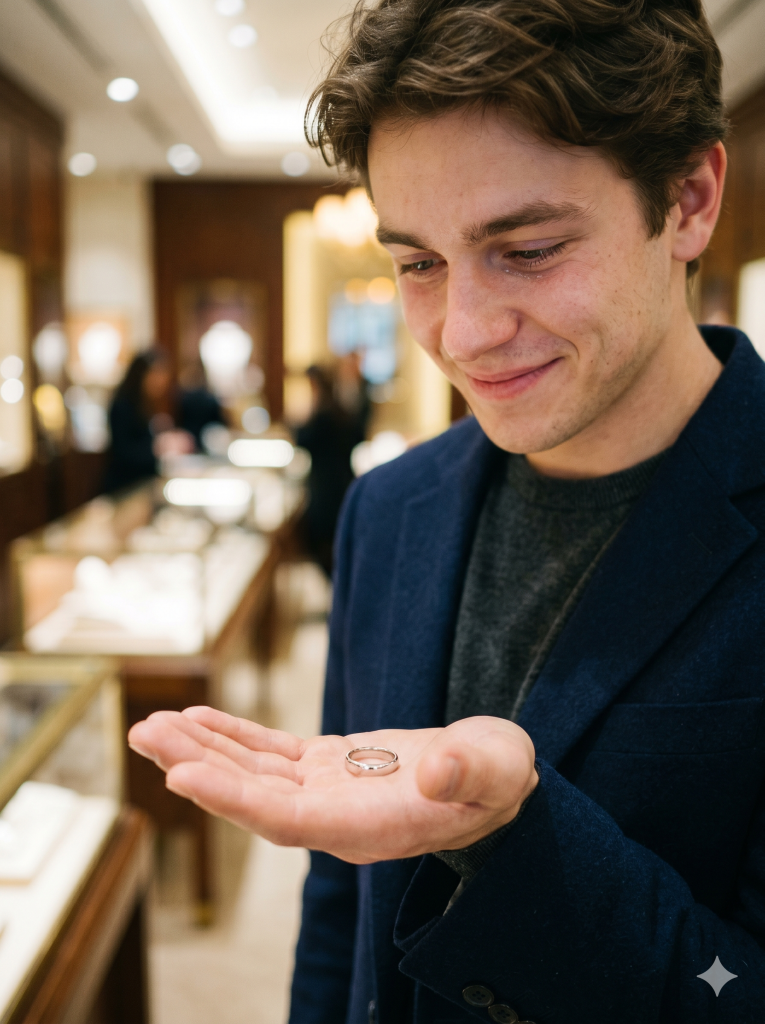
Julian took the ring in his hand and smiled for the first time since he had walked in.
Simple.
Solid.
No pretense.
He turned it once between his fingers and pictured Nora’s face when she would ask if he’d found the one.
“Yes,” he said softly. “This is it.”
Daniel watched him for a moment, then said, his voice only slightly softer than before, “Good choice.”
Julian let out a quiet laugh.
“She’d hate anything louder.”
A few customers smiled despite everything.
The woman who had first spoken up wiped at her eyes.
Maybe because the cruelty had been public, and the correction was too.
Maybe because watching someone choose tenderness after humiliation feels like its own kind of justice.
Julian looked at the ring again.
Then at the silent, frozen store.
Then back at his father.
“Can I buy it somewhere else?”
Daniel’s mouth twitched.
“Yes.”
He turned to the operations director.
“Comp the ring. Charge it to tenant liability recovery.”
Julian shook his head at once.
“No.”
Everyone looked at him.
He placed his card on the counter.
“I’m paying for my wedding band,” he said. “I just won’t be buying it from people who think love has a dress code.”
That line stayed with the witnesses the longest, if the gossip that followed was any measure.
Not the shutdown.
Not the tears.
Not even Daniel Mercer walking through his own mall like judgment wrapped in a winter coat.
That line.
Because it named the ugliness plainly.
What Happened After
The store never reopened under that name.
The lease was first suspended for review, then ultimately terminated after the complaint history, footage, and additional customer statements confirmed the pattern. More stories came forward once people realized someone was finally paying attention.
A janitor’s wife who had been ridiculed for bringing in her late husband’s ring to have it resized.
A bus driver turned away while trying to buy an anniversary band.
A teacher told the store “specialized in investment pieces” after asking for something within her budget.
It was never about a single clerk.
It was a culture.
And once it was exposed, it could no longer hide behind marble and glass.
As for Julian, he presented the wedding band to Nora that evening over takeout noodles at a kitchen table still covered in seating charts.
She took one look at his face and asked, “What happened?”
He told her.
Everything.
She listened in silence, then turned the ring in her palm and said the only thing that mattered:
“I’m glad you still bought the simple one.”
He laughed.
“So am I.”
Then she looked at him with that disarming honesty she carried like a lantern and added, “And I’m glad they showed you who they were before they wrapped our marriage in one of their little velvet boxes.”
She was right.
In the end, that was the real story.
Not that a rude clerk mocked the wrong man.
Not that a mall owner’s son had the power to shut down a luxury store.
Not even that security showed up, managers panicked, and everyone who had sneered had to watch the hierarchy flip in real time.
The real story was smaller.

A man walked in wearing jeans to buy a ring that meant forever.
A clerk looked at his clothes and decided he didn’t belong near the glass.
And a business that had forgotten how to recognize sincerity when it walked through the door lost everything because of it.
By the time Julian slipped the band onto his finger at the wedding two months later, no one in the room knew or cared what it had cost.
Only what it meant.
