

The front door slammed open, bringing in a wave of hot air and the low rumble of motorcycle engines. Heavy boots struck the wooden floor, mixed with the clink of chains and the creak of leather. The mood in the bar shifted instantly. Conversations cut off. Pool cues froze mid-shot, and several patrons suddenly focused intently on their drinks.
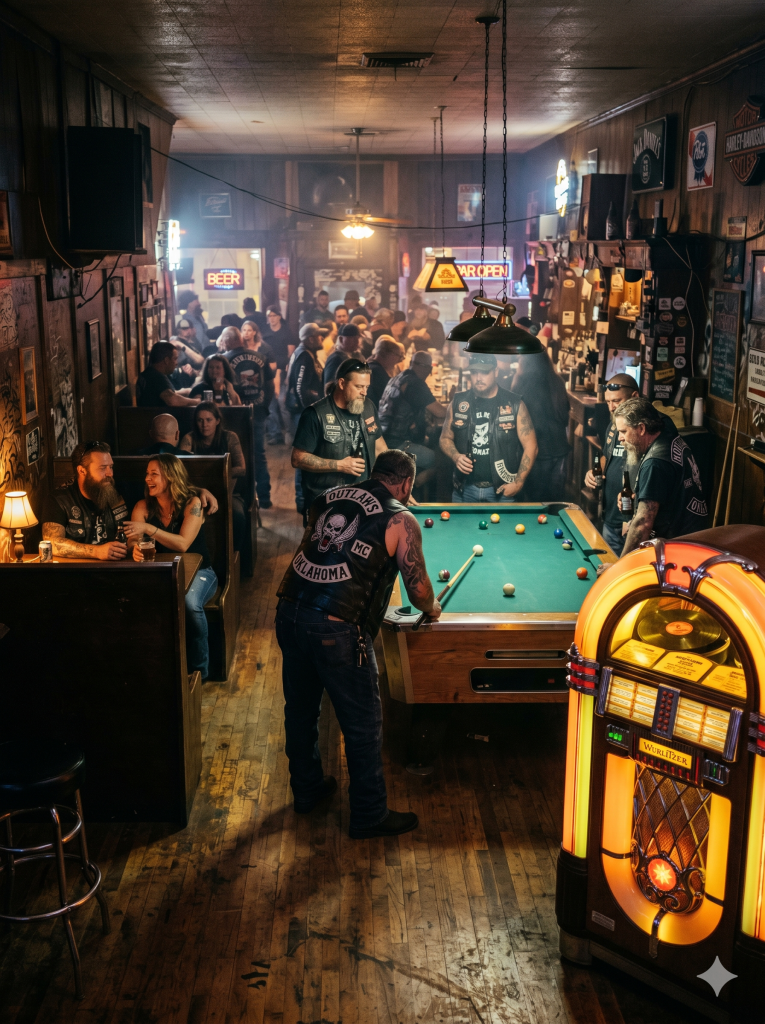
In the mirror’s reflection, Nadia saw five men walk in. Their leather cuts identified them as members of the Iron Dogs MC, the local motorcycle club that dominated illegal activity across three counties. Their leader, Ray “Bulldog” Maddox, stood out in front—taller than the rest, his massive build taking up more space than it needed to.
Nadia had studied his file during her first week in town. Three arrests for assault, suspected involvement in drug trafficking, but no convictions. The local authorities’ hesitation to press charges told her everything about how deep corruption ran here. She took another sip of whiskey, her expression calm, as the jukebox switched to a Merle Haggard song about outlaws—the irony wasn’t lost on her.
The bartender had retreated to the far end of the bar, suddenly busy polishing already clean glasses. The bikers took over their usual table, their voices growing louder as they ordered their first round. Nadia could feel their eyes on her back but didn’t react. She had spent years mastering the ability to be present yet unnoticed, blending in while staying alert to every possible threat.
Her fingers traced the rim of her glass as she thought of similar moments across dozens of countries—different languages, different weapons, but the same underlying dynamics of power and intimidation. She had faced warlords and arms dealers, survived firefights and ambushes. This was familiar ground, even if the setting was different. “Hey, Bobby.”
Bulldog’s voice boomed across the bar. “Where’s that beer? Don’t make me come back there and pour it myself.” The bartender, Bobby, hurried over with their drinks, his hands slightly unsteady as he set the bottles down. Laughter burst from their table, sharp and mean. Nadia noticed how the other patrons seemed to shrink into themselves, trying to disappear. She checked her watch.
6:45 p.m. The shelter would be closing now. Mark and Sarah handling the evening routines she had taught them. Good kids, both of them—Army veterans trying to rebuild their lives. They reminded her of who she used to be, learning how to carry the weight of everything she had seen and done.
The noise from the bikers’ table grew louder. A chair scraped back, followed by heavy footsteps. In the mirror, Nadia saw Bulldog rise. His eyes locked onto her as he nudged one of his men, tilting his head in her direction with a smirk that promised trouble. His crew exchanged knowing looks, settling in to watch whatever spectacle their leader had in mind.
Ray “Bulldog” Maddox started toward the bar, his movement slow and predatory. His reflection expanded in the mirror as he approached, like a wolf sizing up what he assumed was easy prey. He had no idea the quiet woman in the white tank top had once led elite military units, that her calm exterior concealed years of combat experience and tactical training.
The space between them shrank with each heavy step. The jukebox shifted to a Hank Williams song as Ray drew closer. Nadia kept her eyes forward, tracking him in the mirror while maintaining complete stillness. She took another measured sip of whiskey, letting the warmth linger. Around her, patrons shifted uneasily, sensing what was about to unfold.
A couple near the door quietly paid their tab and slipped out before anything could happen. The pool players stopped entirely, cues hanging loosely in their hands as they watched their leader approach. Ray’s breath carried the sour scent of cheap beer as he neared. In the reflection, a wide, cruel grin spread across his face—the kind that had likely preceded countless acts of intimidation in this very bar.
The fluorescent lights glinted off the silver rings on his fingers—makeshift brass knuckles that had marked more than a few faces. “Well, well,” Ray drawled loudly enough for his crew to hear. “What do we have here? Don’t usually see your kind in my establishment.” Nadia didn’t answer. She lifted her glass again, her movement smooth and controlled.
Her peripheral vision tracked everything while she appeared focused only on her drink. Years of training had taught her to read the smallest signals—the shift of weight before an attack, the tightening of muscles before a strike. Behind Ray, his crew had spread into a loose semicircle, ready to enjoy whatever their leader had planned.
They nudged each other, snickering under their breath. The bartender had retreated even farther, now pretending to organize bottles that didn’t need organizing. “Hey, I’m talking to you,” Ray said, stepping closer. His broad frame blocked most of the overhead light, casting a shadow across the bar.
“Ain’t you got any manners?” Nadia carefully set her glass down, perfectly centered on the coaster. Her fingers rested loosely around it—ready, but relaxed. She had been in this position before, not in bars but in compounds and safe houses around the world, waiting for the right moment while keeping absolute control.
Ray leaned against the bar, crowding her space on purpose. “Come on, sugar. Don’t be like that. We’re all friends here.” He glanced back at his crew, who laughed on cue. The sound bounced off the walls, harsh and hollow. The air grew heavy with tension. Even the jukebox seemed quieter, as if trying not to draw attention.
Nadia remained still, her breathing even. She could smell the leather of his vest, mixed with cigarettes and motor oil. “Maybe she’s shy,” one of the bikers called out. “Why don’t you help her loosen up, boss?” Ray’s grin widened, revealing tobacco-stained teeth. “Yeah, maybe that’s it. Just needs a little encouragement to be friendly.”
He shifted his weight, and Nadia registered the movement instantly, calculating angles and distance without appearing to move. Her muscles stayed loose but ready, like a coiled spring. Years of training had perfected that state of controlled readiness.
The next seconds stretched out. Ray’s arm drew back, his rings catching the light. His crew leaned forward, anticipating. The remaining patrons held their breath—some turning away, others unable to look. The slap landed hard against Nadia’s right buttock, the sound sharp in the quiet bar.
Ray’s laughter exploded, joined by hoots from his crew. He turned toward them, arms wide in triumph, expecting to see humiliation. Instead, Nadia moved. Years of close-quarters combat took over. Her body responded with fluid precision built from countless drills and real-world encounters.
In one seamless motion, she pivoted on the stool, her right hand snapping out to seize Ray’s wrist before he could pull away. Her grip found the pressure points between tendons, applying exact force learned in special operations. The movement seemed almost gentle—until it wasn’t.
She twisted his wrist at an angle that sent pain shooting up his arm, using his own weight and momentum against him. Ray’s eyes widened as his knees buckled. His size worked against him now, gravity dragging him down as Nadia maintained perfect pressure. He tried to fight it, but every movement only made it worse.
The bar went silent. The jukebox had paused between songs, leaving only Ray’s startled grunt as his knees struck the wooden floor. His crew stood frozen, their smirks gone, replaced by stunned disbelief as their leader was dropped by a woman they had dismissed as harmless.
Nadia leaned in, controlled and precise. Her lips hovered near his ear as she spoke in a voice carrying cold authority. “Touch me again,” she whispered, keeping the exact pressure needed to hold him still. “And you won’t be using that hand.”
The threat lingered in the air, made stronger by how quietly it was delivered. Everyone in the bar watched, transfixed. Their feared leader—the notorious Bulldog—brought to his knees by someone half his size. The silence held as Nadia released his wrist with the same control she used to take it.
He stumbled back, boots scraping the floor as he struggled to regain balance. His face flushed deep red, spreading down his neck beneath the leather vest. Ray clutched his wrist, rotating it carefully, checking for damage. His eyes flicked between Nadia and his crew, who now shifted uneasily.
The mighty Bulldog had fallen, and everyone waited to see what he would do next. “You—” he began, his voice shaking with anger and humiliation, his free hand clenched, rings glinting under the lights. Nadia turned back to the bar, deliberately showing him her back—a clear signal she didn’t see him as a threat.
She lifted her whiskey again with the same steady hand, studying the amber liquid as if nothing else mattered. One of Ray’s men, a tall, scruffy figure, stepped forward. “Boss, you want us to—” “Shut up,” Ray snapped, cutting him off, his voice cracking and betraying his authority.
The man stepped back, blending into the uneasy group. The jukebox kicked on again, this time with Lynyrd Skynyrd’s “Simple Man.” The familiar chords eased the tension slightly, reminding everyone they were still in a bar on an ordinary night. Some patrons returned to their drinks, though their eyes kept drifting back.
Nadia took another slow sip, savoring the whiskey. The golden liquid caught the light as warmth spread through her chest. Her posture stayed relaxed but ready, prepared for any foolish retaliation. Behind her, Ray’s breathing was heavy and uneven.
She could hear him shifting, torn between anger and uncertainty. His crew murmured, their usual bravado replaced by hesitation. The bartender edged closer, sensing the danger had passed, busying himself wiping the same spot repeatedly.
Nadia set her empty glass down with a soft clink. She reached into her pocket, placing a crisp $20 bill beside it with calm precision. Ray found his voice again. “You think you can just—” “Your tab’s covered too,” Nadia cut in, adding another 20 without turning.
Her voice carried clearly. A few nearby patrons couldn’t hide their snickers. Something in Ray snapped. His face twisted with rage, veins rising along his neck. “You uppety— Don’t—” Nadia cut him off again, finally turning to face him.
Her eyes met his, steady and unshaken. Something in that gaze made him step back slightly. “You really don’t want to finish that sentence.” The bar held its breath. His crew looked between them, unsure how to react. The usual pattern of intimidation had completely fallen apart.
Nadia stood, her movements calm and controlled. She adjusted her tank top, then smoothed her ponytail back into place. Everything about her projected quiet authority. “Get her!” Ray suddenly shouted, desperation tightening his voice—but his crew hesitated, exchanging uncertain looks.
They had seen what she’d done with one hand. None seemed eager to test her. Nadia walked toward the door, her pace steady. The crowd parted, giving her space. Some nodded as she passed; a few even smiled. She had shown them something new—someone standing up to Bulldog and walking away.
Ray’s face twisted into a snarl. “This ain’t over!” he shouted after her. “You hear me? You’ll regret this!” Nadia pushed the door open, letting cool night air rush in.
The parking lot lights cast long shadows across the gravel. Crickets chirped in the darkness. She paused, scanning the area instinctively—checking sightlines, noting cover, identifying threats.
Motorcycles and pickup trucks filled the lot, their surfaces dulled under yellow lights. Nothing moved except moths circling and a scrap of paper skittering across the ground. Ray’s voice followed her outside, still shouting, but it lost its edge in the open air, fading into background noise.
Nadia walked to her car, keys already in hand. Her dark blue sedan waited exactly as she had left it. She unlocked it and slid inside, the leather seat familiar and steady.
Her car purred softly as she turned onto her street, headlights sweeping across familiar houses. The neighborhood was quiet—modest homes, trimmed lawns, flags hanging from porches, the occasional bicycle left in a driveway. She had chosen this place for its normalcy, somewhere to blend in and start over.
The dashboard read 10:47 p.m. A few windows still glowed with TV light, but most were dark. Mrs. Peterson’s cat watched from the window next door, its eyes reflecting green in her headlights.
Nadia pressed the garage opener, then paused. Something felt off. Training told her to trust that instinct. She left the car idling. The security light flicked on, revealing what her headlights had missed.
Bright red letters sprayed across her garage door, paint still dripping. “You’re dead.”
Her jaw tightened, just slightly. The message was crude, meant to frighten—but it only stirred a cold, focused anger. Not the kind that clouds judgment, but the kind that sharpens it.
Nadia stepped out, boots quiet on the concrete. The air carried the scent of grass and fresh paint. A dog barked in the distance, then stopped. She approached the door, scanning carefully.
The letters were rushed, uneven—done recently. Likely within the hour. Whoever did it probably used a motorcycle, given the timing and who she had dealt with.
Mrs. Peterson’s porch light flicked on. “Nadia, is everything all right, dear?”
“Everything’s fine, Mrs. Peterson,” Nadia called back evenly. “Just some kids with spray paint. Nothing to worry about.”
“Oh, those hooligans. Should I call the police?”
“No need. I’ll take care of it.”
She waited until the light went off before stepping closer. The paint was cheap. She ran her fingers across it—still tacky. Red stained her fingertips, the same shade as emergency chem lights from combat zones.
A motorcycle engine sounded in the distance, then faded. Her muscles tensed, but she stayed outwardly calm. Normalcy was its own kind of armor.
At the front door, she checked small details—the position of the mat, a nearly invisible thread across the frame, marks on the handle. Nothing disturbed.
Inside, she moved through her routine with precision. Back door locked. Windows secure. Phone charged. Curtains drawn. Water poured.
The kitchen was spotless. Everything in place. Control what you can control.
She sat at the table and opened a hidden drawer, retrieving a small carved wooden box—a gift from her late husband. Inside, her Delta Force medals rested in dark velvet, catching the light.
She rarely looked at them. They belonged to another life. But tonight, they reminded her what she was capable of.
The red message wasn’t just a threat. It was a challenge.
Nadia wiped her stained fingers on her jeans, leaving streaks of red. Her expression stayed neutral, but her eyes sharpened.
The next morning, sunlight stretched across Main Street as she pulled into the sheriff’s department. The building was worn, the patrol cars dusty.
Inside, fluorescent lights buzzed overhead. A young deputy looked up from a crossword, his expression shifting as she approached.
“Can I help you?” he asked, straightening up slightly. “I need to file a report,” Nadia replied, her tone steady and professional. “Is Sheriff Wilks available?” The deputy picked up his phone, muttered a few words, then gestured toward a line of hard plastic chairs along the wall. “Have a seat. He’ll be with you shortly.”
Nadia sat, her back straight, hands resting in her lap. The walls were lined with faded wanted posters and outdated community notices. A clock ticked loudly, each second dragging. Twenty minutes passed before heavy footsteps echoed from the hallway. Sheriff Cal Wilks appeared in the doorway of his office.
His uniform stretched tightly over his large frame, his badge catching the fluorescent light as he shifted—a flash of gold matching the signet ring on his thick finger. He didn’t smile as he motioned for Nadia to come in. “What brings you in today?” Wilks asked, lowering himself into a creaking desk chair.
His office was cluttered with paperwork, empty coffee cups, and hunting trophies mounted on the walls. A deer head stared down with glassy eyes, frozen in a permanent look of surprise. Nadia sat across from him, noting the chair was slightly lower than his—a subtle power move she had seen many times before.
“Someone vandalized my property last night,” she said. “Sprayed threats on my garage door.” Wilks picked up a pen, spinning it between his fingers. “Threats, you say. What kind of threats?”
“Death threats,” Nadia answered, along with racial slurs. “The paint was still wet when I got home.”
“Uh-huh.” Wilks scribbled something on a notepad. “Any idea who might have done this?”
“Yes,” Nadia said. “Ray Maddox and his crew from Bulldog’s Den. There was an incident at the bar last night.”
“Oh,” Wilks cut in, raising an eyebrow. “What kind of incident?”
Nadia recounted what happened, keeping her voice neutral and factual. As she spoke, she noticed Wilks growing increasingly dismissive, his pen tapping impatiently against the desk. “So, you put hands on Mr. Maddox?” he asked, stressing the word you in a way that made his bias clear.
“I defended myself against sexual assault,” Nadia corrected firmly. “And now I’m being threatened.”
Wilks leaned back in his chair, which groaned under his weight. “Sounds to me like you might have overreacted. Ray’s a good old boy. Just having some fun. No need to make a federal case out of it.”
“A good old boy who assaulted me and then vandalized my home with death threats,” Nadia said, her voice calm but edged. “I want to file a formal complaint.”
The sheriff let out a heavy sigh, as if she were being unreasonable. “Look, Miz…” he glanced down at his notes, “…Carter, this is a small town. We handle things differently here. Less paperwork, more understanding—if you know what I mean.”
“I know exactly what you mean,” Nadia replied. “But I still want to file that complaint.”
Wilks’s expression hardened. He pulled out a form and began filling it out slowly, almost deliberately dragging the process. “Address?”
Nadia gave her information, watching as he intentionally misspelled her street name.
“And you say this happened when exactly?”
“Last night, between 10 and 11 p.m.”
“Funny,” Wilks said without looking up. “Nobody else reported seeing anything suspicious in that neighborhood.”
“The paint was still wet,” Nadia repeated. “I have photos on my phone.”
“Well, you know how these things go,” Wilks said in a patronizing tone. “Hard to prove who did what. Could’ve been anyone. Kids, maybe. Or…” he paused deliberately, “…you could have done it yourself for attention.”
Nadia’s expression didn’t change, but her voice turned cold. “Are you suggesting I spray-painted death threats on my own garage door?”
“I’m not suggesting anything,” Wilks replied, raising his hands in mock innocence. “Just considering all possibilities. That’s police work, ma’am.”
“Will you investigate or not?” Nadia pressed, leaning forward slightly.
The sheriff’s thin layer of professionalism cracked. His lips curled into a sneer, his eyes narrowing. “Maybe if you people knew your place, this wouldn’t happen.”
The words lingered like poison in the air. Nadia rose slowly, her movements controlled. The fluorescent light flickered overhead, casting uneven shadows across Wilks’s face as he looked up at her with open contempt. Without another word, she turned and walked out.
Her boots clicked against the linoleum floor, each step deliberate. The young deputy at the front desk quickly looked down at his crossword, pretending not to hear. Outside, the morning sun felt harsh, the air thick with humidity. Nadia walked to her car, aware of Wilks watching from his office window.
The system she had once served and protected had just made one thing clear—she was on her own.
The veteran shelter sat in an old brick warehouse at the edge of town, its worn exterior softened by window boxes filled with bright marigolds. Inside, sunlight streamed through tall windows, lighting a clean but well-used common area where a dozen veterans gathered over coffee and conversation.
Nadia pushed open the heavy door, greeted by the familiar scent of coffee and wood polish. The tension from her encounter with Sheriff Wilks eased slightly as she stepped into the space. Here, at least, she could make a difference.
“Morning, Sergeant Major.” Marcus Hill’s voice carried across the room.
He stood by the coffee station, tools spread around a dismantled coffee maker. His dark hair was slightly messy, and his T-shirt already bore a grease stain despite the early hour.
“Just Nadia here, Marcus,” she replied with a faint smile. “How’s our patient doing?”
Marcus gestured at the scattered parts. “Terminal case of calcium buildup, but I think we can save her.”
His hands moved confidently, steady from years of mechanical work in the military. Nadia pulled up a chair beside him, studying the disassembled machine.
“Reminds me of field-stripping an M4,” she said, picking up a clogged filter basket. “Except this one fights back with hot water.”
Marcus chuckled, rubbing a phantom burn. “Already got me once this morning.”
They worked side by side as Marcus explained each step, cleaning and reassembling the parts. Other veterans drifted by, offering jokes and stories about terrible coffee. The atmosphere was light, almost therapeutic.
“Pass me that descaling solution,” Marcus said, pointing to a blue bottle. “This thing’s got more buildup than a forward operating base porta-potty.”
Nadia handed it over, laughing. “That’s an image I didn’t need this morning.”
“Speaking of things we don’t need,” Marcus added, lowering his voice slightly. “How are you holding up? Word travels fast in a small town.”
Nadia’s hands paused briefly. “News travels fast, I see.”
“Pete from the gas station saw everything at Bulldog’s,” Marcus said, focusing on scrubbing a stubborn piece. “Said you handled it like a pro.”
“I handled it,” Nadia replied simply.
They continued in silence for a while, tools clicking softly, conversation murmuring in the background. The coffee maker slowly came back together under Marcus’s skilled hands.
“You know what I miss sometimes?” Marcus said, reconnecting the water lines. “The certainty. In the Army, you knew who had your back. Out here…” He trailed off.
Nadia nodded. “The rules are different here. But the principles stay the same. We still look out for each other.”
Marcus smiled. “That we do.” He flipped the switch, and the machine hummed to life. “Hear that? Purring like a kitten.”
A small cheer went up nearby. Marcus poured a cup and handed it to Nadia. “First test subject.”
She took a sip and nodded. “Definitely better than the motor oil we had before.”
The morning passed peacefully as Nadia checked in with veterans, helped with paperwork, and offered quiet encouragement. This was why she had chosen this place—helping others find their footing again.
Around mid-morning, Marcus approached her again, his earlier energy replaced by concern. “Hey, Nadia, can we talk for a minute?”
She followed him to a quieter corner, noting the tension in his posture. “What’s on your mind?”
Marcus glanced around before speaking in a low voice. “I was here late last night finishing some maintenance. Saw something that didn’t feel right.”
Nadia waited as he gathered his thoughts.
“There were bikers,” he said. “Three of them on Harleys. They circled the block four times, slow, watching the shelter. I recognized one from Bulldog’s crew.”
The warmth of the room seemed to fade as Nadia processed the information. Her expression hardened, though her voice remained calm. “What time?”
“Around 11:00. I was locking up when I noticed them.” Marcus shifted uneasily. “They weren’t just passing through. They were watching—studying the place.”
Nadia’s mind immediately assessed the shelter’s weaknesses—old locks, no cameras, ground-floor windows. Too many entry points, not enough exits.
“Did they see you?”
Marcus shook his head. “Stayed in the shadows. Old habits.”
“Good instincts,” Nadia said.
She looked around at the veterans going about their routines—some still struggling, others rebuilding their lives. All of them vulnerable.
“I didn’t want to worry you,” Marcus added. “But after what happened at the bar, I thought you should know.”
Nadia placed a hand on his shoulder. “You did the right thing. Thank you.”
They stood quietly for a moment, the hum of the coffee maker in the background. Marcus cleared his throat. “What do you think they want?”
Nadia’s expression remained controlled, but her eyes sharpened with focus. Ray wasn’t just targeting her anymore—he was expanding to the people and places she cared about.
By evening, long shadows stretched across the shelter parking lot as Nadia and Marcus worked through closing tasks. She checked the supply closet locks while he emptied coffee grounds and wiped down the counter.
“You don’t have to stay late,” Nadia said, watching him carefully clean the machine.
“I always do a thorough job,” he replied. “Besides, two sets of eyes are better than one.”
The shelter felt different at night—less welcoming, more shadowed. Every window looked like a possible entry, every corner a hiding place. Nadia moved with practiced efficiency, clearing rooms instinctively. Marcus mirrored her, positioning himself to watch the approaches.
They worked in quiet coordination, communicating with small gestures.
“Last door,” Nadia said, pulling out the main keys. The parking lot lights flickered on, casting pools of yellow light.
A distant rumble of motorcycles broke the silence. Marcus stiffened, his hand instinctively moving as if reaching for a weapon. “That sounds like more than three.”
Nadia nodded. “Get inside the doorway. Good cover. Clear view.”
The sound grew louder, echoing off nearby buildings. Headlights appeared, sweeping across the lot. Five motorcycles roared in, riders hunched forward like predators.
Ray “Bulldog” Maddox led them, his bulky frame made larger by his vest. The bikes circled, kicking up dust and gravel, engines roaring.
“Stay cool,” Nadia said quietly. “Let them make the first move.”
The bikers formed a loose semicircle facing the entrance. Ray cut his engine first, the sudden silence almost more intimidating than the noise. The others followed, leaving only ticking engines and glaring headlights.
“Well, well,” Ray called out. “If it ain’t the uppety woman who thinks she can embarrass me in my own bar.” He swung off his bike. “And look—she’s got herself a pet monkey, too.”
Marcus stepped forward, but Nadia stopped him with a quick motion. “Easy. That’s what they want.”
The bikers spread out, chains and brass knuckles visible.
“This your little charity house?” Ray mocked. “Where you keep all the broken soldiers who can’t handle real life?”
“Private property,” Nadia said clearly. “You’re not welcome here.”
Ray spat. “Ain’t nothing private. This is my town.” He stepped closer. “And in my town, people show respect.”
His crew shouted slurs and threats. Marcus’s jaw tightened, but he held position.
“Last warning,” Ray growled, close enough for Nadia to smell beer on his breath. “Get on your knees and apologize, or we start tearing this place apart.”
Nadia didn’t move. “You know what your problem is, Rey? You confuse fear with respect.” She met his eyes. “I’ve seen real respect. Earned it. Given it. What you’ve got? It’s just people too tired to fight back.”
Ray’s face darkened. He lunged for her throat—but grabbed empty air. Nadia had already shifted.
“Don’t,” she said quietly.
The authority in her voice made him hesitate.
“You got lucky in the bar,” he snapped. “But there’s five of us now—and no cameras.”
Nadia stepped forward, placing herself between them and the shelter.
“You don’t want this fight,” she said.
Something in her calm stance made the others uneasy. They had expected fear—what they found instead unsettled them.
Ray glared, then turned sharply. “Let’s go,” he barked. “This ain’t over.”
The bikes roared back to life and tore out of the lot.
The next morning, sunlight filled the shelter as Nadia stood before a group of veterans gathered in the main room. About fifteen faces looked back at her—some curious, others cautious. Marcus sat up front, focused.
“I called you here because we need to talk,” Nadia said, her voice calm but firm. “Most of you know about the incident at Bulldog’s Bar. What you don’t know is that it’s escalated.”
“They’ve threatened the shelter—and that means they’ve threatened all of us.” Murmurs spread through the group. A few of the younger vets exchanged uneasy glances. “Look,” said Sarah Chen, a former Army medic who had been coming to the shelter for three months, “we all appreciate what you do here, Nadia, but maybe we should just call the police.”
“I tried,” Nadia replied, shaking her head. “The sheriff made it clear whose side he’s on. We’re on our own.” The room fell silent. These veterans understood what it meant to operate without backup, to face danger alone.
“But that doesn’t mean we’re helpless,” Nadia continued. She took out her wooden box—the one holding her medals—and placed it on a nearby table. “There’s something you should know about me. Something that might help all of us.”
She opened the box, revealing rows of decorations that made several veterans sit up straighter. Combat badges, distinguished service medals, and specialized qualification pins caught the morning light. “I served 20 years,” Nadia said, touching one of them. “Fifteen of those with Delta Force. I wasn’t just a soldier—I was a trainer. I taught elite operators how to survive when everything went wrong, how to protect themselves and others when they were outnumbered and alone.”
The energy in the room shifted. Veterans who had been slouched now sat upright, their eyes fixed on her with new respect.
“In the final years of my career, I focused on teaching small units how to handle siege situations—how to defend positions against larger forces.” Nadia looked around, meeting each gaze. “I can teach you those skills. Not for revenge, not to go on the attack—but to protect yourselves and this place we’ve built together.”
Marcus leaned forward. “You’re talking about self-defense training?”
Nadia nodded. “Simple techniques. Effective ones. Ways to control a situation without unnecessary force. Most importantly, how to work as a team—watching each other’s backs.”
“I’m in,” Marcus said immediately.
“Me too,” Sarah added, her earlier hesitation gone.
One by one, the others agreed. Even Tom Wheeler, a quiet Vietnam veteran who usually kept to himself, raised his hand.
“All right, then,” Nadia said, closing her metal box. “Let’s take this outside. The yard behind the shelter will work for what I want to show you.”
They stepped into the morning air. The yard was simple—a patch of grass with a few picnic tables—but it was private, enclosed by a tall wooden fence.
“First thing,” Nadia said, standing at the center, “forget what you’ve seen in movies. Real self-defense isn’t about flashy moves or dramatic fights. It’s about awareness, positioning, and simple techniques that hold up under stress.”
She demonstrated a basic stance. “Feet shoulder-width apart, knees slightly bent. This is your foundation. Balance is everything.”
“If someone grabs you, your instinct is to pull away. Instead, drop your weight and turn into them.” She called Marcus forward to assist. He reached for her arm as the aggressor.
In one smooth motion, she shifted, turned, and redirected his momentum, throwing him off balance. “See? No strength needed—just position and timing.” She helped him back up. “Now pair up. We’ll practice slowly.”
The veterans formed pairs, a bit awkward at first. Sarah worked with Jenny Torres, a former helicopter mechanic. Tom Wheeler partnered with Mike Collins, who had served in Desert Storm.
“Keep it gentle,” Nadia called, moving between them. “Focus on feeling balance points. Don’t try to muscle through it.”
At first, movements were stiff and uncertain. But gradually, something shifted. Bodies began to remember. Muscle memory returned. Laughter started to break out as they practiced.
“That’s it, Sarah—good pivot,” Nadia encouraged. “Tom, drop your weight a little more. There you go.”
As the morning wore on, Nadia introduced more techniques—how to break free from holds, create space when cornered, and fall safely if taken down.
“Remember,” she said while demonstrating a wrist release, “the goal isn’t to fight. It’s to create a chance to escape or call for help. No heroes, no unnecessary risks.”
Jenny, who had been quiet most of the morning, suddenly executed a perfect escape, sending Sarah stumbling back. Both women burst into laughter. “I didn’t think I could do that,” Jenny said, staring at her hands.
“You all can do more than you think,” Nadia replied. “That’s what today is about—remembering your strength, your training, your ability to protect yourselves and each other.”
The yard filled with movement and encouragement. Veterans who had arrived tense now moved with growing confidence. They shared tips, celebrated progress, and supported one another.
Tom Wheeler, who had barely spoken, finally broke free from a hold that had challenged him all morning. His distant expression softened into a small but genuine smile.
“Looking good, everyone,” Nadia called out, watching Marcus help Mike refine his stance. “This is just the beginning. We’ll keep practicing and improving.”
Sunlight now flooded the yard, reflecting off determined faces and proud smiles. These weren’t broken soldiers anymore—they were a community rediscovering strength, unity, and purpose.
That night, Nadia sat in her parked car two blocks from Bulldog’s Den, engine off and lights dark. The dashboard clock read 11:42 p.m. Over the past few days, she had noticed a pattern—every Tuesday, Ray’s crew gathered at the bar before heading out around midnight. Tonight, she was ready.
Dressed in dark clothing and boots, her hair tucked beneath a black cap, she carried a small backpack holding a camera with a telephoto lens—gear she hadn’t used since her surveillance days.
Right on schedule, motorcycles roared to life. Nadia counted eight bikes, with Ray’s chrome-covered Harley leading. They pulled onto the main road heading east.
She waited until they were half a block ahead before starting her car, keeping her lights off as long as possible. The old skills returned easily—timing turns, tracking taillights, maintaining distance without being seen.
The bikers moved through the quiet town before turning onto Industrial Drive. Old warehouses lined the street, most dark at this hour. They stopped at a gray building marked 1849.
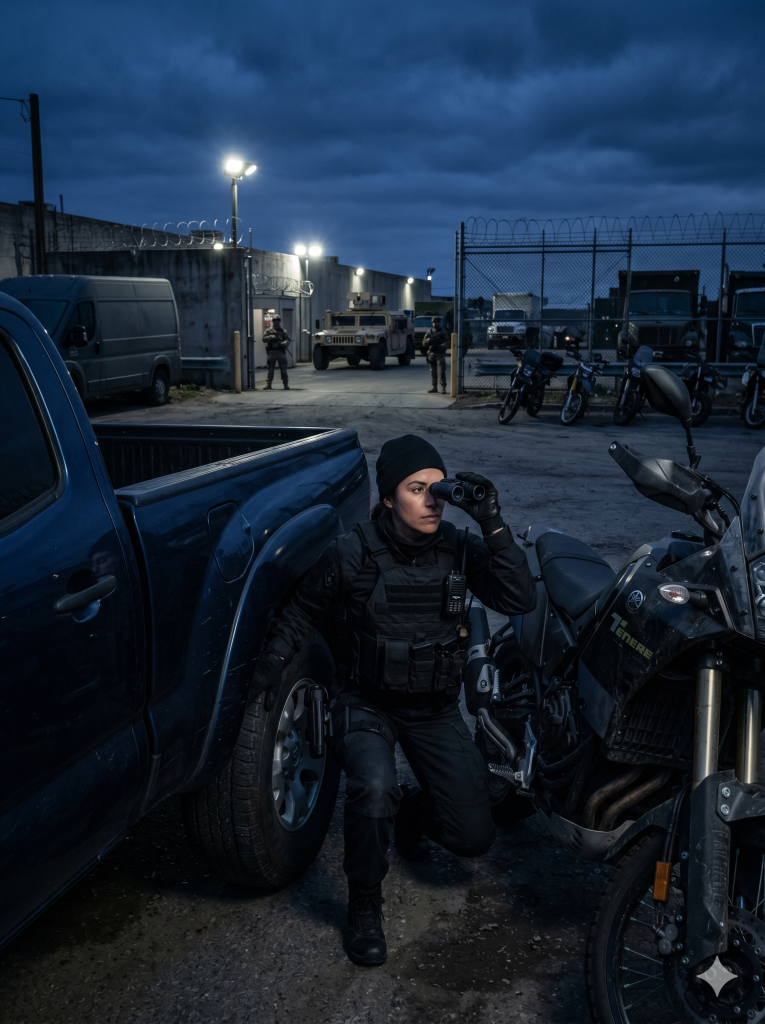
Nadia drove past slowly, noting the layout, then circled the block and parked behind an abandoned factory. Moving quietly, she grabbed her gear and slipped into the shadows.
A rusty fire escape on the next building caught her attention. She tested it—solid. With practiced movements, she climbed silently to the roof.
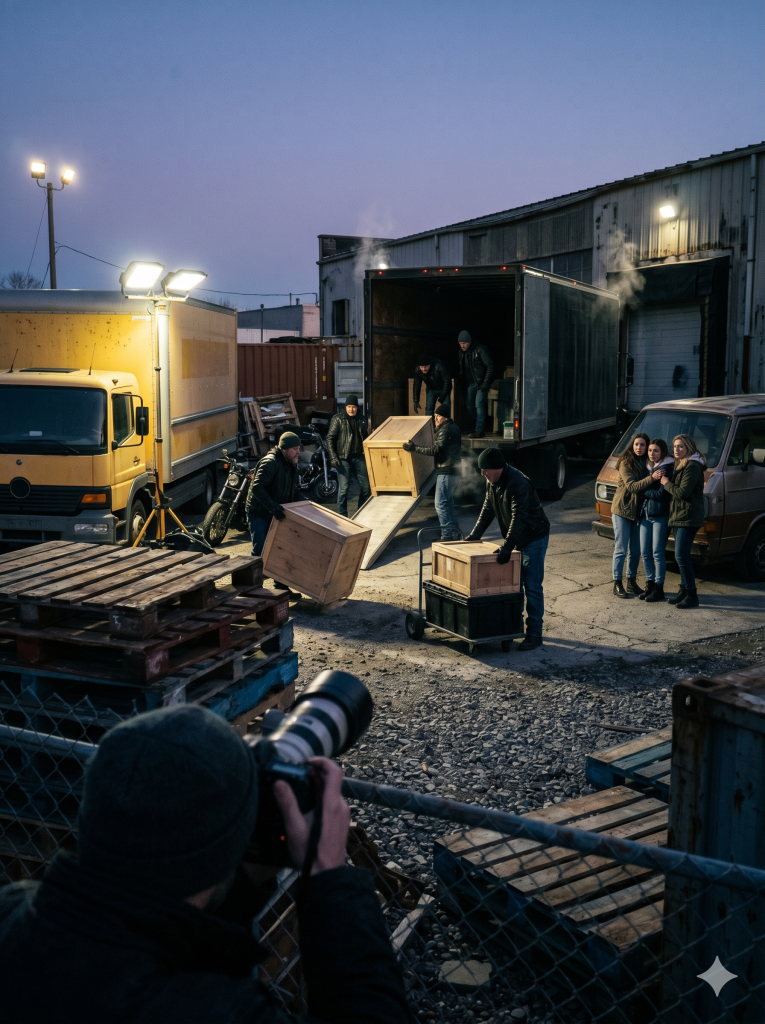
From there, she had a clear view of the warehouse loading dock. Below, Ray directed his men as they opened the doors. A box truck backed in, its engine humming softly.
Nadia set up her camera, adjusting focus in the dim light. Through the lens, she saw Ray shake hands with the driver. The dock light illuminated their faces.
Two bikers opened the truck, revealing stacks of boxes. Nadia pressed the shutter repeatedly, capturing every detail.
The men worked quickly, unloading the boxes inside. Ray supervised, checking his phone and scanning the street. He had no idea someone watched from above.
Nadia zoomed in. One box had split open, revealing tightly packed bags of white powder. She photographed the label—potential evidence.
Voices carried upward on the wind. “Price went up,” the driver said. “Suppliers getting nervous about the feds.”
“Tell him to relax,” Ray replied. “Sheriff’s in our pocket. Nobody’s looking too close around here.”
Nadia kept shooting. Ray counted out cash, handing it over. Faces, money, product—everything documented.
The operation lasted about 40 minutes. Nadia captured the truck’s license plate and clear images of each biker loading smaller packages. She even caught Ray entering a code—5-2-8-1-9—before locking up.
When they finally left, she waited ten minutes before climbing down. Back in her car, she reviewed the images. Clear. Damning.
She drove home carefully, checking her mirrors. The streets were empty.
Inside her garage, she closed the door before turning on the lights. She connected her camera to the printer and opened a hidden safe.
Photos printed one by one—Ray counting cash, boxes of drugs, faces, license plates, labels. A complete record.
She arranged them methodically. This wasn’t just documentation—it was evidence.
Placing everything in the safe, she considered timing. Move too soon, and Ray might escape. Wait too long, and more people could get hurt.
She closed the panel, hiding the evidence.
Before dawn, sirens shattered the silence, pulling her from sleep. Instinct took over instantly. She was already pulling on her boots when her phone buzzed.
A message from one of the veterans: Shelter on fire.
Her heart skipped—then she was moving, grabbing her keys and rushing out. The drive that normally took ten minutes felt endless.
Even as she pushed her sedan far past the speed limit, the glow of flames lit up the sky ahead, growing brighter with every block. When she turned the final corner, the sight struck her like a blow. Orange fire swallowed the veteran shelter, flames clawing upward into the night. Thick black smoke poured from shattered windows.
Two fire trucks were already there, firefighters dragging hoses into place. But what froze her blood was the scene in front of the building. Marcus lay on the ground, surrounded by other veterans. His right arm was raw and red, blisters already forming. Soot streaked his face as he coughed violently, struggling to clear his lungs.
Nadia rushed forward, dropping to her knees beside him. “Marcus, what happened?” Her hands moved automatically, checking his vitals like she had done so many times before.
“Ray… guys,” Marcus managed between coughs. “Threw something through the window. It exploded.” He winced as pain shot through his burned arm. “I was sleeping in the back office. Heard the glass break. Got everyone else out first.”
Other veterans stood nearby—some wrapped in blankets, others being treated for smoke inhalation. The shelter had been their home, their refuge. Now they watched it burn, their faces lit by fire and shock.
“How many were hurt?” Nadia asked, her voice steady despite the anger rising inside her.
“Just me, mostly,” Marcus said. “Got the worst pulling Jerry out. He’s got asthma—couldn’t breathe.” He nodded toward an ambulance where Jerry sat with an oxygen mask.
The heat pressed against them like a wall. Firefighters shouted orders as streams of water arced toward the flames, looking small against the blaze. The roof groaned. Nadia noticed Marcus shivering despite the heat—shock setting in. She removed her jacket and draped it over him carefully.
“The paramedics need to look at that burn.”
“In a minute,” Marcus said, gripping her hand tightly. “They were laughing, Nadia. When they threw it in—I heard them laughing.”
Her jaw tightened. She had seen that kind of cruelty before—men who believed they were untouchable, who took pleasure in destroying others’ safety. But this wasn’t a distant battlefield. This was home.
A crash echoed as part of the roof caved in. Sparks shot into the sky. The veterans flinched, the sound too close to memories they had tried to leave behind.
“Everything we built,” Marcus said, his voice breaking. “All the work—the counseling rooms, the workshop—it’s all burning.”
Nadia watched the flames consume the place she had devoted two years to. The kitchen, the common room, the small library—everything reduced to ash because Ray couldn’t handle being humiliated.
She thought of the photos locked in her safe, the evidence she had gathered. She had planned to act carefully, but Ray had changed the rules. He had crossed a line.
Marcus coughed again as a paramedic approached, but he held on a moment longer, locking eyes with her. “Don’t let them win,” he whispered. “We’re soldiers. We don’t let bullies win.”
The words hit hard. Nadia looked back at the burning shelter. Buildings could be rebuilt. Lives could not.
Her training took over, cold and precise. Ray had escalated to attempted murder. He had attacked not just her, but the people she had sworn to protect.
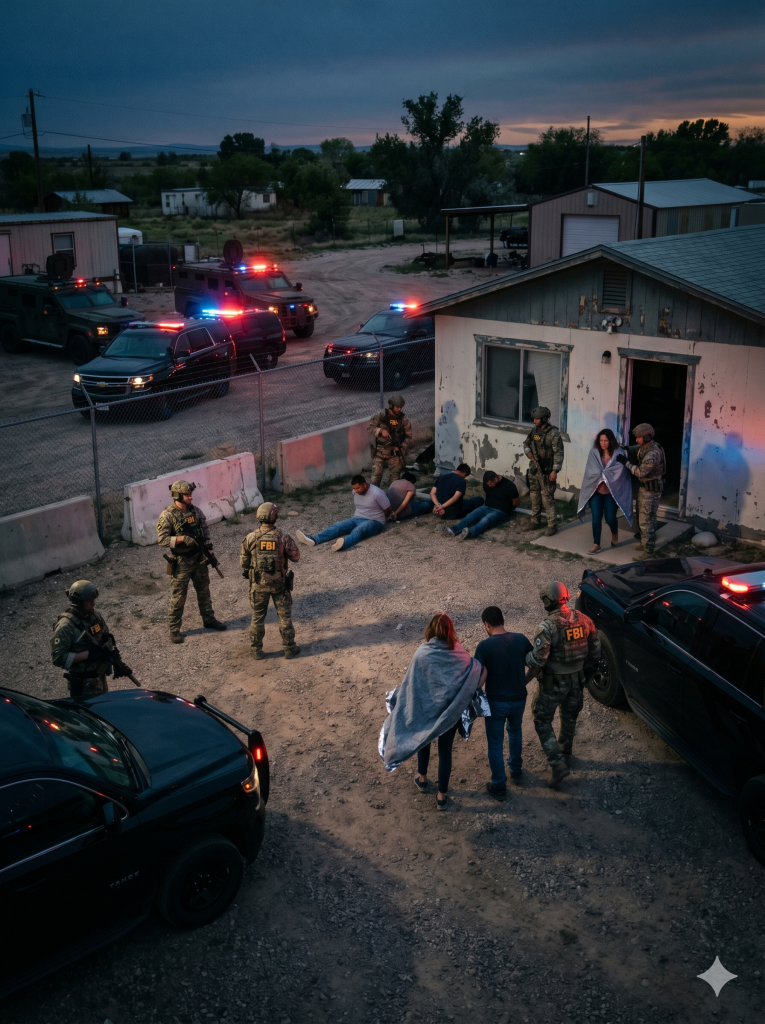
The fire reflected in her eyes as her resolve hardened. This wasn’t just defense anymore. It was about protecting her people, her mission. Ray had declared war—and he had no idea what that meant.
Marcus tightened his grip, recognizing the change in her expression. He had seen that look before—before major operations.
Nadia stayed beside him for a moment, sharing silent understanding.
Dawn broke over the ruins, painting the sky in soft pink and gold. Nadia stood among the wreckage, boots crunching over charred debris as she took in the damage. The air smelled of burnt wood and melted plastic.
Marcus stood beside her, his arm bandaged. He had refused to stay at the hospital.
Other veterans moved carefully through the remains, searching for anything salvageable. Some wore masks against the smoke; others used gloves to sift through debris.
“The photo wall,” someone said quietly.
Nadia turned to see Jerry holding the burned remains of a frame. It had once displayed photos of veterans who had rebuilt their lives here. Now it was ash.
Across the street, townspeople gathered in small groups, whispering. Everyone knew who was responsible—but no one dared say it. Ray’s influence hung over them.
“Found something,” Sarah called, stepping out from what had been the kitchen with a metal box. “Petty cash and documents—mostly intact.”
Small wins felt empty. Nadia moved through the wreckage methodically, assessing damage. The main beams still stood, but the roof was gone. Most walls had collapsed.
“Ma’am,” a young officer approached cautiously. “We’ll need your statement.”
“Save your ink,” Nadia said without turning. “We both know nothing will come of it.”
He shifted awkwardly but said nothing.
More veterans arrived as the morning went on. They came straight from work or home, still in civilian clothes but carrying themselves with discipline. Each face hardened at the sight.
“My tools,” Mike muttered, kicking aside a burned workbench. “All gone. Even my grandfather’s lathe.”
Nadia watched them—her people—sorting through what remained of their lives. The shelter had been more than a building. It had been healing.
Ray hadn’t just destroyed property—he had attacked that healing.
A news van arrived, but Nadia intercepted them. “No comments,” she said firmly. “This isn’t your story.”
The veterans worked together, forming teams without needing direction. Muscle memory took over.
Marcus stumbled while moving debris, his injury throwing off his balance. Three veterans rushed to steady him instantly.
“You should rest,” Nadia told him.
“Can’t,” he replied. “Not while there’s work to do, Sergeant Major.”
Others had begun calling her that too, falling back into old patterns.
Around noon, Mrs. Henderson from the diner arrived with coffee and sandwiches. “For your people,” she said softly. “And I’m sorry for staying quiet about Ray.”
More townspeople followed, bringing supplies. Fear was still there—but something else was growing. Resistance.
Nadia gathered the veterans near what had been the entrance. They formed a loose circle, instinctively creating a perimeter.
“Look around,” she said, her voice firm. “They thought this would break us—that we’d scatter and stay quiet.”
She gestured to the ruins. “But they forgot something.”
The veterans straightened.
“They forgot we’re trained to fight back. We understand tactics, strategy—and most importantly…” she paused, meeting their eyes, “…we know how to work as a unit.”
Marcus stepped forward. “What’s the plan, Sergeant Major?”
Nadia looked at the destroyed shelter, then toward the town beyond.
“We rebuild,” she said. Then her expression hardened. “But first—we take the fight to them.”
That afternoon, sunlight filled her dining room as maps and photos covered the table. Eight veterans gathered around, focused.
“Ray’s compound is here,” Nadia said, pointing to the map. “Three acres, fenced. Two main entrances, plus a hidden back gate.”
Marcus leaned in. “Security cameras?”
“Basic. Four visible—probably more hidden. But their weakness isn’t security—it’s routine.”
She laid out photos. “Every Tuesday and Friday at 4:00 a.m., shipments go out. That’s when they’re most vulnerable.”
Sarah studied the images. “That’s more than drugs. Those crates…” She pointed. “And those girls getting into the van?”
“Human trafficking,” Nadia said grimly. “They’re moving girls through here.”
The room grew colder. This was no longer just about revenge.
“We need evidence that sticks,” Mike said.
“Already working on it.” Nadia revealed a high-resolution camera. “I’ve been documenting them for weeks.”
Jerry pointed at the layout. “What about guards?”
“Three per shift. Rotating every two hours. By dawn—they’re sloppy.”
Nadia laid out plans, positions, and routes. “We’re not attacking. We’re gathering evidence. Making them careless.”
“What about weapons?” someone asked.
“Defensive only. No firearms,” she said firmly. “We’re citizens—not soldiers.”
She handed out cameras and radios. “These are our tools now.”
They nodded. They understood.
“We move at dawn,” Nadia said. “Be in position by 0400.”
They prepared quietly, focused.
At first light, they moved. Eight figures slipping through mist toward Ray’s compound.
“Camera one in position,” Marcus whispered.
“Copy,” Nadia replied.
She watched through night vision as a guard slouched at the gate, distracted by his phone. Exactly as expected.
“Execute,” she said.
Mike disabled the cameras. Jerry’s team quietly sabotaged the motorcycles. Marcus confirmed surveillance positions.
Everything unfolded smoothly.
Nadia felt the calm of a mission in motion. Identify. Disable. Document.
Just like before—but this time, the battlefield was home.
The guard’s phone buzzed with a notification. He got up, stretched, and headed toward the back door of the compound—likely a bathroom break, another routine Nadia had anticipated. “Moving to phase two,” she whispered. Sarah and Mike slipped through the darkness toward the building’s electrical panel. The blackout had to be perfectly timed—too soon would raise suspicion, too late would cost them critical evidence.
Inside, activity picked up. Voices grew louder as the crew began their shift. Engines rumbled, and metal doors screeched open. “First truck moving to dock,” Marcus reported quietly from his concealed position, his camera snapping images of faces and license plates.
Nadia edged closer, using parked vehicles as cover. Through the gaps, she saw Ray barking orders in the dim early light. “Move it, you lazy bastards. We’re behind schedule.” More bikers emerged carrying crates, some escorting frightened young women under the harsh lights.
Sarah’s sharp breath crackled over the radio—seeing trafficking victims in person was far different from viewing photos. “Stay focused,” Nadia reminded them. “Document everything.” Cameras clicked softly from multiple angles, capturing every movement. Evidence accumulated with every passing second.
Ray prowled between the trucks, shoving anyone who lagged. His confidence was absolute—why wouldn’t it be? He believed he owned the town. “Package loaded,” a biker called. “Ready to roll.”
That was the signal. Nadia touched her radio. “Cut the power now.”
Darkness swallowed the compound. Shouts erupted as confusion spread. Flashlights flickered on, beams cutting through the chaos. “What the hell?” Ray roared. “Get those lights back on!” But when engines were turned, nothing happened—Mike had disabled more than just the power.
Panic replaced confusion as bikers realized their motorcycles wouldn’t start either. Jerry’s team had made sure of that. There would be no easy escape. Ray’s furious voice echoed through the compound. “Find out what’s happening now!”
Nadia moved like a shadow, her team spreading into position. Years of night operations made the darkness their advantage. Emergency lights flickered on, casting a sickly yellow glow. In that dim light, Ray spotted her standing calmly at the center of the loading dock. Rage twisted his face.
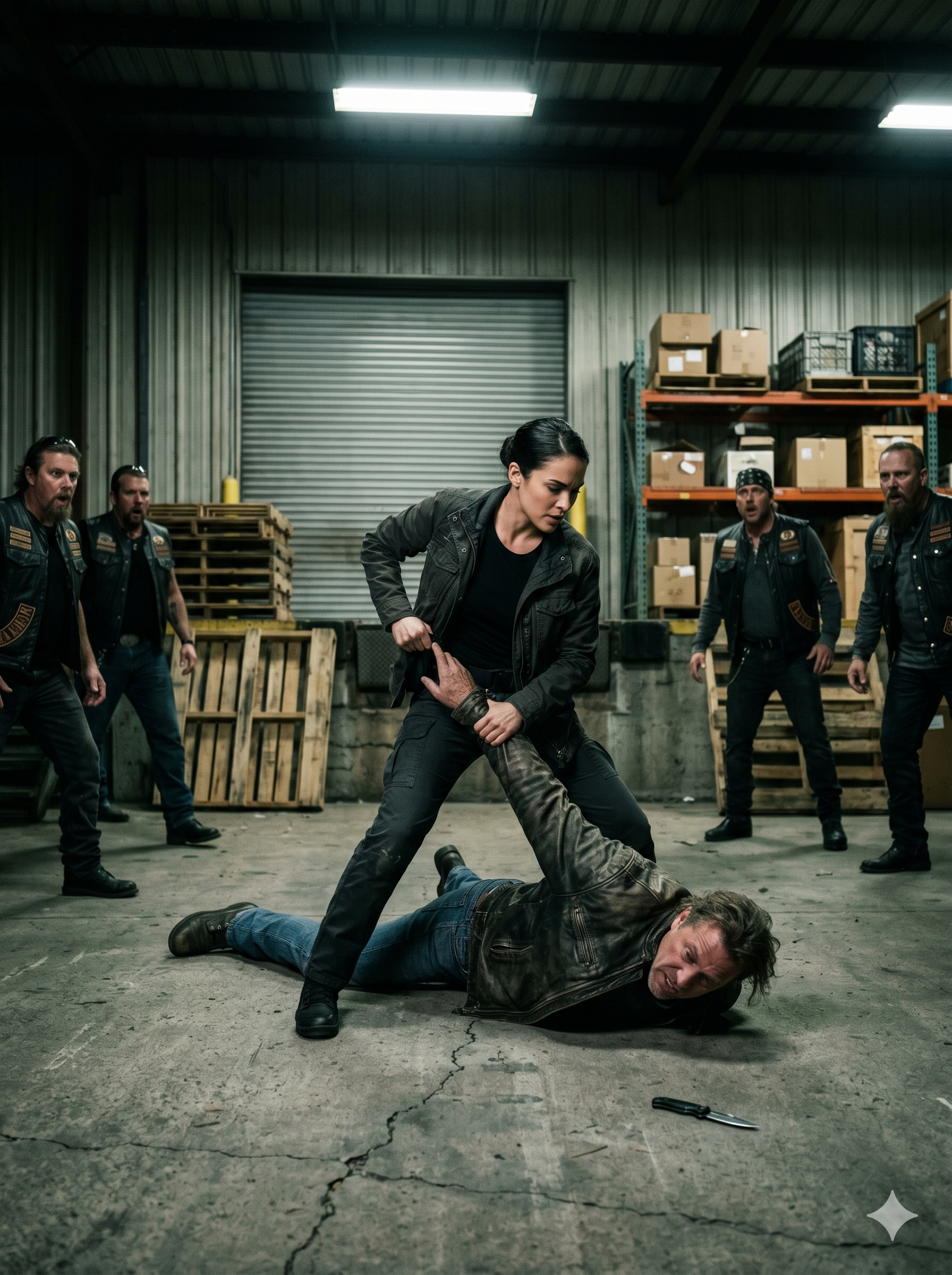
“You.” He pulled a hunting knife. “I’ll gut you myself.”
His crew formed a loose circle, eager for violence—but none stepped forward. This was his fight.
Nadia stood still, relaxed. “Last chance to surrender, Ray. Make it easier on yourself.”
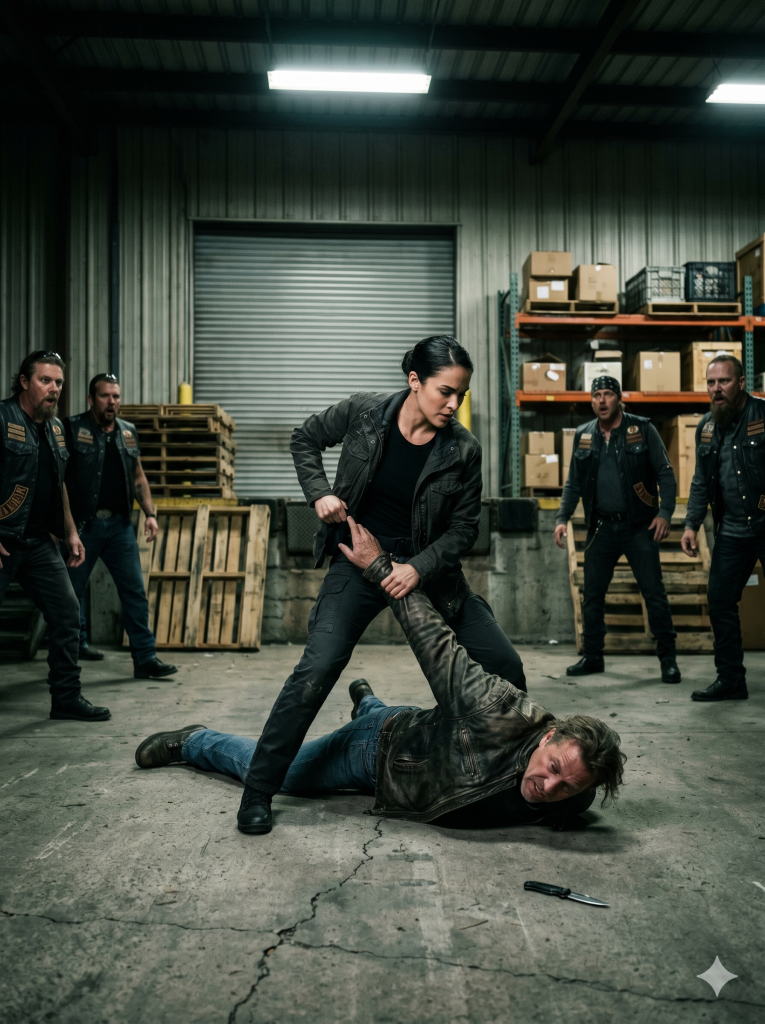
He charged, swinging wildly. But Nadia moved faster, stepping inside his reach, seizing his arm, and twisting. The knife hit the ground. Within seconds, she forced him face down, her knee pressing into his back, his arm locked tight.
“Stay down,” she ordered, her voice cutting through the silence. “It’s over.”
Ray struggled uselessly. Around them, his gang watched in stunned disbelief as their leader lay pinned by the woman they had mocked.
“Got it all on camera,” Marcus said through the earpiece.
Nadia secured Ray’s wrists with a zip tie. Around the compound, her team moved efficiently, restraining the rest of the gang with practiced precision.
“Marcus,” she called. “Start the upload.”
From his position, Marcus transmitted everything—photos, videos, evidence—directly to federal authorities. Years of criminal activity documented in full.
Nadia pulled out her phone and dialed. It rang twice. “Agent Cooper,” came the voice.
“Sierra Delta 719,” she said. “Remember that favor from Kandahar?”
A pause. Then, “Sergeant Major Carter… it’s been a while.”
“I’ve got a situation—drug trafficking, human smuggling, organized crime. Fully documented.”
“Send the location. We’re on the way.”
She sent the coordinates and turned to her team. “Feds incoming. Hold positions.”
The next twenty minutes passed in tense silence. Ray shifted occasionally, but Nadia kept him pinned. His crew sat restrained, surrounded by veterans standing alert.
Sirens broke the silence. Vehicles surrounded the compound. “FBI! Nobody move!”
Agent Cooper entered, surveying the scene—bikers restrained, victims being helped, evidence secured. “Impressive work,” he said.
“The evidence is complete,” Nadia replied. “Including local law enforcement involvement.”
“The sheriff?” Cooper asked.
“Cal Wilks. He’s been protecting them.”
Cooper nodded grimly. “Let’s pay him a visit.”
As agents secured the compound, Ray was pulled to his feet. “This isn’t over,” he snarled.
Nadia met his gaze. “Actually, it is.”
More units arrived. DEA agents cataloged drugs, trafficking victims were assisted, and the operation unfolded with precision.
Marcus approached. “Everything’s uploaded. No way they can bury this.”
At the gate, Sheriff Wilks arrived—handcuffed. “You can’t do this,” he protested.
“Not anymore,” Cooper replied, presenting the warrant.
Wilks glared at Nadia. “This is your doing.”
“You had a choice,” she said calmly. “You chose wrong.”
As arrests continued, the veterans gathered nearby. The rising sun cast gold across the scene.
“I never thought we’d see justice,” Sarah said softly.
“The system works,” Nadia replied. “When people make it work.”
“They tried to break us,” Marcus added. “We got stronger.”
Cooper returned. “Charges are being prepared. This case is airtight.”
“They built themselves,” Nadia said of her team.
The veterans stood taller, pride replacing doubt. They had faced darkness and won—not with violence, but with discipline and unity.
Later, the rebuilt shelter stood stronger than before—a modern center offering support, training, and hope. The community rallied around it, no longer afraid.
At the bar—now changed—Nadia sat quietly with her whiskey. The place was brighter, safer. People nodded to her with respect, not fear.
She raised her glass slightly, acknowledging the change around her.
The whiskey was smooth, but it was something else she savored—the calm that comes after justice.
