

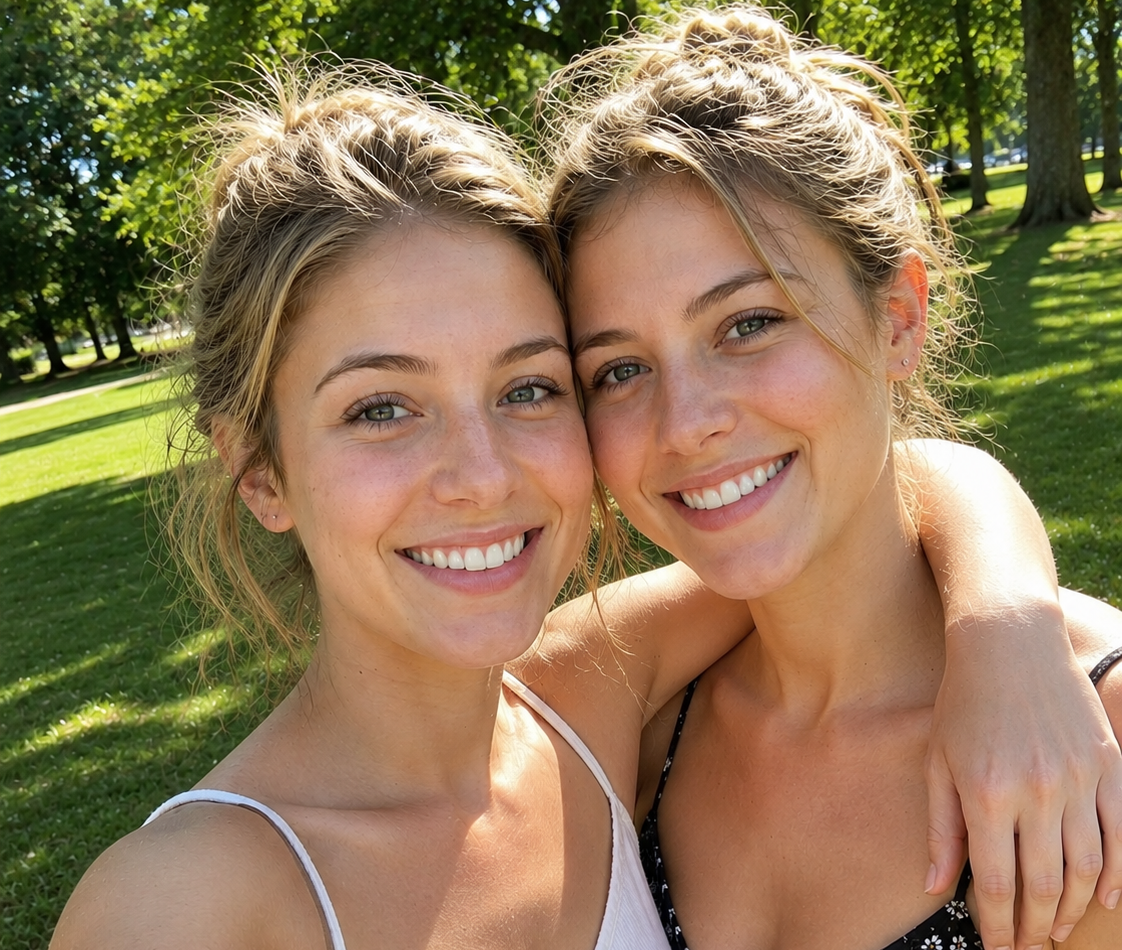
I’d spent ten years reconstructing my life around a loss I believed I’d made peace with. Then a single impossible phone call revealed a truth far messier than mourning: sometimes having someone come back doesn’t mean having the person you lost come back.
A decade after my twin sister’s death, a dental clinic called and asked me to come pick her up.
Then they handed Clara the phone.
“Sarah? Please come get me.”
I recognized that voice before she’d even finished my name.
I was 30, seated at my kitchen island, laptop open, coffee going cold beside me.
“Sarah? Please come get me.”
Now my knuckles were white against the countertop.
“I’m sorry,” I said when the receptionist got back on the line. “Who exactly is with you right now?”
“Your sister, Clara. She had a filling this morning and she’s a bit groggy from the anesthesia. Her phone’s dead, but she remembered your number.”
“My sister has been dead for ten years.”
“Who exactly is with you right now?”
The line went quiet.
“I… I’m so sorry. Would you like to speak with… Would you like to speak with her?”
“Yes.”
There was a shuffling sound.
Then Clara came back on.
“Sarah?”
“Would you like to speak with her?”
My chest clenched.
“Where are you?”
She told me the address.
“Don’t move.”
“I won’t,” she murmured.
I grabbed my keys.
“Where are you?”
Clara and I had both been 20 when her car left a dark highway and went down an embankment. Flames took hold before help arrived. We were told there was almost nothing left to recover.
We held a closed-casket funeral.
Therapy got me through it. I settled 20 minutes from my parents, took a low-key job, bought a modest house, and taught myself to make plans without Clara in them.
Sometimes I still grabbed two pastries out of habit.
We held a closed-casket funeral.
Two blue coffee mugs still sat in my cabinet.
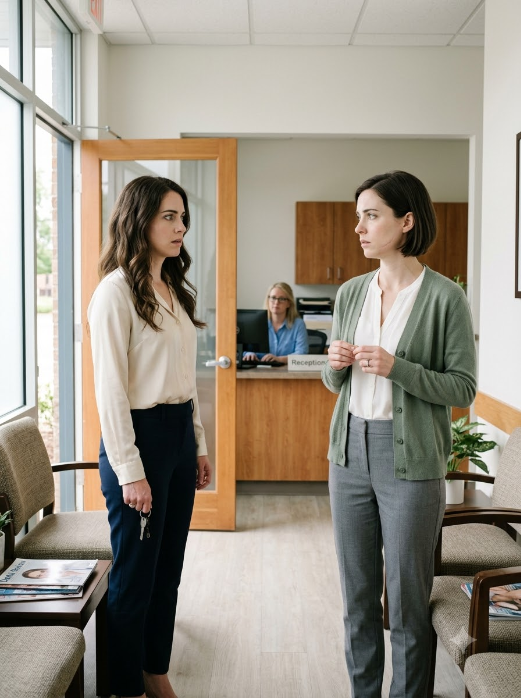
I arrived at the dental office and shoved through the waiting-room door.
A woman rose from a corner seat.
I froze.
She looked older. We both did.
Her hair was cut shorter, and a faint scar traced her jawline.
A woman rose from a corner seat.
She was fidgeting with a silver ring on her right hand.
Clara used to do that with bracelets when we were young.
“Hi,” she said.
“Don’t just say hi.”
Her faint smile faded.
“Okay.”
“Don’t just say hi.”
I couldn’t bring myself to touch her.
“What did we name the dent in my bedroom wall?”
Her eyes welled up instantly.
“The moon.”
“Who broke Mom’s vase during the blizzard?”
“I did. You took the blame so Dad wouldn’t ground me before Maisie’s birthday.”
I couldn’t bring myself to touch her.
Clara took a step closer.
I stepped back.
“It’s really you.”
“You don’t have to accept any of this right now,” she said.
“You don’t get to tell me what I have to do.”
“It’s really you.”
She stopped moving.
“You’re right.”
Same eyes. Same faint crease between her brows when she was frightened.
“How are you alive?”
“Can we go somewhere else first?”
“No.”
“How are you alive?”
Clara’s voice dropped.
“I lived through the crash.”
“We buried you.”
“It was an empty coffin, Sarah.”
“Mom still leaves flowers at your grave.”
Clara shut her eyes.
“I lived through the crash.”
“Dad avoided that highway for five years.”
“I know.”
My stomach lurched.
“How do you know that?”
She opened her eyes again.
“I know.”
And something shifted in her face.
That’s when it hit me — finding Clara alive might not be the hardest part of this.
Outside, she asked me to drive her home.
For a brief, foolish moment, I assumed she meant our parents’ place.
“I’ll call them,” I said, reaching for my phone.
She asked me to drive her home.
“No.”
I turned to her.
“What?”
“Please take me to my apartment first.”
“Your apartment.”
“Sarah…”
“What?”
“You were supposedly dead for ten years, Clara. I’m still catching up.”
She recited an address.
“That’s two towns over.”
“I know.”
“Then why were you at a dentist here?”
“You were supposedly dead for ten years, Clara.”
“I cracked a filling. This was the only office that could fit me in today.”
“So you don’t live around here.”
“No. I’ve never lived near you.”
“How long have you been two towns over?”
“A few years.”
I pulled the car away from the curb.
“So you don’t live around here.”
For the first few minutes, we drove in silence.
When I got anxious, I made lists.
That morning, mine was nothing but unanswered questions.
Clara spoke up first.
“I need to tell you something about the call.”
I glanced her way.
Clara spoke up first.
“What about it?”
“I didn’t realize I’d given them your number.”
“What?”
“I was out of it. They asked who to contact, and apparently your number came out.”
“Clara, that number’s more than a decade old.”
“What about it?”
“I know.”
“You still remembered it?”
“I guess so.”
Somewhere beneath ten years of a different life, my number had apparently stayed with her.
“Why mine?”
“I don’t know.”
“You still remembered it?”
After a beat, Clara asked, “Are Mom and Dad okay?”
“They’re alive.”
“I mean, are they okay?”
“I know.”
Mom, Alita, called every Sunday and never asked whether I was “doing better.” Dad, Jack, said less; after the accident, he’d simply sat with me when there was nothing to say.
“Are Mom and Dad okay?”
They were the ones who’d gotten me through losing Clara — while Clara was still out there living.
“You remembered my number,” I said.
“My brain apparently did.”
“But you don’t know if Mom and Dad are okay.”
She looked out the window.
“That one’s harder to explain.”
“But you don’t know if Mom and Dad are okay.”
“Then you’d better figure it out soon.”
When we reached her apartment, I saw just how fully she’d built a separate life.
Plants lined the windows, framed photos covered the walls, a yellow mug sat by the sink.
Clara had a favorite mug.
I picked up a book on gardening.
“You hate getting dirty.”
Clara had a favorite mug.
“I used to. Before.”
“You killed a cactus once.”
Her mouth twitched slightly.
Then I noticed the photographs.
Clara laughing over dinner.
Clara crouched by a flower bed.
Clara surrounded by strangers.
Not one picture had me in it.
Clara surrounded by strangers.
“How long have you lived here?”
“Three years.”
“And before that?”
“Somewhere farther.”
“Fine. Start with the crash.”
“How long have you lived here?”
“I was thrown from the car before it caught fire. I must have walked afterward, because a driver found me miles down another road. I had a head injury and no ID on me.”
“What about your memory?”
“Gone, mostly. I relearned how to hold a spoon before I remembered my own last name.”
Clara turned the ring on her finger.
“My first name surfaced before anything else. But knowing I was Clara didn’t mean knowing where Clara belonged.”
“What about your memory?”
“Like what?”
“Mom’s yellow kitchen. You singing off-key in the shower.”
“That was you.”
“It absolutely was not.”
I nearly smiled.
“When did you remember me?”
“That was you.”
“Sarah.”
“How long?”
“Please.”
“How long, Clara?”
Her eyes brimmed.
“Six years.”
“How long, Clara?”
“Six?”
She nodded once.
“You knew I was alive for six years?”
“Yes.”
“You knew I believed you were dead?”
“Yes.”
I lifted her mug.
“You knew I was alive for six years?”
Then set it carefully back down.
“Did you ever call?”
“I tried, once.”
“Once?”
“I found Mom and Dad’s old number. It had been disconnected.”
“So that was the end of it?”
“Did you ever call?”
“No.”
“Then what happened?”
“I wrote letters.”
“Did you send any?”
She looked away.
“No.”
“I wrote letters.”
“Then you wrote them for yourself, Clara. Not for us.”
She flinched.
I reached for my purse.
“Sarah, wait.”
I made it to the door.
“Let me explain.”
“Then you wrote them for yourself, Clara.”
I turned back toward her.
“You had six years.”
Then I walked out.
I didn’t call Mom and Dad that night.
That was my choice. Clara had already controlled enough of the truth.
At home, I opened a drawer and found my two blue mugs.
I didn’t call Mom and Dad that night.
One for me, one “extra.”
I’d been buying extras for ten years.
The next morning, I called Mom.
“Are you sitting down?”
“Sarah, you know I hate when you open like that.”
“Please.”
One for me, one “extra.”
Her tone shifted.
“Okay.”
“Clara’s alive.”
Silence.
Then, gently, “Sweetheart…”
“I saw her myself.”
Another pause.
“Sweetheart…”
“She knew about the moon. She knew about the vase. It’s her.”
Dad picked up on the line.
“What do you need from us?”
Not where or how — just what do you need.
“I don’t know yet.”
“Then that’s where we’ll start, sweetheart,” he said.
“She knew about the vase. It’s her.”
Two days later, I brought them to see Clara.
Mom stopped just inside the doorway.
Clara stood by the window.
Then Mom crossed the room in a rush.
“My baby.”
Clara went rigid, then folded into her.
I brought them to see Clara.
Dad hung back, wiping his eyes.
“Hey, kiddo.”
I looked away.
I loved her.
I was also furious with her.
Both were true at once.
After a moment, Mom’s words started tumbling out.
I was also furious with her.
“I still bake that cherry pie you loved. Your room isn’t blue anymore, but we could paint it back. And remember that song the two of you used to sing?”
Clara’s grip slipped.
The mug she held struck the counter and rolled onto its side.
“Stop.”
Mom went still.
“And remember that song the two of you used to sing?”
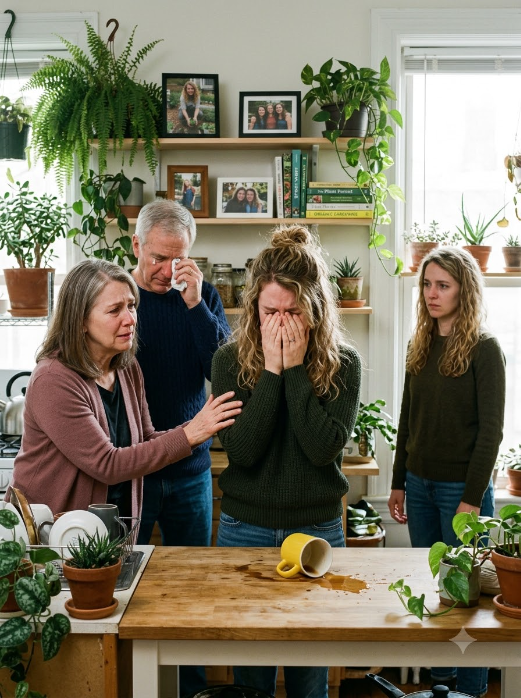
Clara covered her face with both hands.
“Please, just stop.”
“Clara?” Mom whispered.
“I can’t do this anymore!”
The room fell silent.
Dad moved toward Mom, but I didn’t move.
“I can’t do this anymore!”
Clara looked between the three of us, breathing hard.
“This is exactly why I didn’t want to come back.”
Mom’s expression crumbled. “Because of the pie?”
“No, Mom. Because five minutes in, you’re already trying to rebuild who I used to be.”
“I thought familiar things would help.”
“I don’t even like cherry pie anymore.”
“This is exactly why I didn’t want to come back.”
Mom stared at her, then looked at me.
“But Sarah always loved it too. You two liked all the same things.”
Clara let out a short, sharp laugh.
“There it is.”
Something cold moved through me.
“You two liked all the same things.”
“What are you saying?”
Clara faced me.
“Growing up, it was always Sarah-and-Clara. You got the higher grade, made the team, won the thing, and people looked at me like the leftover version.”
“I never asked anyone to treat you that way.”
“I know.”
“Growing up, it was always Sarah-and-Clara.”
“Then why look at me like it’s my fault?”
“Because you never had to notice it.”
Her voice broke.
“You got to walk in and simply be Sarah. I walked in and became the other twin.”
Mom began to cry.
“I never realized you felt that way.”
“I walked in and became the other twin.”
“Neither did I — not fully, not until after the accident.”
Clara held tight to the counter.
“At first, not knowing who I was terrified me. But later, once pieces came back, something else happened.”
“What?” I asked.
“Not until after the accident.”
“For the first time ever, no one was comparing me to you.”
Clara’s eyes filled as she looked at me.
“I discovered things I liked simply because I liked them. People met me without asking where my sister was.”
“So once you remembered us, you chose to stay hidden.”
“At first, I was afraid.”
“And afterward?”
“I discovered things I liked simply because I liked them.”
Her lip trembled.
“Afterward, I chose myself.”
I stepped back.
“You chose yourself by letting us bury you? By letting us grieve you?”
“I know how that sounds.”
“It sounds that way because it is.”
“Afterward, I chose myself.”
She nodded.
“I know.”
Mom reached toward her.
Clara pulled back.
“I loved all of you. I did. But I was afraid that coming back would mean going back to just being Clara-half-of-a-pair again.”
I looked at her.
“I loved all of you.”
“So you decided the only way to be yourself was to make sure I mourned you for ten years?”
Clara wiped her eyes.
“I looked you up, four years ago.”
“You found me?”
“Yes.”
“What did you find?”
“You found me?”
“Your house. Your career. Friends. A whole life.”
“And that’s why you stayed away?”
“I was curious about you.”
“Curious enough to look, but not to call.”
She looked down.
“No.”
“Why not?”
“I was curious about you.”
Clara lowered herself onto the couch’s edge.
“Once I was well enough to make my own choices, nobody could make me reach out to my family.”
“But you didn’t even know who you were yet.”
“Not at first. Rehab gave me routines before it gave me memories. By the time enough of my old life came back to me, I’d already started a new one.”
“And eventually you did remember us.”
“But you didn’t even know who you were yet.”
“Yes.”
“So why didn’t you come back?”
Clara met my eyes.
“Because, again — for the first time, I was just Clara.”
“No twin comparisons, no ‘Sarah did this’ or ‘Sarah was better at that.’ I got to decide what I liked without checking whether you liked it first.”
“No twin comparisons.”
“You could have told us that.”
“I know.”
“You could have come home and said, ‘I need my own life,’ to my face.”
“I know.”
“Instead you let me grieve a sister who was still breathing.”
Her eyes flooded.
“You could have told us that.”
“That part I can’t defend.”
“Good. Don’t.”
She nodded.
“I was selfish. I wanted my freedom. And every year I stayed away made returning feel harder. I told myself you were fine. That coming back would just reopen the wound.”
“And watching me look happy online made that easier to believe.”
“Good. Don’t.”
Her face fell apart.
“Yes.”
I glanced away, then looked back at her.
“I get wanting to be your own person.”
Clara watched me closely.
“I get resenting the comparisons. I even get being scared you’d lose yourself if you came home.”
I get wanting to be your own person.”
She swallowed hard.
“But I will never understand why my grief had to fund your freedom.”
Clara broke down.
“I know.”
“No. Hear me out.”
She did.
She swallowed hard.
“You don’t get to vanish again just because being my sister feels complicated. And I don’t get to pull you back into being the 20-year-old you used to be.”
She nodded.
“So what now?”
“For once, I decide.”
Clara waited.
“So what now?”
“We go slow,” I said. “You don’t disappear. You don’t decide what I can handle. And you don’t make me hunt you down for answers.”
She nodded.
“Okay.”
“Mom and Dad deserve their own time too. They’re going to be hurt and angry, and I’m not speaking for you.”
Clara nodded.
“You don’t disappear.”
“That’s fair.”
“I’m not aiming for fair. I’m trying to figure out how to have a living sister after ten years of believing she wasn’t.”
“So what do you want from me?”
“Right now?”
I picked up my purse.
“Lunch. Thursday.”
“I’m not aiming for fair.”
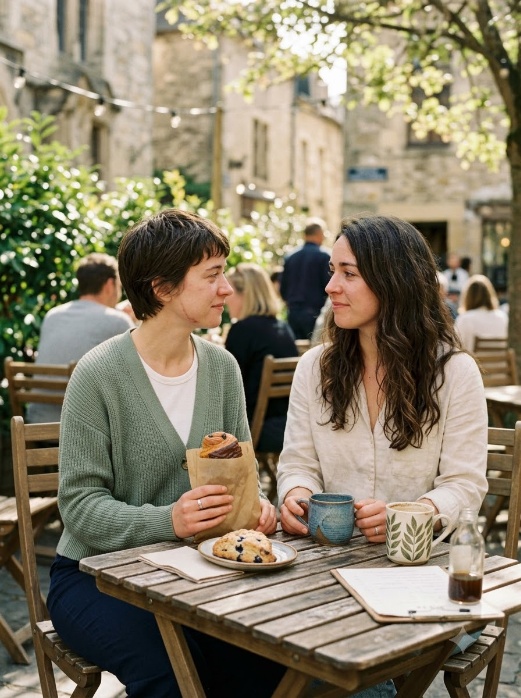
Three weeks later, I stopped at a bakery on the way to meet Clara.
The cashier reached for a bag.
“Two blueberry scones?”
For ten years, I’d bought things in twos without even thinking about it.
Two mugs.
Two pastries.
I stopped at a bakery.
Two of anything that felt wrong on its own.
I studied the display case.
“No. One blueberry.”
Then I pointed to the chocolate croissant Clara had chosen at lunch the week before.
“And one of those.”
The cashier bagged them separately.
I studied the display case.
That felt right.
Clara and I weren’t resuming where we’d left off.
There was no earlier version of us waiting to be pieced back together.
She’d spent ten years turning into someone I didn’t know.
That felt right.
I’d spent ten years turning into someone without her.
Now, for the first time, neither of us had to vanish for the other to exist.
I gathered the two separate bags and went to meet my sister.
