

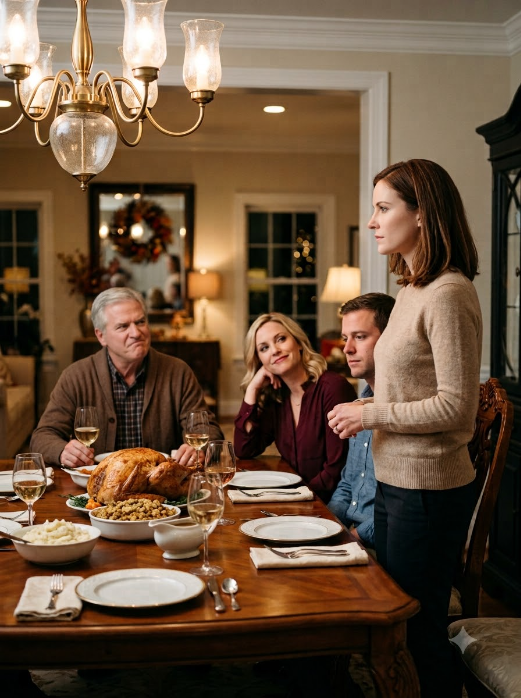
My father didn’t even look embarrassed. He cut another piece of turkey and said, “You left us, Emily. Choices have consequences.”
For a moment, all I could hear was the clatter of silverware against china.
We were seated in my parents’ dining room outside Columbus, Ohio, beneath the same brass chandelier that had hung there since my childhood.
Melissa’s husband studied his plate.
My younger brother, Jason, watched me like he was expecting an explosion.
I smiled.
“Three ways?” I asked.
Melissa leaned back, clearly pleased with herself. “Dad, me, and Jason. We’ve already contacted a realtor.”
“About all nine?”
“All nine.”
That nearly made me laugh.
Those properties had originally belonged to my grandfather, but after he passed away, they were sold off during a messy probate dispute. I had spent seven years buying them back one at a time through an LLC my family barely knew existed. I renovated the duplexes, covered the taxes, refinanced two of them, and kept the deeds locked away in a secure office with my attorney.
My family knew I “worked in property management.”
They didn’t know I owned the portfolio.
Dad wiped his mouth with a napkin. “You picked your career over this family. Now you don’t get to return when there’s money involved.”
I stood, grabbed my coat, and kissed my mother on the cheek.
Melissa frowned. “That’s it?”
“That’s it.”
I made it to the driveway before my phone rang.
It was Claire Donovan, my real estate attorney.
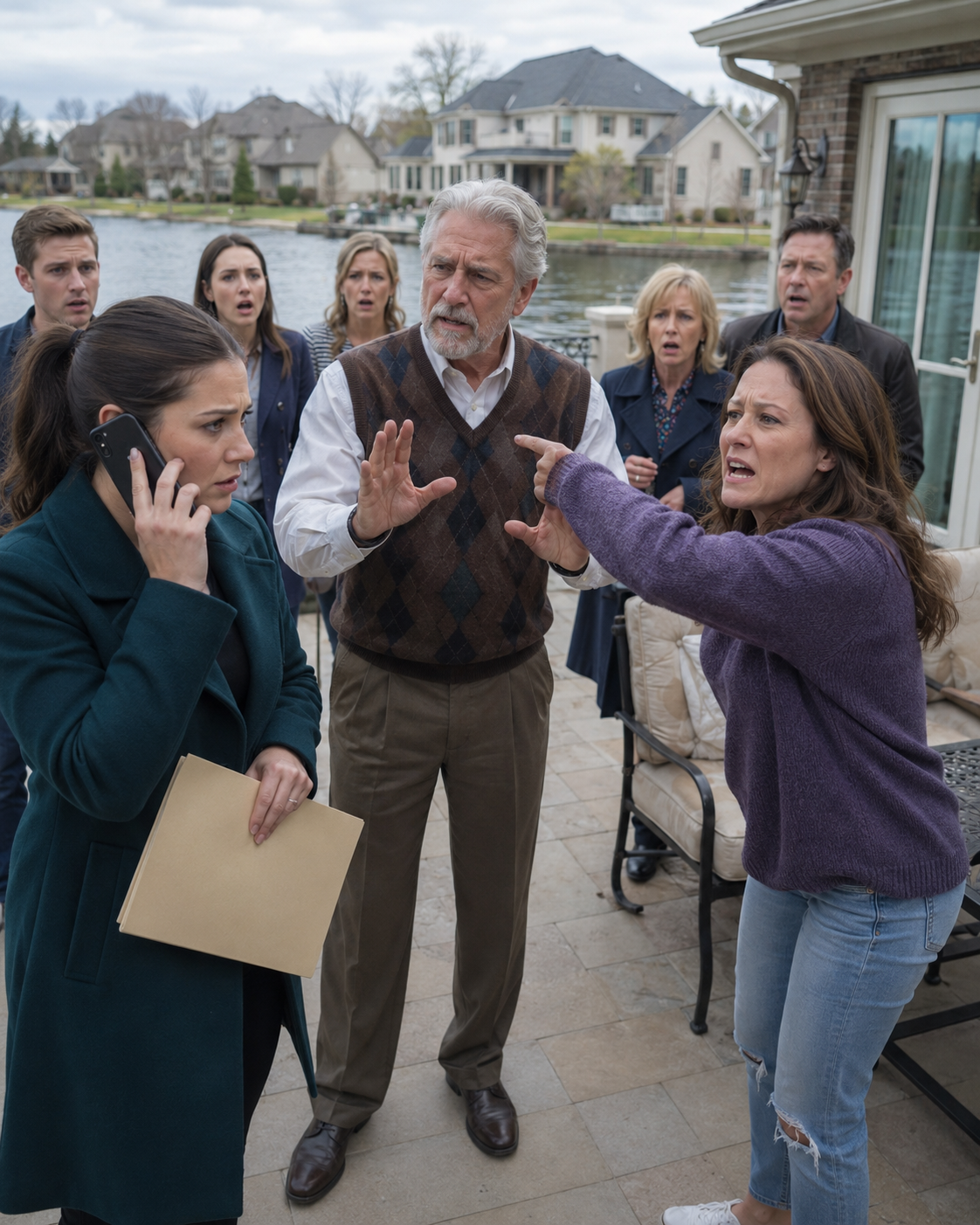
“Emily,” she said, skipping hello, “did you authorize anyone to list the Maple Street duplexes, the Cedar Ridge rentals, or the lake property?”
I stopped walking.
“No.”
Her voice hardened. “Your family just attempted to list your properties.”
The cold November air suddenly felt cleaner than the room I had just left.
“What did they sign?”
“Affidavits claiming beneficial ownership through your grandfather’s estate.”
I glanced back at the glowing dining-room windows.
“They don’t own anything.”
“I know,” Claire said. “But somebody gave the broker copies of old probate documents and a forged authorization letter bearing your name.”
That wiped the smile off my face.
Then she added, “Emily, don’t contact them yet. I need you to hear everything else first.”
Claire emailed me the forged authorization letter while I sat in my car at the end of my parents’ driveway.
My name was printed at the bottom.
Above it was a signature convincing enough to fool anyone who had only ever seen mine once.
But I knew immediately who had copied it.
Three months earlier, Melissa had asked me to co-sign a school form for her daughter while we were at Mom’s birthday dinner. I signed it at the kitchen counter. She snapped a photo of it “for her records.”
Now my signature sat beneath a sentence authorizing the sale of nine properties worth just over $4.2 million.
What I felt was colder than rage.
“Can they actually sell them?” I asked Claire.
“No. The titles belong to your LLC. The broker’s title search would catch it before closing. But attempted fraud is still attempted fraud.”
I drove home instead of confronting them.
That was the hardest part.
For years, my family had treated my absence as a betrayal. When I moved to Cincinnati for work at twenty-four, Dad called it selfish. When I missed Christmas because I was closing on my first duplex, Melissa told everyone I thought I was “too good for them.”
None of them remembered that I had sent money when Dad’s roof leaked. That I had quietly paid off Jason’s community-college balance. That I had covered Mom’s physical therapy after her insurance ran out.
I never brought any of it up.
Maybe that was my mistake.
By Friday morning, Claire had warned the broker, the title company, and my bank. The listings were frozen before they ever went live. She also uncovered something worse: Melissa had promised the realtor a fast sale because the family “needed liquidity immediately.”
At 2:17 on Saturday afternoon, my phone started buzzing.
Melissa.
I let it ring.
She called again. Then Dad. Then Jason.
Finally, Melissa left a voicemail.
“Emily, answer me. Something is wrong with the deeds. The realtor says your company owns everything. Dad is freaking out. Call me now.”
I listened to it twice.
Not because her fear pleased me.
Because for the first time, I heard uncertainty in my sister’s voice instead of entitlement.
Then Claire called.
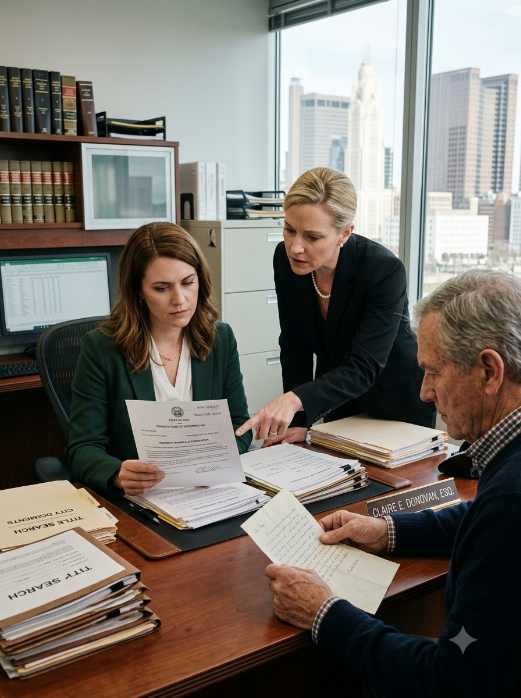
“There’s another problem,” she said. “Your father came to my office this morning.”
“Why?”
“He brought an original document from your grandfather’s estate.”
My stomach tightened.
“What document?”
“A handwritten amendment that was never submitted to the probate court.”
I stared at the wall.
Claire paused for a beat.
“Emily, if it’s authentic, this isn’t only about what your family tried to take from you. It may explain why your grandfather wanted you to have those properties in the first place.”
The document didn’t change ownership.
Claire made that clear before I let myself imagine otherwise.
“It was never witnessed or filed, so legally it doesn’t reverse the probate sale,” she said. “But you should read it.”
I drove to her office.
My father was already there, sitting under fluorescent lights with both hands wrapped around a paper cup.
Claire slid the yellowed page across to me.
The handwriting belonged to my grandfather.
If the rentals must ever be sold, give Emily the first chance to keep them together.
She understands what they are for.
They are not a jackpot.
They are work, shelter, and something to leave better than we found it.
I read it twice.
Then I looked at Dad.
“You had this?”
He nodded.
“For how long?”
“Since your grandfather passed.”
“Then why did you tell Melissa those properties belonged to you to sell?”
Dad looked at the floor. “Because I wanted to think they did.”
The truth came out slowly.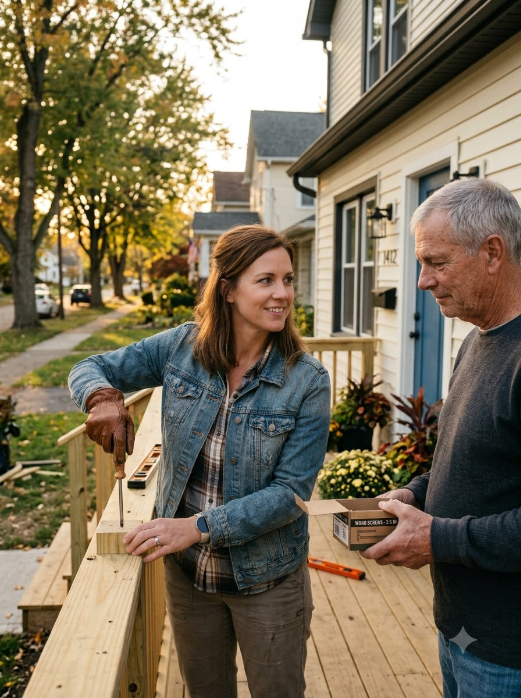
After probate, the family had received its share from the original sales. Dad spent much of his paying off debts and helping Melissa through a restaurant venture that collapsed.
Years later, when he found out I had started buying the buildings back, he told himself I was restoring “family property” for everyone.
I had never said that.
He had simply decided it was true.
Melissa ran with the assumption. She found old estate paperwork in Dad’s files, called a realtor, and drafted the authorization letter using my copied signature. Jason, I learned, had signed nothing. He had simply believed Dad genuinely owned a share.
“I told them to stop once the broker started asking questions,” Dad said. “Melissa refused.”
I should have felt like I’d won.
Instead, I just felt tired.
Claire recommended I file a police report over the forged document. I did. Melissa eventually admitted she had prepared the authorization letter. Because no property changed hands and no money was exchanged, the case ended in a plea agreement covering attempted fraud, probation, reimbursement of my legal costs, and community service.
Dad wasn’t charged.
But something between us shifted for good.
I didn’t cut my family off in one dramatic moment. Real life was quieter than that.
I stopped covering bills nobody had asked me about directly. I stopped fixing emergencies that had become habits. I stopped mistaking secrecy for generosity.
Jason apologized. So did Mom.
Dad took longer.
Almost a year later, he showed up at one of the duplexes while I was repairing a damaged porch rail. He stood next to me holding a box of screws.
“Your grandfather was right,” he said.
“About what?”
“You understood what the properties were for.”
I looked at him.
“And you didn’t.”
He nodded.
That was the first honest thing he’d given me in years.
The nine properties are still mine. Two are now fully paid off. One houses a single mother and her two boys. I kept the lake property for myself.
We still celebrate Thanksgiving.
But we don’t discuss my assets at the table anymore.
And when people ask why I walked away smiling that evening, I tell them the truth.
I wasn’t smiling because I had a secret worth millions.
I was smiling because they were arguing over something they had never bothered to find out I had built.
Ownership gets recorded on paper.
Entitlement lives in people.
Only one of those can be filed at the county courthouse.
