

The Stranger Behind Our House
For twenty years my mother prepared three meals a day for a man living in a small shelter behind our house.
We barely had enough money for ourselves, yet she never let him go hungry.
I spent most of my childhood wondering why she cared so much about someone who wasn’t family.
Then, the morning after her funeral, that same man appeared outside our house in an expensive coat, standing beside a black SUV.
He held the silver necklace my mother had supposedly lost when I was eight.
When he saw me, his eyes filled with tears.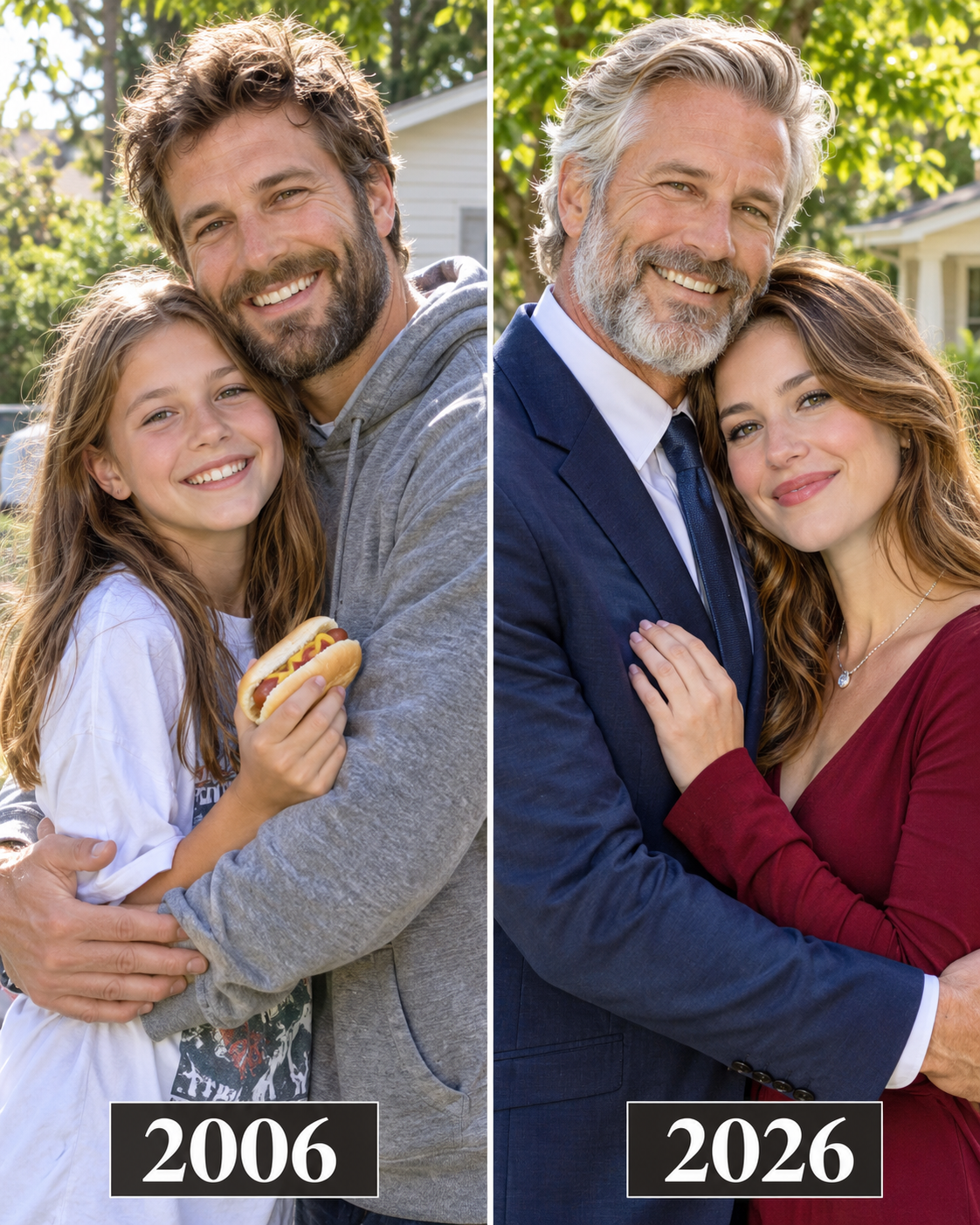
“Your mother asked me to keep something from you,” he whispered. “Before she passed, she begged me never to tell you the truth.”
I stared at him, unable to understand what was happening.
“What truth?”
He looked toward the little house where I had grown up.
“The truth about everything she sacrificed for you. And what I did for your family when you weren’t looking.”
A Childhood Filled With Questions
My name is Natalie Whitcomb, and I grew up in a modest neighborhood outside Pittsburgh, Pennsylvania.
My mother, Evelyn Whitcomb, raised me alone after my father left when I was still a toddler.
She worked long hours cleaning offices and taking extra shifts at a local medical center.
Some evenings she returned home so exhausted she could barely keep her eyes open.
Still, she always found energy to prepare dinner.
And she never cooked for just the two of us.
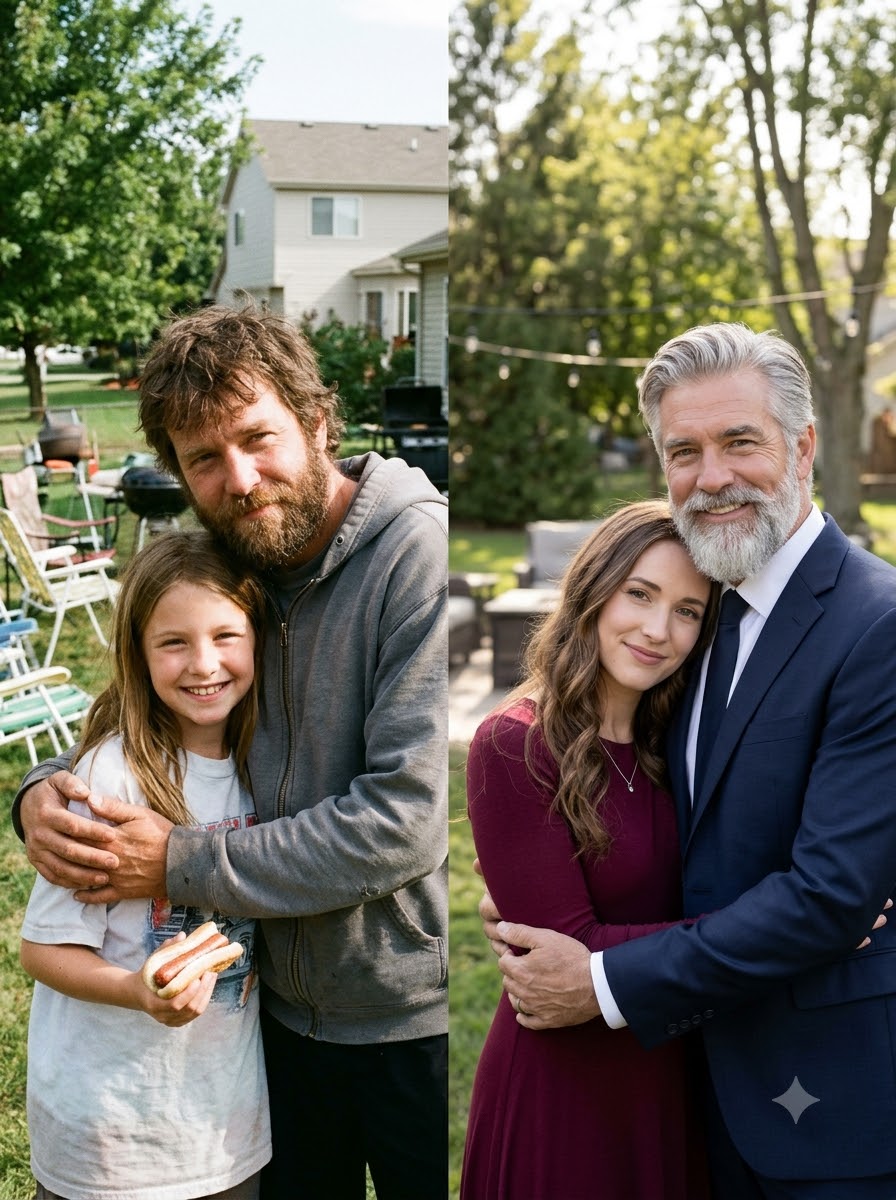
Every morning, afternoon, and evening she carried a plate through our back door to a man named Russell.
He lived beneath a patched canvas roof behind our small rental house.
His belongings fit inside two plastic containers, and his bed was an old mattress covered with blankets.
I never understood why he stayed there or why my mother treated him like an important guest.
When I was eleven I finally asked her.
“Mom, why do you keep feeding Russell when we don’t even have enough money for ourselves?”
She continued stirring the soup on the stove.
“Because he’s hungry, sweetheart.”
“But we’re struggling too.”
She turned toward me.
“I know we are. But having less doesn’t mean we have nothing to give.”
Her answer frustrated me.
My shoes were worn.
My classmates wore new winter coats while I wore one with a broken zipper.
Once our landlord left a notice on the front door just before Christmas because the rent was overdue.
And every single day Russell received three homemade meals.
One evening I finally said something I would regret for years.
“Maybe if you stopped spending money on him, we could afford a normal life.”
My mother set down her spoon.
Her expression changed so quickly that I stepped backward.
“Natalie, you may be upset with me, but you will never speak about another person as though their hunger doesn’t matter.”
I ran to my bedroom, convinced she cared more about Russell than she cared about me.
I didn’t understand that the greatest lessons of my childhood were happening just outside our back door.
The Promise I Didn’t Want to Make
As I grew older I stopped arguing with my mother about Russell.
I graduated from high school, attended college, and eventually found a job in Philadelphia.
My mother was incredibly proud of me.
She told everyone about my graduation, my first apartment, and my new position at a marketing company.
But whenever I visited, Russell was still there.
His hair had turned almost completely gray, and he walked more slowly than before.
My mother continued preparing his meals.
Sometimes I noticed him helping with the yard or carrying groceries inside, but he never entered the house unless she invited him.
I assumed that was simply how things would always be.
Then my mother became seriously ill.
Over the following months her strength gradually disappeared.
The woman who had spent her life caring for everyone else now needed help with ordinary things.
I took time away from work to stay with her.
One evening, about two weeks before she passed, she reached for my hand.
“Natalie, there’s something I need you to promise me.”
“Anything, Mom.”
Her fingers tightened around mine.
“Please don’t forget Russell. Make sure he has something to eat.”
I felt a familiar frustration rising inside me.
Even now, when she needed every bit of comfort she could receive, she was thinking about him.
But I looked at her tired face and couldn’t refuse.
“I promise, Mom.”
She smiled faintly.
“Thank you, sweetheart. Someday, I hope you’ll understand.”
Those were among the last clear words she spoke to me.
The Man Beside the Black SUV
The day after my mother’s funeral I woke up in her house surrounded by memories.
Her favorite mug sat beside the kitchen sink.
Her cardigan hung over a dining chair.
A handwritten grocery list was still attached to the refrigerator.
Everything looked exactly as she had left it.
Except she was gone.
I remembered my promise and decided to prepare Russell’s lunch.
I made meatloaf using her old recipe, mashed potatoes, and green beans.
Then I covered the plate with foil and walked outside.
Russell’s shelter was empty.
The mattress, blankets, containers, and canvas roof had disappeared.
I stood there confused, wondering whether he had finally moved away.
Then I noticed a black SUV parked along the curb.
A tall older gentleman stood beside it, wearing a tailored charcoal coat and polished shoes.
He looked familiar, but I couldn’t immediately understand why.
When he turned toward me, my breath caught.
“Russell?”
He nodded.
His beard was gone, his hair neatly combed, and his posture completely different.
“Hello, Natalie.”
I stared at him.
“What happened? Where are your things? And whose car is that?”
He didn’t answer immediately.
Instead, he reached into his coat and removed a small silver necklace.
I recognized it instantly.
It had belonged to my grandmother, and my mother wore it almost every day until I was eight.
She had told me it disappeared during a difficult time when we were struggling financially.
“Where did you get that?” I whispered.
Russell looked down at the necklace.
“Your mother asked me to keep it safe.”
“For twenty years?”
He nodded.
“Natalie, there’s something you deserve to know. Your mother made me promise I would never tell you, but I can’t leave you wondering anymore.”
My hands began trembling.
“Then please tell me.”
The Life Russell Left Behind
We sat together on the front steps.
Russell placed the necklace carefully between his palms.
“Before I met your mother, I had a completely different life.”
He explained that he had once been a successful businessman named Russell Pembroke.
He had owned a manufacturing company in Connecticut, lived in a beautiful home, and shared his life with his wife, Diane, and their young daughter, Sophie.
“Sophie was six years old,” he said quietly. “She loved drawing pictures of our family and leaving them on my desk.”
His voice softened.
“One evening, our family was involved in a terrible accident. I was the only one who came home.”
I remained silent.
“Afterward, I couldn’t bear to return to our house. Every room reminded me of them. I eventually sold my share of the business and walked away from everything.”
For years Russell traveled from place to place, carrying little more than a bag of clothes.
He stopped contacting friends and refused offers of assistance.
“I convinced myself that I didn’t deserve another comfortable life,” he admitted.
Eventually he arrived in Pittsburgh.
One cold evening my mother found him resting near a bus station after finishing a long shift at work.
She offered him half her sandwich.
Then she told him about a sheltered spot behind our house where he could stay temporarily.
“She didn’t ask about my past,” Russell said. “She didn’t care whether I’d once been wealthy or whether I had anything to offer. She only saw someone who needed help.”
I could picture my mother doing exactly that.
“But why did you stay for twenty years?”
He looked toward the backyard.
“Because your mother gave me something I thought I’d lost forever. She made me feel like I still mattered.”
The Hospital Bill I Never Knew About
Russell turned the silver necklace over in his hand.
“Do you remember being hospitalized when you were eight?”
I nodded.
I remembered the severe stomach pain, the bright hospital lights, and waking up to find my mother sitting beside my bed.
“I needed surgery.”
“Yes. And afterward, there were complications that required more treatment.”
I remembered very little about the financial side of those weeks.
My mother had simply told me not to worry.
Russell continued.
“The medical expenses reached more than forty thousand dollars. Your mother didn’t have insurance that covered everything.”
I stared at him.
“Forty thousand?”
“She had almost nothing in savings. She sold furniture, jewelry, and anything else she could manage without.”
He lifted the necklace.
“This was the last valuable thing she owned.”
My throat tightened.
“She told me she lost it.”
“She didn’t want you to know she’d sold something that meant so much to her.”
Russell explained that he had seen the necklace displayed in a secondhand jewelry shop a week later.
He recognized it immediately.
For the first time in years he contacted the attorney who had managed his financial affairs.
His money had remained untouched in an investment account.
“I bought the necklace back,” he said. “Then I arranged for the remaining hospital expenses to be paid through a charitable assistance program.”
I looked at him in disbelief.
“You paid our hospital bills?”
He nodded.
“Your mother never knew where the money came from. At least, not at first.”
I covered my mouth.
For years I had believed my mother was supporting a stranger who had nothing.
I never imagined that the man behind our house had quietly helped save us from an overwhelming financial burden.
But Russell wasn’t finished.
The Scholarship That Changed My Future
“There’s something else,” he said.
I looked up.
“Do you remember the Bright Harbor Scholarship?”
My heart seemed to stop for a moment.
That scholarship had changed my life.
When I was seventeen I received a letter announcing that a private educational foundation would cover my college tuition and essential expenses.
I had applied for several scholarships, but Bright Harbor was the only one that offered enough support for me to attend the university I wanted.
Without it I would have faced years of financial uncertainty.
“Of course I remember,” I said. “Why?”
Russell took a slow breath.
“I established that fund for you.”
I stared at him.
“What?”
“I worked with my attorney to create an educational account. We used the foundation to handle the payments so you wouldn’t know where the money came from.”
My eyes filled with tears.
“You paid for my college?”
“I provided the financial support, Natalie. But you earned your education. You studied, worked hard, and built your own future.”
I shook my head, struggling to absorb what he was telling me.
For years I had proudly described myself as someone who had escaped poverty through determination and a scholarship.
I had never known that the scholarship came from the quiet man who ate dinner behind our house.
“Did Mom know?”
Russell hesitated.
“Eventually.”
Why My Mother Demanded His Silence
Russell explained that my mother discovered the truth when I was seventeen.
A letter from the foundation’s attorney had arrived at our house by mistake.
She confronted Russell that evening.
“She was upset,” he recalled. “She asked why I had secretly spent so much money on you.”
I could almost hear my mother’s voice.
“What did you tell her?”
“I told her that for years, she’d given me food, warmth, and friendship without asking for anything. I wanted to help her daughter have opportunities she couldn’t afford.”
My mother initially refused.
She had never accepted money from Russell, even when he occasionally offered to contribute to household expenses.
But eventually she agreed to let the educational fund continue.
There was one condition.
“She made me promise you would never know who was behind it,” Russell said.
“Why would she do that?”
His expression softened.
“Because she wanted you to believe in yourself. She knew how hard you worked. She didn’t want you growing up feeling that your success belonged to someone else.”
Tears slipped down my cheeks.
“But I spent years being angry with her.”
Russell nodded gently.
“She knew that, Natalie. She also understood why.”
He told me my mother had once repeated the hurtful words I’d said about feeding him.
I felt ashamed remembering that argument.
“Was she angry?”
“No. She said you were a child who was frightened of being poor. She wished she could give you more, but she hoped you’d eventually understand why she couldn’t turn someone away.”
I lowered my face into my hands.
My mother had spent years carrying responsibilities I never fully understood.
And she had protected my confidence even when telling me the truth might have made me appreciate her more.
One Final Request
After several minutes I asked Russell why he had decided to tell me everything now.
He looked toward the empty backyard.
“Because your mother asked me to make one final change.”
Three days before she passed she had spoken privately with him.
She told him that twenty years was long enough to live apart from the world.
“She said Sophie would want me to find happiness again,” Russell explained, his voice trembling.
My eyes filled with fresh tears.
“She remembered your daughter?”
“She never forgot her. She remembered Sophie’s birthday every year, even when I tried not to.”
He swallowed.
“Your mother told me that honoring someone we love doesn’t mean giving up the rest of our lives.”
That conversation had finally persuaded Russell to seek help.
He contacted his former attorney, arranged temporary accommodation in a hotel, and scheduled an appointment with a counselor.
That morning he had cleared away the shelter where he’d spent so many years.
“I’m going to try living again,” he said. “I don’t know exactly what that will look like, but your mother believed I could do it.”
I reached for his hand.
“I think she was right.”
He smiled through his tears.
The Envelope That Changed Everything
Russell reached into his coat and removed a cream-colored envelope.
“There’s one more thing.”
I almost laughed through my tears.
“Russell, I don’t think my heart can handle another surprise.”
He handed me the envelope.
Inside were documents relating to my mother’s rental house.
The landlord had been planning to sell the property for several months.
Russell had recently arranged to purchase it through his attorney.
“I wanted to make sure the house stayed in your family,” he explained. “If you want it, I’d like to transfer it to you.”
I stared at the paperwork.
“You’re giving me the house?”
“Only if you’re comfortable accepting it.”
I shook my head.
“I can’t accept something this expensive.”
Russell looked at me with an expression I had never seen before.
“Natalie, your mother gave me twenty years of kindness when I had stopped believing I deserved any. She never once asked for repayment.”
He paused.
“I know a house cannot replace her. But I would be grateful if I could help preserve the place where she raised you.”
I looked toward the kitchen window.
I could almost see my mother standing there, smiling as she watched us from inside.
“I’ll think about it,” I whispered.
Russell nodded.
“That’s all I ask.”
Then I remembered the plate of food sitting beside us.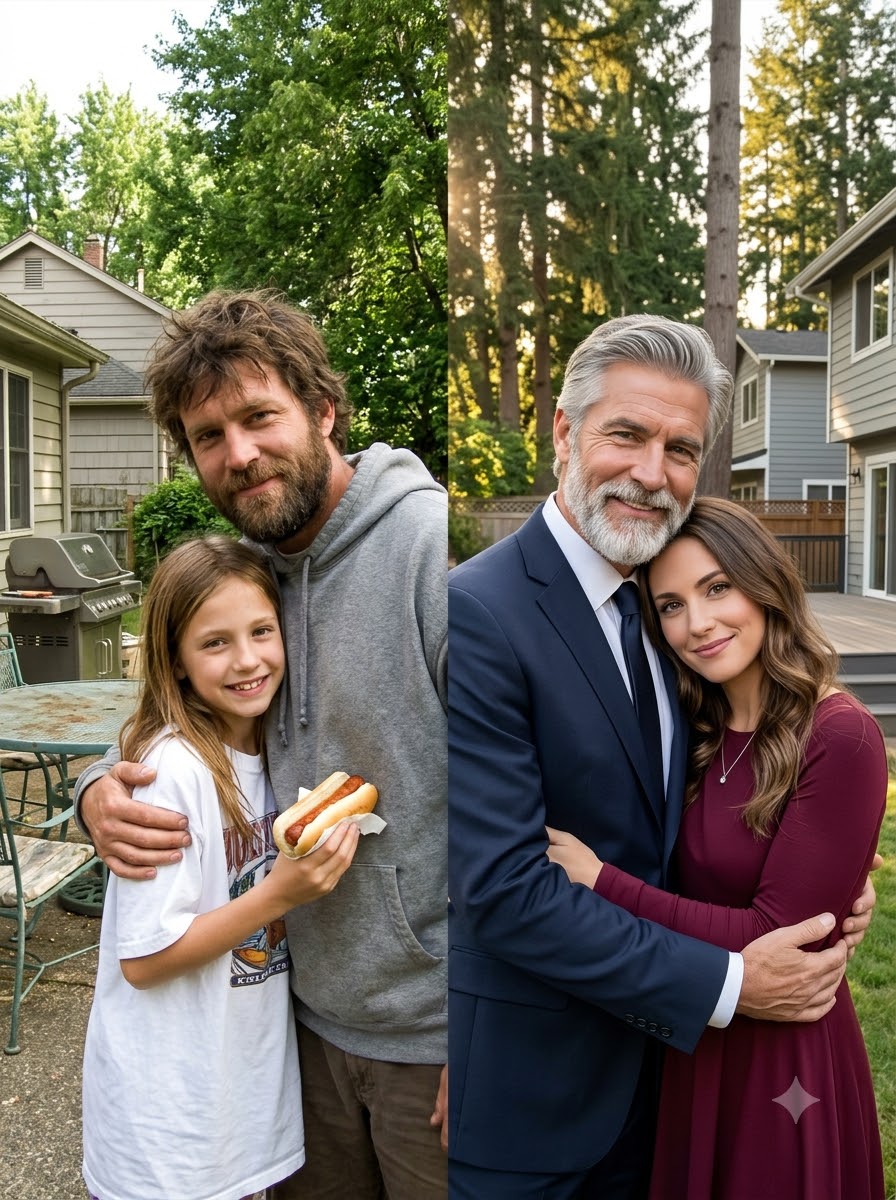
“But first, you need to eat.”
He looked surprised.
“What?”
I lifted the foil.
“I made meatloaf. Mom’s recipe. And I promised her I’d make sure you were fed.”
For the first time that morning Russell laughed.
It was a quiet, emotional laugh that made me smile despite my tears.
“Then I suppose we shouldn’t disappoint her.”
Dinner on the Front Steps
We sat together and shared the meal.
The meatloaf was slightly dry, and I had forgotten how much pepper my mother usually added.
Russell took a bite and smiled.
“Your mother would have added more seasoning.”
I laughed.
“She absolutely would have.”
We talked about ordinary things for a while.
He told me about the flowers my mother planted every spring and how she always insisted that he take the largest portion of whatever she’d cooked.
I told him about my work, my apartment, and how strange it felt to return home without hearing her voice.
For the first time Russell didn’t feel like a stranger living behind our house.
He felt like someone who had known my mother in ways I was only beginning to understand.
When we finished eating he picked up the silver necklace.
“She wanted you to have this.”
He carefully placed it around my neck.
The metal felt cool against my skin.
I remembered my mother wearing it when she tucked me into bed, helped me with homework, and held my hand during thunderstorms.
“Thank you,” I whispered.
Russell shook his head.
“Your mother is the one we should both be thanking.”
The Home We Found Again
A month later I accepted Russell’s offer to transfer the house into my name.
I didn’t make that decision because of its financial value.
I accepted because I couldn’t bear the thought of losing the little kitchen where my mother had cooked thousands of meals or the back porch where she had taught me lessons I hadn’t understood.
Russell moved into a small apartment nearby.
He began meeting regularly with his counselor and slowly reconnecting with people from his earlier life.
Every Saturday he visits to help with the garden.
Sometimes we cook together.
Other evenings we carry two plates outside and sit near the place where his shelter once stood.
We talk about my mother, his daughter Sophie, and the ordinary moments that make life meaningful.
Sometimes we simply sit quietly.
I’ve learned that silence can feel comforting when you’re sharing it with someone who understands.
The silver necklace now rests in a small dish beside my kitchen window.
Every morning sunlight catches its worn surface.
Whenever I see it I remember the woman who raised me with very little money but more compassion than I could understand as a child.
For years I thought my mother was choosing a stranger over her daughter.
Now I know she never made that choice.
She was showing me that kindness doesn’t have to come at someone else’s expense, and that the smallest acts of care can return to us in ways we could never predict.
I once believed Russell had taken something from our family.
Instead he had quietly helped protect our future.
And my mother had given him something no amount of money could purchase.
A reason to believe that his life still mattered.
Last Sunday Russell and I prepared my mother’s favorite Sunday dinner.
We made enough for several neighbors, including an older gentleman who lives alone down the street.
As I carried a plate to his door I thought about all the times I had watched my mother walk across our backyard with a warm meal.
For the first time I understood why she never considered it a burden.
When I returned home Russell was waiting on the porch.
“You look just like your mother when you do that,” he said.
I smiled.
“I hope so.”
And that evening, as the sun disappeared behind the neighboring rooftops, I touched the silver necklace and whispered the words I wished I could have said while she was still here.
“I kept my promise, Mom. And I finally understand why it mattered.”
A Message About Kindness, Family, and the Things We Understand Too Late
Sometimes the people who appear to have the least to offer are carrying stories, experiences, and quiet generosity that could change our understanding of the world if we took the time to know them.
A parent’s sacrifices are not always visible in the clothes they buy, the money they earn, or the comforts they provide, because some of their greatest gifts are the opportunities they create without asking for recognition.
We should be careful about judging the choices of those who love us, because what looks like an unnecessary sacrifice today may turn out to be an act of wisdom we only understand years later.
True kindness is not measured by how much someone can afford to give, but by the willingness to share what they have while still respecting their own needs and responsibilities.
The people who quietly support our dreams may never appear in our graduation photographs or receive applause for our achievements, yet their generosity can become part of the foundation on which our futures are built.
When someone has experienced profound loss, compassion and patient friendship can help them rediscover their worth, even when the journey toward healing takes many years.
There are moments when accepting help requires as much courage as offering it, because gratitude does not diminish our independence or erase the hard work that brought us to where we are.
A loving parent may not be able to give their child every material comfort, but the values they demonstrate through ordinary decisions can become an inheritance more lasting than money or property.
If someone has shown you kindness during a difficult season, remember that the most meaningful way to honor their generosity may be to extend that same compassion to another person who needs it.
And whenever you have the chance, tell the people you love that you appreciate them, because understanding sometimes arrives late, but expressing gratitude while they can still hear it is a gift that should never be postponed.
