


Part 2
The first call came at 6:12 a.m., from Detective Marcus Reed.
“Mrs. Langley,” he said, calm and businesslike, “your husband tried to board Flight 418 to Zurich with Ms. Olivia Marsh. Homeland Security flagged both passports before boarding. They’re being held for questioning.”
I stood in the kitchen in my robe, watching coffee drip into the machine Victor had once called “too cheap for people like us.”
“Did he say anything?” I asked.
Reed paused. Behind him I could hear muffled airport announcements, rolling suitcases, travelers heading toward lives that still belonged to them.
“He said you were emotionally unstable,” Reed told me. “Then claimed you’d given him full authority over all marital and business assets.”
I let out a quiet laugh. “Of course he did.”
“We also found a hundred and eighty thousand in cash in Ms. Marsh’s carry-on. Plus several certified checks from accounts linked to Langley Medical Logistics.”
The company name still felt foreign in my mouth.
Langley Medical Logistics had started in my father’s garage in Ohio, long before Victor had any idea what freight compliance meant. My father, Harold Whitaker, had built it up hospital by hospital across the Midwest. I’d pushed it east. Victor came in later, after we married, bringing charm, swagger, and almost no real skill.
Over the years, I’d let people assume he ran the show. It was simpler that way. Investors ate up his big speeches. Clients trusted my quiet reliability. Behind the scenes, I fixed his numbers, cleaned up his messes, and rescued deals he nearly torched.
Then Olivia showed up.
Her looks weren’t the issue. Her ambition was reckless. She kept telling Victor he deserved better. To her, I was dull, forgettable — “a spreadsheet in human form.” I’d found that exact phrase in one of their messages.
Spreadsheets remember everything, though.
By 8:00 a.m., my attorney, Diane Caldwell, arrived with two associates and a sealed folder.
“You look rested,” she said, pulling off her gloves.
“I slept before the storm hit.”
Diane smiled. “Good. Victor’s lawyer is already pushing for an emergency hearing. Claims you froze the accounts out of spite.”
I took the folder. “Can he prove he had legal access?”
“No. That’s the beautiful part. The restructuring you approved last month put operational control under the Whitaker Family Trust. Victor signed it himself.”
“He thought it was tax paperwork,” I said.
“He never got past page seven.”
Victor never read anything longer than a dinner menu.
By midday, word had reached the board. Three members called me privately. One apologized. One claimed he’d always suspected Victor was unstable. The third, Arthur Bell, just wanted to know if quarterly deliveries would be affected.
“No,” I told him. “The company runs better by Monday.”
At 2:30 p.m., I finally played Victor’s first voicemail.
“Claire, listen to me. This is a misunderstanding. Olivia panicked. I didn’t mean that message. You know how I get when I’m angry. Call Diane off. We can fix this.”
His second message was harsher.
“You think you’re clever? You think paperwork makes you powerful? I made you relevant!”
The third came from Olivia.
“Claire, please. Victor told me you two were separated. I didn’t know about the money. I didn’t know any of this was illegal.”
I played that one twice.
Not because I believed her.
Because the shake in her voice matched mine exactly, from five months earlier — standing alone in my bathroom, reading her texts on Victor’s phone, realizing my marriage hadn’t collapsed all at once. It had been taken apart piece by piece while I was busy holding it together.
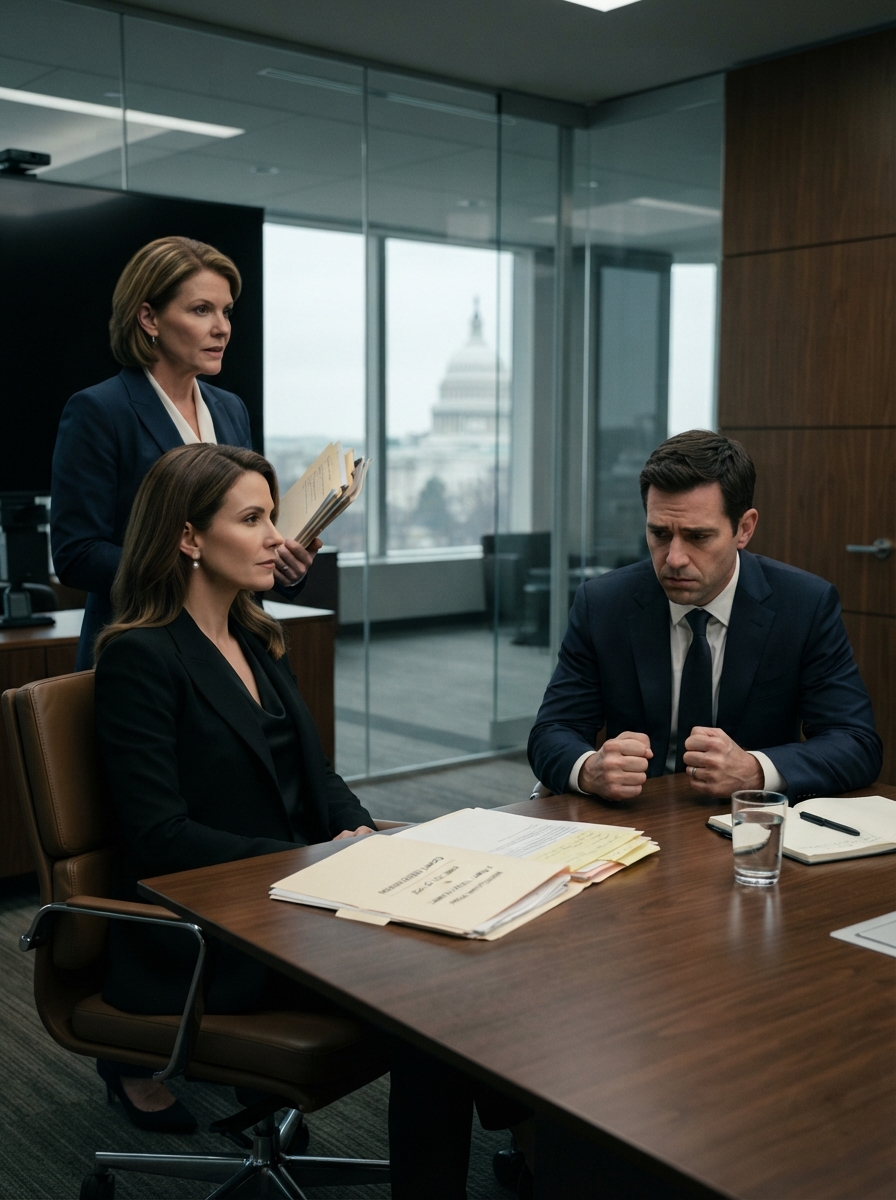
That evening, Diane and I sat across from Victor in a conference room at the federal building.
Without his tailored coat, he looked smaller.
His eyes fixed on mine. “Claire,” he said, voice softening, “baby, please.”
I folded my hands.
“You called me useless at 2:37 this morning.”
Beside her public defender, Olivia stared at the floor.
Victor swallowed. “I was angry.”
“No,” I said. “You were honest. That was your mistake.”
Diane opened the sealed folder and slid a page across the table.
Victor’s face went white as he read the first line.
It wasn’t divorce papers.
It was a civil complaint — fraud, breach of fiduciary duty, misuse of company funds, identity theft, conspiracy.
I stood.
“Enjoy the hearing, Victor.”
He gripped the edge of the table. “Claire, you can’t destroy me.”
I looked at the man I’d once loved — the one who’d mistaken my patience for a blank check.
“I’m not destroying you,” I said. “I’m taking back everything you built off of me.”
Part 3
Two days later, the emergency hearing convened at Suffolk County Superior Court.
Victor showed up in a navy suit that hadn’t been pressed properly. I felt more satisfaction over that than I should have. For years I’d quietly managed everything that made him look polished — the dry cleaning, the reservations, the charity lists, the client gifts, the edited speeches, the carefully worded apologies. Without me, he looked like a man who’d thrown on clothes in a hurry and called it a plan.
Olivia sat behind him, jewelry-free. My diamond bracelet had already been photographed, logged as evidence, and locked away at Diane’s office.
Judge Evelyn Ross took the bench at 9:05 a.m. and made it clear immediately she had no patience for stalling.
Victor’s attorney, a sharp-faced man named Peter Nolan, stood first.
“Your Honor, my client has been locked out of personal and professional accounts by his wife in an act of emotional retaliation. Mr. Langley has been a senior executive of Langley Medical Logistics for nearly eight years. He has a right to access funds necessary for his living expenses and legal defense.”
Judge Ross looked over her glasses. “Was Mr. Langley attempting international travel when these accounts were frozen?”
Nolan hesitated. “He had planned a short business trip.”
Diane rose, unhurried. “With his mistress, Your Honor. One-way tickets to Zurich. Booked under false names. Carrying a hundred and eighty thousand dollars in cash and certified checks pulled from company accounts he had no authorization to touch.”
A ripple moved through the room. Even the court clerk glanced up.
Nolan’s jaw tightened. “Those allegations are still under investigation.”
“They’re documented,” Diane said.
She pulled up the first exhibit.
One transfer record.
Then another.
Then a string of emails between Victor and Olivia’s brother, Grant Marsh, laying out how to funnel money through a consulting firm with no employees, no office, and no actual clients.
Victor stared straight ahead.
I watched his hands instead. His right thumb kept rubbing his wedding band, still on his finger. Maybe he thought it made him look sympathetic. Maybe habit had simply outlived his guilt.
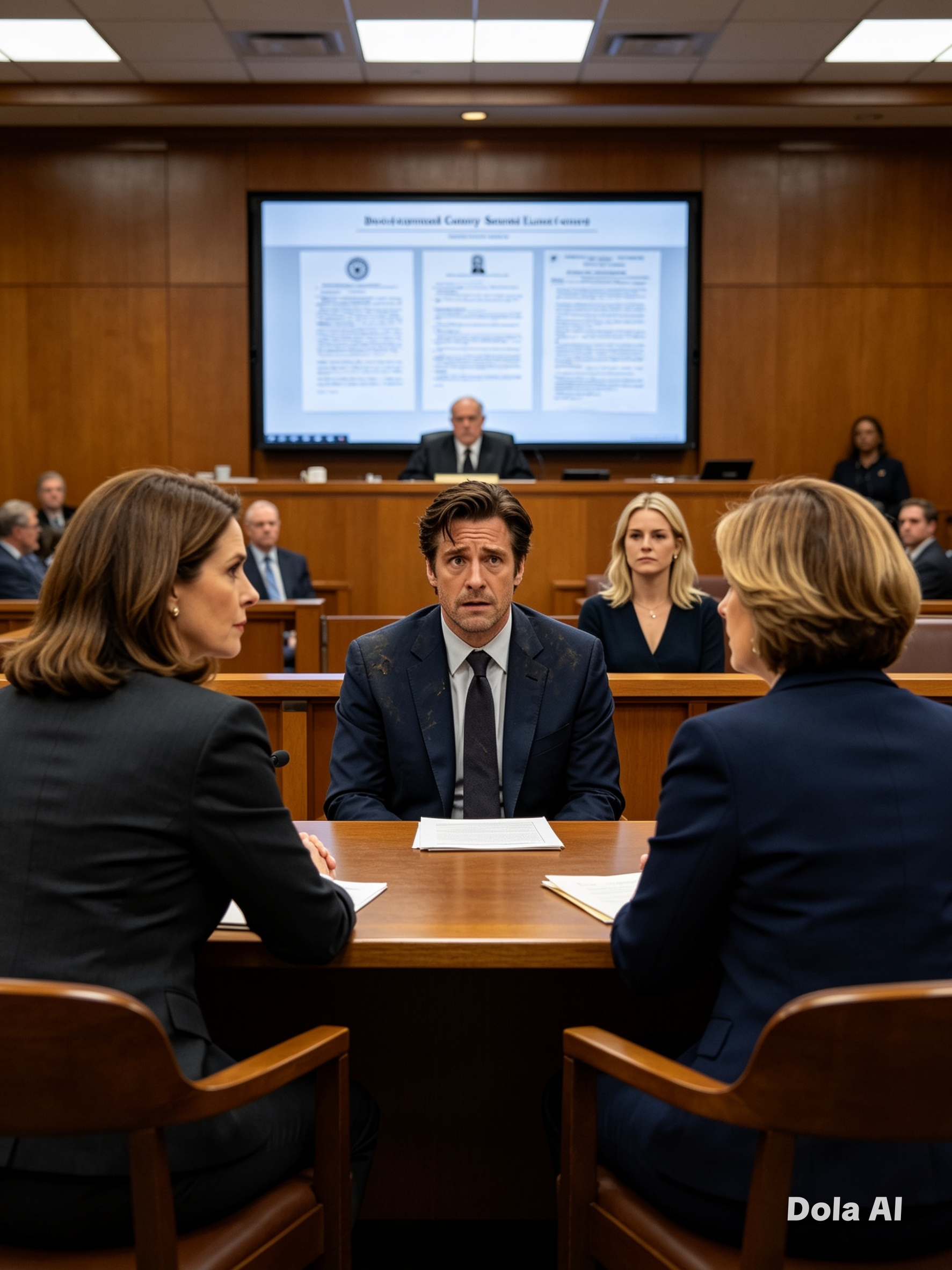
Diane put up the airport text next.
“Goodbye, useless woman! I’ve stripped you of all your assets!”
The words sat in bold black letters on the screen.
Sometimes a room goes cold even though nothing’s changed temperature-wise. This was one of those moments.
Judge Ross read it twice.
“Mr. Nolan,” she said, “does your client dispute sending this?”
Nolan turned to Victor.
Victor stared at the table.
“No, Your Honor,” Nolan said.
Diane continued. “Mrs. Langley did not freeze these accounts out of retaliation. The Whitaker Family Trust, majority owner of Langley Medical Logistics, initiated emergency protective measures after forensic accountants flagged unauthorized transfers totaling 2.6 million dollars over nine months.”
Victor’s head snapped toward me.
It was the first time he’d heard the full number.
He’d assumed he was skimming amounts small enough to slip past notice. A fake consulting fee here. A phantom vendor payment there. A so-called “temporary liquidity adjustment” buried in a quarterly report.
But spreadsheets remember everything.
Diane kept going, level and even. “Mr. Langley also signed documents last month acknowledging the trust’s final say in matters of executive misconduct. His signature is on pages seven, twelve, and nineteen.”
Judge Ross turned to him. “Mr. Langley, did you read what you signed?”
Victor’s face reddened. “Claire handled the paperwork. She always put things in front of me and said it was routine.”
I almost smiled.
That was his entire defense: he’d trusted the useless woman to manage every important detail.
Judge Ross wasn’t moved.
“Your signature isn’t decorative, Mr. Langley.”
By the end of the hearing, Victor was still locked out of every corporate account. The judge issued a temporary restraining order barring him from selling, hiding, transferring, or borrowing against marital property. His passport stayed with federal authorities. Olivia was ordered to hand over all financial records and communications tied to Grant Marsh’s business.
After the judge left, Victor shoved his chair back.
“Claire,” he snapped.
Diane touched my sleeve, but I shook my head slightly. I wanted to hear his last performance.
He came close enough that I could see the exhaustion under his eyes.
“You planned this,” he whispered.
“Yes.”
That admission seemed to wound him more than any denial could have.
“For how long?”
“Long enough.”
His face hardened. “You set me up.”
“No, Victor. I documented you.”
He leaned in. “You think you’ll keep the company? You think the board wants you? They liked me. They respected me.”
“They put up with you because I made you useful.”
For the first time in our eleven years together, Victor had nothing to say.
I turned and walked away before he could find something.
The following weeks were rough, but not chaotic. Preparation had bought me that.
Grant Marsh tried scrubbing corporate records from a rented office in Providence. The FBI already had duplicates, pulled via subpoena from the company’s cloud storage. Olivia initially insisted she knew nothing. Later she admitted she’d helped Victor set up accounts after he promised they’d “start fresh in Europe.” Cooperating softened her consequences — it didn’t erase them.
Victor fought everything.
He contested the divorce.
He fought the civil suit.
He fought the board’s decision to remove him.
He even tried to keep my mother’s emerald earrings, arguing they’d been “gifted to the marital household” — despite photos from my college graduation showing them on my ears years before I met him.
Each lie generated another record.
Each record made Diane grin wider.
The board met on January 14th, in the top-floor conference room of our Boston headquarters. Snow drifted past the windows, blurring the harbor into gray. Twelve directors sat around the long walnut table. Several had known my father personally. Others had come aboard after Victor joined. Every face was guarded.
Arthur Bell cleared his throat. “Claire, no one’s questioning your competence.”
Sentences like that usually mean the opposite is coming.
I said nothing.
He continued. “But the public nature of this could shake hospital confidence. We need stability.”
“Agreed,” I said.
Priya Desai, one of the younger directors, leaned forward. “What are you proposing?”
I laid out the documents in front of me.
“First, immediate rebranding — back to the original name, Whitaker Medical Logistics. Second, an independent audit of every vendor relationship. Third, a client communication plan, already drafted and ready to go. Fourth, Victor’s executive role terminated for cause, effective now, all compensation suspended pending litigation.”
Arthur’s eyes narrowed. “You put all this together?”
“Yes.”
“Before today?”
“Before Victor made it to the airport.”
Silence.
Then Priya smiled. “I vote yes.”
The motion passed, nine to three.
That same afternoon, I was named acting CEO.
Not because I was Victor Langley’s wronged wife.
Because the hands running this company had always been mine.
Our first public statement went out at 4:00 p.m. — restrained, factual, deliberately unremarkable, exactly how a crisis statement should read. No accusations. No emotional language. No mention of affairs or airport photos. Just corporate oversight, uninterrupted service, and commitment to patient care.
Hospitals didn’t care about Victor’s bruised ego. They cared about insulin arriving on time, surgical supplies processed correctly, temperature-sensitive medicine handled properly.
They stayed with us.
By March, we’d landed two new hospital networks.
The forensic investigation wrapped up in May.
In June, Victor pleaded guilty to financial crimes involving unauthorized transfers and falsified records. There was no dramatic courtroom scene. Real consequences rarely look like the movies. No collapse. No thunderclap outside. No sobbing confession.
Victor stood stiffly before the judge, colorless, as each term was read aloud.
Restitution.
Probation conditions.
A suspended prison sentence, contingent on cooperation and repayment.
A permanent ban from holding executive control over fiduciary funds.
The civil case stripped away nearly everything he’d tried to take.
Our divorce was finalized in September.
I kept the house, then sold it three months later. I didn’t want to keep living in rooms where I’d spent years pretending not to notice the growing distance between us. My new place was smaller, full of wide windows and clean, empty walls. No old memories waiting in the closets.

Victor moved into a rental near Hartford. Olivia left Boston. Last I heard, she’d gone back to real estate and dropped his name from hers. I never bothered checking up on either of them. Real freedom means you stop tracking whether the people who hurt you are suffering.
Exactly one year after Victor sent that airport photo, I was at a medical logistics conference in Chicago. Whitaker Medical Logistics had just won a regional excellence award. My father, slower now with age, watched from the front table, eyes wet, as I walked up to accept it.
After dinner, while people crowded the bar, my phone buzzed.
An unfamiliar number.
For a second, I thought about ignoring it.
Then I opened it.
It was from Victor.
“Claire. I know I don’t deserve a response. I just wanted to say I understand now. You were never useless. I was.”
I stared at it for a long moment.
It didn’t bring the satisfaction people imagine it would. Revenge only burns bright in stories. In real life, by the time someone who hurt you finally sees what they did, you’ve usually already carried the weight too.
Disclaimer: This content may be created by AI for entertainment purposes. Any resemblance to real persons, events, or places is coincidental.
