

The Signature That Changed Everything
Part 1: The Room Where I Was Asked to Leave
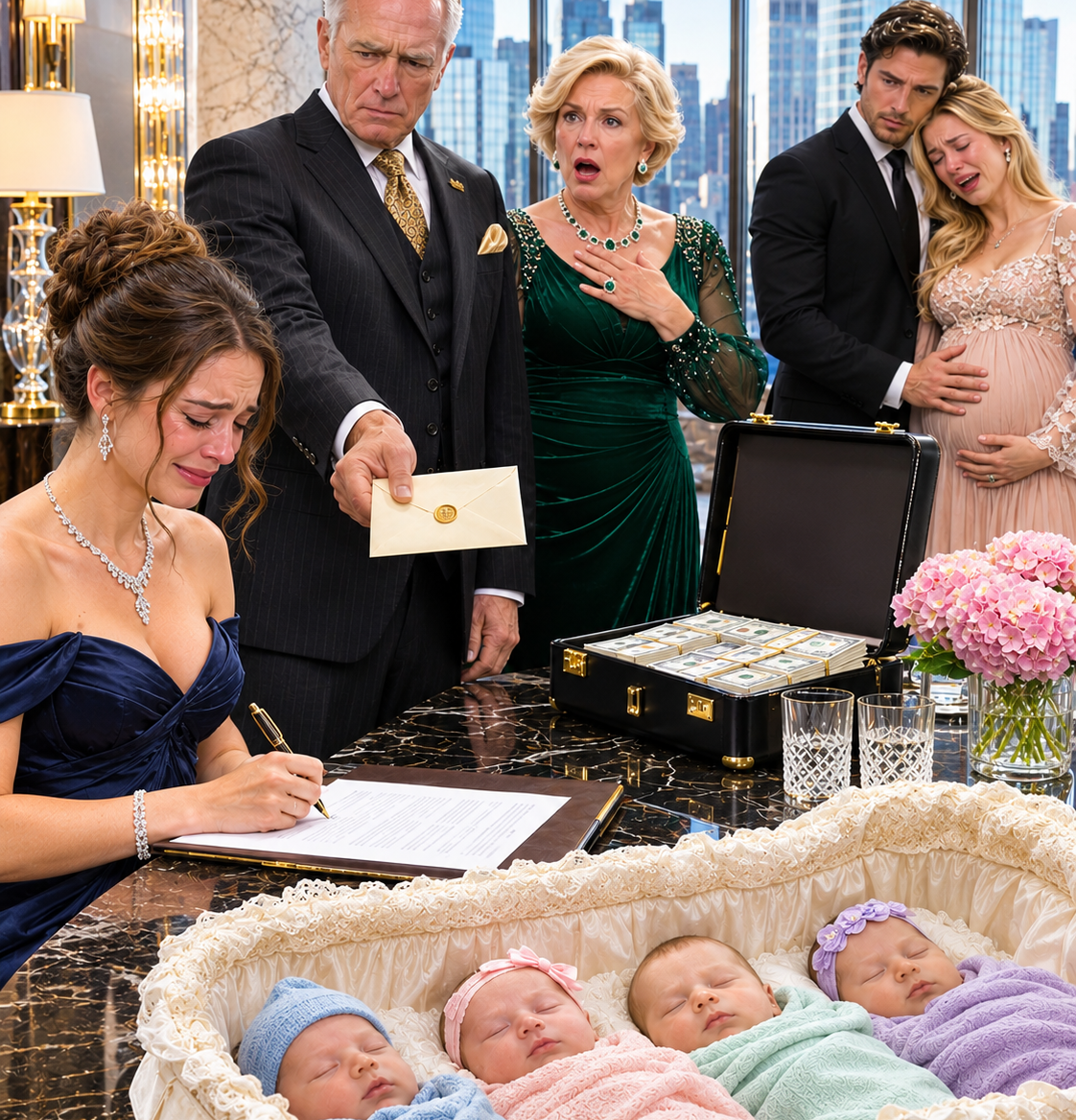
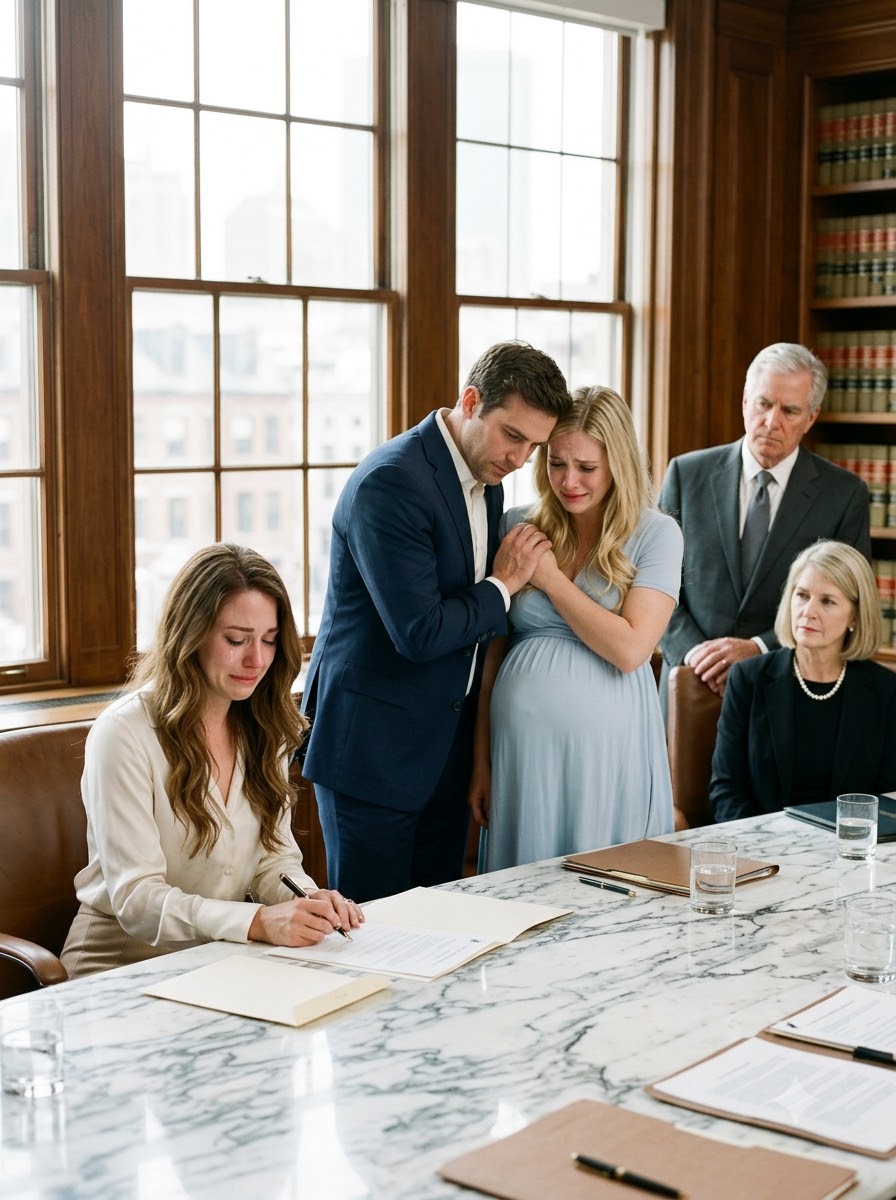
My husband sat beside the woman carrying his children, close enough that their shoulders touched. In front of me lay a stack of divorce papers.
His father had set a fountain pen beside the signature line, as if this were a routine closing and not the end of a marriage I had spent years trying to save.
“Patrick,” I said quietly. “Look at me.”
He did, for a moment. I thought I saw the man who used to wait up for me with cold takeout and a bad joke.
“Tell me not to sign.”
His lips parted. A crease formed between his brows, and I couldn’t tell if it was regret or just the discomfort of being asked to choose in front of his parents. Then Tessa pressed a hand to her rounded stomach and began to cry. Patrick turned to her at once, murmuring that she was fine, that she should breathe slowly. He gave her the tenderness I had been begging for, and the last stubborn part of me finally understood. Our marriage had ended long before anyone printed the paperwork.
My name is Lydia Hartwell, and until that afternoon in a Boston law office, I still believed we were building a life together.
Children had hung over us from the very first holiday at his parents’ house. Warren Leighton had built a real-estate empire and talked about its future like a man who believed every uncertainty could be fixed with a contract. His wife, Elaine, never raised her voice, but she could turn a casual remark into a verdict. For three years she had asked whether I had good news, whether I’d made another appointment, whether I was sure I was following the doctor’s orders. Every negative test, I told myself, was only one more month. Patrick would hold me and promise we had time.
What I didn’t know was that while I was learning to live with the possibility that motherhood might take longer, my husband had been seeing Tessa, a program director at the family foundation. She was expecting triplets. His parents had decided that made everything simpler.
Warren sat at the head of the conference table, Elaine at his right, Tessa at his left in a pale blue dress, eyes fixed on the papers. An ivory envelope rested in front of me.
“Twelve million dollars,” Warren said, “transferred the moment the divorce is final. But only if you sign this afternoon. It’s generous. It lets everyone move forward without a public fight.”
“Tessa is carrying three healthy boys,” he added. “You understand what that means for this family’s future.”
He spoke of those babies as heirs, as if their lives had already been assigned to offices and boardrooms. I asked whether he truly believed grandchildren gave him the right to decide my marriage was over. He leaned back and called the offer fair. Elaine studied her bracelet. Patrick studied the table.
I had walked in with one question burning in my chest. Now I asked it.
“How long has this been going on?”
“Don’t make this worse than it is,” Patrick muttered.
I asked again, slower, until he finally admitted it had been months. Months of me cooking the dinners he liked. Months of me going to appointments alone and wondering if the distance between us was my fault. Months of him letting me believe he was stuck at work when he had chosen to be somewhere else.
Tessa looked up and said she’d never wanted to hurt me, that the pregnancy had changed everything. I asked how she could sit beside my husband while his father paid me to disappear. Her eyes dropped. She said she was under a lot of stress and had to think about the babies. Patrick reached for her hand, then glanced at me as though I were the cruel one.
That was when I understood. My pain had become an inconvenience to everyone in that room.
I gave him one last chance. I told him he could still ask his father to put the papers away, own what he’d done, and try to repair us before we were reduced to signatures. For one second, I saw the man I’d married caught between us. Then Tessa whispered that she was scared, and he leaned toward her.
I picked up the pen.
I didn’t sign because of the money, and I didn’t think the agreement was fair. I signed because begging him to choose me had become another way of giving up my dignity. Warren exhaled with visible relief. Elaine murmured that she was sorry, but her apology arrived after years of remarks about my body and comforted no one. Patrick pushed back his chair as I stood, saying my name as if he’d only just remembered I was there.
I left the envelope on the table and walked out.
I made it to my best friend Joanie’s apartment before I broke. She opened the door, took one look at my face, and pulled me into her arms without a single question. Only when my throat was raw could I tell her everything: Tessa, the triplets, the twelve million dollars.
Joanie was quiet for a moment. Then she asked something that drained the warmth from the room.
“Lydia, when was your last period?”
I opened my mouth to answer, and nothing came out. I counted back, and the numbers made no sense. Joanie was already pressing a small box into my hand from the bathroom cabinet. Minutes later, I stared down at two pink lines.
I slid to the floor. The one thing I had prayed for all those years had arrived on the very day my marriage ended. Patrick didn’t know. His parents didn’t know. And I had no idea whether this news was a gift or just one more thread the Leightons could use to pull me back into their plans.
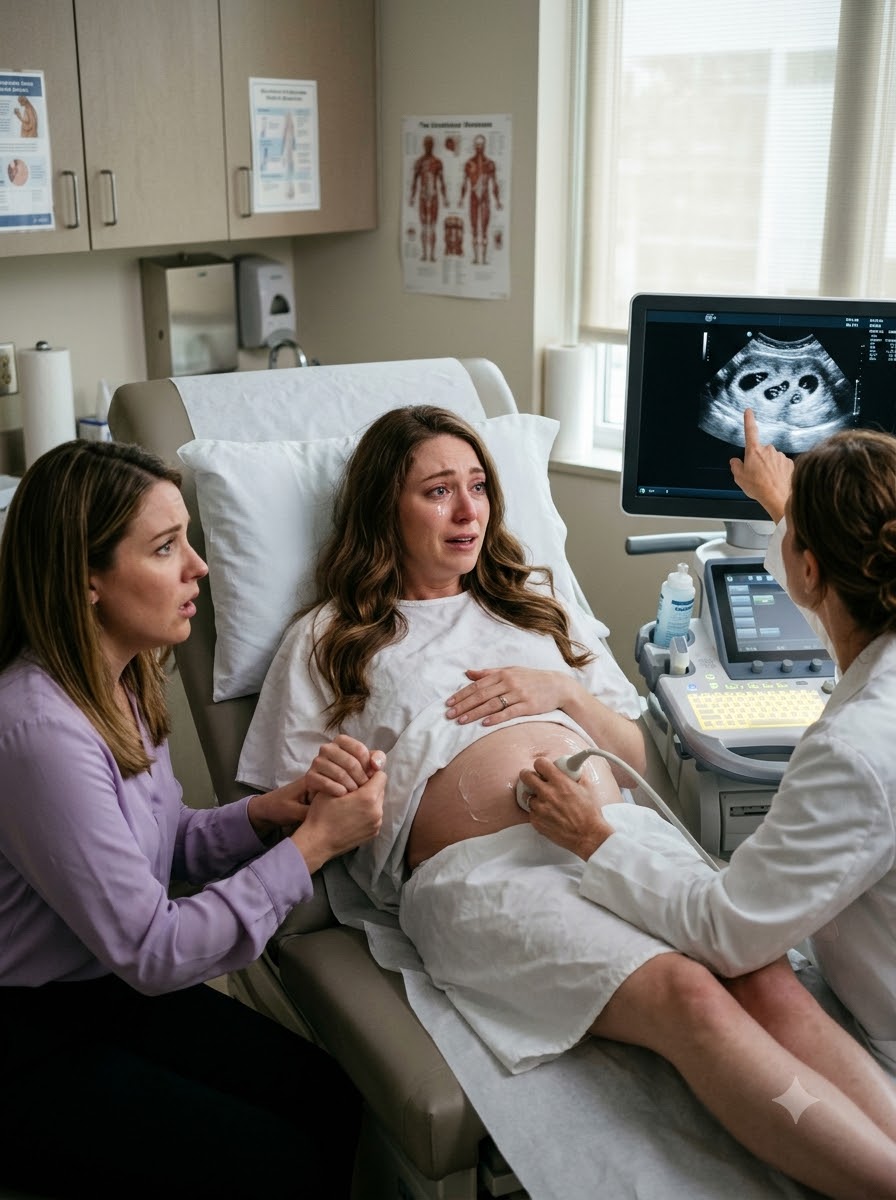
A few days later, I lay on an exam table in a clinic near the Charles River, trying not to let myself feel too happy too soon. The technician studied the monitor, then smiled and pointed at a tiny flicker.
“There’s one,” she said softly.
Tears filled my eyes. Then she moved the wand, frowned slightly, and found a second flicker. Joanie squeezed my hand. The technician went very quiet. She said she wanted the doctor to take a closer look.
I searched her face for a clue. She wouldn’t meet my eyes.
The doctor came in and examined the screen. She counted once. Adjusted the monitor. Counted again. I watched her point to one small shape, then another, then a third.
Three.
I had gone from believing I might never be a mother to wondering whether I was carrying triplets, and I could barely breathe. Joanie kept her eyes on my face, ready to catch me.
Then the doctor paused, and slowly turned the screen toward herself.
“Lydia,” she said. “Don’t move. There’s a fourth.”
Part 2: A Secret Kept for the Right Reasons
The room went completely still. Joanie’s fingers tightened around mine. The doctor checked again, carefully, methodically, and confirmed it. Four tiny heartbeats, all steady, at about nine weeks.
I stared at the grainy image. Four lives had been growing quietly inside me while I sat at a table where people had decided my body had failed them.
Outside the clinic, the late-afternoon light looked almost too bright. We sat on a bench while Joanie arranged a ride. I rested both hands on my flat stomach and waited for panic to arrive. It didn’t. Instead came a steady, quiet clarity.
“They can’t know yet,” I said.
Joanie turned to me. “Not until you’re ready?”
“Not until the divorce is final, the money is secure, and I have my own attorney. If Warren finds out while the papers are still moving, he’ll turn these babies into a negotiation. A family matter. An inheritance question. I need time to decide what I want without anyone telling me what it means.”
She thought about it, then nodded. “Then we do this at your pace.”
Patrick called constantly at first. His messages slid from confusion to irritation to strained concern. I let the phone ring while I stood at the window or sat at the kitchen table with my appointment notes spread out. The silence wasn’t meant to punish him. It was the only boundary I knew how to hold. Some nights I missed the ordinary pieces of our life, the shared jokes, the sound of his key in the door, and then I remembered that missing someone didn’t erase what he had chosen. The last voicemail I listened to began with a request that I call him back and ended with a reminder that his father wanted to know why I hadn’t moved the settlement money.
I deleted it. I had spent years translating his silences into affection. I wasn’t going to start translating his messages into something kinder than they were.
The divorce moved fast. The Leightons wanted it finished before Tessa’s due date, and I had no interest in dragging out something that had already taken enough from me. I hired an attorney, Marjorie Bell, a sharp, steady woman who read every page and explained every clause. When the decree was entered, the twelve million arrived in an account Marjorie had helped me set up. I put half into a protected trust and kept the rest for medical care and living expenses. I didn’t want money as a weapon. I wanted it to give my children a stable beginning and to make sure nobody else would ever decide what security looked like for us.
On the morning the divorce became final, I went to the specialist for another scan. Four small bodies shifted on the monitor. The smallest one at the first visit had caught up, and all four were growing just as they should. I asked for the images and a written summary. Then I walked to a quiet café, ordered tea I barely touched, and finally let myself breathe.
Three days later, Patrick turned up at Joanie’s workplace and was escorted out by building security. He tried Marjorie’s office next, where he was told that every message had to go through counsel. A few days after that, his lawyer demanded genetic testing and joint custody, calling it a matter of the children’s best interests.
Marjorie’s reply was two sentences long. The babies had not yet been born, and any parenting plan would be addressed after delivery, with full financial disclosure from both parents.
“Wait,” Joanie said when she read it over my shoulder. “Babies. Plural. How did he know to ask about custody?”
I went cold. I had told no one but her and Marjorie.
Marjorie called Patrick’s lawyer that afternoon and came back looking relieved, though not completely. The request had been generic, boilerplate she’d seen a hundred times. It referred to the unborn children of the marriage, a phrase the Leightons’ legal team used for everything. They hadn’t guessed. Not yet. Still, she made me promise to keep every appointment confirmation off my phone, and I did.
The weeks passed in a blur of appointments and swollen ankles. By thirty weeks, my specialist wanted me close to the hospital. She expected the babies early, so we planned a scheduled delivery at thirty-two weeks, with a full neonatal team in the room.
The night before, I couldn’t sleep. I sat in Joanie’s spare room with my hand on my enormous belly, feeling four sets of kicks, and I talked to them in the dark. I told them I didn’t know much about being a mother, but I knew how to show up. I promised they would never have to earn their place in anyone’s family.
On Tuesday morning, Joanie walked me through the hospital doors carrying a small overnight bag and a folder of ultrasound prints. I was frightened, but I was ready to meet the four people who had changed my entire future before I even knew their faces.
We were halfway across the lobby when I saw them.
Warren stood by the elevators in a charcoal coat, speaking quietly to a man with a legal folder. Beside them, Patrick turned, and his eyes dropped to my stomach.
Every drop of color left his face.
“Lydia,” he whispered. “How many…?”
Warren’s head snapped around. And in the half second before anyone spoke, a nurse touched my elbow and said, very softly, “Mrs. Hartwell, we need to go. Now. Your doctor says the babies can’t wait.”
Part 3: Four Names of My Own
I didn’t look back. The nurse pushed my wheelchair through a set of double doors, and Joanie’s voice rose behind us, sharp and unfamiliar, telling someone they were not allowed past that point. Then the doors swung shut, and the sound of the lobby fell away.
Later I learned that a hospital security officer had stepped in front of Warren and quietly asked him to wait in the visitors’ area. Marjorie, whom Joanie had called from the elevator, arrived within the hour. That was all I needed to know, because in that moment there was only one thing in the world I could do.
The delivery took less than an hour. I was awake, a screen between me and the surgeons, Joanie’s hand clamped around mine. One by one, the babies arrived. First a girl. Then a boy. Then another girl. Then, finally, a second boy. They were tiny and needed help adjusting to life outside me, but each gave one small, clear cry before the neonatal team carried them off to the intensive care nursery.
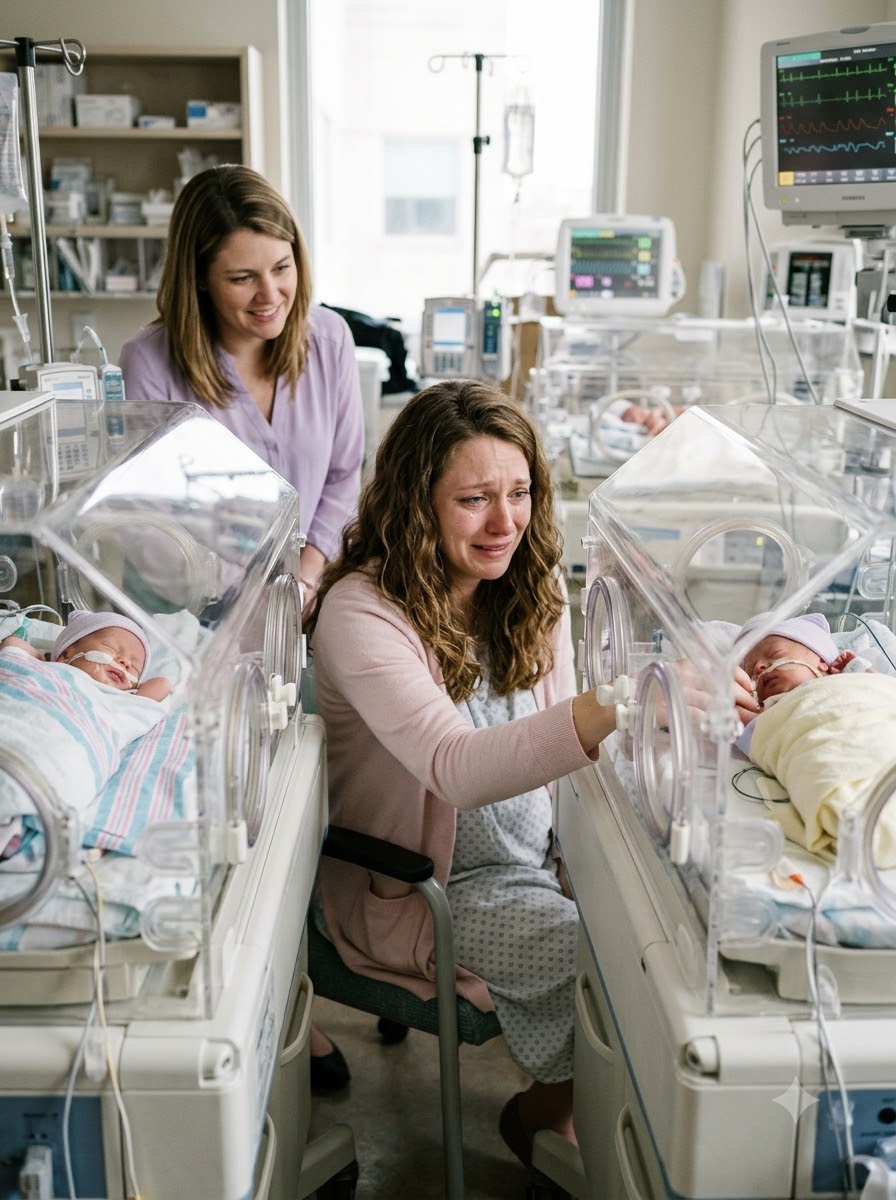
I had imagined motherhood as a sleepy face against my shoulder and a nursery waiting at home. Instead, our first days together were separated by clear incubator walls, soft alarms, and nurses who explained every tiny change. I learned to treasure the smallest things: a finger curling around mine, a steadier breath, a nurse saying they’d finished a little more of their bottle. A nurse brought each baby close enough for me to see a nose, a crease in a miniature hand. I repeated their names so I wouldn’t forget the order in which I had met them.
I named them Willa, Henry, Rose, and Finn. I wrote every name on the hospital forms myself. No family trust had chosen them. No business plan had reserved a place for them. They were my children, and they deserved names picked with love instead of expectation.
The Leightons did not give up quietly. Warren filed a motion to intervene, calling himself the babies’ grandfather with a vested interest in their welfare. Patrick’s lawyer filed for paternity testing and joint custody within the week. Marjorie met every filing with a calm, thorough response. She was the one who explained to me that a good lawyer doesn’t have to shout.
The judge granted me primary physical custody and allowed Patrick supervised visits twice a week, with a review in six months. Child support was set according to his disclosed income. Warren’s request to join the case was denied. The ruling didn’t answer every uncertainty, but it gave my babies a protected routine and gave me room to learn how to care for them without answering to their grandfather.
In the courthouse hallway afterward, Patrick stopped several steps from me. A security officer lingered nearby, but Patrick didn’t raise his voice.
“I didn’t know you were expecting.”
“You knew I was your wife when you sat down next to her,” I said. “You knew I asked you not to let me sign. You had a chance to choose honesty, and you chose the papers.”
He lowered his eyes. He said Tessa’s boys were healthy, then tried to explain that he hadn’t known what he was thinking. I listened, not because I owed him comfort, but because I had once loved him and didn’t want bitterness to be the only thing left between us.
“You thought the story ended when I walked out of that office,” I said. “It didn’t.”
I turned toward the elevator, where Joanie waited with the carriers we had practiced securing in the hospital parking lot. We drove back to the neonatal unit without a word. At the desk, a nurse gave us the news we’d been hoping for. All four babies had gained weight overnight. Willa had finished a whole bottle. Henry had opened his eyes and followed a light. Rose and Finn still needed some extra support, but their condition was steady.
I washed my hands, pulled on the gown, and sat between their beds. I rested one hand near Willa and the other beside Henry, feeling their warmth through the clear sides of the incubators. The monitors marked time in soft, regular tones. Beyond the unit, Boston went on with its traffic and its errands. In that room, the only thing that mattered was four small children making their way forward.
I didn’t know what the coming year would bring. I didn’t know how it would feel when Patrick sat beside them, or whether Warren would keep reaching into their lives with gifts and legal letters. Those questions belonged to another day. For the first time in a long while, I didn’t have to solve every future problem before I was allowed to be present.
The papers were signed. The money was secure. My children were here, with names I had chosen and a mother who would show up, day after day. I had once believed I needed Patrick’s love to become a mother. Now I understood that his choice hadn’t taken that from me. It had only shown me I would have to build the life I wanted without waiting for his approval.
I stayed until the evening nurse began her shift. Before leaving, I told each baby I’d be back in the morning. Then I joined Joanie in the corridor. She handed me a cup of coffee and asked if I was all right. I looked through the nursery window one more time, at four small shapes resting beneath the soft hospital lights.
“I think I will be,” I said.
This time, the words weren’t a promise I was making to soothe someone else. They felt like the beginning of something I could trust.
Note: This story is a work of fiction inspired by real events. Names, characters, and details have been altered. Any resemblance is coincidental. The author and publisher disclaim accuracy, liability, and responsibility for interpretations or reliance. All images are for illustration purposes only.
