


I rushed home two days earlier than planned, my trunk packed with gifts from three different airports because I wanted everything to feel perfect. A silk scarf for my wife, Emily. A soft blue cardigan for my mother, Diane, who had been partially paralyzed since her stroke two years ago. Chocolates she loved but rarely got anymore. A framed photo from a beach trip Emily and I once took, back when life still felt light.
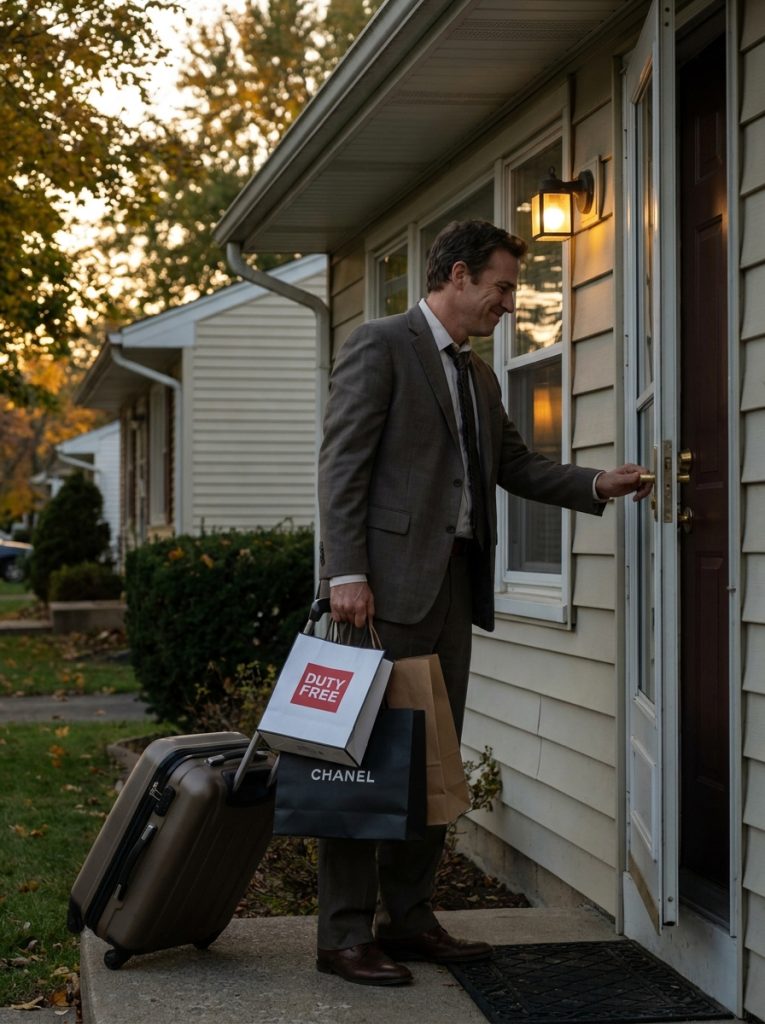
All the way from the airport, I imagined walking in on laughter—Emily teasing my mom, my mom smiling in that quiet, grateful way she had when she felt safe. Before I left, Emily had squeezed my hand and said, “Don’t worry. I’ll take care of her like my own.” And I believed her. Completely. Because loving someone who embraces your hardest responsibility feels like a miracle.
The house looked the same when I arrived. Calm. Still. Almost too still.
Then I noticed the front door.
It wasn’t locked.
Emily never forgot to lock the door.
That was the first crack in the picture I had built in my head.
I pushed it open slowly, the bags pressing into my wrist. I was about to call out, something light and cheerful, but then I heard my mother’s voice from the kitchen.
Small. Fragile. Pleading.
“Please… I’m sorry. I dropped it.”
My body froze before my mind could catch up.
Then Emily’s voice came, sharp and cold in a way I had never heard before.
“Sorry doesn’t clean anything, Diane. Sorry doesn’t fix what you ruin.”
And in that moment, something deep inside me shifted—like a warning I had ignored for too long finally found its voice.
I moved quietly toward the kitchen, each step slower than the last. My heart was pounding, but everything else felt numb.
When I turned the corner, I saw it.
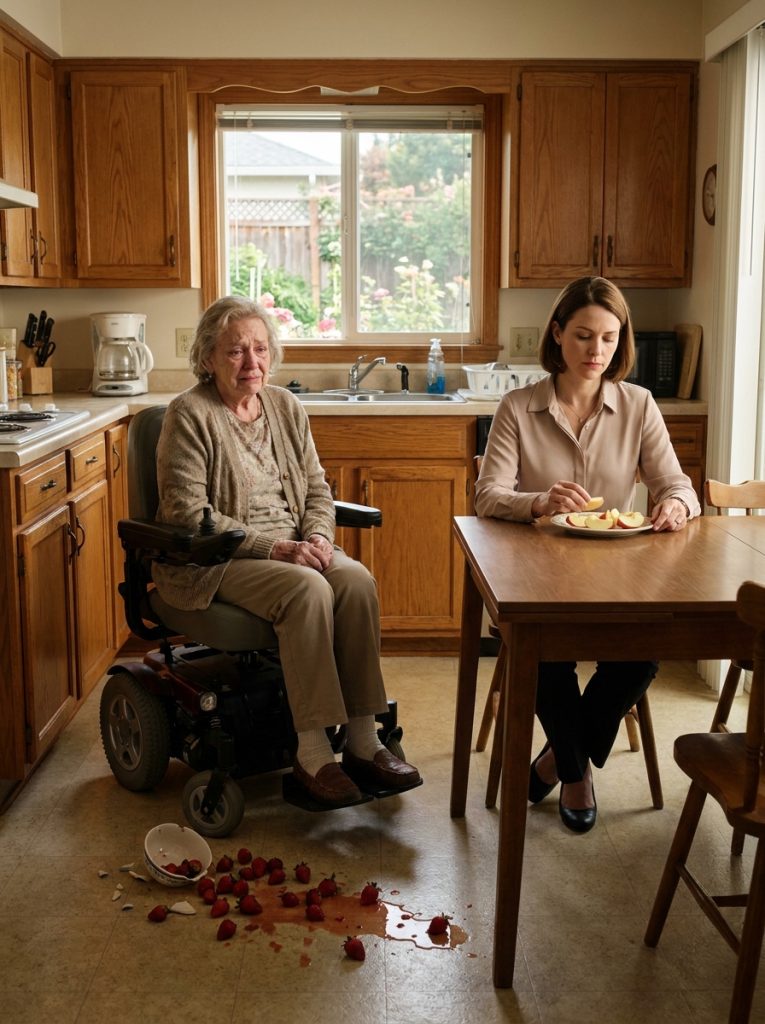
My mother sat in her wheelchair, shoulders curled inward, eyes glistening with tears. A bowl of sliced strawberries had spilled across the floor. Red pieces scattered like something broken beyond repair.
Emily sat at the table, calm. Composed. Eating fruit from another bowl as if nothing was wrong.
Then, without even standing, she leaned forward—
—and slapped my mother across the face.
Not in anger.
Not in a moment of loss of control.
But deliberately. Casually. Like punishment.
My mother flinched. Her voice trembled into a whisper.
“Please… don’t make him hate you.”
That sentence didn’t just break my heart—it shattered everything I thought I knew about the two people I loved most.
The bags slipped from my hands and hit the floor.
Emily turned. Her face drained of color.
That was the exact second my marriage ended—long before either of us said a word.
Silence filled the room.
Heavy. Suffocating.
Emily looked at me like she could still fix this, like the right combination of words could erase what I had just seen.
My mother kept her eyes down, staring at the strawberries on the floor, as if they mattered more than the mark forming on her cheek.
“What the hell was that?” I asked.
My voice was low. Too calm.
Emily stood up quickly, her chair scraping harshly against the tile. “Jack, it’s not what it looked like.”
I laughed. A short, hollow sound.
“I watched you slap my mother.”
“She’s been impossible all week!” Emily snapped, then faltered. “I mean—she… she keeps dropping things, calling me every five minutes, watching everything I do. I haven’t slept. I haven’t had a moment to breathe.”
“Don’t fight because of me,” my mother whispered.
I knelt beside her.
“Mom… look at me.”
She hesitated, then slowly raised her eyes. There was fear there—but not for herself.
For me.
And that realization cut deeper than the slap ever could.
“How long has this been happening?” I asked softly.
She shook her head. “It’s been hard for everyone.”
“How long?”
Emily crossed her arms. “Oh, come on. I’ve done everything here while you’ve been off working, playing the hero.”
I stood up slowly.
“Answer me.”
She rolled her eyes, exhaling sharply. “A few bad days. That’s all. You have no idea what it’s like taking care of someone like this.”
My mother’s voice trembled. “I never—”
“You don’t get to act innocent,” Emily cut in.
And that’s when all the small, ignored details in my memory suddenly aligned into something undeniable.
My mother growing quieter.
Her asking if I could stay home more often.
Emily always speaking for her.
Always saying, “Everything’s fine.”
I reached into my pocket and pulled out my phone.
Opened the home security app.
We only had cameras outside—except one inside the living room, installed after my mother’s first fall.
I hadn’t checked it in weeks.
Emily’s expression changed instantly.
“Jack—wait.”
Too late.
I scrolled.
Clips loaded.
Emily yanking the wheelchair too hard.
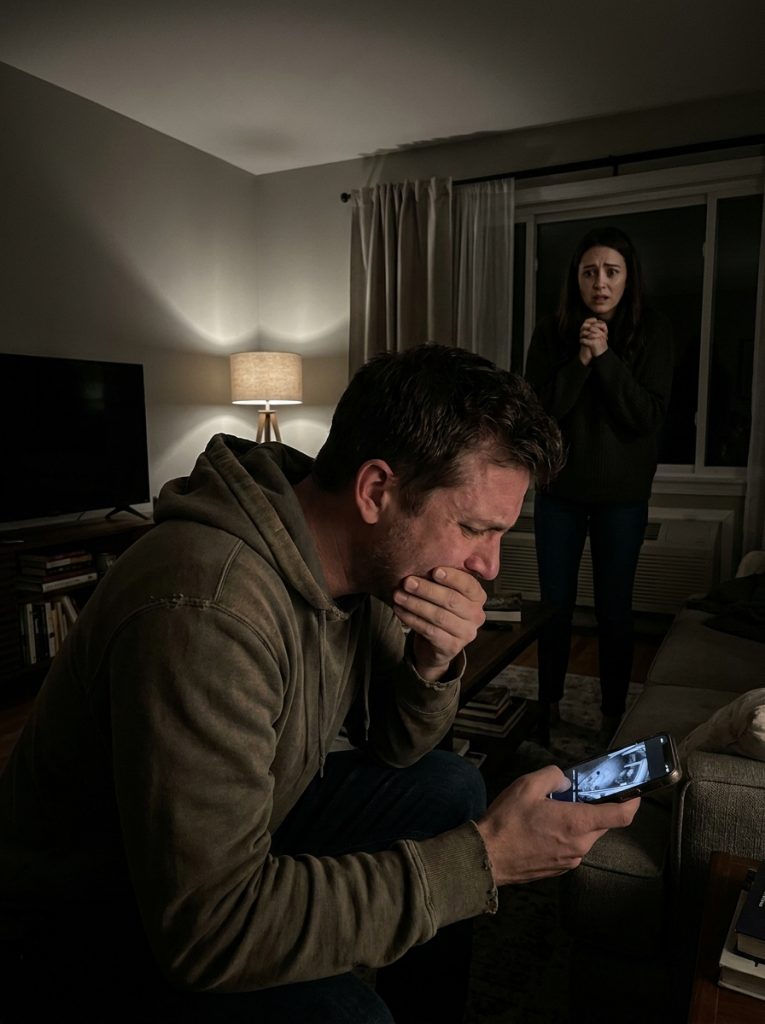
Snatching a glass from my mother’s hands.
Ignoring her for long stretches.
Leaning close once—too close—and saying something that made my mother cry.
Each clip didn’t just show me the truth—it forced me to face how long I had chosen not to see it.
“You lied to me,” I said.
“I was overwhelmed!” Emily shouted. “I’m human!”
I looked at her.
Really looked.
There was no remorse in her eyes.
Only fear of consequences.
“Pack a bag,” I said. “You’re leaving tonight.”
She stared at me. “You can’t be serious. This is my house too.”
“No,” I said quietly. “It was our house.”
“You lost your place here the moment you decided she was someone you could hurt when I wasn’t looking.”
Tears filled her eyes instantly.
“Jack, please… I was tired. I never asked for this life.”
That sentence hit harder than anything else.
My mother closed her eyes.
I stepped between them.
“Then you should have said that before you promised she’d be safe with you.”
Emily grabbed my arm. “Don’t throw everything away over one bad moment.”
I raised my phone.
“One bad moment?”
She saw the footage.
And in that second, the performance stopped.
Completely.
No more tears.
No more pleading.
Just silence.
And that silence confirmed what I already knew—there was nothing left worth saving.
She packed.
I called my cousin Megan, a nurse. She arrived quickly, took one look at my mother’s face, and said quietly, “I’m staying tonight.”
The relief in my mother’s eyes was overwhelming.
Not because Emily was leaving.
But because she no longer had to pretend.
Emily came downstairs with her suitcase, one last attempt ready.
“She manipulated this entire situation,” she said coldly.
I opened the door.
“Goodbye, Emily.”
She waited.
For hesitation.
For weakness.
For love.
There was none.
She left.
I locked the door.
That night, after Megan helped my mother into bed, I sat beside her.
“I’m so sorry,” I whispered. “I should have seen it sooner.”
She reached for my hand with what little strength she had left.
“You came home when I needed you.”
And that was the moment I realized the truth she had been protecting me from all along—she had endured the pain just to protect my happiness.
A week later, I filed for divorce.
A month later, I hired professional care and rebuilt my life around my mother.
It cost me time.
Opportunities.
The future I thought I was building.
But it gave her peace.
And it gave me clarity.
Because sometimes the deepest betrayal isn’t just what someone does to you—
it’s realizing the person you trusted most made someone you love suffer in silence.
If you’ve ever ignored a red flag because trusting felt easier than questioning… then you know exactly how it feels to stand in that kitchen.
And if you had been in my place—
what would you have done the moment you saw her raise that hand?
