

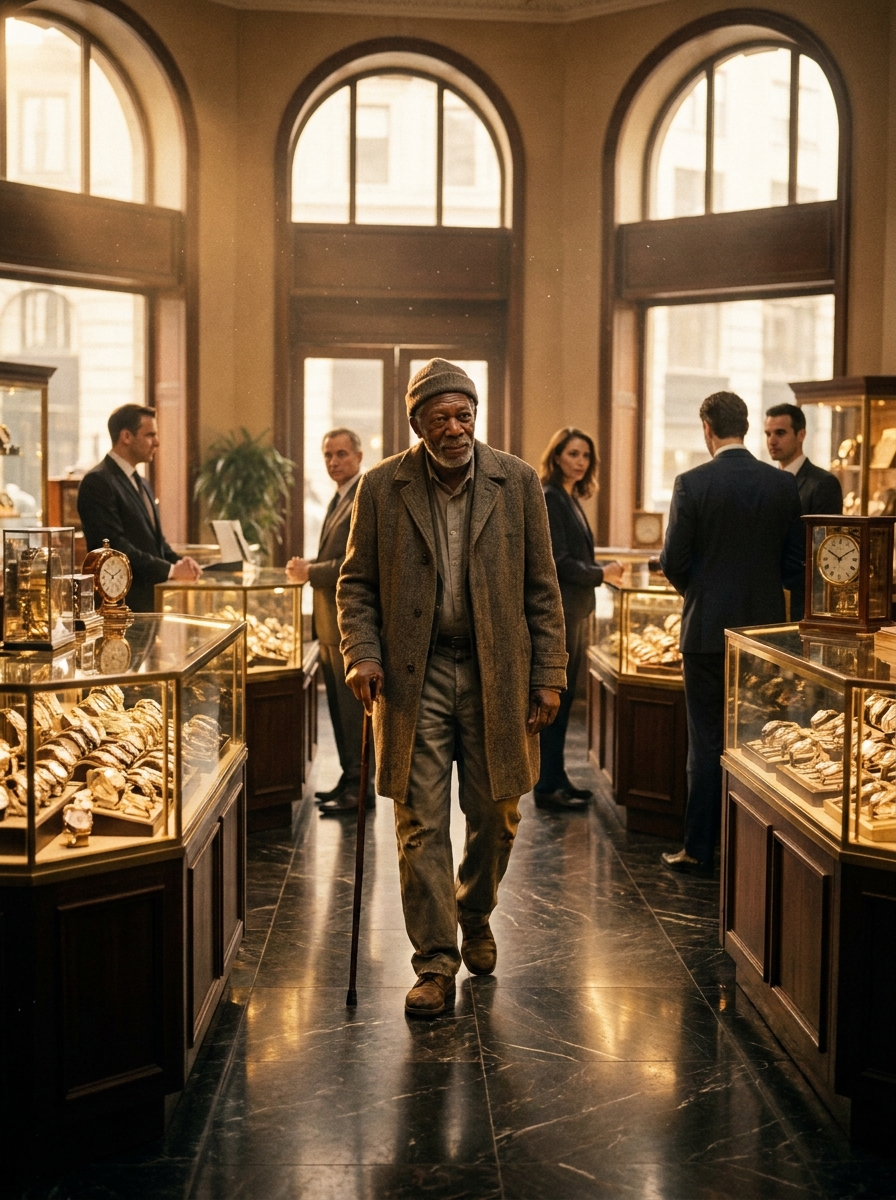
The luxury watch showroom stood in the heart of the city like a silent declaration of wealth and precision. From the outside, its glass façade shimmered under the daylight, reflecting the passing traffic like a mirror that belonged to another world. Inside, everything was designed with intention. The floors were polished marble, the lighting was warm but controlled, and every display case was arranged with surgical perfection. It was not just a store—it was an experience curated for those who already understood value without needing it explained.
Each watch inside those glass cases was more than a timepiece. They were symbols of legacy, craftsmanship, and status. Some had been handcrafted in Switzerland, others were limited editions that only a handful of people in the world could ever own. Soft spotlights bathed them in golden tones, making the metals glow and the glass sparkle like jewels in a quiet museum. Even the air felt different here—cooler, calmer, heavier with unspoken expectations.
People who entered usually adjusted themselves without realizing it. Their voices dropped. Their posture straightened. Their gestures became more careful, as if they were afraid of disturbing the balance of the space. It was the kind of place where wealth was assumed, not questioned.
That afternoon, however, something disrupted that silent order.
An older man walked through the entrance.
He wore a worn jacket that had clearly seen many years of use. His shoes were simple, not polished to a shine like those of the typical clientele. There was no driver waiting outside for him, no luxury car dropping him off at the entrance. He arrived alone, unannounced, and unaccompanied by any visible sign of wealth.
To most people, he would not have looked like he belonged there.
But he did not hesitate.
He stepped inside calmly, as though he had entered places like this many times before. His eyes moved slowly across the showroom, not with awe, but with quiet evaluation. He was not overwhelmed by the luxury around him. Instead, he seemed to be studying it.
He walked toward one of the central display cases.
Inside it were some of the most expensive watches in the entire showroom. Pieces that represented the peak of design and engineering. The kind of watches that collectors waited years to acquire. The older man leaned slightly forward, placing his hands near the glass without touching it. His attention settled on one particular watch, and he studied it with a stillness that suggested deep understanding rather than casual interest.
Time passed unnoticed as he observed.
That was when the dealer noticed him.
The dealer had been standing behind the main counter, dressed in a perfectly tailored suit. His posture was rigid, his expression controlled. He had spent years in this environment and had developed a strong sense of judgment—at least, he believed he had. In his mind, he could recognize who belonged and who did not within seconds.
At first, he simply watched the older man in silence. But as he took in the worn clothing and unassuming appearance, his expression tightened. Something in his mind had already categorized the visitor.
And that judgment came before any conversation even began.
He finally stepped forward.
“Don’t touch anything,” the dealer said coldly.
The words were sharp enough to cut through the calm atmosphere of the showroom.
The older man slowly lifted his gaze. He did not react with anger or confusion. Instead, he looked slightly surprised, as though he had not expected such a tone in a place built on refinement. He said nothing in return.
The dealer, emboldened by silence, moved closer.
“This is not for people like you. Get out right now.”
The statement echoed more than intended. It was not simply instruction—it carried dismissal, judgment, and humiliation all at once.
The showroom reacted instantly.
An employee near the back looked up from their task. Another customer who had been browsing near the entrance stopped completely. The air felt heavier, as if the entire room had become aware that something inappropriate had just occurred.
But the older man did not respond with frustration.
He remained composed.
His gaze returned briefly to the watch in the case, as if confirming something within himself. Then he turned back to the dealer.

“You are making a serious mistake,” he said.
There was no aggression in his tone. Only certainty.
The dealer let out a faint smirk.
“No,” he replied. “The mistake was letting you walk this far inside.”
It was a statement of authority, delivered with misplaced confidence.
For a brief moment, silence filled the space again. No one moved. No one spoke.
Then the older man reached into the inside of his jacket.
Slowly, deliberately, he pulled out a small folder. It was simple, unremarkable in appearance, completely at odds with the tension it was about to create. He placed it gently on the glass counter.
The dealer frowned, annoyed by what he assumed was an attempt to cause trouble.
But as he opened the folder and scanned the contents, his expression changed.
Confusion replaced arrogance. Then uncertainty. Then something closer to disbelief.
The older man’s voice remained steady.
“I am the new CEO of this entire showroom.”
The words did not rise in volume. They did not need to.
The effect was immediate.
The dealer froze.
For the first time since the interaction began, his posture faltered. His confidence collapsed inward. He looked down at the documents again, reading them more carefully now, as if hoping they would rearrange themselves into something less damaging. But they did not.
Reality was not negotiable.
The older man continued speaking, his tone calm but firm.
“I came here today to see how customers are treated when nobody knows who they are.”
The meaning of his visit became clear to everyone present.
This was not a casual inspection. It was a test.
The showroom, once quiet in a comfortable way, now felt tense in a different manner. Employees exchanged brief glances. The weight of realization spread quickly. The mistake was not minor. It was foundational.
The dealer had not simply been rude to a customer. He had failed a fundamental expectation of the business.
The older man turned his attention back to him.
“You are fired, effective immediately.”
The words landed without hesitation.
The dealer opened his mouth as if to respond, but no argument formed. His earlier confidence had vanished entirely, leaving only embarrassment and shock.
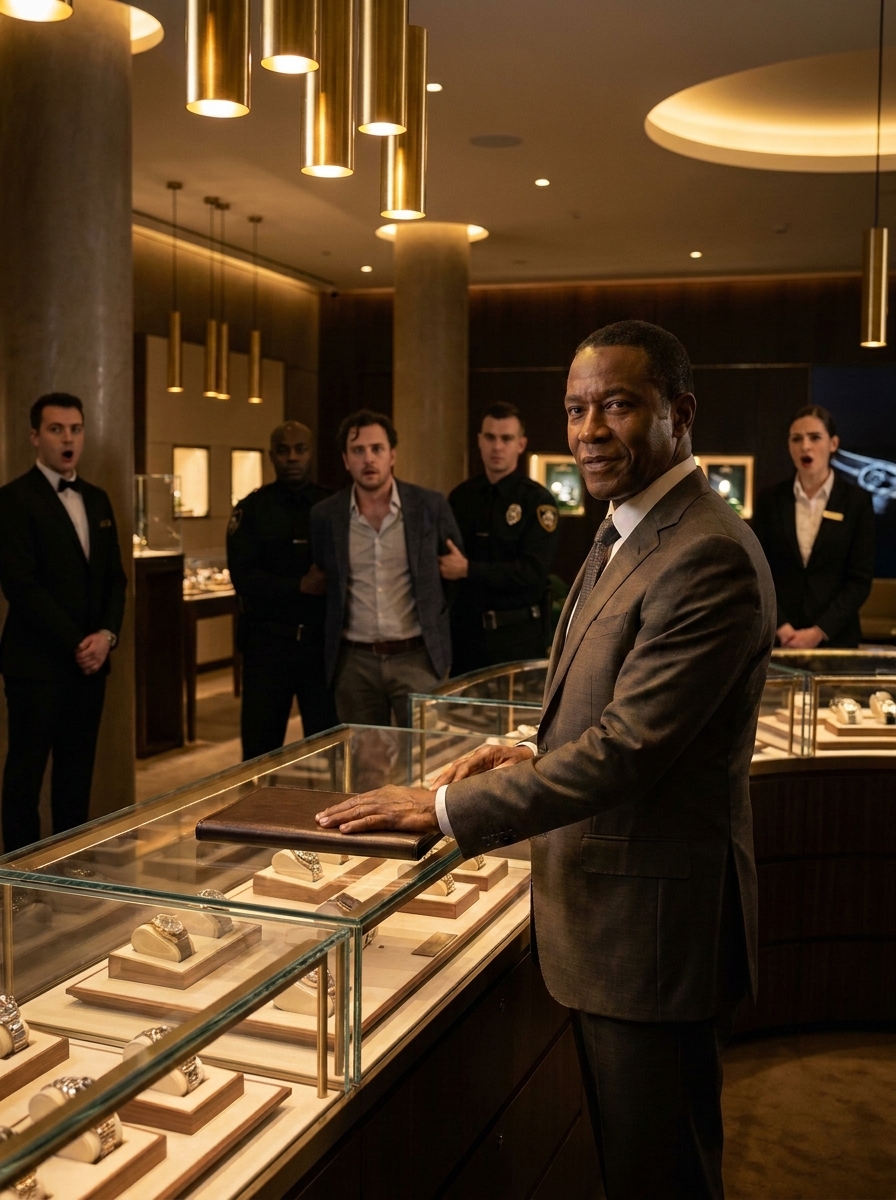
The CEO turned slightly toward the security staff.
“Security, remove him right now.”
Within seconds, the situation resolved itself physically. The man who had moments ago attempted to expel a customer was now the one being escorted out of the showroom.
No resistance followed. Only silence.
The showroom slowly returned to stillness, but it was no longer the same kind of silence as before.
The older man remained by the glass case. His attention returned once again to the watch he had been observing from the beginning. It had not changed, yet everything around it had.
Then he turned to the staff.
His voice softened slightly, but remained clear.
“Luxury is not only about what we sell. It is about how we treat people before we know who they are.”
No one spoke immediately after.
The message settled into the room like something heavier than words.
That day, the showroom learned something that no display case could ever hold, and no price tag could ever measure.
Respect was not a feature of luxury.
It was its foundation.
