

The front door creaked open just after noon. Sunlight spilled across the hallway floor of the modest family home, carrying dust through the warm air. A military duffel bag entered first, then heavy boots, then a tired soldier still in uniform after months away.
Captain Nguyen Van Thanh had counted every mile of the journey back to his small hometown on the outskirts of Hanoi. Twenty-seven months in the remote border outpost had carved new lines into his face and left his shoulders permanently tensed. He had imagined this moment a hundred times—his mother smiling, food on the table, peace waiting behind the door. The scent of pho simmering on the stove. His fiancée Lan rushing into his arms. Laughter. Rest.
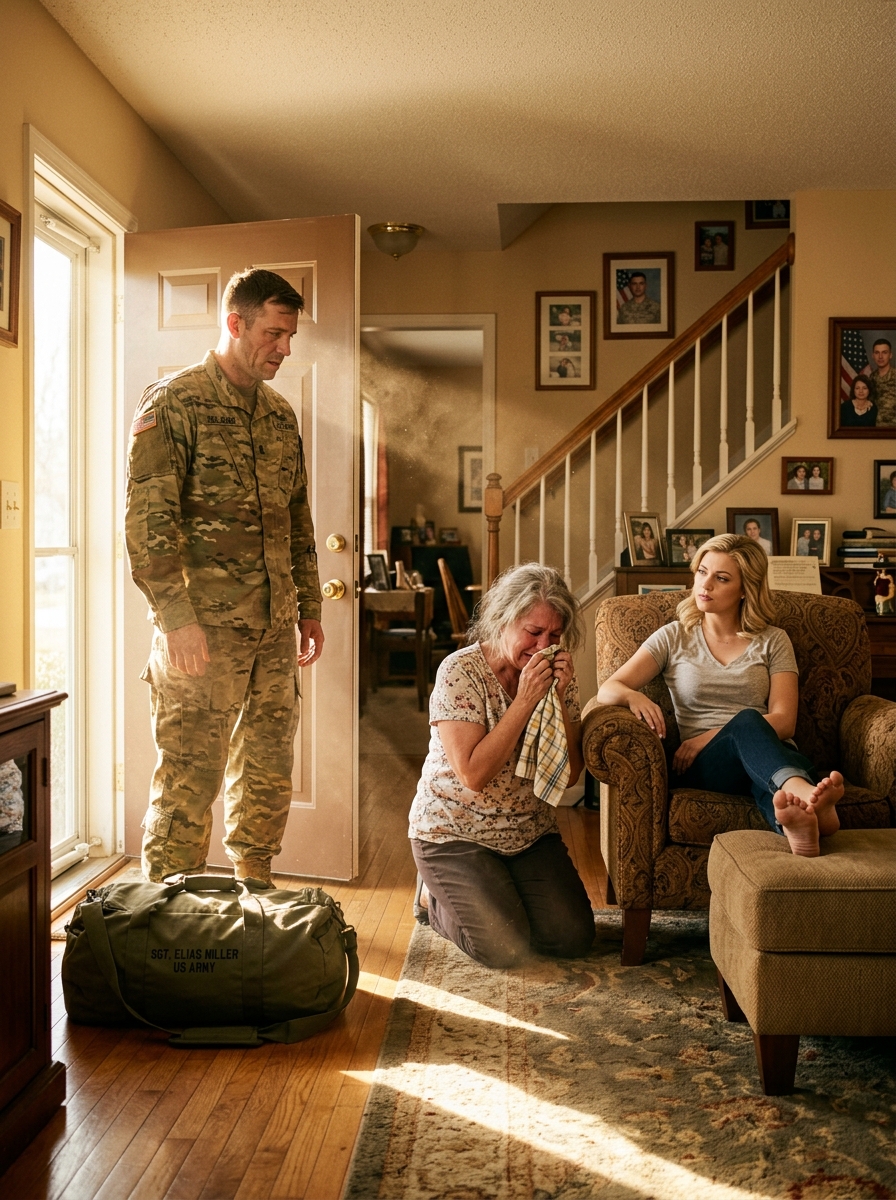
Instead, a plastic water container slipped from shaking hands and crashed onto the floor. Water spread across the tiles like a wound.
His mother, Mrs. Nguyen Thi Hoa, was on her knees, crying. In front of her, seated comfortably in the wooden armchair that had once belonged to Thanh’s father, was Lan—his fiancée—with both feet stretched toward the older woman.
“Wash properly,” Lan said coldly, not even looking up from her phone. Her voice carried the sharp tone of someone who had grown too comfortable in someone else’s home.
The room froze when she finally lifted her gaze.
Thanh stood motionless in the doorway, his duffel bag falling from his hand with a dull thud. His mother lifted tear-filled eyes and whispered in shame, “My son…”
Lan forced a smile that died halfway across her lips. “You’re home early…”
He said nothing.
The silence stretched, thick and suffocating. Outside, a neighbor’s motorbike sputtered past, unaware of the earthquake unfolding inside these familiar walls. Thanh walked forward slowly, boots striking the tiled floor one deliberate step at a time. Each footfall echoed like a heartbeat in the quiet house.
No one in the room breathed.
He knelt beside his mother, took the damp towel from her trembling hands, and gently wiped the tears from her weathered cheeks. The skin there was thinner than he remembered, marked by new wrinkles earned in his absence. “Stand up, Mom,” he said softly, his voice low but steady—the same voice he used to calm frightened young recruits under fire.
She rose on unsteady legs. He kept one hand on her shoulder, protective, anchoring. Then he turned toward the woman he had planned to marry.
His eyes were calm now—the kind of calm more frightening than rage. Years in the military had taught him that true fury rarely shouted. It measured. It decided.
Lan laughed nervously, shifting in the chair. “It was just a joke, anh Thanh. You know how your mother and I tease each other sometimes.” She pulled her feet back and crossed her legs, trying to reclaim dignity. “She offered to help with my pedicure. I didn’t force anything.”
Thanh bent down, picked up the fallen water container, and walked closer. Water dripped from his fingers onto the floor. He set the container on the table with deliberate care, as if handling fragile evidence.
“Mom,” he said without looking away from Lan, “go rest in your room. I’ll make tea.”
Mrs. Hoa hesitated, glancing between her son and the woman who had ruled the household for the past year. “Thanh, it’s okay. I don’t want trouble…”
“There is no trouble,” he replied quietly. “Only truth.”
His mother shuffled away, her shoulders still hunched in shame. The sound of her bedroom door closing was the saddest thing Thanh had heard since the war zones.
Lan stood up, smoothing her fashionable dress. She was beautiful—Thanh had always known that. Long black hair, sharp features, and an ambition that once seemed admirable. They had met three years ago when he was on leave. She worked in marketing for a foreign company, spoke fluent English, and dreamed of a modern life in the city. He had been flattered by her attention. Her parents approved of the soldier with a stable salary and honorable profession. Love, or what he thought was love, had grown quickly in the short visits between deployments.
But something had shifted while he was gone.
“You’ve been away a long time,” Lan said, stepping closer and attempting to touch his arm. “The house needed a woman’s touch. Your mother is old-fashioned. She doesn’t understand how things work in a real relationship now.”
Thanh looked at her hands—manicured, soft, never roughened by real labor—and remembered his mother’s hands: calloused from years of washing clothes by hand, cooking for neighbors during hard times, and raising him alone after his father died in a factory accident.
“Real relationship?” he echoed. His voice remained even. “You made my mother wash your feet. On her knees. In her own house.”
Lan rolled her eyes. “It was one time. She’s dramatic. You know how elderly people exaggerate.”
“One time?” Thanh pulled out his phone. During his long bus ride home, he had ignored most messages, but now he opened the chat with his younger sister, who lived in the next province. Dozens of unread texts described the situation in painful detail: Lan moving in six months ago, gradually taking control of finances, demanding his mother cook specific meals, criticizing her clothes, and treating her like hired help. The foot-washing incident was not the first humiliation—only the latest.
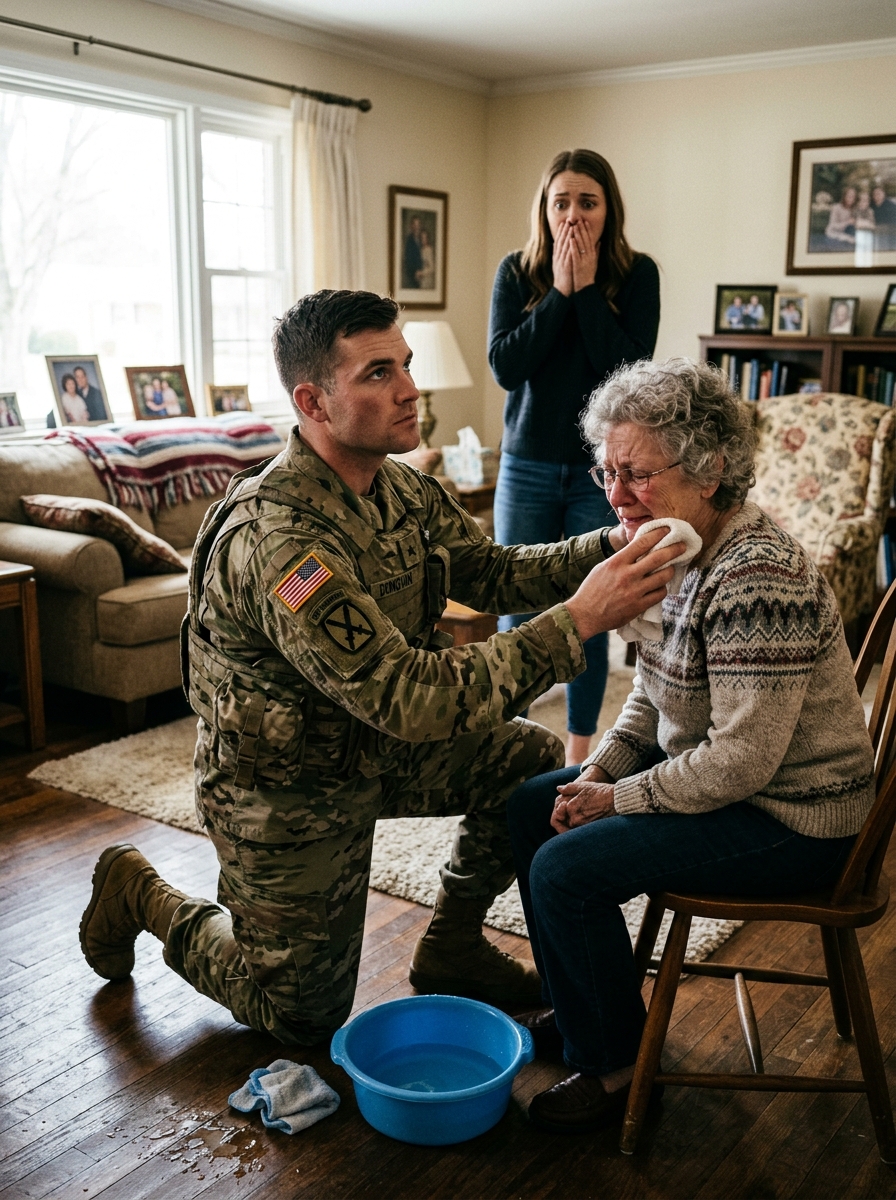
He showed Lan the screen.
Her face paled. “You were spying on me?”
“I was checking on my family,” he corrected. “Something I should have done more carefully.”
The confrontation unfolded over the next hour in the living room where Thanh had once played as a child. Lan tried every tactic: tears, accusations of ungratefulness, reminders of the sacrifices she claimed to have made waiting for him. She painted herself as the victim of an old woman’s jealousy.
Thanh listened without interrupting. When she finally ran out of words, he spoke.
“I loved the woman I thought you were,” he said. “The one who sent me letters and promised to care for my mother. But that woman doesn’t exist. You saw weakness and tried to exploit it. My mother is not weak. She survived war, poverty, and loss. She raised me to be a man who protects his family—not one who brings enemies into the home.”
Lan’s tears turned angry. “So that’s it? After everything? You’re choosing your mother over me?”
Thanh smiled for the first time—a small, sad smile. “There is no choice. She is family. You were a guest who forgot her place.”
He walked to the bedroom, packed Lan’s belongings into the expensive suitcase she had bought with his deployment pay, and set them by the door. Then he called a taxi.
As she waited outside, clutching her purse, Lan turned one last time. “You’ll regret this. No woman will want a man so tied to his mother’s apron strings.”
Thanh closed the door without answering.
Inside, the house felt different already. He found his mother sitting on her bed, staring at an old photo of the three of them—father, mother, young Thanh—taken before everything changed. He sat beside her and took her hands.
“I’m sorry, Mom. I should have seen it.”
She shook her head. “You were serving the country. I didn’t want to burden you.”
“That’s over now,” he said. “No more burdens alone.”
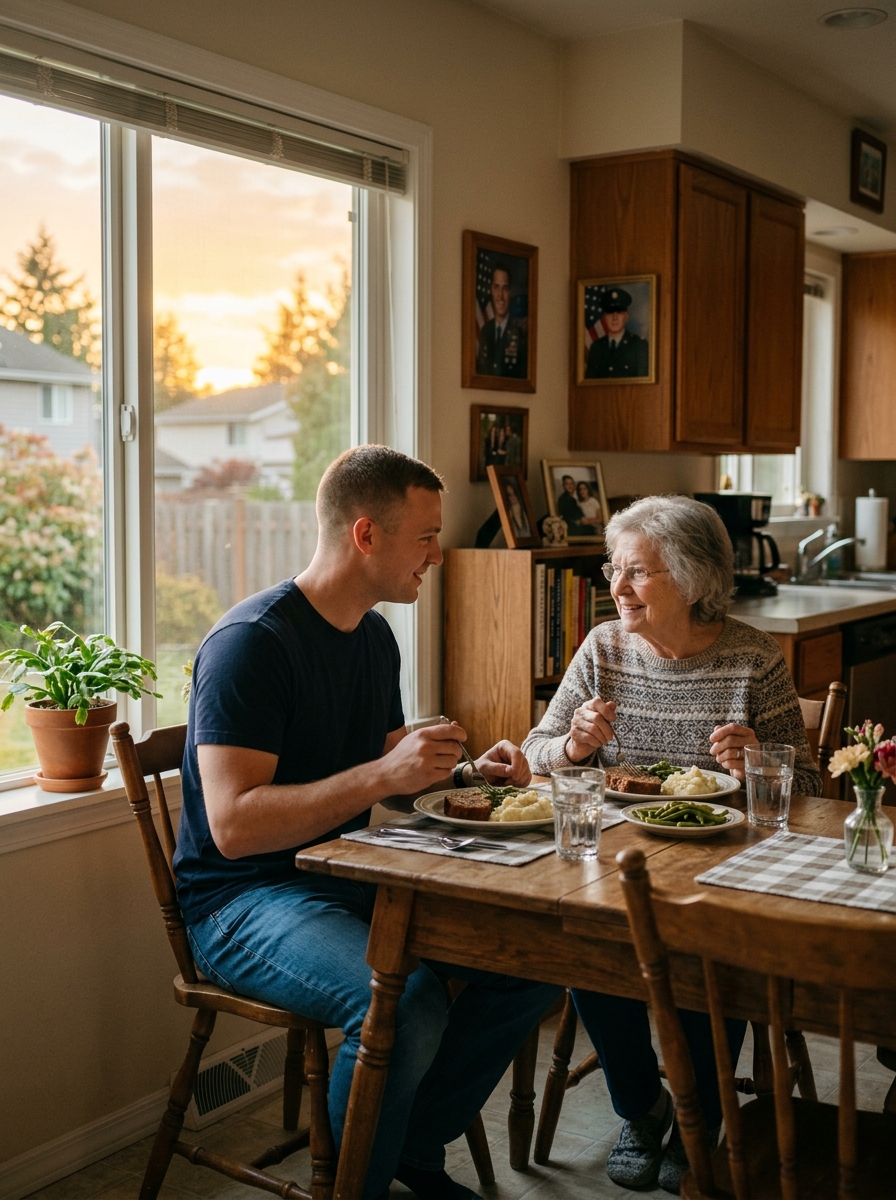
That evening, Thanh cooked dinner for the first time in years. Simple fried rice with vegetables from the garden his mother still tended. They ate slowly, talking about small things: the neighbor’s new grandchild, the price of rice, the stray cat that visited every morning. No grand speeches. Just healing in ordinary moments.
Later, as the sun set, Thanh stepped outside and looked at the modest house. It needed paint. The roof required repairs. The garden could be bigger. There was work to do—real work, the kind that built something lasting.
Over the following weeks, life settled into a new rhythm. Thanh took leave to help around the house. He listened to his mother’s stories from the old days. He visited the local veterans’ group and found quiet strength in shared silences. Word of what happened spread through the tight-knit community. Some neighbors praised him; others whispered that he had thrown away a good match. Thanh didn’t care.
Months later, when the pain had dulled to a manageable ache, Thanh met someone new at the market—a schoolteacher named Mai who helped her elderly parents without complaint and laughed easily. There was no rush this time. Only careful observation and honest conversation.
One afternoon, while helping his mother plant new herbs, Thanh paused and said, “Mom, thank you for waiting for me.”
She straightened, wiping soil from her hands, and smiled—the first real, unburdened smile he had seen since his return. “I always knew you’d come home the right way.”
The front door no longer creaked with dread. It opened to sunlight, to respect earned through hardship, and to the simple truth that family is not a burden to manage but a foundation to protect.
In the end, the soldier did not return to fanfare or romance as he had dreamed. He returned to something better: clarity, dignity, and the strength to choose what truly mattered.
