

The water didn’t merely spill; it poured in a cascade.
It came down as a heavy, intentional rush of ice water, dumping straight onto the glowing keyboard of my laptop. I sat motionless in the rigid plastic chair at JFK’s Gate B24, the constant hum of Terminal 4 abruptly dissolving into a sharp, ringing quiet. I watched the liquid gather around the trackpad, slipping into the delicate vents, the screen flickering violently before going dark into a flat, glossy black.
I didn’t yell. I didn’t jump up. I just remained seated, watching thin streams of water drip from the edge of the aluminum body onto my worn denim jeans.
Standing over me was a gate agent named Todd. I knew his name from the polished brass tag pinned to his perfectly pressed navy vest. Todd carried himself with that refined, authoritative stance some men adopt only in uniform, a posture built entirely on the small power granted by a lanyard and a radio. In his right hand, he held a large stainless-steel water bottle. The cap was fully unscrewed. You don’t accidentally loosen a bottle and flip it upside down.

A short, breathless chuckle slipped from Todd’s mouth. It wasn’t an apology—it was a sneer. ‘Oops,’ he said, loud enough for the Zone 3 passengers to hear. ‘Should have moved it when I told you to step aside, sir. Clumsy me.’
My breathing steadied. I shut my eyes briefly, feeling the cold dampness seep through my jeans. The anger rising in my chest wasn’t new. It was familiar, an old heat I’d been trained to swallow since childhood. I am a Black man, six-foot-two. I learned early that my anger is never seen as justified—only as a threat. If I raised my voice now, if I stood too quickly, if I pointed at Todd’s smug face, the airport security detail fifty yards away wouldn’t see someone whose property was destroyed. They’d see an aggressive passenger. I’d be the one in handcuffs. Todd knew that. It showed in the relaxed slope of his shoulders and the defiant lift of his chin.
‘You unscrewed the cap,’ I said, my voice low, barely rising above a boarding announcement nearby.
‘I tripped,’ Todd shot back immediately, his smile never reaching his cold, pale eyes. ‘Now, are you boarding, or are you going to keep holding up my line? Because right now, you’re acting erratically, and I have the authority to deny boarding to anyone who presents a security risk.’
I glanced around. The terminal was crowded—businessmen in tailored suits, tired families clutching neck pillows, college students with half-removed earbuds. They were all watching. A thick, suffocating silence settled over the area. The woman closest to us, an older lady holding a floral tote, looked horrified. Her mouth hung slightly open, her eyes darting between Todd’s smirk and my ruined laptop. She took a small step back, instinctively distancing herself. No one spoke. The bystander effect had taken hold. They were relieved it wasn’t them—and unwilling to step in.
I looked back at the laptop. It wasn’t just hardware. I am Marcus Vance, managing partner of one of Manhattan’s most ruthless corporate litigation firms. I wasn’t in a suit because I’d been working nonstop for forty-eight hours, buried in discovery for a massive class-action case. And the dead machine in my lap wasn’t just a computer—it held the only locally decrypted copy of a whistleblower data dump: thousands of internal emails proving this very airline had knowingly bypassed federally mandated safety checks on its regional jets for three years. I was flying to Atlanta to present that evidence to a federal oversight committee.
Todd saw me as nobody. A Black man in a faded gray hoodie near the boarding lane, typing away—someone occupying space he wanted control over. He’d insisted I gate-check my carry-on despite it clearly meeting size limits. When I politely asked for a moment to save my work, he decided I was being defiant. And in his world, defiance needed punishment.
I slowly shut the laptop. The hinge forced out more water, droplets hitting the linoleum floor with small, pitiful splashes. I didn’t reach for a napkin. I didn’t try to dry it. It was done. The motherboard was gone.
‘Well?’ Todd pressed, stepping closer, deliberately invading my space, baiting the reaction he wanted. ‘Are we going to have a problem here?’
I stood. Slowly, deliberately, keeping my hands visible and my face neutral. I was at least four inches taller, but I slouched slightly, dulling any sense of threat. I met his eyes. Beneath the arrogance, I caught a flicker of uncertainty. He expected anger. He was waiting for it—to call backup, to play victim. My silence unsettled him.
‘No problem,’ I said evenly, without inflection. ‘I won’t be taking this flight.’
‘Smart choice,’ Todd sneered, regaining his swagger. He turned away and addressed the crowd. ‘Next in line! Boarding passes out and ready!’
I picked up my soaked laptop and slid it into my backpack. I didn’t head for the exit. I walked straight toward the Delta Sky Club lounge down the hall. My mind was razor sharp. The humiliation still burned at the edges, but it was being overtaken by the cold precision of legal strategy. By destroying that laptop, Todd hadn’t just committed property damage. He had potentially engaged in spoliation of evidence tied to a major federal investigation involving his employer.
I entered the quiet, carpeted calm of the lounge. Ignoring the buffet, I found a private booth in the back corner. I sat, pulled out my phone, and dialed a number I rarely used.
It rang twice.
‘Vance,’ came the answer. Sarah, my senior partner. Sunday evening—but she’d be in the office.
‘Sarah. The airline just destroyed the primary hardware holding the Delta-Echo files.’
A pause. ‘Accidentally?’
‘Deliberately. A gate agent poured water on it. Thought it was amusing. Did it in front of fifty witnesses. I need a preservation letter sent to the airline’s general counsel immediately. Demand all CCTV footage from Terminal 4, Gate B24, covering the last twenty minutes. If they overwrite it, we file separately for evidence tampering.’
‘Are you okay, Marcus?’ Her tone softened.
‘I’m perfectly fine,’ I lied, jaw tight. ‘But they won’t be. Add malicious destruction of property, racial discrimination in a place of public accommodation, and intentional infliction of emotional distress to the complaint. We’re no longer just pursuing safety violations—we’re targeting their corporate culture. Increase the damages.’
‘To what?’ Sarah asked.
‘Forty-two million,’ I said quietly, watching a drop of water fall from my bag onto the spotless table. ‘And Sarah? Name the gate agent personally.’
CHAPTER II
I sat in the corner of the Delta Sky Club, the air carrying the scent of rich roasted coffee and a faint chemical note of carpet cleaner. A glass of sparkling water rested in my hand—cold, condensation gathering against my palm, a stark contrast to the warm dampness still soaking my laptop bag on the floor beside me. My phone was pressed to my ear. I waited for everything to ignite on the other end.
Sarah’s voice returned, sharp and controlled. ‘The preservation letter was delivered four minutes ago, Marcus. Not just emailed—I had a courier from our midtown office hand-deliver it to Arthur Sterling’s executive assistant. He’s the airline’s General Counsel. He knows your name. He knows the firm. By now, the panic’s starting.’
I leaned back against the leather chair, eyes closed. ‘And the CCTV?’
‘Our tech team is already filing an emergency injunction to ensure the Gate B24 feed isn’t “accidentally” overwritten,’ she said. ‘Marcus, I saw the preliminary photos. If water hit the motherboard during decryption…’
‘It did,’ I said flatly. ‘The machine’s dead, Sarah. But the liability is very much alive.’
I ended the call and stared out at the tarmac. I thought of my father—the Old Wound that never fully healed, only covered by layers of scar tissue and expensive suits. He’d spent thirty years as a night janitor in a bank. A man of deep dignity in a world that tried daily to strip it away. I remembered him coming home once, eyes red—not from exhaustion, but from humiliation after being scolded by a young teller for not emptying a trash can quickly enough. He swallowed it because he needed the health insurance for my mother. He taught me silence was protection. But over years of corporate warfare, I learned silence can also be a weapon. Todd didn’t know he’d just stepped on a landmine thirty years in the making.
As I sat in the quiet luxury of the lounge, three miles away in a glass-walled boardroom at the airline’s headquarters, routine was turning into crisis. I know this because later, during discovery, I would read the internal emails sent in those frantic minutes after our letter arrived.
Arthur Sterling—a man known for his composure—stood staring at a printed sheet bearing my firm’s letterhead: Vance & Associates. We weren’t just personal injury attorneys. We were the firm corporations hired to bury their enemies.
And now, we were the ones digging.
‘Who is Marcus Vance?’ the CEO had reportedly asked, according to the executive assistant’s deposition.
Sterling’s reply came as a hushed realization of a career-ending error: ‘He’s the man who secured the ninety-million-dollar class action against the fuel suppliers last year. And we just soaked his laptop at Gate B24.’
In that boardroom, they pulled up the security footage. This was the Triggering Event—the instant the abstract threat turned into a visible, irreversible liability. The executives sat in silence as the high-definition video flickered to life. They watched Todd. They saw the sneer. They saw him lift the bottle. They watched the slow, deliberate arc of water as it poured straight into the vents of my computer.
There was no spinning it. It wasn’t accidental. It wasn’t a crowded-terminal mishap. It was a targeted act of malice by a uniformed employee against a high-value passenger. The General Counsel later admitted in a private memo that the room went cold the second Todd smirked on screen afterward. They weren’t just facing a lawsuit—they were staring at a PR disaster that could torch their stock price.
I glanced at my watch. 3:15 PM. At that exact moment, the ‘sterile office’ confrontation began.
Todd was in the employee breakroom, likely still riding the satisfaction of his petty win. He probably believed he had finally put someone ‘in their place.’ He was summoned over the radio to the station manager’s office. I imagine he walked in with that same loose confidence, expecting a warning or maybe a lecture about ‘de-escalation.’

Instead, he found Arthur Sterling on speakerphone and the regional manager, a woman named Elena, staring at him like he was already gone.
‘Sit down, Todd,’ Elena said. Her voice wasn’t angry—it was empty. That’s when you know it’s over—when the people meant to manage you stop being angry and start being afraid to be near you.
‘Is this about the guy with the hoodie?’ Todd asked. I could almost hear the defensive edge in his tone. ‘He was being difficult. He wouldn’t show me his—’
‘He was the Managing Partner of Vance & Associates,’ Sterling’s voice cut through the speaker, sharp and cold. ‘And you didn’t just damage a laptop, Todd. You destroyed a decrypted drive containing sensitive legal evidence. You’ve exposed this company to a forty-two-million-dollar lawsuit for spoliation of evidence, civil battery, and racial profiling.’
Todd’s Secret—the one he never admitted even to himself—was that he wasn’t enforcing rules. He was a small man using a uniform to feel larger. We later uncovered a pattern: ‘randomly’ selecting people of color for extra bag checks, misplacing paperwork for passengers who didn’t show him enough ‘respect.’ For years, he hid behind the anonymity of the terminal. But now that anonymity was gone. He wasn’t a faceless employee anymore—he was a named liability with a recorded pattern of malice.
‘Forty-two million?’ Todd stammered. The color must have drained from his face. The reality of a corporate world he didn’t understand was collapsing around him. He thought he was playing at playground intimidation. He didn’t realize he had stepped onto a battlefield.
‘We’ve reviewed the video, Todd,’ Elena said, sliding a tablet toward him. It showed him pouring the water. ‘It’s being entered into the record. You are terminated, effective immediately, for gross misconduct. And because this is a private civil matter involving individual liability, the company will not provide legal counsel. You’re on your own.’
This was the airline’s Moral Dilemma. They could have shielded him, claimed it was accidental, tried to settle quietly. But protecting him would cost more than sacrificing him. So they chose to throw him to the wolves to save themselves. There was no clean outcome—it exposed failures in hiring and training—but it was the only way to slow the bleeding. For Todd, the dilemma was personal: admit fault and bias, destroying his pride, or double down and face financial ruin. There was no ‘right’ choice left.
Back in the Sky Club, I opened my second phone—the one reserved for secure communication. I had a Secret of my own. The destroyed laptop was a serious setback, but the data… the data was tougher than he realized. I had been syncing the decryption progress to a secure cloud server through the airport’s 5G network. The hardware was gone, but the truth wasn’t. The airline didn’t know that. They believed the evidence had been lost.
I wanted them to believe it. I wanted them to think they had, even unintentionally, buried the whistleblower’s report. It made them more desperate. More eager to resolve the ‘laptop’ issue quickly—without digging into why I had been at that gate in the first place.
A heavy weight settled in my chest. Not guilt—something heavier. The reality of the system. I had to become the very thing I despised—a precise, cold strategist—just to be granted the basic respect my father never received. I was dismantling Todd’s life, his career, with surgical efficiency. I could justify it—he started it, he was biased, he deserved it. And he did. But the weight of it still lingered.
Sarah texted: ‘Sterling just called. He sounded like he was hyperventilating. He wants to meet tonight at our office. Off the record.’
‘No,’ I replied. ‘Everything on the record. Tell him I’m taking the next available flight. First Class. Different airline. Bill him for the seat.’
I stood, grabbing my damp bag, and scanned the lounge. People laughed, sipped drinks, complained about delays. They lived among inconveniences. I lived among consequences.
As I walked toward the exit, I saw a group of security officers heading toward Gate B24. They weren’t going for a passenger—they were there for Todd. The public fall had begun. He humiliated me in front of a line of travelers; now he’d be escorted through that same terminal as an outcast, badge removed, career over.
The Old Wound pulsed again. I thought of my father’s worn, quiet hands. I thought of the countless people treated the way I had been—without a law firm behind them, without a $42 million weapon. All they had was a ruined laptop and humiliation.
This wasn’t just about the laptop. Not even about the whistleblower evidence. It was about ensuring that, for once, the person who caused the harm felt the full, unfiltered force of consequences pushing back.
I reached the gate for my new flight. Same hoodie. Same skin. But as I approached the counter, the young gate agent glanced at his screen. His eyes widened. He looked at me, back at the screen, then at me again. The alert had clearly gone out system-wide: Handle Marcus Vance with extreme care.
‘Mr. Vance,’ he said, his voice slightly unsteady. ‘We have your boarding pass ready. You’ve been upgraded to 1A. Is there… anything else we can do for you? Anything at all?’
‘No,’ I said, my tone as cold as the water Todd had poured. ‘There’s nothing you can do now.’
I boarded and settled into the wide leather seat. Rain began tapping against the window. The conflict had moved from the gate to the boardroom—and soon, to the courtroom. The airline was afraid because they didn’t know how much I knew. And Todd was afraid because he finally understood the world no longer belonged to people like him—it belonged to those who knew how to wield the law.
As the engines came alive, I felt the first real spark of the fire I had started. It was a dark kind of satisfaction. I was the one causing harm now—with a reason that was rational, defensible. But staring at my reflection in the darkened window, I wondered whether I would recognize the man I was becoming by the end. Forty-two million was just a figure. The real cost was the part of my humanity I was trading to win.
I took out my phone and opened the last image I had saved before the laptop died—a screenshot of the flight safety audit. If the airline thought this could be resolved with a check and a fired employee, they were mistaken. The trap was already in place. Todd was only the bait. The true target was the entire broken system that allowed men like him to thrive.
We were above the clouds now, sunlight breaking through the gray. Below, the city looked small, manageable. But I knew better. Down there, lawyers were scrambling, shredders were running nonstop, and Todd was likely sitting on a curb outside the airport, wondering how a bottle of water had turned into a tidal wave.
I leaned back and closed my eyes. The second chapter was ending, but the climax was still ahead. The truth would come out—and it would cost them everything. Not because I was a hero, but because I was a man who had finally run out of patience for silence.
CHAPTER III
I stepped into the boardroom on the sixty-fourth floor, the air so thin and over-processed it felt like breathing through a luxury handkerchief. Floor-to-ceiling glass framed a sweeping view of a city that didn’t care who thrived or failed, as long as the markets kept moving. Arthur Sterling was already inside, flanked by three associates who looked engineered for document review—pale, restless, carrying the scent of expensive espresso and quiet panic.
Sterling didn’t rise. He looked like he hadn’t slept since JFK. His silk tie was pulled slightly too tight, a subtle sign of a man trying to hold himself together. On the table between us rested a single manila folder. This was the altar where they hoped to sacrifice forty-two million dollars to keep their god of Profit alive.
“Marcus,” Sterling said, his voice dry and worn. “You’ve made your point. The board has reviewed the footage. Todd has been handled. We’re ready to make this right. More than right.”
I pulled out a chair, the leather groaning under my weight. I didn’t open my briefcase—I didn’t need to. The most dangerous things I carried were already in my mind. “You didn’t handle Todd, Arthur. You tossed a piece of meat to the wolves and hoped they’d quiet down. I’m not a wolf. I’m the one who owns the forest.”
One of the junior associates tried to interject, but Sterling silenced him with a small gesture. The room fell still. The low hum of the HVAC system filled the silence, like the building’s mechanical heartbeat.
“The offer is fifty million,” Sterling said, leaning forward. “Comprehensive. The racial profiling claim, the property damage, the emotional distress. All of it wrapped in a non-disclosure agreement thick enough to stop a bullet. You walk away the richest litigator in the city, and we return to pretending we’re a respectable airline.”
I glanced at the folder. Fifty million. Enough to repair everything—for my family, for the echoes of my father’s past, for the humiliation I felt when the water hit my face. But looking at Sterling, I didn’t feel satisfaction. I felt indifferent. The money was a payoff for silence, and I’d spent my life being told to stay quiet.
“You think this is about a laptop and a rude gate agent,” I said, my voice lowering. “You think I’m shaking you down because my feelings were hurt. But we both know what was on that drive, Arthur. We both know about the Project Icarus files.”
Sterling’s face didn’t just pale—it turned ashen, like damp ash. The associates exchanged confused glances; they hadn’t been brought into the deeper secrets yet. They were just the foot soldiers.
“That’s enough,” Sterling murmured. “We are here to discuss a settlement for a personal injury and property damage case.”
“No,” I said, rising and pacing along the window. “We’re here to discuss the fact that your airline knowingly flew three hundred Boeing 737s with hairline fractures in their wing spars because grounding the fleet cost more than projected legal payouts for a mid-air breakup. You didn’t just pour water on a laptop, Arthur—you tried to bury evidence of a mass tragedy in the making.”
This was the Fatal Error. I should have taken the deal. I should have played along. But the old wound—the memory of my father being silenced by men just like this—throbbed like it had never healed. I wanted to watch them burn. I wanted to see the moment they realized money couldn’t save them.
Sterling stood abruptly, his chair scraping across the marble floor. “You have no proof. That laptop was destroyed. Our IT forensics team confirmed the liquid damage was catastrophic. The encryption keys are gone. You’re bluffing with nothing, Vance.”
I smiled—not kindly, but like a man who had already pulled the pin on a grenade. “I didn’t just have the hardware, Arthur. I had a shadow server. The second the laptop died, the cloud backup triggered a secondary decryption. I have the safety audit. I have internal memos from the CEO saying ‘let’s roll the dice.’ And I have the names of every engineer who tried to blow the whistle before you buried them.”
The atmosphere shifted. It wasn’t tension anymore—it felt like a ship taking on water. Sterling looked at me, and for a moment, I saw the man behind the façade: genuinely afraid. Not for the airline—for himself.
“If you release that,” Sterling said, his voice unsteady, “the FAA will ground the entire fleet within hours. The stock will collapse by noon. Tens of thousands will lose their jobs. Pension funds, secondary markets—you’ll trigger damage that hits people who don’t even know your name.”
“Then they should have hired better gate agents,” I snapped. It was a petty, cruel remark, and the instant I said it, a chill ran through me. I was using thousands of lives as leverage for a grudge rooted in a boy watching his father get humiliated decades ago.
Sterling motioned for his team to leave. They hurried out. Once the doors shut, he moved to the bar in the corner and poured himself a glass of scotch. His hands shook so badly the decanter tapped against the glass.
“You think you’re the hero here, don’t you?” Sterling said, not turning toward me. “The righteous lawyer taking down a corrupt corporation. But you got that data from someone, Marcus. Someone who trusted you. Someone who believed you’d use it to save lives—not to win a pissing contest.”
“I am saving lives,” I replied. “I’m grounding those planes.”
“By holding them hostage for a payout?” Sterling let out a hollow, bitter laugh. “You haven’t gone to the FAA. You haven’t gone public. You’re here—with me. You’re just chasing a bigger number. Just another predator who found a bigger target.”
He turned, looking older, diminished. “The person who gave you that audit… they’ll be the first to go to prison. Not me. Not the CEO. We have layers of deniability. But the one who accessed the secure server? The one whose biometric ID downloaded the Icarus files? They become a criminal the moment this goes public.”
A tight knot formed in my stomach. “Her name is Sarah,” I said quietly. Sarah was a junior counsel in his own department—twenty-six, brilliant, idealistic. She came to me believing I stood for integrity. I had spent three months gaining her trust, making her believe we were partners in something meaningful, when in truth, I was using her as a key to unlock a door.
“She’s my niece, Marcus,” Sterling said, the words landing like a blow. “My sister’s only daughter. I got her that job. I mentored her. And you… you manipulated her into committing corporate espionage for your own vendetta.”
I stared at him. The truth cut deep. I had known about the connection. I had used it—to make her feel safe, to convince her she was helping her uncle do the right thing before it was too late. I had deceived her. I had exploited her conscience to get what I needed to destroy a man I hated.
“She didn’t know what I was going to do with it,” I whispered.
“She does now,” Sterling said. He pulled a phone from his pocket and set it on the table. “She called me an hour ago, crying. She figured out what you are. She realized you weren’t going to the authorities—you were coming here to negotiate. She’s at her apartment right now, Marcus. She thinks her life is over. And she’s right. If you use those files, I have no choice but to name her as the thief. I have to protect the board. I have to burn her to save the company.”
This was the moment. The moral ground had shifted. If I walked away now, I’d take the fifty million, Sarah would stay free, and the planes would keep flying—potential coffins in the sky. If I pressed forward, I’d bring down the airline, get my revenge, but Sarah would go to federal prison, her life destroyed by my ambition.
“Give me the NDAs,” I said, my voice sounding distant, like it wasn’t mine.
“You’re taking the deal?” Sterling asked, a flicker of hope in his eyes.
I looked out the window. Below, tiny figures and cars moved in predictable patterns. I thought about my father. He would have despised this. He believed in simple truths. I had become a man built on complicated lies.
“No,” I said. “I’m not taking the deal. And I’m not leaving.”
I picked up my briefcase and opened it, pulling out a burner phone. I hadn’t planned this, but the momentum of destruction had carried me too far. I was no longer in control—I was just along for the ride.
“What are you doing?” Sterling asked, his voice tightening.
“I’m calling the Department of Justice,” I said. “I’m reporting criminal negligence. And I’m telling them I coerced a whistleblower. I’m giving them everything, Arthur. Including myself.”
Sterling lunged for the phone, but I moved faster, stopping him—not violently, but with a firm, immovable resolve. He stumbled back into the bar, bottles rattling.
“You’ll lose your license!” he shouted. “You’ll be disbarred! You’ll go to prison right alongside her!”
“I know,” I said. The realization brought a strange calm. “But the planes will stop flying.”
I dialed the number I had memorized years ago—the federal prosecutor’s office. As it rang, the boardroom doors burst open. It wasn’t security. It was the CEO, Henderson, a man who looked carved from stone, followed by a line of armed private security.
“Hang up the phone, Mr. Vance,” Henderson said, his voice low and commanding. “We’ve filed an emergency injunction in district court. Your servers have been seized. Your ‘shadow backup’ was intercepted ten minutes ago. Our cyber-security team traced the handshake protocol the moment you mentioned it.”
I glanced at my phone. The signal dropped to zero. A jammer. They had anticipated this. They weren’t preparing for a lawsuit—they were ready for war.
“You’re too late,” I said, though the hollow feeling in my chest said otherwise.
“No, Marcus,” Henderson replied, stepping closer. He didn’t look angry—he looked disappointed, like a parent watching a child fail. “You’re the one who’s late. You spent so much time searching for the ‘fatal error’ in our system that you missed the one in your own. You’re a brilliant litigator, but you’re a terrible human being. You used a girl who loved you. You used a tragedy to settle a score. And now, you have nothing.”
He signaled the guards. They didn’t touch me—they just stood there, a wall of authority.
“You’re being charged with extortion, corporate espionage, and unauthorized access to protected systems,” Henderson continued. “The police are downstairs. Not for us—for you. And Sarah? She’s already confessed. She’s cooperating. She’s telling them how you manipulated her. How you threatened her.”
“I never threatened her,” I said, though the words felt weak, hollow.
“In court, Marcus, the truth is whatever the wealthiest side says it is. You taught me that in your first lecture at Harvard. Remember?”
I did. I remembered the arrogance of my younger self, believing the law was a weapon I could wield better than anyone. I had spent years sharpening it—only to find it turned against me.
Sterling looked at me, a trace of his old smugness returning now that Henderson stood beside him. “You could have taken the fifty million, Marcus. You could have been a quiet hero. Now you’re just a criminal in plain sight.”
They escorted me out of the boardroom. The walk to the elevator felt endless. Every employee we passed stopped to stare. I recognized the look in their eyes—the same one I had given Todd at the airport. The look of someone watching something insignificant being crushed.
In the lobby, the police were waiting. The handcuffs were cold, stark against the warmth of the humid afternoon outside. As they guided me into the back of the patrol car, I looked up at the glass tower. It resembled a gravestone.
I had wanted justice for my father. I had wanted to prove the small man could win. But in trying to destroy monsters, I had built a prison for myself and called it a palace. I had sacrificed Sarah. I had sacrificed my career. And for what? The planes still flew. The airline still profited. The only difference was that the world now knew exactly what kind of man Marcus Vance was.
I closed my eyes as the sirens wailed. The darkness behind them was the only place I didn’t have to face my reflection. I was no longer the man in the hoodie or the tailored suit. I was just a man who lost everything over a drop of water.
This was the end. No backup servers. No hidden files. No more moves left. Just cold steel bars and a long, silent night ahead. I had won the battle of ego and lost the war of the soul. My father’s name hadn’t been redeemed—it had been stained again, this time by his own son. The silence in the back of the car was deafening.
CHAPTER IV
The holding cell smelled of stale disinfectant and regret. Not just mine, but the lingering weight of everyone who had sat on that bolted bench, staring at graffiti-scarred walls. I rubbed my face. How long had it been? Hours? Days? Time blurred when everything collapsed.
The arraignment passed in a haze of legal jargon and flashing cameras. I pleaded not guilty, of course, though the evidence felt overwhelming, almost physical in its weight. Extortion. Espionage. Each charge echoed through the sterile courtroom like a hammer striking what remained of my reputation.
Bail was denied. Too much of a flight risk, the judge said flatly. As if there were anywhere left to go.
They returned me to the cell. This time, the smell felt stronger, more personal. I was part of it now—another number, another warning story.
My phone was gone. My laptop gone. My life…paused. Or maybe finished.
Arthur Sterling visited the next day. He looked exhausted. Victorious, but drained. There was no gloating—just a quiet, almost regretful tone.
“Marcus,” he said softly, “you were a formidable opponent. Brilliant, even. But you let your…anger…take over.”
“Anger?” I scoffed. “That airline was risking lives!”
“And now?” Sterling replied. “What have you achieved? You’ve destroyed your career, hurt innocent people, and the airline…will survive. They always do.”
He paused, meeting my gaze. “The data you had—Project Icarus—it was already under investigation. The FAA had opened a case weeks ago. You didn’t uncover anything new, Marcus. You just sped up what was already happening…while ruining yourself.”
The air left my chest. The FAA already knew? All of it…for nothing?
Sterling nodded slightly, a hint of pity in his eyes. “Sometimes, Marcus, the world doesn’t need a hero. It just needs patience.”
He left, and I sat there with the crushing weight of his words. The truth had already been known. My fight, my sacrifice…meaningless.
Later that week, the disbarment proceedings began. A formality. The evidence was undeniable. The outcome inevitable.
I didn’t contest it. There was no point.
My father’s name—the Vance legacy—ruined. All because I couldn’t let go of revenge.
I was released pending trial, but my apartment was gone, the lease terminated. My assets frozen. I drifted through my own city like a ghost.
I ended up in a cheap, run-down motel on the outskirts. The kind of place where dreams fade away. The silence there was different from the cell—heavier, suffocating.
I spent my days staring at the wall, replaying everything, searching for a different choice, a different ending.
The media had a field day, of course. Marcus Vance, the fallen attorney. A cautionary tale of ambition gone off track. They cast me as the villain—a manipulator, a man consumed by his own ego.
Sarah never came to see me. I didn’t expect her to. The guilt stayed with me, a constant, dull weight in my chest. I had used her, broken her trust, and destroyed her future. For what? A hollow victory that never even came.
One evening, about a week after my release, my phone rang. An unknown number. I nearly ignored it.
“Marcus?” The voice was soft, uncertain.
It was Sarah.
“Sarah…I…I don’t know what to say,” I stammered.
“I needed to hear your voice,” she said quietly. “To understand…why.”
“I thought I was doing the right thing,” I said, desperate. “I thought I was fighting for justice.”
“Justice?” Her voice cracked. “You destroyed me, Marcus. You used me, and for what? To settle some old score?”
I had no answer. The truth was too harsh, too painful to speak.
“My uncle…he’s trying to help me,” she went on. “He found me a good lawyer. He says I might be able to get the charges dropped…if I testify against you.”
My breath caught. “I understand,” I whispered.
“Do you?” she asked, bitterness creeping into her tone. “Do you understand what you’ve done to me?”
I shut my eyes, her face vivid in my mind. “Yes, Sarah. I understand.”
She hung up.
The silence afterward was overwhelming.
That night, I walked. For hours. No direction, no purpose—just moving through the streets, lost in regret.
Eventually, I found myself at the airport. JFK. Where everything had started.
I stood there, watching planes lift off and land, each one a reminder of everything I had lost.
I spotted Todd, the gate agent, back at his post. He looked older, more worn. Our eyes met briefly before he looked away.
The lawsuit, the recognition, the power—it all felt distant now. Empty.
I had begun this fight to avenge my father, to punish those who wronged him. But in the end, I had become exactly what I despised.
The next morning, I called my lawyer. I told him I wanted to change my plea.
I pleaded guilty to every charge.
There was no spectacle, no defiance. Just quiet acceptance.
The sentencing came quickly. Five years in prison. A lifetime of regret.
As they led me out, I glanced back at the courtroom—the people I had hurt. My lawyer, defeated. The prosecutor, satisfied. Reporters scribbling furiously.
But Sarah wasn’t there.
In prison, the silence was different again. A silence of control, of stripped hope.
I spent my days reading, thinking, trying to understand how it had all gone so wrong.
I learned that my father’s old company—the one destroyed by corporate greed—had quietly been acquired years earlier…by Henderson Airlines.
The irony was suffocating.
My entire life, my entire crusade, had been shaped by the very man I tried to bring down.
Henderson had played me. He had used my anger, my resentment, to serve his own ends.
And I had fallen for it completely.
One day, I received a letter. It was from Sarah.
She wrote that she was doing okay. That she had started college, that she was trying to move forward.
She didn’t mention me once.
I understood.
My five years passed slowly, each day a reminder of what I had lost.
When I was released, there was nothing waiting for me. No family, no friends, no career.
I was an outcast. A ghost.
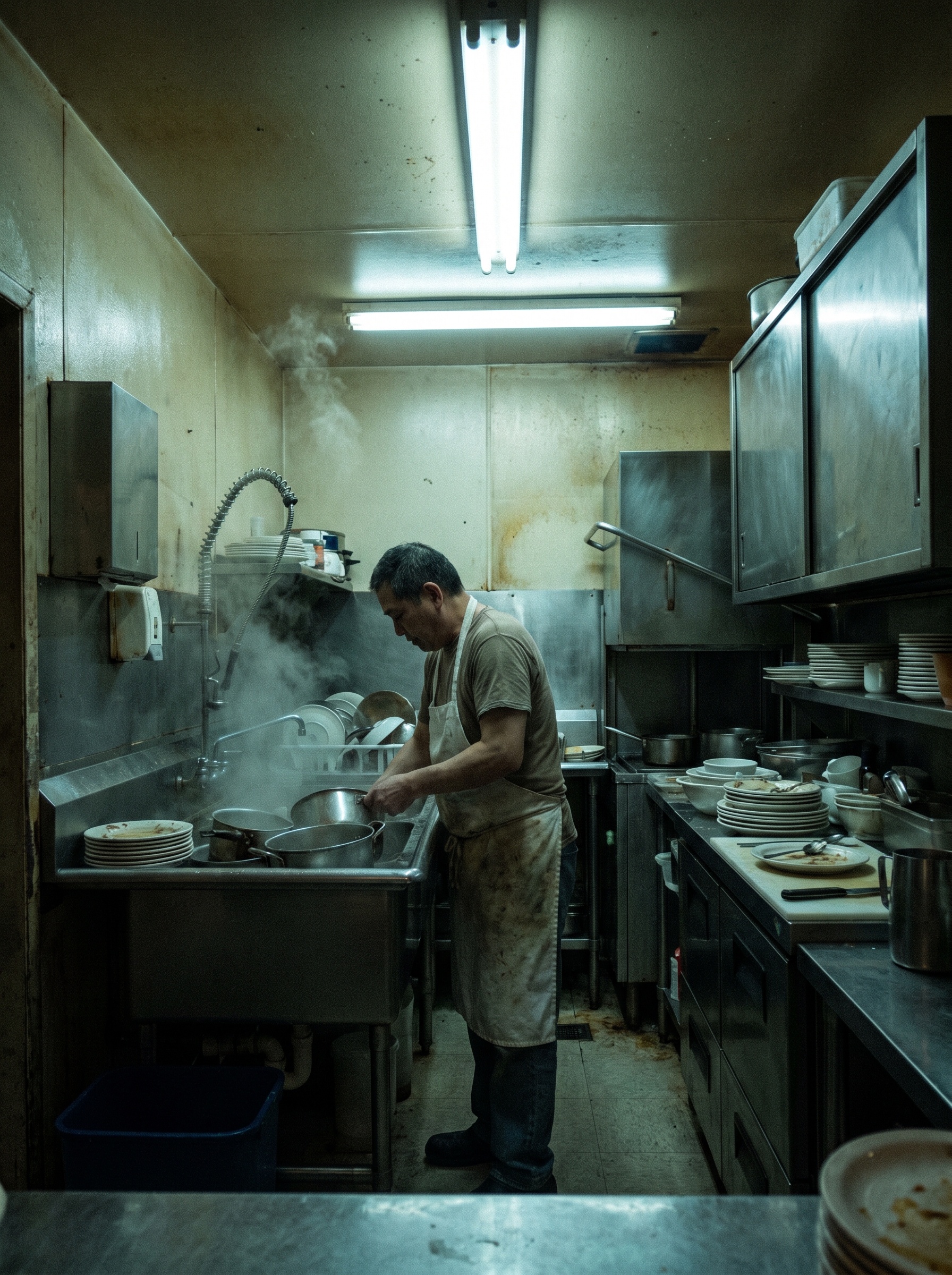
I found work washing dishes at a greasy diner on the edge of town. It wasn’t much, but it was honest.
I never tried to reach out to Sarah. I knew I had no right.
One evening, as I scrubbed a stack of pots, a news report played on the diner’s television.
Henderson Airlines was facing a massive lawsuit. Project Icarus—the safety audits—had finally been exposed. The FAA had launched a full investigation.
The truth, it seemed, had finally surfaced.
But watching it, I felt nothing. No satisfaction. No sense of justice.
Only emptiness.
I had done what I set out to do. I had revealed the truth. I had taken down the powerful.
But at what cost?
My life was shattered. Sarah’s future uncertain. My father’s legacy stained.
And the world…had barely changed.
Later that night, walking back to my tiny apartment, I passed a homeless man asleep on a park bench.
Wrapped in rags, his face marked by hardship.
I stopped and watched him for a long moment.
In that instant, I saw myself.
A man who had lost everything. A man with nothing left to lose.
I reached into my pocket, pulled out a few dollars, and set them beside him.
He didn’t move.
I walked away.
And as I walked, I realized I had finally found what I had been searching for all along.
Not revenge, not justice, not vindication.
But peace.
A quiet, empty kind of peace.
The peace that comes from knowing I had finally paid for my sins.
The peace that comes from knowing I was finally free.
Free from anger, free from resentment, free from the past.
Free to begin again.
Or maybe just free to fade away.
No one remembers my name anymore. I’m just another face in the crowd, another ghost drifting through the city.
And that’s alright.
Because in the end, the only thing that matters is the truth.
And the truth is, I was wrong.
Wrong to let anger take over. Wrong to harm innocent people. Wrong to believe I could change the world.
The world, it turns out, is far more complicated than I ever understood.
And sometimes, the best thing you can do is let it be.
Let it be.
And let yourself disappear.
I live in a small town now, far from the city. I work as a janitor at a school. The job is simple, honest. It doesn’t demand much thought.
I don’t speak about my past. No one here knows who I am or what I’ve done.
I prefer it that way.
Sometimes, I see Sarah’s name in the news. She’s doing well. She’s a successful lawyer now. She’s fighting for justice.
I’m proud of her.
I hope she’s found peace.
I hope she’s forgiven me.
But even if she hasn’t, it doesn’t matter.
Because I’ve forgiven myself.
And that’s enough.
That’s all there is.
That’s all there ever was.
And that’s all there ever will be.
CHAPTER V
The sharp clang of metal against porcelain had become the rhythm of my life. Washing dishes at ‘The Greasy Spoon’ wasn’t glamorous, but it was honest work. No more legal strategies, no more billion-dollar stakes—just hot water and an endless stream of plates. The other cooks barely noticed me. I was just the dishwasher, a shadow in the kitchen. The irony wasn’t lost on me: a man who once handled mountains of legal documents now handled piles of dirty dishes.
Months slipped into a year. Then another. The outside world—the world of Henderson Airlines and Arthur Sterling—felt distant, like a dream or maybe a nightmare I had finally escaped. My days were filled with routine, my nights with a quiet solitude I hadn’t known before. The anger, the drive for revenge, had slowly cooled into a faint, lingering ache.
One afternoon, during a slow shift, the radio crackled with a news report. Henderson Airlines was facing a massive class-action lawsuit. Project Icarus—the data I had risked everything for—had finally become public. The FAA had been sitting on it, just as expected, but a whistleblower had leaked everything. Passengers and victims’ families were filing suits for negligence. The stock price was crashing. Henderson, the CEO, was stepping down amid calls for criminal charges. I felt… nothing. No satisfaction, no sense of justice—just a hollow echo in my chest. This was what I had wanted, wasn’t it? To bring them down? But all I could feel was the cost. The loss. Myself.
The cook, a broad-shouldered man named Tony, glanced over at me. “That airline you used to talk about,” he said gruffly. “They’re getting what they deserve.” I nodded, unable to respond. What could I say? That I had been the spark? That I had destroyed my own life in the process? That in the end, none of it felt like it mattered anymore?
The summons arrived on a Tuesday, slipped between the water bill and a stack of junk mail. Henderson’s lawyers were requesting a deposition. They wanted everything I knew about Project Icarus—about Sarah, about Arthur Sterling. I almost laughed. After everything, they still needed something from me. My lawyer, a court-appointed public defender named Ms. Rodriguez, advised me to cooperate. “They’re building a case against Henderson,” she said. “This could help you.” Help me? What was left to fix?
The deposition took place in a sterile conference room downtown. Henderson’s lawyers were precise, relentless. They questioned me for hours, dissecting every detail of my involvement. I answered honestly, exposing the entire ugly truth. Sarah’s name came up repeatedly. I noticed the spark of interest in their eyes whenever I mentioned her. I knew what they were thinking—she was the key. But I wouldn’t betray her again.
“Did you love her, Mr. Vance?” one of the lawyers asked, his tone edged with doubt. I hesitated. Did I? Or had she only been a means to an end? A piece in my game of revenge? The truth was, I didn’t know. Maybe I had loved her, in my own flawed way. But I had destroyed that too.
The deposition ended late that evening. Ms. Rodriguez drove me back to my small apartment. “You did well, Marcus,” she said gently. “This could matter.” I didn’t believe it. The damage had already been done. Nothing could undo it.
The mediated meeting with Sarah was my idea—or rather Ms. Rodriguez’s, but I agreed to it. She thought it might give me closure. I wasn’t convinced. Sarah agreed, though reluctantly. She was working as a software engineer now, living in another state. She had moved forward. I hadn’t.
The meeting took place in a neutral office, a space designed for difficult conversations. Sarah entered, her eyes guarded, her posture tense. She looked different—stronger, more confident. The guilt tightened inside me.
“Hello, Marcus,” she said, her voice calm and distant. I nodded, unable to meet her eyes. Ms. Rodriguez sat beside me, silent. A mediator remained at the head of the table, ready to step in if needed.
We spoke for hours—or rather, she spoke. She told me about her life, her work, the effort it took to rebuild after the scandal. She never raised her voice, never showed anger. But her words cut like glass. She didn’t forgive me. She didn’t hate me. She simply acknowledged me—my place in her life—and moved on. I was just a chapter in her past, a mistake she had learned from.
I apologized. I told her how deeply sorry I was—for using her, for hurting her. She didn’t respond. She only looked at me, her eyes empty. “It doesn’t matter, Marcus,” she finally said. “It’s over.” Then she stood and walked out.
I watched her leave, feeling an overwhelming sense of loss—not just for her, but for everything I had lost. My career, my reputation, my life. All of it reduced to nothing by my own obsession.
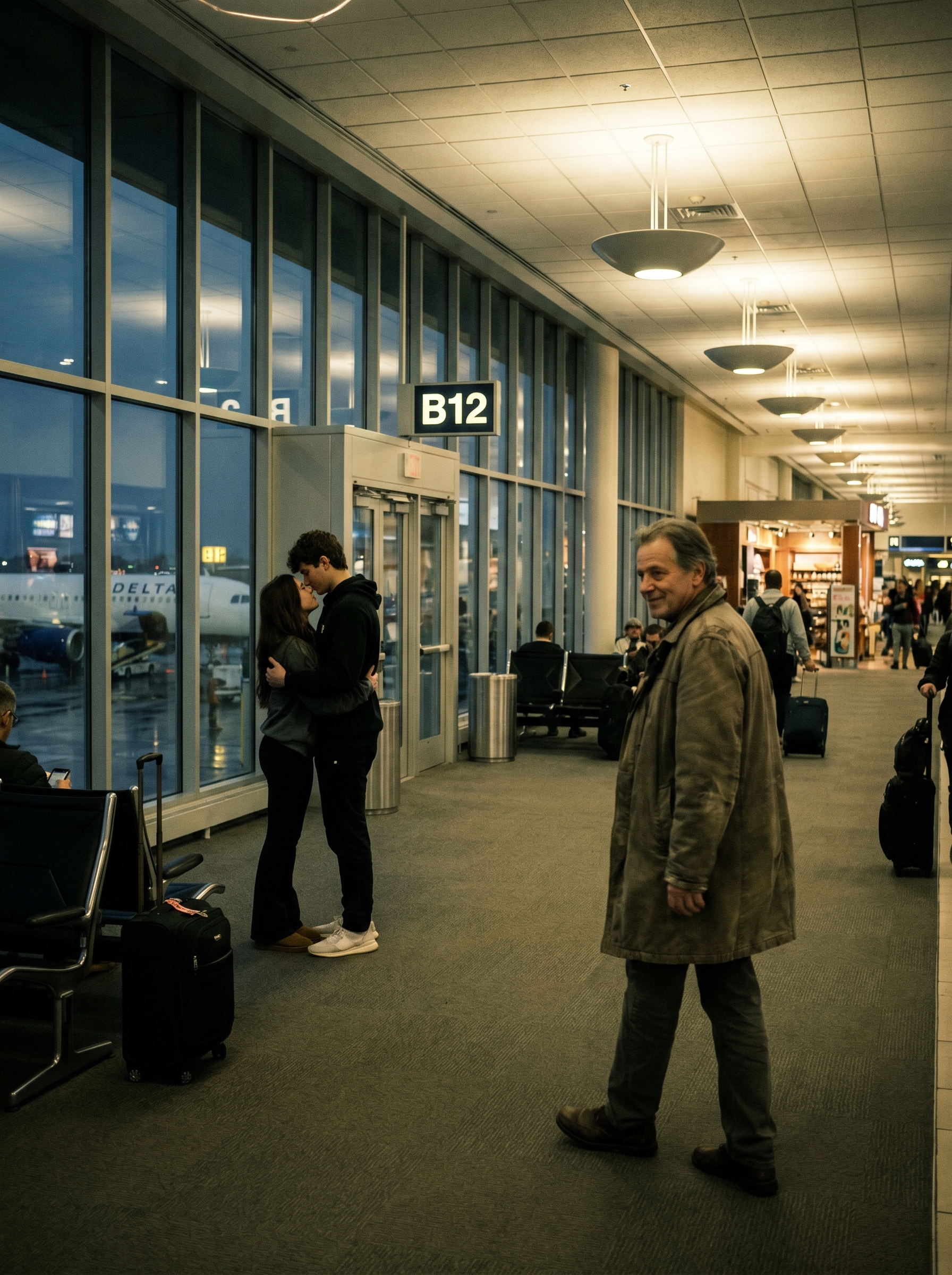
I took a bus to JFK. I hadn’t been back since… since everything unraveled. The airport hadn’t changed—a chaotic blend of people and emotions. Families reuniting, travelers rushing, the constant roar of engines. I found a bench near Terminal 8, the international terminal, and sat watching planes rise and descend, each one carrying people toward new beginnings.
I noticed a gate agent struggling with a broken luggage scale, frustration written across her face. She reminded me of Todd. I wondered where he was now, what had become of him. Had he moved on? Had he forgotten me? I didn’t try to find out. There was nothing left to say.
The sun began to set, casting long shadows across the tarmac. The sky shifted from burning orange to deep purple. Airport lights flickered on like distant stars. I sat there for hours, lost in thought, watching life continue without me.
As night settled in, I realized something. I was free. Not in the way I once imagined—not with power, wealth, or revenge—but free from the anger, the obsession, the constant need to fight. I had paid the price. I had lost everything. And in that loss, I had found something resembling peace. Quiet, empty—but still peace.
I stood, stretched, and walked toward the exit. I didn’t know where I was going, and for the first time, it didn’t matter. The journey had come full circle.
The last thing I saw before leaving was a young couple embracing near the departure gate. They looked full of hope, full of life. I smiled—a quiet, knowing smile. They had no idea what lay ahead. Then again, neither had I all those years ago. And maybe that was the point—the uncertainty, the possibility, the chance to choose differently.
END.
