

The shouting started small.
That’s how it always starts. A raised voice. A little more authority than the situation calls for. A man behind a desk reminding the man in front of him exactly where power sits.

Henry didn’t react to the volume.
He’d learned not to.
Seventy-three years old. Canvas jacket. Clean boots — he always kept them clean, a habit so old he couldn’t remember where it began. One hand on his bag strap. The other holding a slip of paper he’d been carrying for three weeks like it mattered more than anything else.
“You’ve been told,” Officer Briggs said, loud enough now for the entire lobby to hear. “The form is on the website. Ten business days. That’s the process.”
“I’ve submitted the form twice,” Henry said.
“Then submit it again.”
“Sir.” Henry kept his voice low. “Those documents are the only—”
“I don’t care what they are.” Briggs leaned over the counter, face flushed with that specific anger of a man who’s decided patience is no longer something he owes. “You don’t come in here four times demanding—”
“I’m not demanding anything.”
“You are harassing my desk—”
“I’m asking.” The words stayed steady. “That’s all I’m doing.”
“And I’m done answering.” Briggs straightened. “Step back or I’ll have you removed.”
Henry didn’t move.
Not forward. Not back.
He just stood there, the way a man stands when he’s too tired to perform submission but too careful to give anyone a reason.
“Please,” he said. One word. No decoration.
Briggs opened his mouth.
Across the lobby, from a bench where a man in a leather jacket had been sitting quietly for ten minutes, something shifted.
Not sound. Stillness.
The man looked up from his phone.
Then he wasn’t looking at the phone anymore.
He was looking at Henry.
Specifically at the left lapel of Henry’s canvas jacket.
At the small, worn pin there — a five-pointed star, dulled with age, hanging from a faded pale-blue ribbon.
His phone lowered slowly.
His expression changed.
He stood.
Ray Kowalski was forty-nine, with a bad knee and no intention of getting involved in anything that day.
He was only there for a parking ticket. Seventy dollars. Wrongfully issued. Six weeks of back-and-forth that had finally forced him to show up in person.
He had his paperwork. His plan was simple: hand it in, get coffee, go home.
Then he saw the pin.
He knew that pin.
Not in an abstract way. In the way you know a face from a photograph you’ve looked at for years — from his brother’s wall, from a ceremony on a small hospital TV in Germany, from stories repeated so often they became part memory, part inheritance.
He crossed the lobby.
Not quickly. His knee wouldn’t allow it. But steadily, with the certainty of a man who has decided something irreversible.
He stopped at the desk.
Looked at Briggs.
And brought his hand down flat on the counter.
Once.
The sound cut through the room.
Briggs turned.
“Sir—”
“Do you even know,” Ray said quietly, “who this man is?”
Briggs blinked. “What?”
Ray wasn’t looking at him anymore.
He was looking at the pin.
Then at Henry’s face.
“Khe Sanh,” Ray said.
Henry went still.
“1971,” Ray continued. “Third Battalion. The valley.”
Something flickered behind Henry’s eyes — not surprise, something older, buried.
“How do you—” Henry began.
“My brother,” Ray said. “James Kowalski. Corporal.” A pause. “He was in the first wave.”
Henry stared at him.
“Jimmy,” Henry said quietly.
Ray nodded once, jaw tight. “He talks about you. Still. Every Thanksgiving. Every time someone asks him about that war, he talks about a sergeant who went back in—three times.”
Henry raised a hand slightly. “Stop.”
Ray stopped.
“How is he?” Henry asked.
“Good,” Ray said, voice roughening. “Retired. Colorado. Four grandkids.”
Henry nodded slowly. “Good.”
Silence settled between them.
Then Ray turned back to Briggs.
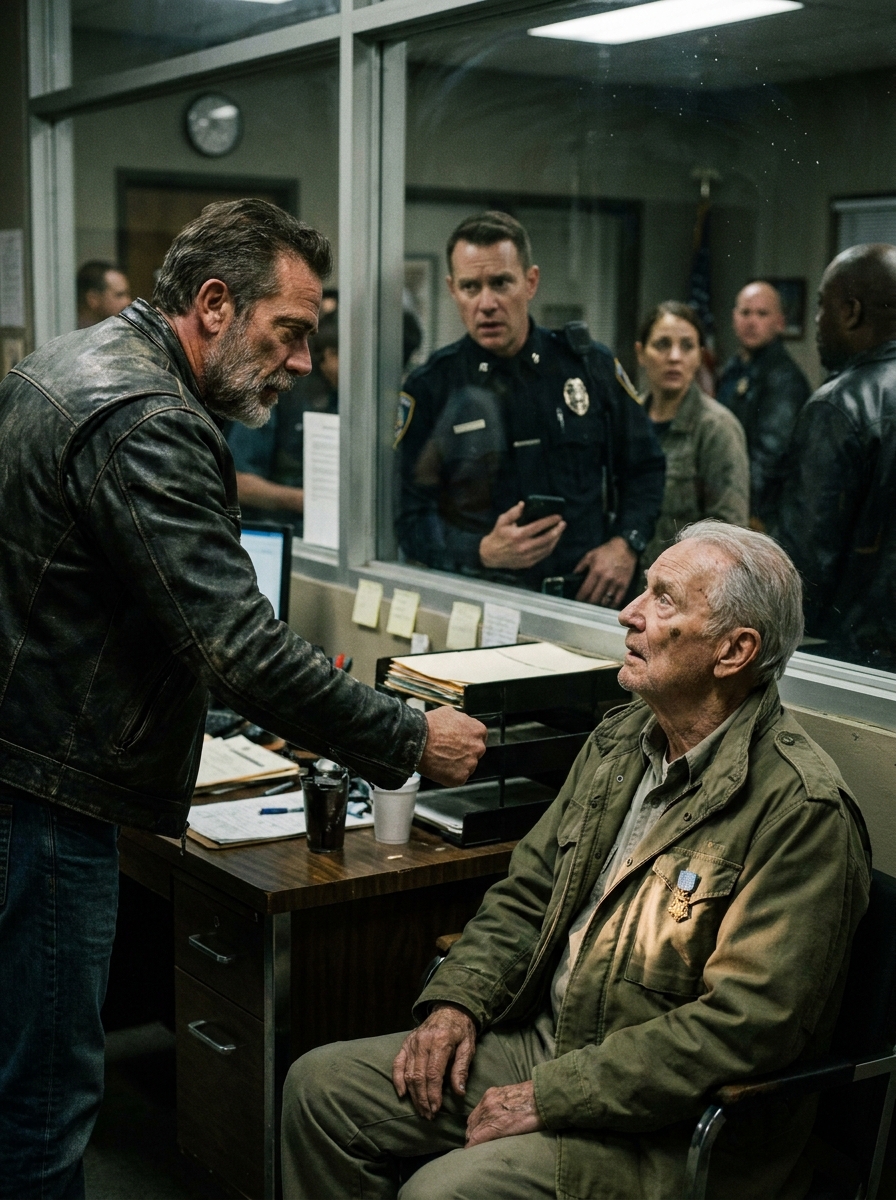
“That pin,” he said, “is the Medal of Honor.”
Briggs looked at it again.
“This man went back into a burning valley three times,” Ray said evenly. “Carried men out under fire. His hands were so badly burned they had to cut his gloves off at the field hospital.”
The lobby had gone still.
“My brother is alive because of him,” Ray continued. “Four grandkids exist because of him.”
He looked directly at Briggs.
“And you’re screaming at him over a form.”
Briggs tried. “I didn’t—”
“You didn’t know,” Ray cut in. “Fine. But you knew he was old. You knew he was tired. You knew he’d been here before and wasn’t getting help.”
A pause.
“And you still chose to raise your voice.”
Briggs said nothing.
A door opened.
Captain Donna Marsh stepped out, already sensing the shift in the air before she saw the cause.
She took in the room in seconds.
Henry. The pin. Ray. Briggs.
Then she understood.
“Mr. Calloway,” she said gently.
Henry looked at her.
“I’m Captain Marsh. I’m sorry for how you’ve been treated here.” No hesitation. “Please wait one moment.”
She turned to Briggs.
“My office. Now.”
He tried to speak.
“Now.”
He went.
The door closed.
Minutes later, it opened again.
Briggs walked out, passed the desk without looking at anyone, and left through the side exit with a box of belongings.
No words.
No argument.
Captain Marsh returned.
“Get his file. Everything,” she said. “Now.”
Someone moved immediately.
Nine minutes later, a box was placed on the desk.
Henry went through it slowly. Service records. VA forms. Misfiled documents. A letter confirming benefits that should have been in his hands weeks earlier.
Nine minutes.
Three weeks of waiting.
He closed the box carefully.
Ray stood beside him.
“Your brother know you’re here?” Henry asked.
Ray shook his head. “Not yet.”
“Call him,” Henry said.
Ray did.
When the call connected, a voice came through — older, cautious.
“Ray?”
“Jimmy,” Ray said, voice catching slightly. “I’m outside the precinct.”
A pause.
“You’re not going to believe who’s with me.”
Silence.
Then, barely a breath:
“Ray?”
Henry took the phone when it was handed to him.
He didn’t speak at first.
Then: “James Kowalski.”
A broken sound came through the line.
“Still here,” Henry said quietly. “Both of us.”
Six weeks later, Henry moved into a small apartment. Nothing remarkable. A bed. A chair. A window that caught morning light in a way that made even a parking lot look almost intentional.
His documents sat in a neat folder by the bed.
Safe. Present. Real.
One morning, his phone rang.
Unknown number.
“This is Henry Calloway?”
“Yes.”
“My name is James Kowalski.”
A pause. Like a man testing whether the moment would hold.
“I’ve been trying to find the right words for twenty-two years,” the voice said. “My brother told me to just say them.”
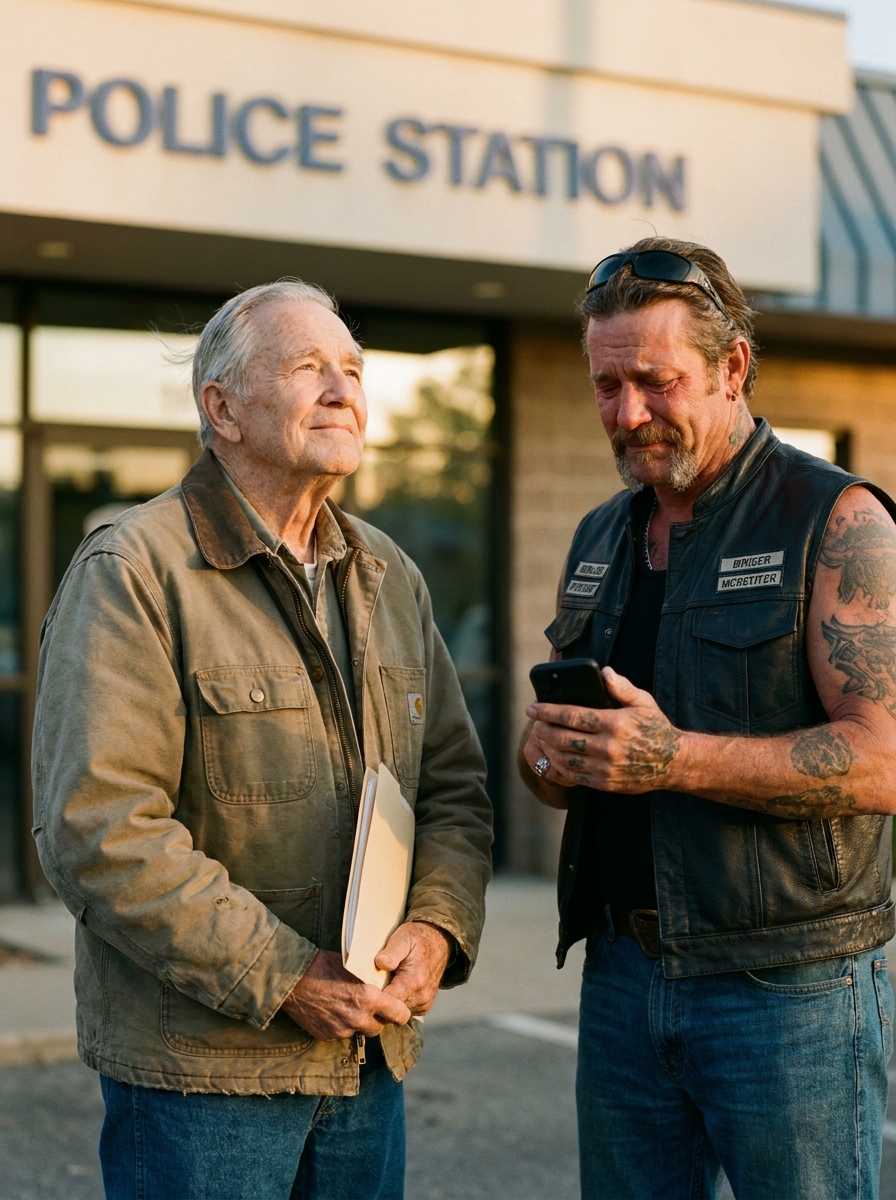
Henry sat down.
“Say them,” he said.
And James did.
All of them.
When it ended, Henry said quietly, “You turned out all right.”
A rough laugh on the other end. “I tried.”
“That’s all it is,” Henry said. “Trying.”
Later, Henry made coffee.
The morning was ordinary.
And he was in it.
