

PART 1 – THE MILLIONS THAT CHANGED MY SON
There are moments in life that leave wounds no one else can see. Years may go by, but the memory still aches whenever you let yourself return to it. My name is Catherine Hill, I am sixty-four years old, and the day my son inherited millions was the day I learned how little I actually knew the man I had spent a lifetime loving.
I grew up believing family was sacred. My mother taught me to sew, to cook, and to care for others, but more than that, she taught me that love should be given freely, with no strings attached. That belief guided my whole life, and for decades I never once questioned it.
I married Richard Hill when I was young. We were never rich, but together we built a good life through hard work, sacrifice, and devotion to our children. We raised three children — Andrew, Lucy, and Thomas — and every choice we made centered on giving them chances we never had ourselves.
Andrew, our eldest, stood apart from the others even as a boy. He was sharp, driven, and set on building a life bigger than the one he was born into. Richard pulled exhausting shifts at the factory while I gave sewing lessons in the evenings so we could pay for his schooling and back his dream of becoming a lawyer.
Watching him succeed felt like watching our sacrifices finally bloom. When he graduated from law school, Richard wept openly at the ceremony, still wearing the same suit he had carefully kept all those years. It was one of the proudest days of our lives, because it felt like proof that our struggles had meant something.
As time passed, Andrew built a thriving legal career and married Valerie, a woman from money whose polite smiles never quite reached her eyes. She was always courteous, but I often sensed she saw me as something to be tolerated rather than family. I stayed quiet, though, because keeping the peace mattered more to me than defending my pride.
Everything shifted five years ago when Richard died suddenly of a heart attack. We had shared breakfast that morning; a few hours later, he was gone. The grief nearly broke me, but I kept going because there was nothing else to do.
After Richard passed, my world grew quiet. Lucy moved away for work, Thomas settled nearby and visited often, and Andrew slowly drifted further away. His calls came less and less, his visits grew rare, and every conversation seemed wrapped in some excuse about work, travel, or other obligations.
I stayed on alone in the house where we had raised our children, surrounded by old photographs and memories. The white rose garden Richard had planted became my refuge — every bloom a reminder that some kinds of love outlast death.
Money had never come easily to us, but Richard had quietly set some aside. I found a savings account holding forty-five thousand dollars that he’d never mentioned, and with Thomas’s help, I invested it carefully and let it sit untouched.
I never thought of it as wealth. To me it meant security, peace of mind. Somewhere in the back of my thoughts, I also pictured leaving it to my children one day, a last gift from both Richard and me.
Life had settled into a steady rhythm until one Friday evening six months ago, when Andrew called out of nowhere. There was an excitement in his voice I hadn’t heard in years, and he said he had news that couldn’t wait.
He came by the next day with Valerie and explained why they’d come. A distant relative on Richard’s side, an uncle named August Hill whom we barely knew, had died recently without children of his own.
Then Andrew told me something none of us could have expected.
Under the will, Uncle August had left an estate worth roughly thirty-two million dollars. Since Richard had already passed, it would go directly to his three children — Andrew, Lucy, and Thomas.
For a moment I couldn’t take it in. Thirty-two million dollars felt less like something real and more like a figure pulled from a movie or a headline.
Then Andrew mentioned there was more.
August, it turned out, had also set aside one million dollars specifically for me.
I looked at him in disbelief and asked why a man I hardly knew would do such a thing. Andrew said August had been struck by my character and my devotion to the family, though the way he repeated it made it clear even he found the explanation hard to swallow.
Valerie’s reaction was even less warm.
“How generous of him,” she said, her smile carrying more irritation than gratitude.
The formal reading of the will was set for the following Friday, to be held at Andrew’s house. Overwhelmed as I was, part of me felt hopeful — maybe something good could finally bring our family back together.
When the day came, Thomas drove me over. Expensive cars lined the driveway, guests filled the house, and the mood felt more like a party than a legal proceeding.
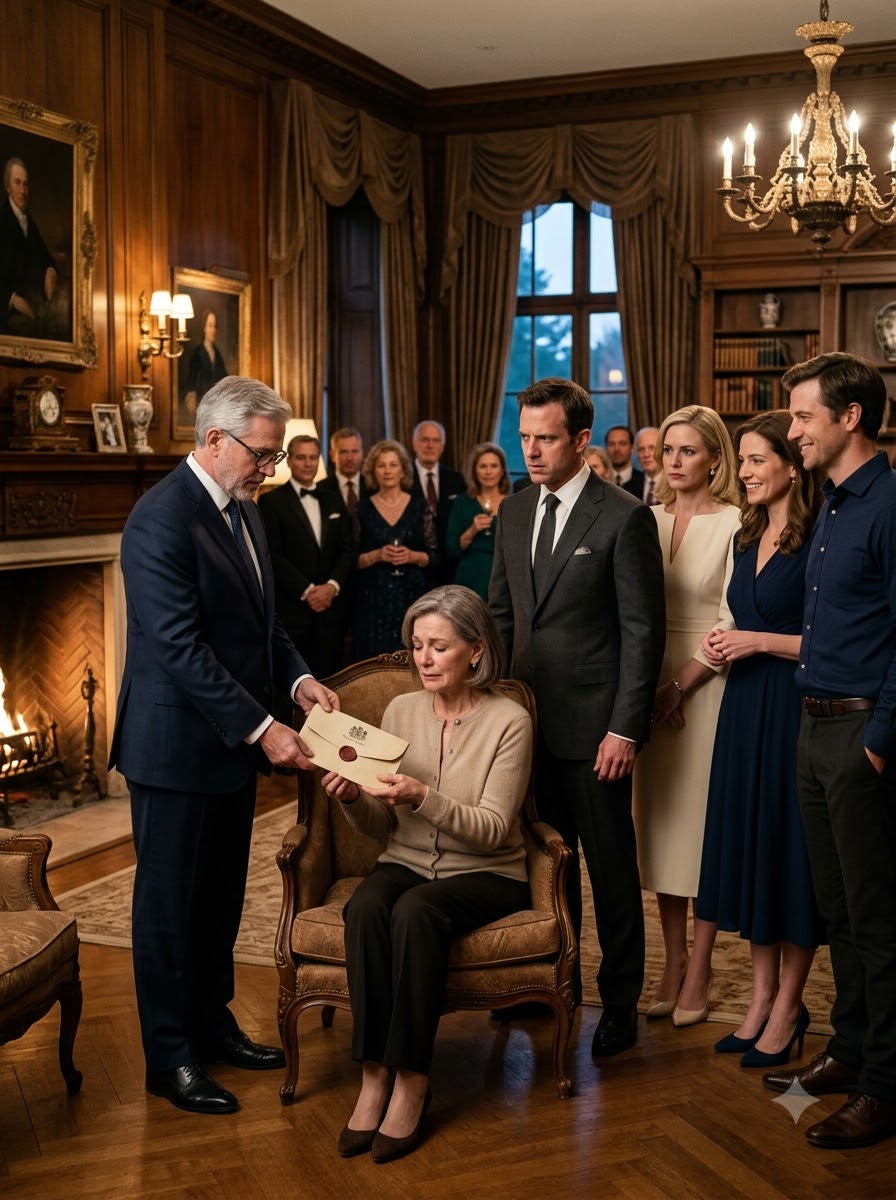
The attorney, Arthur Miller, eventually brought everyone into the living room and began reading the will. After working through the legal details, he confirmed the thirty-two million would be split evenly between Andrew, Lucy, and Thomas.
The room broke into applause and celebration.
Then Arthur raised a hand for quiet.
There was one more provision, he explained. Per Uncle August’s wishes, an additional one million dollars would go directly to me, in recognition of my selflessness and devotion to my family.
He then handed me a personal letter August had written himself.
Reading it, my eyes filled with tears. He wrote that we had only met twice, yet those brief encounters had shown him a quiet dignity and kindness worth honoring. His words were plain and sincere, and they moved me more than I expected.
The moment should have been beautiful.
Instead, it became the start of something terrible.
When I looked up from the letter, Lucy was smiling through tears, and Thomas looked truly happy for me. Andrew, though, was watching me with a look that sent a chill straight through me.
The excitement that had lit up his face minutes before was gone entirely. In its place was a coldness, an anger, I had never seen aimed at me before.
Valerie looked just as displeased.
“There must be some mistake,” Andrew said sharply. “My mother isn’t a direct heir.”
The attorney explained calmly that there was no mistake and no legal ground to contest it. The gift had been meant for me specifically, and the terms were fully binding.
The clarification should have settled things, but I could already feel something shifting between my son and me.
Later that evening, once the guests had gone, Andrew pulled me aside. At first I assumed he only wanted to understand things better.
Instead, he asked something that left me speechless.
He suggested there might have been some hidden relationship between me and Uncle August that would explain the gift. It took me a moment to realize he was doubting my faithfulness to Richard, implying something deeply hurtful.
The accusation cut deeper than I can put into words.
For thirty-eight years, Richard and I had loved each other faithfully, and now my own son was ready to question that history over money.
When I called him out on it, he tried to walk it back, blaming confusion, but the damage was done. Something had broken between us, and neither of us could pretend otherwise.
That night, as Thomas drove me home, I stared out into the darkness with an unease I couldn’t quite name. The inheritance hadn’t even been paid out yet, and already it was tearing my family apart.
Three days later, Andrew showed up at my door with a briefcase and a proposal that would show just how far things had already gone.
PART 2 – THE SON WHO WANTED CONTROL
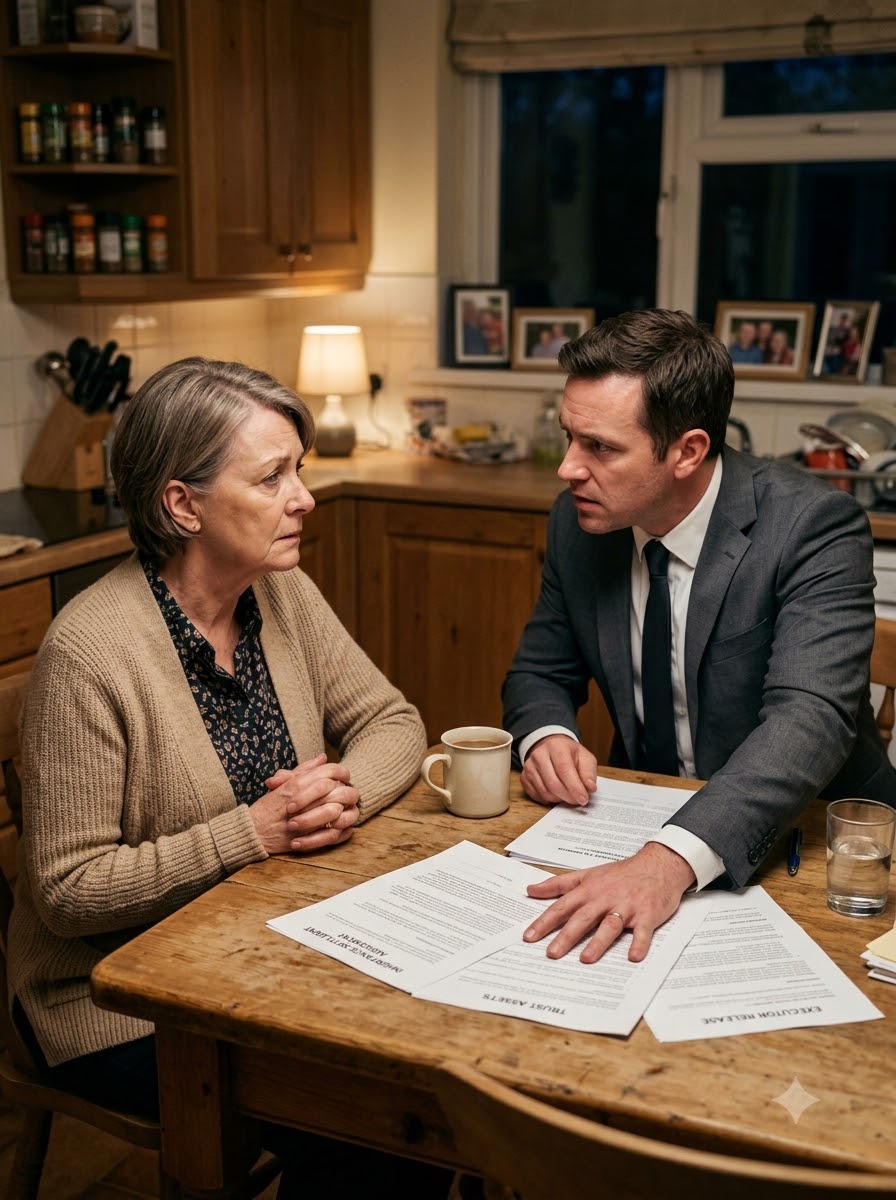
Three days after the reading of the will, Andrew turned up at my house carrying a leather briefcase and the same self-assured look he wore in court. He was polite enough, accepted a cup of coffee, but I could tell he hadn’t come to spend time with me. He’d come for the money.
We sat across from each other at the kitchen table where our family had shared thousands of meals over the years. For a moment, the familiar setting nearly convinced me this was an ordinary visit, but that illusion vanished the second Andrew opened his briefcase.
He laid several legal documents across the table and launched into a financial plan he’d already prepared. In his view, I didn’t have the experience to handle a million dollars responsibly, and the safest option would be to put the money under his professional control.
Andrew spoke with confidence about investments and long-term growth. If I gave him legal authority over the inheritance, he said, he could invest it and pay me a monthly income while managing everything else himself.
At first I tried to believe he meant well. But the longer he talked, the more uneasy I felt, because every option he offered seemed built to put my entire inheritance in his hands.
When I asked about simply keeping the money in a safe account or talking to an independent adviser, he brushed off both suggestions almost instantly. His tone hardened with every alternative I raised, until the conversation no longer felt like advice.
It felt like pressure.
Worst of all was how quickly he turned it into a test of loyalty. Refusing his plan, he implied, meant I didn’t trust him — leaving me stuck between protecting my independence and being accused of betrayal.
I tried to explain that my hesitation had nothing to do with trust. The money meant my future, my security, my right to decide for myself. But Andrew didn’t seem willing to accept anything short of full control.
As we kept talking, he started blaming Thomas, accusing his younger brother of putting doubts in my head and insisting Thomas secretly wanted the inheritance for himself.
Hearing him talk that way stunned me — it didn’t sound like the son I had raised. His words were bitter and suspicious, unfair toward a brother who had done nothing but support this family.
When I told him I wouldn’t sign anything without time to think it over, his frustration was obvious. He gathered his papers quickly, accused me of turning down his help, and warned I’d regret not listening to him.
Then he left.
I sat alone at the kitchen table long after, staring at my cold coffee, wondering what had happened to the child I once knew. For the first time, I found myself unsure whether I really recognized my own son.
That afternoon I called Thomas and told him everything.
His answer came right away.
“Don’t sign anything, Mom,” he said firmly. “If Andrew really wanted to help, he’d be pushing you toward an independent adviser, not asking for total control.”
His logic made sense, but emotionally I struggled to accept it. Andrew was still my son, and part of me wanted badly to believe there was some misunderstanding behind all of this.
Over the next week, Andrew stopped calling altogether.
The silence felt intentional.
It was as if turning down his proposal had erased me from his life overnight. Lucy eventually reached out after speaking with Andrew, and she sounded genuinely worried.
She said Andrew was telling people I was becoming paranoid, and that Thomas was manipulating me. Hearing those claims broke my heart, because they echoed the same tactics he’d used on me directly.
For the first time, Lucy admitted something was clearly wrong.
She reminded me that looking out for my own interests wasn’t selfish, and that I had every right to handle my inheritance however I wanted. Her support gave me strength, and I finally decided to get independent advice instead of handing control to anyone.
I thought things would eventually settle down.
I was wrong.
Two weeks later, a certified letter arrived at my door.
It came from a law firm I’d never heard of. Sitting in my living room reading the papers inside, I felt my hands start to shake.
The lawsuit claimed I was suffering from age-related cognitive decline.
According to the filing, I had become unable to manage my own finances and needed a legal guardian to oversee my affairs. The person requesting that authority was Andrew.
My own son.
The claims were devastating.
The papers described me as confused, irrational, forgetful, and easily manipulated. There were witness statements about behavior I’d never shown, including remarks suggesting I could no longer make sound decisions.
Every page felt like a betrayal.
The son I had sacrificed for, worked for, loved without condition, was trying to convince a court that I was mentally incapable of running my own life. If he won, he’d gain legal control over my finances and, eventually, the inheritance he hadn’t been able to win any other way.
I sat on my sofa surrounded by family photos and cried harder than I had since Richard’s death.
The pain wasn’t from the lawsuit itself.
It came from realizing how far Andrew was willing to go.
When Thomas arrived and read through the documents, his anger was immediate. He called the lawsuit abusive and insisted we fight it, but even then, I struggled to accept what was actually happening.
Whatever he’d done, he was still my son.
Lucy arrived that evening, having taken the first flight she could find. She and Thomas sat with me in the same living room where we’d celebrated birthdays and holidays for decades, and for the first time I understood something clearly.
This wasn’t just a legal fight.
It was a fight for my dignity.
The next day, Lucy put me in touch with an attorney named Frank Sullivan. After going through the case, he told me the claims were weak and poorly supported, but warned the process ahead would be painful and public.
When he raised the idea of settling — offering Andrew part of the inheritance in exchange for dropping the suit — my own answer surprised me.
“No.”
The word came out firmer than I expected.
I told him that giving in would reward cruelty and teach Andrew that tearing down his own mother was an acceptable way to get what he wanted. If there was going to be a fight, it would be fought honestly.
Frank quickly arranged independent medical evaluations.
Over the following days, I met with neurologists, psychologists, and specialists who tested my memory, reasoning, and judgment from every angle. It felt humiliating, having to prove something that should never have been in question.
Thankfully, the results left no room for doubt.
Every doctor found my cognitive abilities excellent for my age. Several even noted I performed above average in memory and reasoning.
The evidence should have brought me relief.
Instead, it made Andrew’s actions feel even more calculated.
Then came the day of the hearing.
Walking into the courthouse and seeing my son across the room with his legal team, I realized the inheritance had already taken something from me that could never be given back.
It had turned a mother into an opponent.
And the fight was only starting.
PART 3 – THE DAY ANDREW LOST EVERYTHING
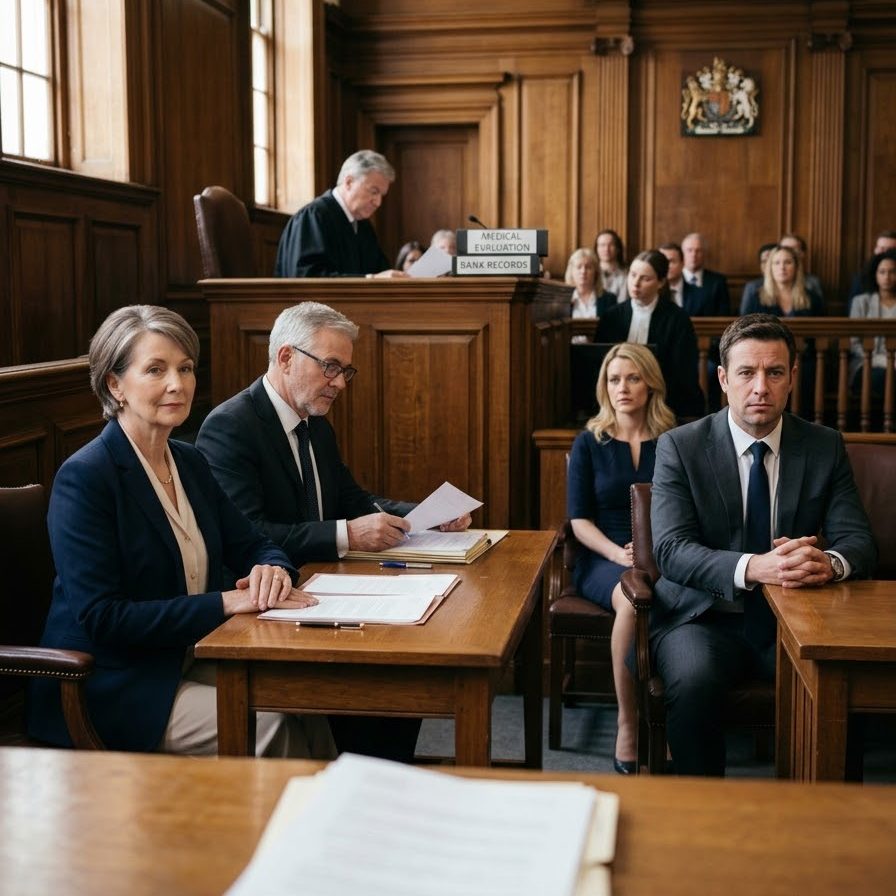
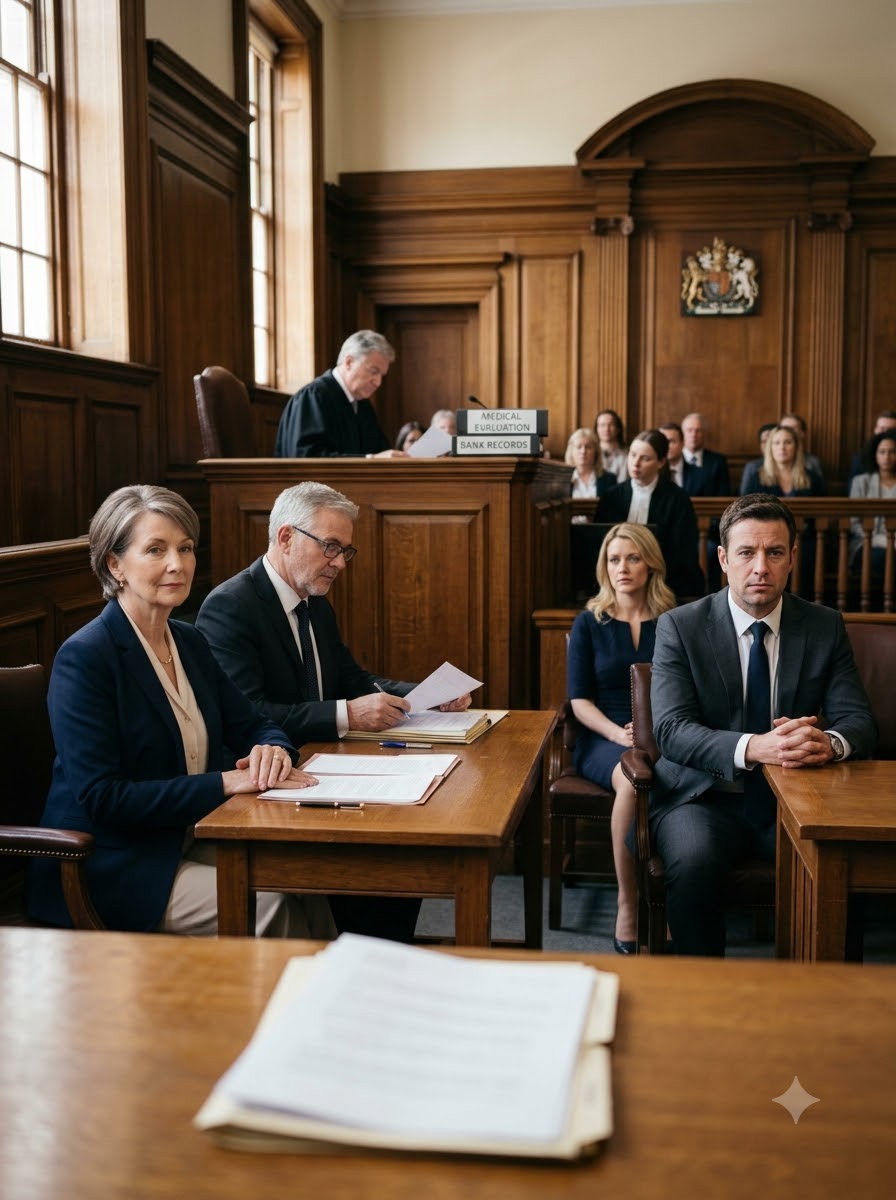
The courtroom was quieter than I’d expected when the hearing began. Sunlight came through the tall windows, attorneys sorted through their papers, and rows of spectators filled the seats behind us — but despite how ordinary it all looked, I felt like my entire life was on trial.
Andrew sat across the room next to Valerie and his legal team, looking confident and fully convinced the court would side with him. Watching him prepare to argue that his own mother couldn’t manage her affairs was one of the most painful things I’ve ever lived through.
Once things got underway, Andrew’s attorney framed the case as concern rather than greed. He claimed my recent decisions raised doubts about my judgment, and argued I had grown vulnerable to manipulation from other family members — Thomas, in particular.
Listening to it all felt unreal, because it described someone I didn’t recognize. The woman in those papers was confused, dependent, incapable of thinking clearly, while the real one sat quietly, knowing every word of it was false.
Fortunately, our side was ready.
Frank Sullivan carefully walked the court through the independent medical evaluations. Neurologists, psychologists, and cognitive specialists had all reached the same conclusion: I was fully competent, sharp-minded, and completely capable of handling my own finances.
Expert after expert testified there was no sign of cognitive decline. Several noted that my scores on memory and reasoning tests exceeded what would be expected for my age.
As the testimony went on, the judge’s expression began to change.
Whatever skepticism had first seemed aimed at both sides gradually shifted toward Andrew’s case. The more evidence came out, the harder it was to see why such a lawsuit had ever been filed.
Then Frank brought up something none of us had expected to matter so much.
Discovery had turned up emails and messages between Andrew and several financial advisers, sent well before he ever brought his investment plan to me. Those messages showed he had already been exploring ways to take control of my inheritance before he ever claimed to be helping.
The courtroom went noticeably quiet.
The messages told a troubling story — one of planning, not concern. Long before he ever questioned my mental state, Andrew had already been working out how to control the money.
Confronted with the records, Andrew tried to say he’d simply been weighing ways to protect family assets. Unfortunately, that explanation clashed with things he’d already said under oath.
The contradictions were hard to ignore.
For the first time that day, I saw real doubt cross his face.
The judge went through the evidence carefully, then asked a series of direct questions. Andrew’s answers grew more defensive with each one, and every response made it harder to believe this lawsuit had ever been about protecting me rather than getting hold of the inheritance.
After hours of testimony, the hearing came to a close.
The judge threw out the petition entirely.
Not only did the court reject every claim about my competency, the judge openly criticized how little credible evidence had backed the case. The ruling was unambiguous: I kept full control of my finances, my property, and my inheritance.
It should have felt like a victory.
Instead, I felt a deep sadness.
Winning didn’t repair what had broken. It didn’t erase the accusations, undo the humiliation, or rebuild the trust that had been destroyed.
As people started filing out of the courtroom, Andrew came over to me.
For a second, I wondered if he meant to apologize.
Instead, he stood there silently before finally asking a question that told me everything.
“Are you really going to keep all of it?”
The words hit harder than anything said in that courtroom.
Even after losing the case, even after months of conflict, public embarrassment, and emotional wreckage, his main concern was still the money.
I looked at him for a moment before answering.
“Yes.”
Andrew just stared.
“Why?”
The answer came easier than I expected.
“Because your father spent his whole life teaching our children that character matters more than money. If I back down now, I’d be dishonoring everything he stood for.”
For once, Andrew had nothing to say.
He turned and walked out without another word.
That was the last real conversation we had.
In the months after, Lucy and Thomas stayed close. They checked on me regularly, helped me get through the aftermath of the lawsuit, and reminded me that family could still bring comfort instead of pain.
Andrew, meanwhile, grew more and more isolated.
Word of the court case spread through his professional circles, and even though the lawsuit itself was legal, plenty of people judged him for it. Business relationships cooled off, invitations stopped coming, and the reputation he’d spent decades building took a hit he never saw coming.
I chose a different path.
Instead of spending the inheritance on luxury, I used part of it to start the Richard Hill Community Scholarship Fund, giving educational support to students from working-class families who lacked resources but had drive and potential.
It felt like the right choice from the start.
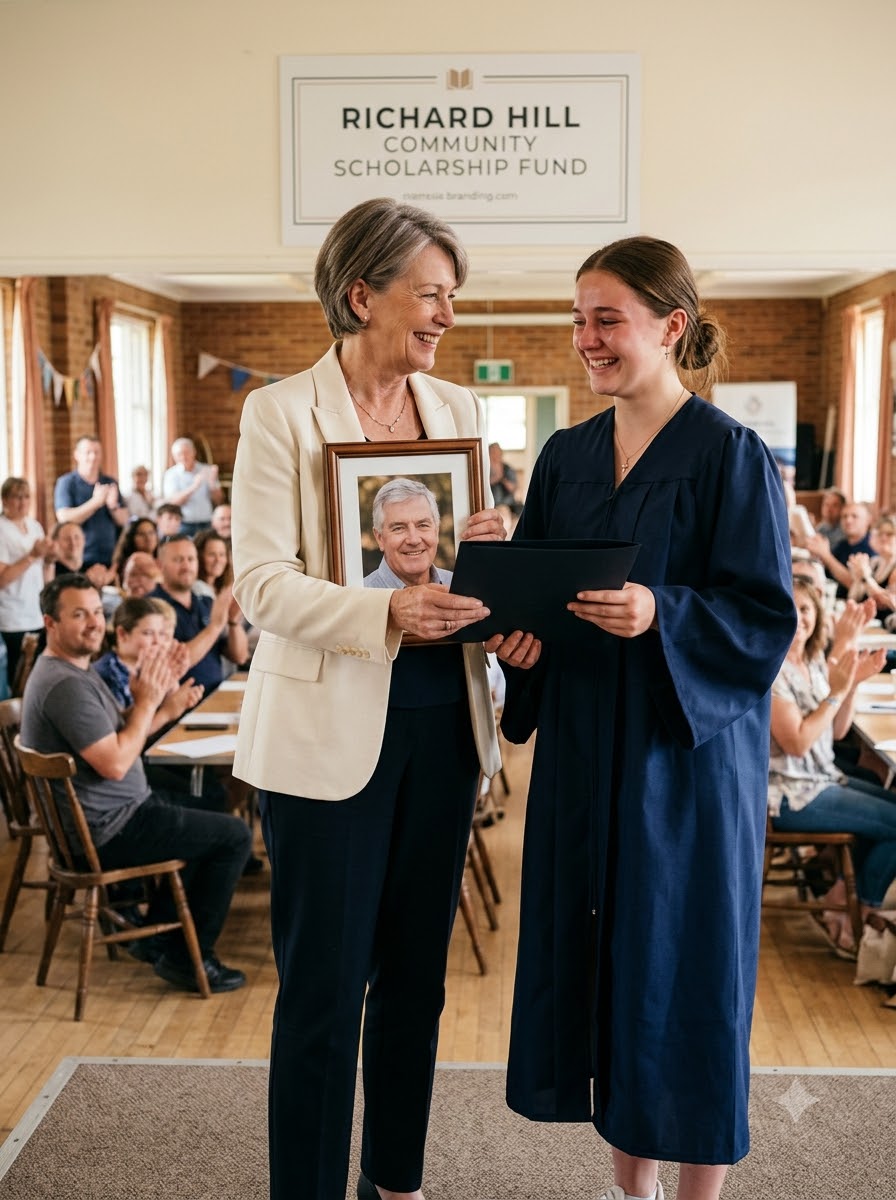
Richard had spent his life helping our children reach for opportunities we never had, and this scholarship let his values keep helping people long after he was gone.
The first scholarship ceremony took place almost a year after the case ended.
Watching those young students accept their awards, I felt something I hadn’t felt in a long time.
Peace.
The inheritance that had nearly torn my family apart was now opening doors for people who genuinely needed them. Instead of dividing us, it had become a source of hope.
A few months later, an unexpected letter arrived.
The handwriting on the envelope was Andrew’s.
I sat looking at it for almost an hour before I opened it.
Inside was a short note.
He admitted that greed had shaped his choices. He said the anger over the inheritance had clouded his judgment, and confessed he’d spent months telling himself his actions were justified when he knew they weren’t.
Most of all, he apologized.
The letter wasn’t dramatic.
It didn’t ask for money.
It offered no excuses.
It simply acknowledged the pain he’d caused and expressed genuine regret for becoming someone neither of us recognized.
When I finished reading, I sat quietly in my garden, surrounded by Richard’s roses.
For a long while, I thought about forgiveness.
I thought about family.
I thought about the distance that still stood between a mother and her son.
Eventually, I folded the letter and set it down beside me.
I hadn’t decided whether I was ready to forgive Andrew completely. Some wounds need time, honesty, and steady effort before they can truly heal.
Still, looking out across the garden Richard had loved so much, I understood something important.
Money had brought out my son’s worst side, but maybe losing everything he thought he wanted had finally given him a chance to find his best one again.
Whether he would take that chance, I couldn’t say.
But for the first time in a long while, I was willing to hope.
