


I’ve always had an instinctive aversion to places that look too perfect. In my twenty years wearing a gold shield, I’ve come to trust a grim, almost mathematical truth: the crisper the edges of the hedges, the brighter the whitewash on the fence, the more decay is hiding beneath the surface.
Number 47 Westbrook Lane was a textbook example of suburban disguise. It stood at the end of a quiet cul-de-sac, a wide Colonial house wrapped in an oppressive, polite silence. The rosebushes beside the mahogany door were trimmed with almost surgical severity. It looked like a picture-perfect slice of the American Dream. To me, it felt like a tomb.
I wasn’t there because of a frantic 911 call or a scene soaked in blood. It started with a quiet tip. A thin, shaky voice from an elderly neighbor who insisted the pregnant woman next door had simply “evaporated” without a trace.
I left my unmarked cruiser parked a few houses away, listening as the engine clicked softly while it cooled. The air carried the scent of freshly cut grass and costly fertilizer. I adjusted my shoulder holster, reassured by the weight of my sidearm, and made my way up the immaculate brick path.
Before my knuckles could even touch the brass knocker, the door opened inward.
Agatha Sterling stood in the doorway. She was in her late sixties, dressed in a flawless dove-gray knit suit that likely cost more than my car. Her silver hair was styled into a rigid, immovable shell. She smiled, but it was purely mechanical. None of the warmth reached her pale, icy eyes. She was a well-known pillar of this wealthy neighborhood—treasurer of the local diocese, chairwoman of the charity gala, and, by every public measure, a deeply devoted mother-in-law.
“Detective. To what do we owe this unexpected novelty?” Agatha purred, her voice a silky mix of honey and shattered glass. She shifted slightly, just enough to subtly yet decisively block the doorway with her narrow frame.
“Just a routine neighborhood canvass, Mrs. Sterling,” I replied evenly, flashing my badge. “Actually, conducting a standard welfare check. We received a call raising concerns about your daughter-in-law’s well-being.”
I studied the micro-expressions flickering across her face—a brief twitch of irritation, quickly concealed beneath a carefully crafted mask of maternal concern.
“Oh, my poor Clara,” Agatha sighed, clutching her pearls with such theatrical flair it made my teeth ache. “She is, regrettably, indisposed. The pregnancy has been… tremendously taxing on her delicate constitution. Her mind is currently quite fragile. I wouldn’t want to agitate her.”
Fragile. It’s a word abusers cling to. It casts the victim as damaged and the captor as the one holding everything together.
“I completely understand,” I said, my tone turning firm and authoritative. “However, protocol requires that I see her in person. It will only take a moment—just to check a box for the captain.”
Agatha’s jaw clenched. She weighed the consequences of denying a detective entry against whatever secrets were hidden upstairs. At last, she stepped aside.
The inside of the house hit me all at once. It reeked of synthetic lavender and harsh furniture polish—a sterile, chemical blend meant to erase any sign of real human life. The hardwood floors shone like glass. I followed her up a sweeping mahogany staircase, each step softened by a thick, cream-colored runner.
She guided me to the master suite at the end of the hallway. The door was heavy, made of solid oak. She pushed it open.
The room was stiflingly hot and cloaked in shadow. Thick blackout curtains sealed off the afternoon light. In a wingback chair in the corner, staring blankly at the wall, sat Clara.
My breath caught. She looked about seven months pregnant, her belly protruding beneath a shapeless gray nightgown. But the rest of her was devastating. She resembled a walking corpse. Her collarbones protruded sharply beneath her pale skin, her cheeks hollowed into skeletal dips. Dark, bruised circles swallowed her eyes.
When she noticed me, she made no sound. Her hands, shaking like fragile leaves, hovered protectively over her swollen abdomen. Agatha drifted in behind me, looming over Clara like a watchful predator.
“You see, Detective?” Agatha murmured, her voice laced with sweet poison. “She is completely catatonic. Liam and I are exhausting ourselves, doing everything medically possible, but she simply refuses to eat. She has this tragic belief that her food is poisoned. The poor, broken girl.”
I ignored Agatha entirely. I crossed the room and lowered myself to one knee, placing myself below Clara’s line of sight—a non-threatening stance.
“Clara,” I said gently, keeping my voice calm and steady. “I’m Detective Lucas Thorne. I need you to tell me if you are safe.”
Clara blinked slowly, her eyelids dragging with effort. Her eyes flicked anxiously toward Agatha, then snapped back to me. The raw terror in them was unmistakable—a silent, piercing scream.
She didn’t speak. But as she shifted slightly, her frail hand brushed the mahogany nightstand. With a movement so subtle it was nearly invisible, she nudged a thick, leather-bound prayer book an inch closer to the edge—toward me.
I reacted without hesitation. Rising smoothly, I picked up the book in one fluid motion and tucked it under my arm.
“I appreciate your cooperation, ladies,” I said, turning to Agatha and meeting her cold gaze. “I’ll note this in my report. I may return if the department finds it necessary.”
I made my way out of the lavender-scented tomb, the back of my neck prickling until the front door finally shut behind me.
I moved quickly to my cruiser and climbed into the stifling interior. I didn’t start the engine. Instead, I ducked low beneath the dashboard, out of sight from any upstairs windows, and opened the prayer book.
There was no ribbon marker, no highlighted passages. But inside the back cover, pressed flat and written in jagged strokes of black eyeliner on a torn receipt, was a frantic message:
I am not crazy. She is starving me to death. She cancelled my obstetrician. Please, my baby is dying inside me. Don’t tell Liam, she controls his mind. Help me. Please.
I stared at the uneven black letters, a cold dread settling deep in my gut. This wasn’t a routine domestic situation. This wasn’t simple neglect. This was a slow, deliberate killing hidden behind a mask of piety. And when I glanced into the rearview mirror, I saw the heavy velvet curtain in the master bedroom shift.
She knew I had the book.
Chapter 2: The Sentinel Next Door
I couldn’t just break the door down. The law demands probable cause—not a desperate message scribbled in makeup. Agatha Sterling was a dangerous opponent—wealthy, influential, and merciless. If I acted too soon without solid evidence, she’d have a lawyer on speed dial, dismiss Clara’s note as the ramblings of a delusional woman, and I’d be hit with a restraining order. Clara wouldn’t last a week.
I needed something stronger. I needed a witness—someone who could see through the illusion of Westbrook Lane.
My first move was the neighboring house. Number 45 stood in stark contrast to the Sterling estate. The paint was slightly chipped, the yard overgrown with wildflowers, and a rusted wind chime rattled softly on the porch.
Before my boot even touched the first step, the screen door creaked open.
Mrs. Higgins stood there—a small, frail woman well into her eighties. Her hands were knotted with arthritis, but her eyes were sharp and dark as obsidian. She wore a floral apron that carried a faint scent of cinnamon and old books.
“I figured you’d be the one they’d send, young man,” she rasped, motioning me inside. “The uniforms came by a month ago. Stood right there, took Agatha’s word as gospel, then drove off. But you… you look like someone who keeps digging.”
She led me into a cramped but warm kitchen and slid a worn, cracked leather ledger across the Formica table.
“Agatha is an expert at deception,” Mrs. Higgins said, pouring black tea with a surprisingly steady hand. “But I’m a widow with terrible insomnia. Old people have one thing the young don’t: time to watch.”
I opened the ledger. It wasn’t a journal—it was a detailed record.
Day 43: 14:00 hours. Clara attempted to escape through the back garden. Agatha intercepted her at the patio door. Dragged her back inside by her hair. All ground-floor blinds were lowered and locked afterward.
Day 60: Liam left for a corporate retreat in Chicago. 03:15 hours. High-pitched screams from the master bedroom. Agatha turned up a choir broadcast on the stereo to cover the noise.
Day 90: Clara seen at the second-floor window. Severely underweight. Almost skeletal. Agatha later discarded untouched meals—roasted chicken, vegetables—into the outdoor compost while the girl cried against the glass.
My stomach twisted, a bitter mix of admiration for the old woman and rising disgust toward her neighbor. “This is incredible, Mrs. Higgins. It shows a clear pattern of confinement and abuse.”
“You don’t just read it, Detective—you feel it,” she said softly, gripping my forearm with surprising strength. “You save that girl. You save her baby. There’s something evil in that house.”
I closed the ledger and slipped it into my jacket. “I will. You have my word.”
I stepped back onto the porch, the afternoon sun feeling harsh against my skin. I paused, lighting a cigarette I hadn’t touched in three years, my eyes scanning the Sterling property. The neighborhood’s silence felt heavy—almost complicit.
As I exhaled a stream of smoke, my gaze drifted up to the roof of Number 47.
The attic window—a small, round pane clouded with grime. Behind it, something shifted. It wasn’t Clara. The figure was stiff, unmistakable. Agatha stood in the dark attic, watching me speak with her neighbor.
She slowly lifted a hand and drew a finger across her throat.
The message was unmistakable. The clock had just started ticking faster.
Chapter 3: Shattering the Glass Heir
The weakest point in Agatha’s armor wasn’t her arrogance—it was the oblivious stand-in she relied on to preserve the illusion of a perfect home. Liam Sterling.
I didn’t call ahead. I drove straight to the financial district, flashed my badge to bypass reception at Sterling Logistics, and pushed open the frosted glass doors to Liam’s corner office.
Liam was thirty-two, dressed in a tailored navy suit, carrying the polished confidence of a man who had rarely been denied anything. But beneath the sharp appearance, his features held a softness—a boy uneasy in the dark.
“Detective Thorne?” Liam stood, clearly confused, adjusting his silk tie. “Is something wrong? Is Clara okay?”
I shut the heavy oak door behind me, locking it with a firm click. I remained standing. Walking up to his wide glass desk, I dropped a manila folder onto his keyboard.
“Your wife is currently starving to death in a locked room, Liam,” I said, my voice cutting through the quiet office. “And I’m here to figure out whether you’re orchestrating it—or just the most dangerously oblivious accomplice I’ve ever encountered.”
Liam stumbled back into his chair. “Excuse me? How dare you! My mother has been consulting top psychiatrists. Clara is suffering from acute prenatal psychosis. She refuses to eat. It’s tragic, but we’re handling it.”
“Your mother,” I cut in, my tone lowering into something sharp and controlled, “is systematically breaking down your wife’s body.” I opened the folder, spreading photographs across his desk—images from local surveillance and records. Clara from six months ago, vibrant and smiling, contrasted with the hollow figure I had seen earlier.
Liam stared, his breath catching. “She’s sick…”
“She’s being held captive,” I replied. I placed another document in front of him—bank records. “Let’s discuss the medication your mother claims to be providing. You gave her power of attorney over your joint accounts for ‘medical expenses,’ right?”
“Yes… she handles everything…”
“She isn’t paying doctors, Liam. Over the past ninety days, she has drained your primary savings. Two hundred and forty thousand dollars—gone into offshore accounts.” I tapped the document. “And that’s not all. Financial records show she’s diverted forty-seven thousand dollars from the women’s shelter fund she manages.”
Liam’s face drained of color. “That’s… that has to be a mistake. That’s impossible. My mother is a saint. She built that church.”
“Saints don’t profit from death,” I said quietly, delivering the final blow.
I slid a notarized document in front of him. “Three months ago, right when Clara’s ‘condition’ appeared, your mother took out a life insurance policy on your wife. Payout: half a million dollars. It includes coverage for death during childbirth. And the sole beneficiary?”
Liam’s eyes locked onto the signature. Agatha Sterling.
“Your wife,” I said, leaning closer, “is worth far more to her dead than alive. And the baby? Just collateral.”
I watched his reality collapse. The confidence vanished, replaced by raw, overwhelming horror. He understood—he had handed his pregnant wife over to someone dangerous. His grip tightened on the desk, knuckles pale, his body shaking.
When he finally looked at me, something had changed. The fear was gone, replaced by cold, focused anger.
“What do we do?” he asked, his voice strained and unfamiliar.
“You’re going to wear a wire,” I said, pulling a small transmitter from my pocket. “And you’re going home.”
Cliffhanger: I secured the wire to Liam’s chest, the adhesive cold against his damp skin. As I tuned the signal, my phone buzzed. A message from dispatch. Agatha Sterling had just contacted Dr. Arthur Webb—a disbarred physician known for dealing in black-market sedatives. The situation wasn’t just escalating. It was unfolding tonight.
Chapter 4: The Wire and the Wolf
The surveillance van smelled of stale coffee, ozone, and old sweat. It was parked two blocks from Westbrook Lane, disguised as a municipal utility vehicle. Inside, the blue glow of monitoring equipment carved long shadows across my tactical team.
I sat with heavy headphones pressed over my ears, listening to the frantic, accelerating heartbeat of Liam Sterling transmitted through the wire.
“Breathe, Liam,” I said quietly into the comms. “You go in. You ask about the insurance policy. No escalation. Just keep her talking—we need this on tape.”
“Copy,” his voice crackled back, thin and unsteady.
The front door of Number 47 opened. The audio feed filled with the house—clock ticks, faint air conditioning, and an oppressive silence that seemed to swallow sound.
“Mom?” Liam called.
Footsteps followed—slow, deliberate, closing in.
“Liam, darling. You’re home early,” Agatha’s voice came through crystal clear. Sweet on the surface, but now sharpened beneath. “I was just preparing broth for Clara. Though I suspect she’ll reject it again.”
“We need to talk,” Liam said, his voice shaking despite his effort. “I got a call from the insurance broker. About a policy. On Clara.”
Silence stretched across the line. Ten seconds. Then fifteen.
When Agatha spoke again, the warmth was gone. What remained was cold and controlled.
“You’ve been speaking to the police.”
It wasn’t a question.
“Why is there a half-million-dollar policy on my wife?” Liam demanded. “Why is our money gone?”
“Because you are weak, Liam,” Agatha replied calmly. “Just like your father. You brought something fragile into this bloodline. She cannot sustain the Sterling name. She cannot even carry it properly.”
The words made the air in the van feel thinner.
“You’re starving her!” Liam shouted.
“I am correcting an inevitability,” Agatha snapped. “She is unfit. Once the child is removed, she serves no further purpose. The insurance ensures the child’s future. I will raise it properly—none of her contamination.”
I exchanged a look with the SWAT commander. He gave a single nod and chambered his rifle.
“And if she tells anyone?” Liam asked, voice breaking.
A low laugh came through the wire.
“She won’t. Dr. Webb arrives in twenty minutes. Tomorrow she will be institutionalized—diagnosed, sedated, erased. And once she’s discredited, anything that happens inside a psychiatric facility…” Agatha paused. “Well. Accidents are common.”
My grip tightened on the console.
“All units,” I said into the radio. “We have a confirmed conspiracy to commit homicide. Prepare for breach.”
The situation inside the house fractured instantly.
“I won’t let you!” Liam shouted.
A sudden crash—footsteps racing upstairs.
“Liam, stop!” Agatha screamed.
A struggle erupted. A heavy impact against a wall.
“Get off that door!” she shrieked.
Then—a sound that cut through everything.
A scream. High, raw, and primal. Clara.
“She’s in labor!” Liam yelled. “She’s bleeding—call an ambulance!”
“I will do no such thing!” Agatha roared back. “Webb will handle it here!”
That was enough.
I ripped off the headset. The audio died into static.
“Move!” I shouted. “Breach! Breach the house now!”
Chapter 5: Breach and Clear
The tactical van surged forward, tires screaming as we closed the two-block distance in seconds. We hit the curb hard, tearing through Agatha’s carefully maintained rosebushes.
“Police! Search warrant!” I shouted, already running up the brick path with my Glock 19 drawn.
We didn’t stop for the doorbell. The SWAT entry specialist swung the battering ram with brutal force. It struck the mahogany door like a freight train. Wood exploded outward, hinges tore free, and the entire door collapsed into the foyer.
“Police! Get down! Hands where I can see them!”
I moved inside, weapon raised, scanning through the haze of drywall dust and artificial lavender.
Agatha Sterling stood at the base of the grand staircase. She wasn’t afraid. She was rigid, composed, and furious—her face twisted with aristocratic outrage.
“This is outrageous!” she screamed over the chaos. “I am a respected member of this community! You are destroying my home! I will see every one of you ruined!”
“Down on the ground, Agatha! Now!” I barked.
She refused.
I crossed the distance in a few strides, grabbed her shoulder, and forced her down. She hit the hardwood with a sharp impact. I pinned her, twisted her arms behind her back, and locked the cuffs with a metallic snap that echoed through the room.
“You’re under arrest for conspiracy to commit murder, kidnapping, and financial fraud,” I said coldly. “Careful on the stairs.”
Two officers took control of her as I broke away and sprinted upstairs.
I slammed into the master bedroom.
The scene inside hit like a physical blow.
Clara was on the floor in the corner, her nightgown stained, her body shaking with pain and exhaustion. She clutched her abdomen, her face contorted—but her eyes were fiercely aware, refusing to surrender completely.
Liam knelt beside her, sobbing, trying to shield her with his jacket.
“Paramedics are almost here,” I said quickly, dropping to her level. “You’re safe now. She’s been arrested.”
Clara looked at me through trembling lashes. Despite everything—starvation, terror, confinement—something soft broke through her expression. A faint, exhausted smile. She reached out and gripped my wrist with shaking fingers, holding on like it was the only solid thing left in the world.
She couldn’t speak. She didn’t need to.
Outside, sirens grew louder as medical crews arrived. Clara was carefully lifted onto a stretcher, Liam following helplessly behind.
I stepped back into the night air.
Agatha was being escorted to a cruiser, still screaming defiance, her composure fully shattered. The once-polished figure of Westbrook Lane was nothing more than rage in handcuffs.
Across the street, Mrs. Higgins stood quietly on her porch. Wrapped in a shawl, she watched without celebration, without emotion. As the cruiser doors closed on Agatha, she simply lifted her teacup in a slow, silent toast—then took a measured sip.
The infection had been removed from Westbrook Lane.
Cliffhanger:
The trial was swift and devastating. Agatha’s attorneys collapsed under the weight of the evidence—the financial records, the wire recordings, Mrs. Higgins’ meticulous ledger. Forty years. No parole.
I watched her being led away in an orange jumpsuit, her world finally stripped of control.
But true closure didn’t come under fluorescent courtroom lights.
It came six months later… under an open sky.
Chapter 6: The Light Through the Cracks
The invitation arrived in a plain white envelope. No official seal. No court markings. Just heavy cardstock, embossed with small gold footprints.
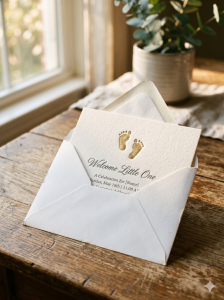
A christening.
I drove beyond the city limits, leaving behind the controlled, suffocating order of Westbrook Lane. The road eventually opened into a modest farmhouse sitting on an acre of untamed land. The front yard was a living sprawl of wildflowers—sunflowers bending toward the sky, lavender growing freely, bees moving through the air. It was unrestrained. It was alive.

I stepped through the open gate. Music drifted through the backyard—soft acoustic strings mixed with laughter.
And there she was.
Clara sat beneath a wide, old weeping willow. The change was striking. The fragile, skeletal figure I had pulled from that dark bedroom was gone. In her place was someone grounded, warm, and fully present. Her cheeks held color again. Her eyes, once hollow with fear, now reflected light.

In her arms was a baby girl, wrapped in white lace, making soft, restless sounds. Healthy. Real.
Liam stood near a grill a short distance away. He looked different—no longer polished, no longer untouchable. The arrogance had burned away, leaving something quieter and steadier behind: a man learning how to live with what he almost destroyed. When he noticed me, he gave a small, respectful nod.
Mrs. Higgins sat comfortably in a wicker chair nearby, knitting with intense focus. Pink baby booties were forming quickly in her hands. She looked up, caught my eye, and gave me a knowing wink.

Clara rose when she saw me. She crossed the grass slowly, the breeze moving through her dress. For a moment, she said nothing. Then she simply held out her arms.
I hesitated only briefly before accepting the baby.
She was warm. Solid. Real in a way that felt grounding after everything I had seen. Her tiny hand closed tightly around my thumb with surprising strength.
“My name is Grace,” Clara said softly. Her voice was steady now—no longer fragile, but anchored.
Grace.
She held my thumb tighter.
“She’s here because you didn’t look away,” Clara continued, resting a hand lightly on my shoulder. “You and Mrs. Higgins saw what everyone else ignored.”
I looked down at the child, feeling something unfamiliar settle in my chest—not victory exactly, but weight. The kind that comes after surviving something that should have broken you.
“This grip,” I murmured, gently returning the baby to Clara, “she’s going to grow into it. She’s going to be strong.”
Clara looked down at her daughter, then lifted her face toward the sky. She closed her eyes and breathed in deeply, as if reclaiming something that had been taken from her for too long.
Trauma doesn’t disappear. It lingers, reshapes, leaves its marks. But standing there in the sunlight, it was clear those marks had changed. They were no longer evidence of breaking.
They were evidence of survival.
Because even in the most carefully sealed houses, the truth never stays buried forever.
It moves quietly, like water finding stone. Pressure builds. Cracks form.
And eventually, the light always gets in.
