

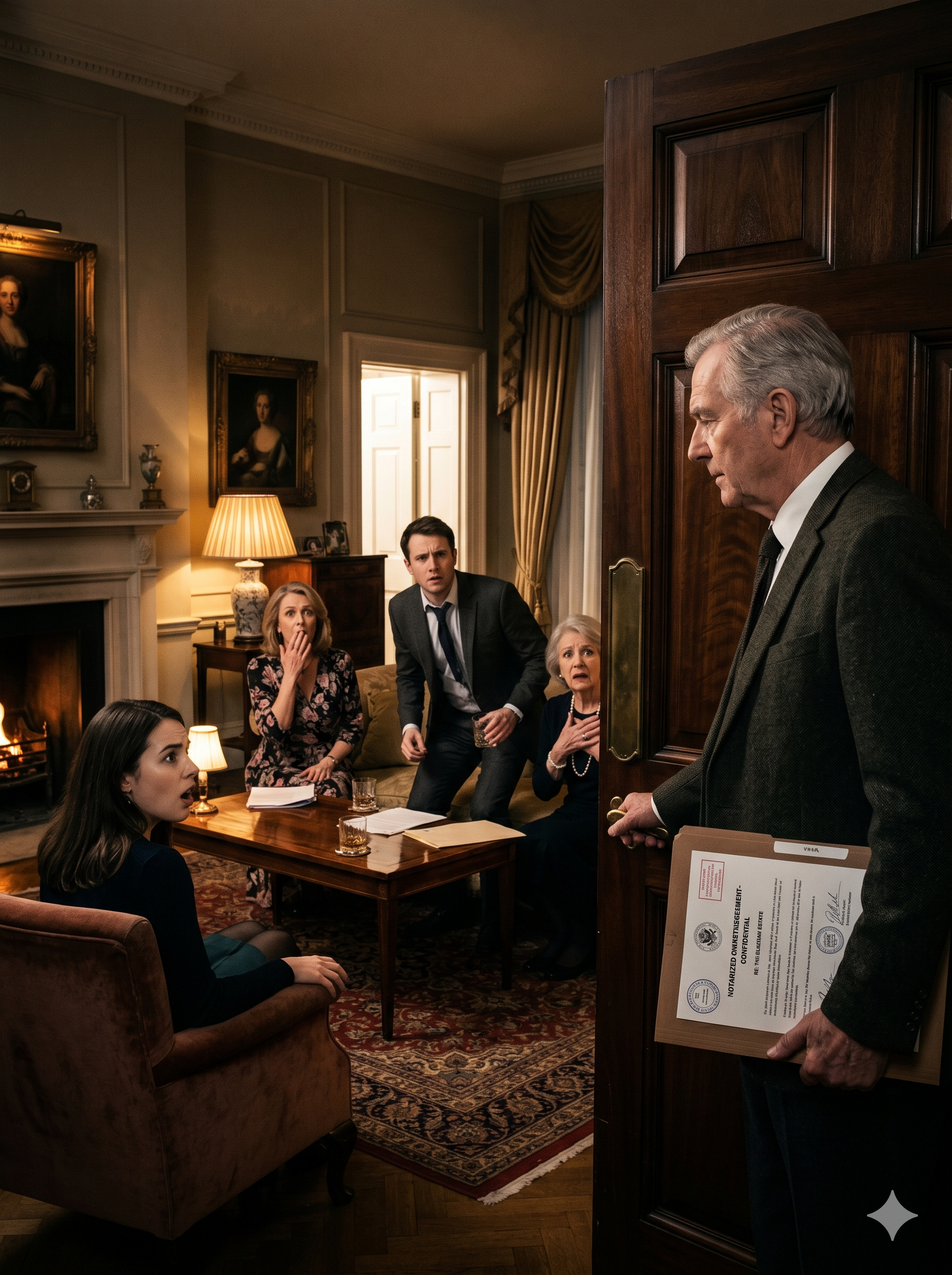
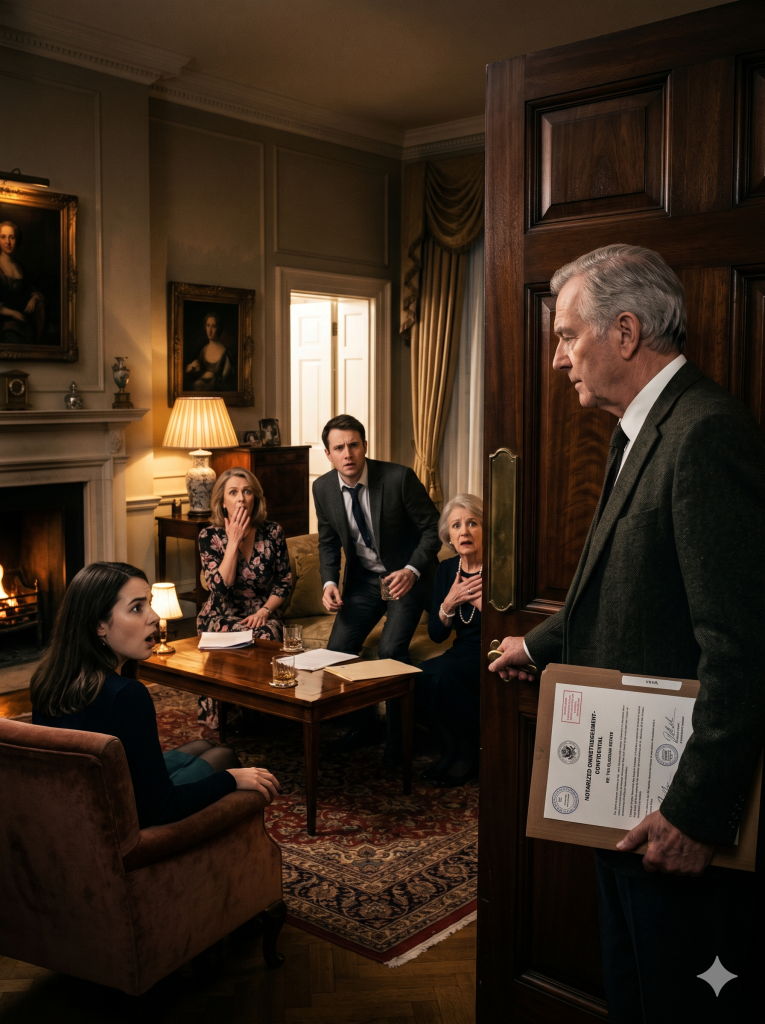
For a long, heavy moment, no one moved.
Not the fiancée.
Not the son.
Not even the elderly mother still kneeling beside the basin.
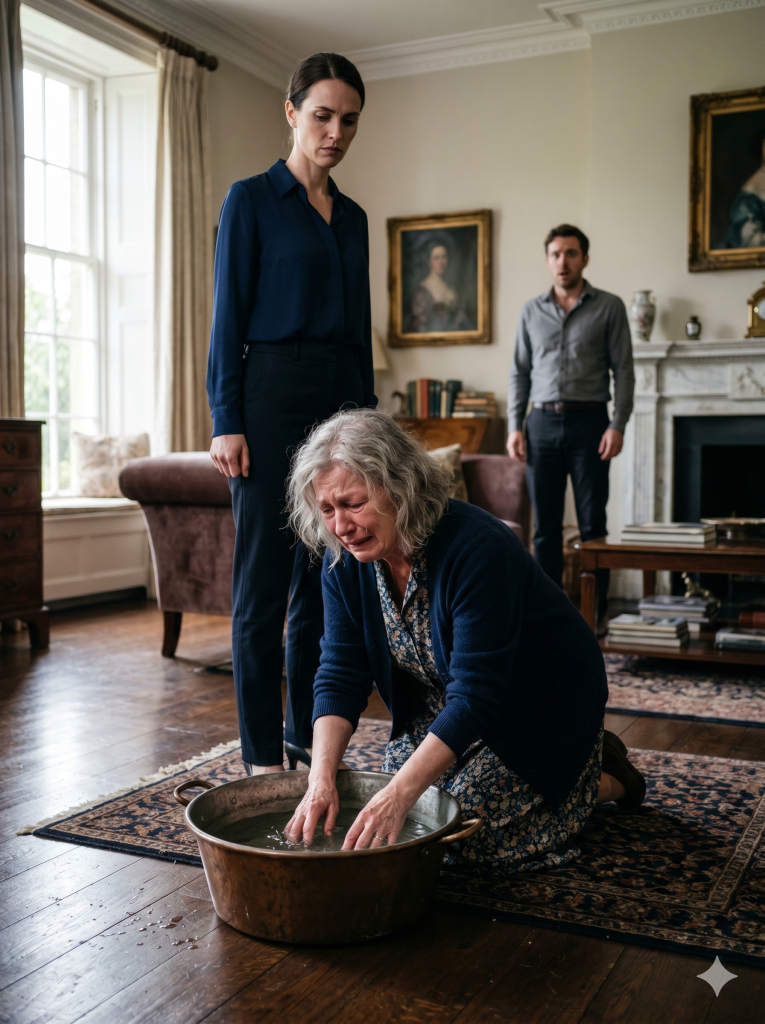
Only her sobs echoed through the room.
The older man stepped in and quietly closed the door behind him.
With unsettling composure, he set the notarized folder on the table.
Then his eyes settled on the son.
“Help your mother up.”
This time, he obeyed.
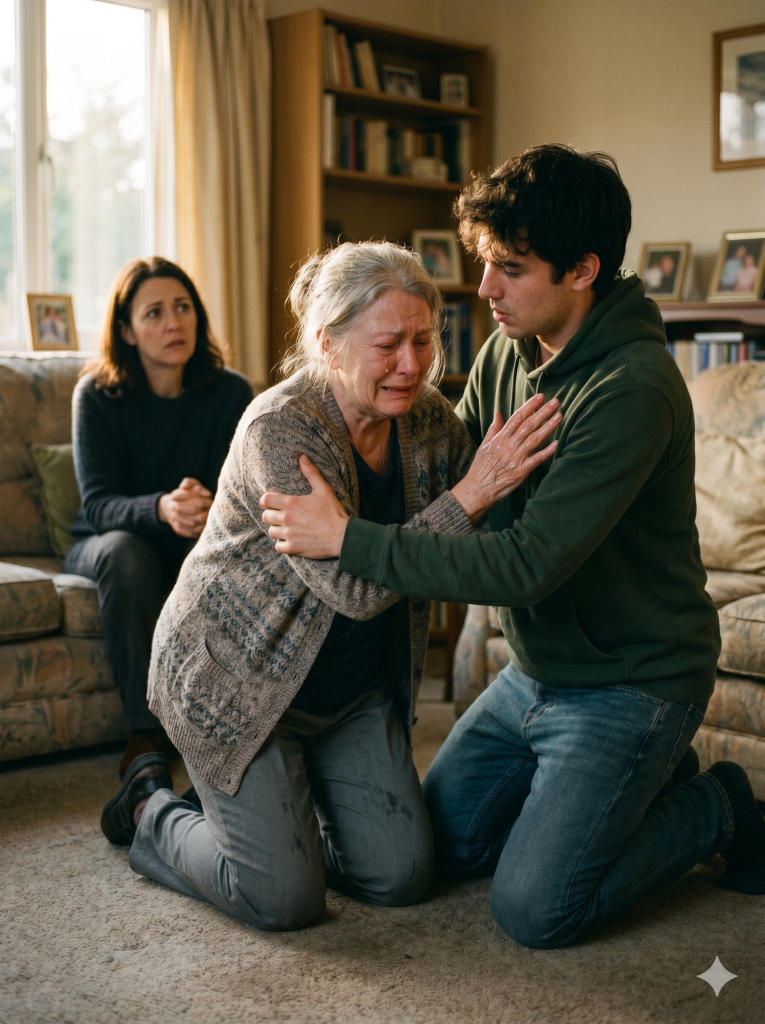
The son hurried forward, dropping to his knees beside her and lifting her to her feet.
Her hands still shook from the cold water.
Her cheeks were streaked with tears.
She could barely remain standing.
The fiancée was the first to regain her voice.
“You can’t just walk in here and threaten people,” she snapped, though her tone had already begun to tremble.
The older man regarded her coldly.
“I’m not threatening you,” he said.
“I’m informing you.”
He opened the folder.
Inside were stamped documents, signed pages, and a sealed statement.
“Your late husband appointed me executor because he feared one thing more than death,” he said, turning to the elderly mother.
“That after he passed, the woman who stood by him for forty years would be degraded in the very home he built for her.”
Silence returned to the room.
The son lowered his gaze.
The elderly mother covered her mouth, her sobs deepening.
The older man unfolded the first document and read:
“All residential rights, authority over household occupancy, and full control of this property pass solely to my wife upon my death.”
The fiancée’s face drained of color.
The son stared in disbelief.
“Mom owns the house?” he whispered.
The executor didn’t glance his way.
“She always did,” he replied.
Then he raised the second page.
“There is also a protection clause.”
The fiancée swallowed.
“What clause?”
His tone turned colder.
“If my wife is coerced, humiliated, stripped of dignity, or forced into servitude under this roof, the executor is to remove all responsible parties from the residence immediately and contact authorities if abuse is observed.”
The fiancée stepped back.
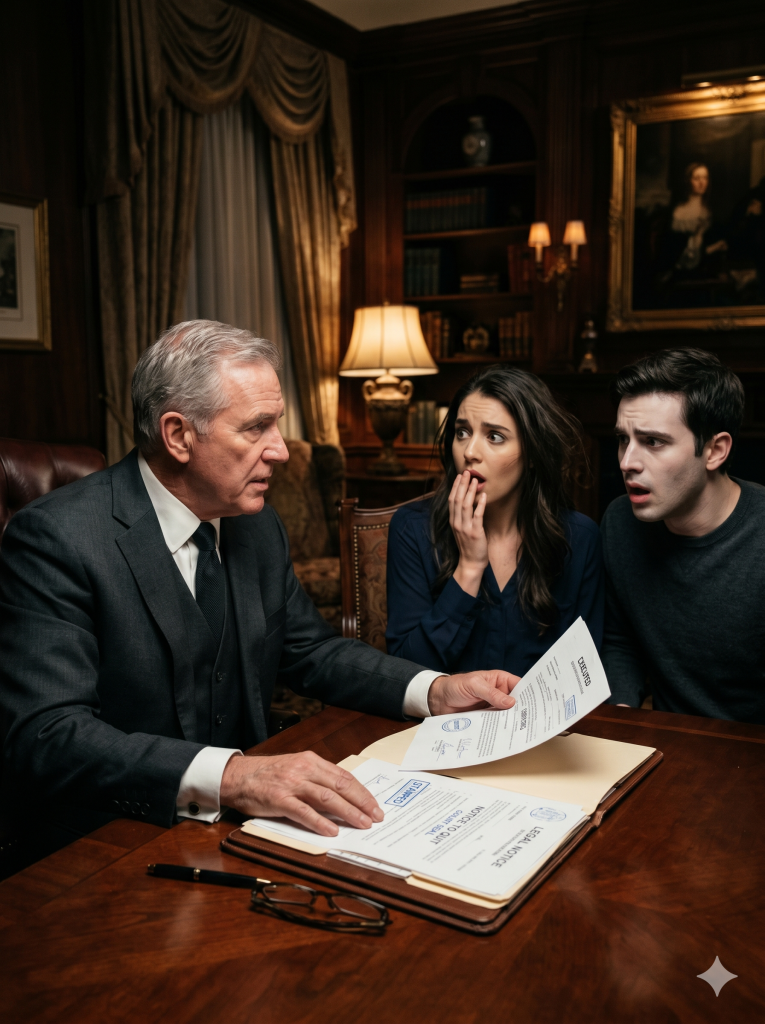
The basin on the floor now looked like evidence.
Because it was.
The son’s face crumpled with shame.
“I didn’t stop it…” he murmured.
The executor finally faced him.
“And your father anticipated that too.”
He unfolded the final handwritten page.
“If my son remains silent while his mother is degraded, he may stay under this roof only with her permission.”
The son looked as if he’d been struck.
The fiancée made one last attempt.
“This is ridiculous. She was just being dramatic—”
The executor cut her off immediately.
“I walked in and saw a 78-year-old woman on her knees with your foot at her chest.”
His voice hardened.
“The police will determine how dramatic that was.”
The fiancée froze, unable to breathe.
The elderly mother looked from the will to the woman who had forced her to beg.
Her body still trembled, but something inside her had shifted.
She was no longer powerless.
The executor closed the folder and delivered the final words:
“From this moment, she decides who remains in this house.”
The room went completely still.
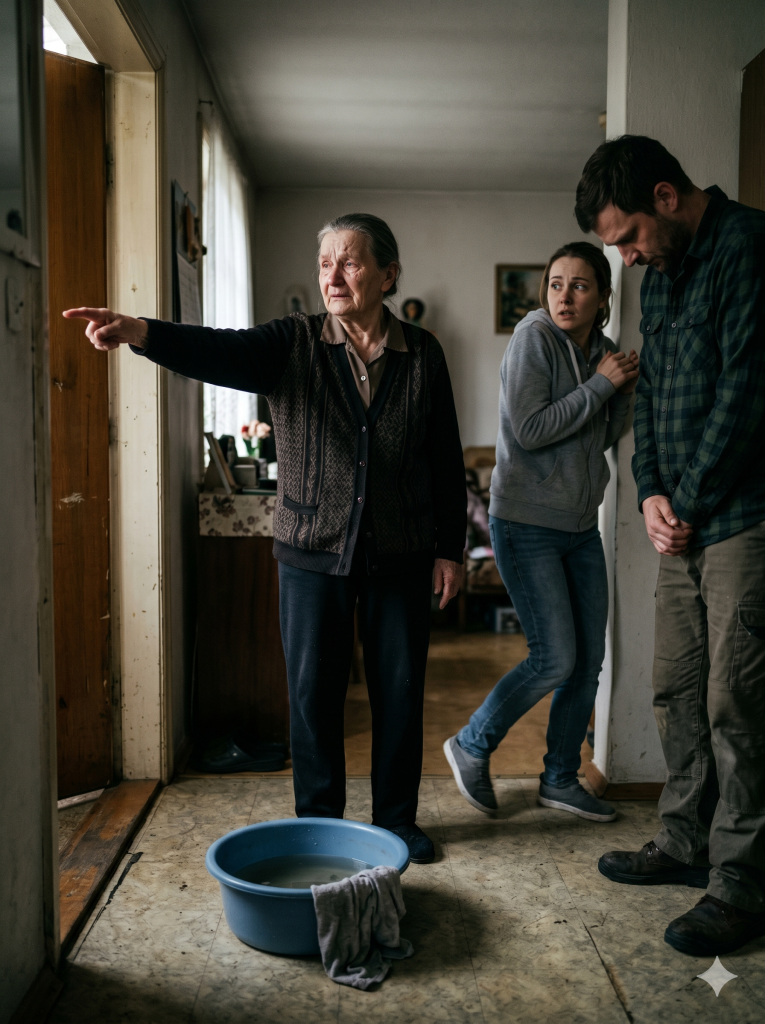
The son looked at his mother through tears.
The fiancée seemed as though the ground had vanished beneath her.
And the elderly woman, still crying, still shaken, but finally standing in her own home, said in a trembling voice:
“Take that basin… and wait for the police outside.”
