

PART 1: A Dinner With No Food
“Take that ring off and get out of this house with your son — that test just proved you deceived my family.”
My mother-in-law, Doña Carmen, hit me with those words before I’d even shut the door behind me.
I’d come in with Santiago dozing against my chest, his stuffed dog in one hand and his kindergarten backpack slung over my shoulder. I was worn out, still wearing my scrubs from the clinic where I worked the front desk, expecting nothing more than a routine family dinner at my in-laws’ house in one of Guadalajara’s nicer neighborhoods.
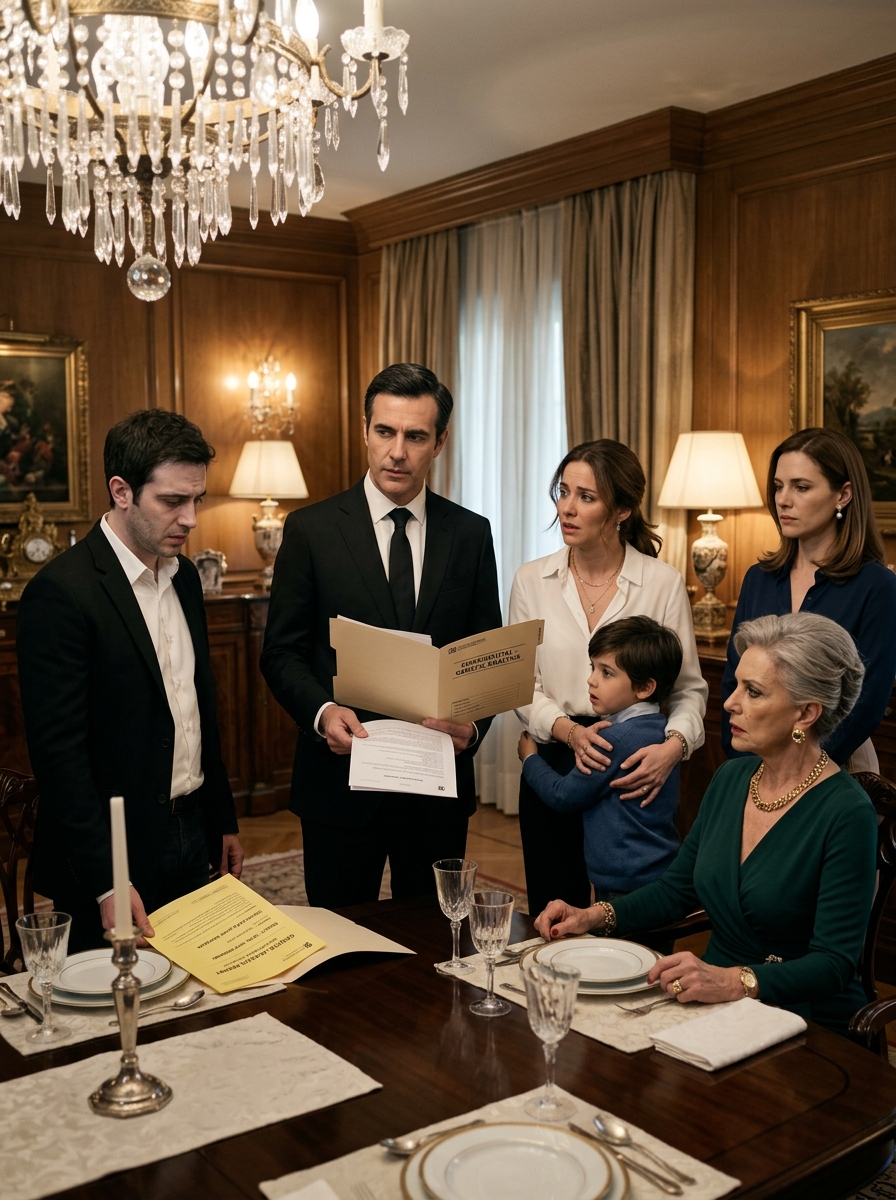
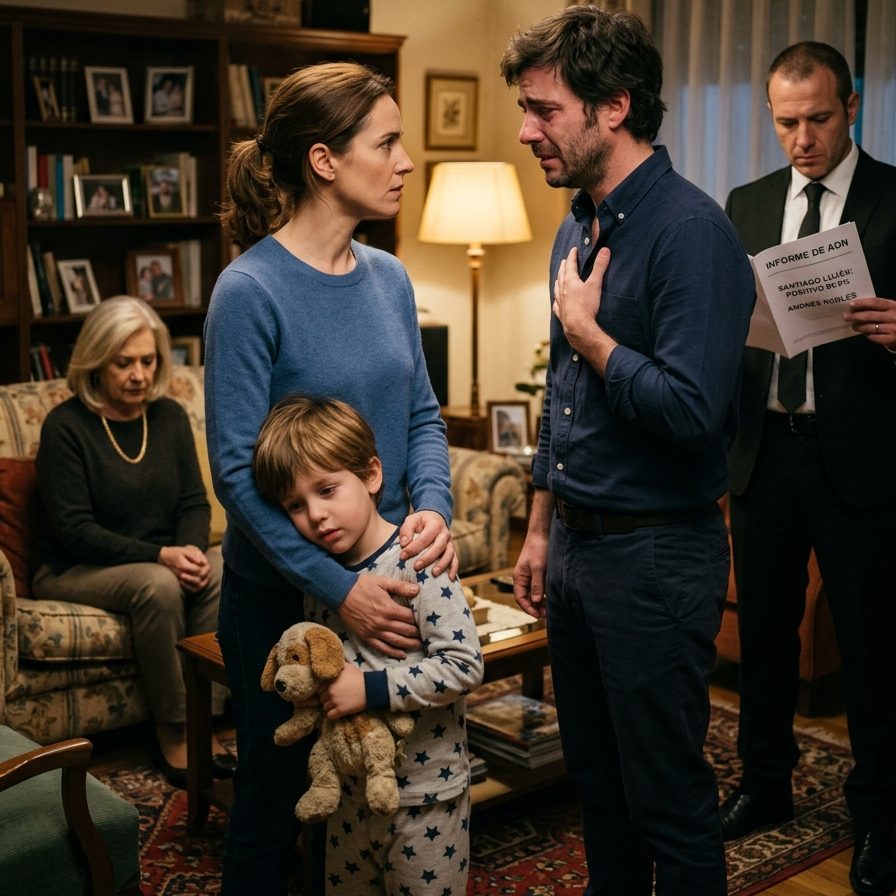
Except there was no dinner waiting.
The dining table was empty. No plates, no cups, no scent of noodle soup, no fresh tortillas. Just Andrés’s relatives seated around the room in dead silence, staring at me like they’d already decided my fate.
My husband stood near the window, arms folded tight. He didn’t walk toward me. He didn’t greet Santiago. He didn’t ask if we’d eaten.
He just extended a yellow envelope toward me.
“Read it, Valeria,” he said, and his voice sounded foreign to me.
Something inside me turned to ice.
“What is this?”
“Open it.”
Doña Carmen touched her gold necklace and let a thin smile cross her face, as if she were relishing every moment.
My hands shook as I tore open the envelope. The page bore a private lab’s letterhead. My name. Andrés’s name. My son’s name. Then one line stole the breath from my chest:
Probability of paternity: 0%.
Santiago shifted against me, disturbed by how fast my breathing had become.
“No,” I whispered. “That can’t be right.”
Andrés’s sister, Fernanda, gave a sharp, bitter laugh.
“Funny how they all say that once they’ve been caught.”
I turned to her, still not grasping what was happening.
“You knew about this too?”
“Not only her,” Doña Carmen said. “We all deserved to know what kind of woman had married into this family.”
My eyes stung, but I refused to cry in front of them.
Three hours before, Andrés had phoned while I was giving Santiago his bath.
“Come by my parents’ place a little early. Mom wants a family dinner.”
“Why? I have an early shift tomorrow.”
“Just come, Valeria. Don’t fight me on this.”
He’d hung up abruptly.
I should have caught the warning signs. For days he’d seemed off — asking about my schedule, questioning who I worked with, going quiet whenever I texted someone from the clinic. I never imagined he was setting me up to be humiliated.
“This is a mistake,” I said, still gripping the page. “Santiago is Andrés’s son.”
Doña Carmen stood slowly.
“My son will not keep providing for another man’s child.”
“Don’t speak about my son like that!”
“Your son,” she repeated, biting off each word, “no longer has a place in this house.”
I searched Andrés’s face.
“Tell me you don’t believe this. Say something.”
He swallowed hard.
“I don’t know what to believe.”
That was when something inside me snapped.
Doña Carmen gestured toward the door.
“You’re leaving tonight. And don’t come back.”
I started to respond, but three firm knocks echoed from the entrance.
Nobody stirred.
The door swung open and a stranger stepped in — dark suit, black folder under his arm, his expression urgent and tense.
“Sorry to interrupt,” he said, his eyes locked on Andrés. “I just came from the lab. There’s a serious issue with that DNA result.”
Everyone in the room seemed to stop breathing at once.
I had no idea what was about to unfold.
PART 2: A Mistake No One Saw Coming
He didn’t carry himself like a guest. He moved like someone racing to stop a lie before it ruined a life.
Doña Carmen stepped forward.
“Who do you think you are, barging into my home like this?”
He pulled out an ID badge.
“Javier Luján. I’m a quality control supervisor at Genomex laboratory. I need to speak with Andrés Robles about the result he was given this afternoon.”
Andrés went white.
“I didn’t contact him.”
“I know,” Javier said. “That’s exactly why I drove here myself. That result should never have gone out.”
Silence swallowed the room.
Santiago stirred and pressed his face into my neck. I rubbed his back, trying to steady my shaking hands.
Fernanda crossed her arms.
“How convenient. The second this woman gets exposed, someone shows up claiming it’s all a mix-up.”
Javier didn’t rise to her tone.
“I’m not here to take sides. I’m here because the process wasn’t followed correctly.”
Doña Carmen pressed her lips into a thin line.
“Go on, then.”
Javier opened his folder.
“The child’s sample came in paired with a sample claimed to be the father’s. But it wasn’t collected under our staff’s supervision. There was no ID verification for Mr. Robles. No documented chain of custody. A third party requested the whole procedure.”
Every gaze in the room shifted to Andrés.
Including mine.
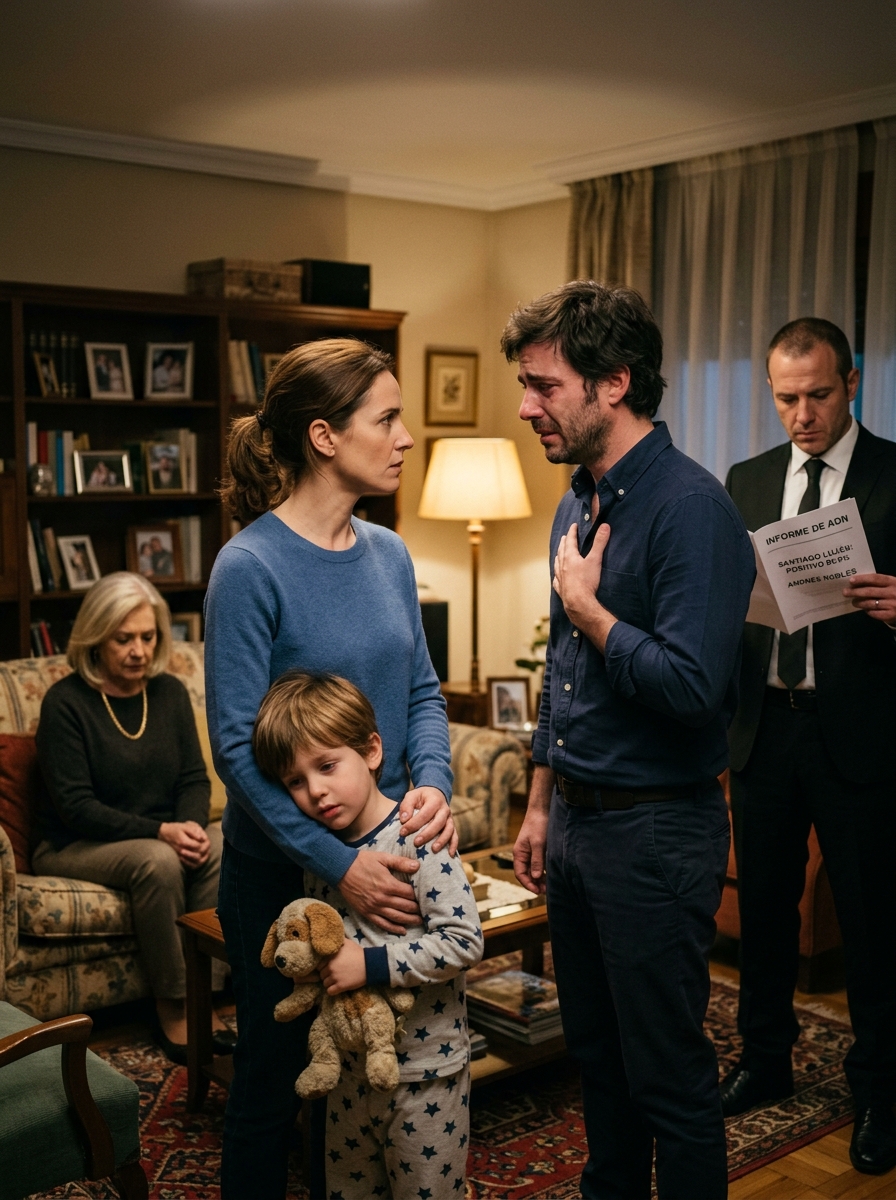
“You did this behind my back?”
He stared at the floor.
“My mother thought it was smarter to stay quiet until we were sure.”
I gave a short, hollow laugh.
“Stay quiet? They paraded me in front of your whole family with a bogus document.”
Doña Carmen raised her chin.
“Not bogus. Necessary. I took Santiago’s hairbrush and one belonging to Andrés. Any mother would do the same to look out for her son.”
“You didn’t look out for anyone,” I said. “You took things from my own home to tear me apart.”
Andrés said nothing. His silence hurt worse than any accusation could have.
Javier went on.
“When we reviewed the file, we found a discrepancy. The sample marked ‘Andrés Robles’ doesn’t align with an earlier genetic profile we have on record for Mr. Robles, from a past medical test.”
Andrés’s head snapped up.
“What do you mean it doesn’t align?”
“Because that sample wasn’t his.”
Those words landed in the room like something massive crashing down.
One of the uncles crossed himself. Fernanda’s smile vanished. For the first time, Doña Carmen’s smug certainty slipped from her face.
“That can’t be,” she said.
Javier glanced at the paper I was still clutching.
“That 0% result doesn’t mean Santiago isn’t Mr. Robles’s son. It means Santiago isn’t the son of whoever’s sample was submitted under Mr. Robles’s name.”
My knees nearly buckled.
Andrés turned on his mother.
“Mom… whose brush was that?”
Doña Carmen hesitated far too long before answering.
“I grabbed it from the upstairs bathroom,” she finally said. “I assumed it was yours.”
Fernanda’s eyes went wide.
“My husband used that bathroom when he stayed over last week.”
The silence turned suffocating.
Javier nodded gravely.
“That’s exactly why we’re here. The test needs to be redone with properly collected samples. But there’s something else.”
Doña Carmen’s hands clenched.
“What else.”
Javier pulled out a signed form.
“Whoever requested this test asked for rushed results, even after being told the sample wasn’t adequate for a conclusive answer.”
Andrés took the paper and saw the signature.
His expression collapsed.
“Mom… you knew this could be wrong.”
Doña Carmen said nothing.
I looked around at everyone who had condemned me minutes earlier. Not a single one would meet my eyes.
Javier reached into his folder again and pulled out one more sealed envelope.
“And before this goes any further against Mrs. Valeria, there’s something else you all need to hear.”
The truth was about to come out. I just didn’t know yet who it would hit hardest.
PART 3: The Truth Spoke Louder Than Anyone
Javier placed the second envelope on the coffee table.
Nobody reached for it.
“Once we caught the irregularity,” he explained, “we ran an internal check using Mr. Robles’s authorized medical sample already on file, matched against the child’s correct sample. It’s not a formal legal result, but it’s solid enough technically to stop the damage happening in this room.”
Andrés could barely catch his breath.
“Tell us,” he said.
Javier opened the envelope.
“The probability of paternity between Andrés Robles and Santiago Robles is 99.99 percent.”
The room fell utterly still.
No one rushed to apologize. No one cried out. Just a thick, guilty quiet — the kind that reveals exactly who took part and who simply stood by out of cowardice.
Santiago, half-awake, lifted his head and mumbled:
“Dad…”
Andrés broke down.
He moved toward us, eyes wet, but I stepped back.
“No,” I told him.
He froze like I’d slapped him.
“Valeria, please forgive me. I didn’t know.”
“There was one thing you did know,” I said. “You knew I was your wife. You knew that boy has called you Dad since he could barely speak. You knew we didn’t deserve to be ambushed like this.”
Andrés covered his face with his hands.
“My mother poisoned my thinking.”
“Your mother said what she wanted. You’re the one who chose to believe her.”
Doña Carmen, quiet until now, straightened up and reclaimed her wounded-matriarch tone.
“Everything I did was for my son.”
I met her eyes directly.
“No. You did it for your pride. Because you never accepted that Andrés could have a family where you weren’t the only woman who mattered anymore.”
Fernanda stared at the floor. The uncles suddenly found the walls fascinating. Nobody stepped up to defend Doña Carmen now that everything was exposed.
Andrés faced his mother.
“Did you know the result might not hold up?”
She pressed her lips shut.
“I just wanted certainty.”
“You wanted to watch her fall apart,” he said, voice cracking. “And I let it happen.”
For the first time, Doña Carmen had no comeback that could save her.
I shifted Santiago in my arms and grabbed my bag.
Andrés hurried after me.
“Where are you going?”
“A hotel.”
“Valeria, please. Let’s talk this through at home.”
“I won’t sleep under the same roof as a man who needed a lab result to decide if I was worth trusting.”
He dropped his head.
“And Santiago?”
“Santiago stays with me. You’ll get to see him — I’ll never turn my son into a weapon. But your mother stays away from him until she owns what she did and apologizes to me properly — no performance, no excuses, no audience.”
Doña Carmen’s mouth fell open, offended.
“I’m supposed to apologize to you?”
Andrés lifted his eyes.
“Yes, Mom. To her. And if you can’t show my wife respect, you won’t have a place in my son’s life.”
That hit harder than any document ever could.
I walked out that night with Santiago sleeping against me and my shoulders squared, even though everything inside me was shattered.
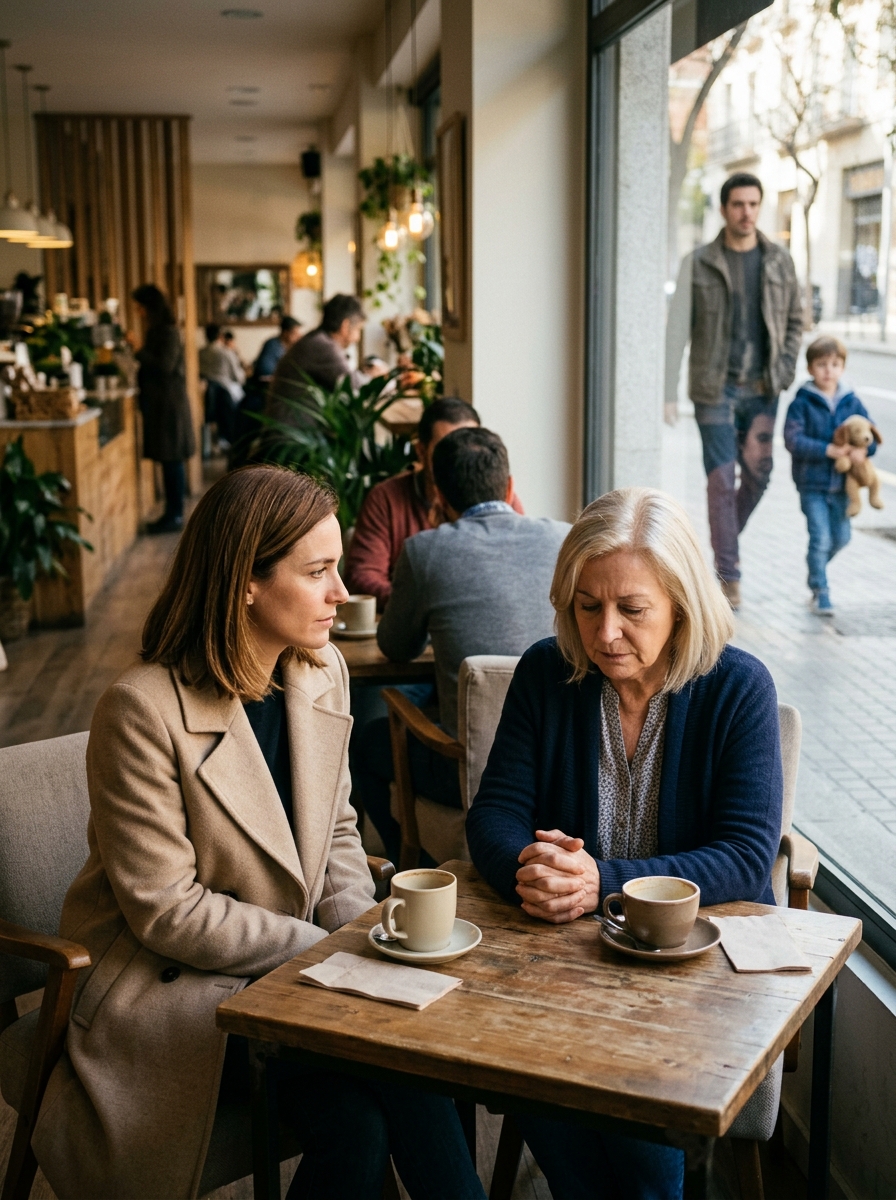
Weeks later, Doña Carmen asked to meet at a coffee shop. She showed up without her jewelry, without her usual polished makeup, without the regal confidence she’d always used to make people feel small.
“Forgive me,” she said, her voice cracking. “I was wrong.”
I didn’t hug her. I didn’t smile.
I only said:
“My son isn’t a blood test or a last name you get to claim or reject depending on what’s convenient for you.”
Andrés and I stayed together, but things were never quite the same. We went to counseling, drew boundaries, had hard conversations we couldn’t avoid. Because sometimes a lie doesn’t tear a family apart — it just brings the cracks nobody wanted to admit were already there into the light.
And that night taught me something I’ve never forgotten: blood can confirm who the father is, but trust is what confirms who’s earned the right to stay.
