


The marble floors of the Oakwood Heights Management Center gleamed so brightly they appeared wet. To Marcus, they simply looked slippery — a dangerous surface where one misstep could destroy everything he had spent his life building. He stood to the side of the large mahogany reception desk, his worn Red Wing work boots leaving faint dusty traces on the spotless Italian stone.
He was a tall, broad-shouldered, quiet man wearing a faded Carhartt jacket that carried the faint scent of sawdust, dry earth, and the cheap black coffee he had grabbed at a gas station at 4:30 that morning. His hands, rough and scarred from decades of hard labor, stayed buried in his pockets. In his right pocket, his fingers traced the smooth, familiar curve of his grandfather’s brass pocket watch. The cool metal kept him grounded. A reminder. Keep your head down, Marcus. Do the work. Provide for Maya. His eight-year-old daughter was the reason his heart kept beating. Ever since his wife Sarah had died from breast cancer three years earlier, Marcus’s whole world had narrowed to two things: making sure Maya never lacked anything, and preserving his dignity in a world that rarely gave him the benefit of the doubt. Today was supposed to be a good day. A quiet day. He had just finished a twelve-hour shift at the new development site on the ridge and had stopped by the Oakwood Heights main office to finish some paperwork before heading home to make Maya her favorite macaroni and cheese.
He didn’t want any trouble. He never wanted trouble. But trouble always seemed to find him.
“Excuse me. I said, excuse me!”
The voice sliced through the soft ambient jazz in the lobby like a rusted saw blade. Marcus didn’t turn right away. He had learned long ago that ignoring the first spark of someone else’s unearned rage was often the fastest way to let it die.
“Hey! You! The delivery guy!”
Marcus slowly turned his head. Standing less than three feet from him was a woman who looked like she had been built in a factory dedicated to country club nightmares. Let’s call her Brenda. She wore a tight, expensive-looking white dress that clung to her artificially tanned skin, and her hair was styled into a stiff, impenetrable blonde helmet. A massive diamond ring sparkled under the chandelier as she gripped a designer handbag — though to Marcus’s experienced eye, the stitching on the leather appeared slightly frayed, a desperate imitation of wealth rather than the genuine article.
“Are you deaf?” Brenda snapped, her eyes scanning his dusty clothes with deep disgust. “I have been waiting for five minutes, and you’re just standing here taking up space. Give the boy your little packages and get out. Residents shouldn’t have to wait behind… whatever it is you’re doing.”
Behind the mahogany desk stood Sammy. Sammy was nineteen, barely weighed a hundred and forty pounds, and was currently sweating through the armpits of his starched white uniform shirt. Sammy was a good kid, working two jobs to help his single mother pay medical debt, and he suffered from a crippling fear of confrontation. He looked at Marcus, his eyes wide and pleading.
“Ma’am,” Sammy stammered, his voice cracking. “I… I’ll be right with you. I’m just pulling up the file for—”
“I don’t care what you’re pulling up, Samuel!” Brenda barked, leaning over the counter and slamming her perfectly manicured hand down on the wood. The loud smack echoed through the massive lobby, causing several well-dressed men and women on the plush leather sofas to pause their conversations and turn. “I pay three thousand dollars a month in HOA fees for this gated community so I don’t have to deal with incompetence! My air conditioning is making a rattling noise, and I want a maintenance crew at my door in ten minutes!”
She spun back around on her spiked heels and glared at Marcus, who hadn’t moved.
“And why is he still here?” she demanded, pointing an aggressive finger at him. “You people always do this. You think because you have a job to do inside the gates, you can just loiter in the resident areas. This lobby is for homeowners. Not for the help.”
Marcus felt the familiar heavy burn of anger rising in his chest. It was a suffocating heat, an old wound reopened by a lifetime of micro-aggressions, suspicious looks, and outright hostility. He thought about the watch in his pocket. He thought about his grandfather, who had worked as a janitor in buildings he wasn’t allowed to live in, smiling politely while swallowing his pride like broken glass.
Don’t give them a reason, Marcus, his grandfather used to say. They’re just waiting for you to get angry so they can prove themselves right.
Marcus took a slow, deep breath, expanding his broad chest. He looked Brenda directly in the eye, his face completely expressionless.
“I’m not a delivery driver, ma’am,” Marcus said. His voice was a deep, resonant baritone, quiet but carrying a weight that forced the room to listen. “And I’m not loitering. I’m waiting for some paperwork.”
Brenda let out a sharp, incredulous laugh. She looked around the lobby, making eye contact with the onlookers as if gathering an invisible army of allies. “Paperwork? What paperwork? Are you applying for the landscaping crew? Because let me tell you, if you are, I’m personally making sure you don’t get it. Your attitude is completely unacceptable.”
The silence in the lobby grew oppressive. Over a dozen wealthy residents had now stopped to watch the spectacle. None of them intervened. They simply watched, eyes shifting between the furious blonde woman and the large, quiet Black man in the dusty coat. Some looked uncomfortable. Some looked entertained. None moved.
Sammy was practically hyperventilating behind the desk. “Mrs. Van Der Kamp… please,” the young clerk begged, his hands shaking so violently he knocked a pen off the desk. “You don’t… he’s not… please don’t speak to him like that.”
“Shut up, Samuel!” Brenda shrieked, losing whatever thin layer of civility remained. Her face flushed a dark, angry crimson. The truth was, Brenda Van Der Kamp was drowning. Her husband had quietly filed for divorce three days earlier, her credit cards were maxed out, and she was two months behind on the very HOA fees she was now weaponizing. Her entire world was falling apart, and she desperately needed someone to feel smaller than her. She needed a target. And the silent man in the dirty boots was the perfect one.
She stepped directly into Marcus’s personal space, the heavy floral scent of her perfume turning his stomach. She raised her hand and jabbed her index finger hard into the center of his chest.
“Listen to me, you piece of trash,” she hissed, her voice vibrating with venom. “I know exactly what you are. You’re a nobody who managed to sneak his way past the front gate, and now you’re stinking up my lobby. If you don’t turn around and walk out those doors right now, I am calling security. I am calling the police. I will tell them you threatened me. And who do you think they’re going to believe? A resident, or a dirty thug in a cheap jacket?”
The word hung in the air. Thug. It was a loaded gun pointed at his head. The crowd in the lobby fell completely silent. You could hear a pin drop on the marble. Sammy covered his mouth with his hand, tears welling in his eyes, terrified for the man standing before the desk.
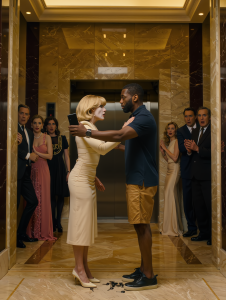
Marcus looked down at the finger pressed against his sternum. He felt the rapid beating of his own heart. He thought of Maya sitting at school drawing pictures of houses. He thought of the sacrifices his wife had made. He thought of the sheer arrogance of the woman in front of him, believing she held the power of life and death over his future simply because of the clothes he wore and the color of his skin.
Marcus didn’t yell. He didn’t raise his hands. He didn’t defend himself to the silent crowd.
Instead, a chilling, terrifying calmness settled over him. The heat in his chest disappeared, replaced by an absolute, freezing certainty.
He slowly reached his right hand into his faded Carhartt jacket.
Brenda flinched, stepping back, her eyes widening in sudden panic. Several people in the crowd gasped, one man halfway rising from his leather chair.
But Marcus didn’t pull out a weapon. He pulled out his heavy matte-black smartphone.
He looked at the screen, his face an emotionless mask, and pressed a single button on his speed dial. He put the phone to his ear. The lobby was so quiet everyone could hear the ringing on the other end.
One ring. Two rings.
“Yes, Mr. Hayes?” a crisp, professional voice answered.
Marcus didn’t take his eyes off Brenda. Her face had shifted from rage to flickering uncertainty.
“Elias,” Marcus said quietly, his deep voice carrying through the silent room. “I’m in the main lobby. Pull up the deed and residency file for a Mrs. Van Der Kamp. I need you to initiate an immediate and full eviction protocol based on the morality and conduct clause in the ownership agreement. Foreclose the property if you have to. Have the legal team draft the papers now.”
Brenda’s jaw dropped. All color drained from her face, leaving her spray tan looking sickly and yellow. “What… what are you talking about? Who are you calling?”
Marcus didn’t answer her. Instead, he took the phone from his ear and slowly held it out toward her face.
“Take it,” Marcus whispered, his eyes locking onto hers with the weight of a collapsing star. “It’s for you.”
**Chapter 2**
The heavy matte-black smartphone hung in the air between them, an immovable object of glass and brushed aluminum. To the dozens of wealthy onlookers across the polished marble of the Oakwood Heights lobby, it was just a phone. But to Brenda Van Der Kamp, staring at the device held out by the man she had just publicly humiliated, it looked like a live grenade.
The silence in the room had changed. It was no longer the uncomfortable quiet of people watching a train wreck; it was the heavy stillness before a devastating storm.
Marcus Hayes did not blink. He stood perfectly still, his massive frame rooted like an ancient oak. The hand holding the phone remained rock steady. Beneath the faded, sawdust-dusted Carhartt jacket, his heart beat with a slow, measured rhythm. He had spent his entire life perfecting the poker face, a survival skill necessary for a Black man moving through the ruthless old-money world of commercial real estate and development. He knew exactly what he looked like to a woman like Brenda. He knew what the dirt on his boots signaled to her. He had counted on it.
“Take it,” Marcus repeated, his voice dropping an octave into a low, resonant rumble that vibrated against the lobby’s expensive acoustic paneling. “Elias is waiting.”
Brenda’s chest heaved. The aggressive crimson flush had vanished, leaving a sickly yellowish pallor beneath her foundation. Her mind, already strained to breaking point by days of hidden disasters, froze completely.
Who is this man? The question screamed inside her head. Why isn’t he backing down? Delivery drivers, maintenance men, landscapers — they always backed down. They apologized. They lowered their eyes. She studied Marcus’s face. There was no fear. There wasn’t even anger anymore. Only cold, terrifying authority.
Slowly, as if moving through thick mud, Brenda raised her manicured hand. Her fingers trembled so badly that her heavy diamond ring clattered against the phone as she took it.
She brought the device to her ear. The overpowering floral perfume now smelled sour, mixed with the sharp scent of her own nervous sweat.
“Hello?” Brenda whispered. Her voice, once a shrieking siren of entitlement, was now a fragile, hollow rasp.
“Am I speaking with Brenda Van Der Kamp? Resident of 402 Magnolia Drive within the Oakwood Estates?”
The voice on the line was smooth, patrician, and chillingly precise. It belonged to a man who destroyed lives using only fountain pens and legal briefs.
“Yes,” Brenda breathed, her eyes darting back to Marcus, who simply watched her, his large calloused hands now resting in his pockets.
“My name is Elias Vance,” the voice said. “I am the Chief Legal Counsel for Hayes Global Development. The man standing in front of you — the man whose phone you are holding — is Marcus Hayes. He is the Founder and Chief Executive Officer of our firm.”
Brenda felt the floor tilt beneath her spiked heels. Blood rushed from her head, leaving a ringing in her ears. She opened her mouth, but no sound came.
“Mrs. Van Der Kamp, I understand you have just initiated a hostile verbal altercation in the primary management center,” Elias continued, his tone calm but ice-cold. “I want to be very clear about your current standing. Hayes Global Development owns the proprietary lease for the entirety of Oakwood Heights. We own the management company. We own the ground beneath your luxury home. More importantly, according to our internal financial records, which I am currently viewing, you and your husband are sixty days delinquent on your primary homeowner’s association dues.”
“My husband… my husband handles…” Brenda stammered, a single tear of pure panic breaking through her mascara.
“Your husband, Richard Van Der Kamp, filed for divorce on Tuesday, a fact I imagine you are desperately trying to keep from your neighbors currently watching you,” Elias said smoothly. “Furthermore, the Oakwood Heights resident contract contains a strict morality and conduct clause, designed to protect our staff and residents from harassment. Mr. Hayes has just instructed me to initiate an immediate eviction protocol. Given your financial delinquency, we do not have to wait for a standard thirty-day notice. We can lock you out of the gates by five o’clock this evening.”
Brenda’s knees buckled. She caught herself on the edge of the mahogany desk, knuckles white. She looked at Marcus. The dirty boots. The faded jacket. The quiet stoic face.
She wasn’t looking at a piece of trash. She was looking at the king of the castle.
Marcus watched the exact moment her reality shattered. He saw the desperate light in her eyes die, replaced by raw terror at having pushed the wrong man too far.
And in that moment, Marcus felt… nothing. No triumph. No vindictive joy. Only deep, exhausting weariness.
To understand Marcus Hayes, one had to understand the dirt on his boots. Thirty years ago, he had been a nineteen-year-old kid pushing a wheelbarrow of wet concrete for minimum wage under the Texas sun. He hadn’t inherited anything. No trust fund. No Ivy League network. He had built his empire with his own hands, laying brick, framing walls, and studying zoning laws under a single bulb in his tiny apartment while his young wife Sarah slept beside him.
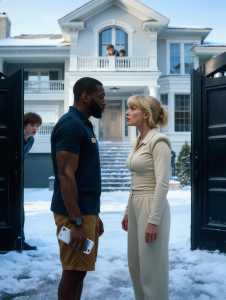
Sarah. The thought of her still brought a physical ache. She had been the only one who believed in him when he was just a kid with big hands and impossible dreams. When he took out huge bank loans to buy his first piece of land, she had held his shaking hands and told him he was destined for greatness.
They’re going to look at you and see what they want to see, Marcus, Sarah had told him years ago. They’re going to see a Black man from the wrong side of the tracks. Let them. Let them underestimate you. Then, when they aren’t looking, you build the whole damn building right out from under them.
She hadn’t lived to see Oakwood Heights completed. Breast cancer had taken her when Maya was only five. When Sarah died, Marcus buried a huge part of himself with her. The money, the power, the tailored suits, the corner office — none of it mattered without her.
That was why he still wore his work clothes. That was why he spent three days a week on construction sites, breathing sawdust and feeling dirt under his nails. It kept him grounded. It kept him close to the man Sarah had loved. It reminded him that wealth was an illusion, but hard work was real.
And it was also a test. Marcus had built Oakwood Heights as a sanctuary for families. But he had learned that high gates and high prices often drew out the worst in people. People who believed money gave them permission to abandon their humanity. People like Brenda Van Der Kamp.
“Mr. Hayes?”
Brenda’s voice was a pathetic squeak. She pulled the phone from her ear, her hand shaking so badly she nearly dropped it. She looked at Marcus, her eyes wide, glassy, and stripped of all arrogance. The woman who had jabbed her finger into his chest minutes earlier had vanished, replaced by a desperate, hollow shell.
“I… I…” She couldn’t form the words. The crowd in the lobby, sensing the dramatic shift, began to murmur.
Arthur Pendelton, a retired hedge fund manager who had ignored Marcus earlier, leaned forward on the leather couch. Hayes, he whispered to his wife. Good god, Eleanor. That’s Marcus Hayes. The developer. He owns half the commercial real estate in the county.
The whispers spread like wildfire. The wealthy onlookers, who had just watched a woman abuse a man they thought was beneath them, suddenly realized they were in his building. Collective hypocrisy filled the air. People suddenly became fascinated with their shoes or the magazines on the tables.
Behind the desk, young Sammy stood frozen, mouth slightly open. He looked from the cruel woman who had tormented him for a year to the quiet, dusty man in front of him. Sammy’s heart pounded. He felt profound awe mixed with overwhelming relief.
Marcus slowly extended his hand, palm up.
Brenda placed the phone gently into it as if it were fragile glass.
“Elias,” Marcus said, returning the phone to his ear. His voice stayed calm. “Hold the paperwork. I’ll call you back in five minutes.”
He hung up and slid the phone back into his jacket pocket. The lobby fell silent again, heavier and more expectant.
“Mrs. Van Der Kamp,” Marcus said quietly. He didn’t need to raise his voice. When you own the ground beneath people’s feet, a whisper sounds like thunder.
“I am so sorry,” Brenda blurted out, her voice cracking. Tears flowed freely now, ruining her makeup. The mask of the wealthy, untouchable wife had shattered, revealing the terrified, debt-ridden, lonely woman beneath. “Mr. Hayes, please. I didn’t know. I swear I didn’t know who you were. I’m just… I’m having a really hard week. My husband… the money… I’m so stressed. I didn’t mean any of it.”
Marcus looked at her. He no longer felt anger. Only pity. It was a tragic, pathetic sight — a woman who had tied her entire worth to a zip code and a designer bag, now realizing her life rested on sand.
“You’re right, Brenda. You didn’t know who I was,” Marcus said, his tone even and firm. “You looked at my clothes, you looked at the color of my skin, and you made an assumption. You assumed I was someone who couldn’t fight back. Someone whose dignity didn’t matter. You didn’t apologize because you realized you were wrong. You apologized because you realized I have the power to destroy you.”
Brenda let out a small, choked sob, staring at the floor. She couldn’t meet his eyes.
“That’s the problem with people who think money makes them better than everyone else,” Marcus continued, his voice echoing in the silent room. “You only respect power. You don’t respect people.”
He shifted his weight, his work boots scuffing softly on the marble. “I know about the divorce, Brenda. I know about the financial trouble. Elias monitors the fiscal health of this entire community. I know you’re drowning. And as a man who has lost more than you could possibly understand…” Marcus paused, a brief shadow of grief crossing his eyes as he remembered Sarah’s hospital bed. “…I understand what stress does to a person. I understand panic.”
He took a step closer. Brenda flinched, shrinking against the desk.
“But your pain,” Marcus said, his voice dropping to a harsh whisper, “does not give you the right to bleed on people who didn’t cut you.”
He slowly turned and looked at Sammy. The young clerk jumped, eyes wide. Sammy trembled, hands clasped tightly. Marcus knew Sammy’s story. He made it a point to know his people. He knew Sammy took the bus an hour each way. He knew Sammy sent half his paycheck to his mother. He knew Sammy had more character in his little finger than the woman in front of him had in her whole body.
Marcus turned back to Brenda.
“I am not going to evict you today,” Marcus said.
Brenda let out a massive, shuddering breath, her knees wobbling again. “Thank you. Oh my god, thank you, Mr. Hayes. I promise I will—”
“I am not finished,” Marcus interrupted smoothly, holding up a single calloused finger. The authority in the gesture silenced her instantly. “I am not going to evict you today, provided two things happen immediately. First, you are going to call Elias Vance tomorrow morning and set up a payment plan for your back dues. If you miss a single payment, or if I ever hear of you treating any member of the maintenance staff, landscaping crew, or security team with anything less than absolute respect, the eviction papers will be filed before you wake up the next morning. Do you understand me?”
Brenda nodded frantically, wiping her nose with the back of her hand, completely abandoning her cultured poise. “Yes. Yes, sir. I understand.”
“Second,” Marcus said, his eyes locking onto hers with unyielding intensity. He pointed a thumb over his shoulder at the young man behind the desk. “You are going to apologize to Sammy. And you are going to mean it.”
Brenda froze. The crowd in the lobby leaned in. Apologizing to a billionaire developer was one thing; survival instinct demanded it. But apologizing to the teenage help? For a woman of Brenda’s social conditioning, that was a psychological hurdle of immense proportions. She looked at Sammy, the pale, skinny kid in the cheap uniform. The kid she had been screaming at just five minutes ago.
She looked back at Marcus. The large man simply waited, immovable, the arbiter of her fate.
Brenda swallowed hard. The bitter taste of complete defeat coated her throat. She slowly turned to face the mahogany desk.
Sammy stood up a little straighter, gripping the edge of the counter to stop his hands from shaking.
“Samuel,” Brenda started, her voice wavering. She took a deep breath, closing her eyes for a brief second to gather whatever shattered fragments of her dignity remained. “Sammy. I… I am sorry. I was out of line. I shouldn’t have spoken to you that way, or slammed my hand on your desk. I was angry about my air conditioning, but it wasn’t your fault. Please forgive me.”
It wasn’t a perfect apology. It was forced, born of necessity rather than true remorse. But as Marcus watched, he saw something shift in the young clerk’s posture. Sammy took a deep breath, his shoulders relaxing slightly. The paralyzing fear that had gripped the boy was gone, replaced by a quiet, growing confidence. He had seen the dragon slain.
“Apology accepted, Mrs. Van Der Kamp,” Sammy said, his voice surprisingly steady. “I’ll put a high-priority ticket in for your air conditioning unit right now. Maintenance should be there within the hour.”
Brenda nodded weakly. She didn’t say another word. She couldn’t look at the crowd, couldn’t look at Marcus. She simply turned, her designer heels clicking softly against the marble, and walked toward the heavy glass exit doors, her head bowed, her shoulders slumped beneath the weight of her ruined pride. The lobby watched her go in total silence.
When the glass doors closed behind her, the collective tension in the room finally broke. A few people cleared their throats. The soft jazz music playing from the hidden speakers suddenly seemed very loud.
Marcus turned back to the reception desk. He reached into the inner pocket of his jacket and pulled out a manila envelope, setting it gently on the counter.
“Sammy,” Marcus said softly.
“Yes, Mr. Hayes!” Sammy stood at absolute attention, looking at Marcus with the kind of reverence usually reserved for religious deities. “Whatever you need, sir.”
Marcus allowed a small, tired smile to touch the corners of his mouth. “Breathe, kid. You handled yourself well today. You kept your cool under pressure. I appreciate that.”
Sammy blushed furiously. “Thank you, sir. I tried. She was just… really loud.”
“Bullies usually are,” Marcus said, tapping the envelope. “These are the final sign-offs for the Phase Four zoning permits on the ridge. Make sure they get to the architect’s office by noon, please.”
“Absolutely, sir. Right away.” Sammy took the envelope carefully. He hesitated for a moment, his eyes darting to the dusty work boots, then back up to Marcus’s face. “Mr. Hayes? If you don’t mind me asking… why didn’t you just tell her who you were right away? Why did you let her yell at you?”
Marcus paused. He thought about his grandfather, swallowing his pride while sweeping floors for men who wouldn’t look him in the eye. He thought about Sarah, telling him to let them underestimate him. He reached into his right pocket, his fingers finding the cool, smooth brass of his grandfather’s pocket watch. He rubbed his thumb over the engraved casing.
“Because, Sammy,” Marcus said softly, his deep voice carrying a lifetime of hard-won wisdom, “if you tell a person who you are, they only show you what they want you to see. But if you stay quiet and let them believe they hold all the power… they’ll show you exactly who they are.”
Sammy slowly nodded, letting the weight of the words sink in. “I understand, sir.”
“Good.” Marcus checked his watch. It was nearing five o’clock. His shift was over. The paperwork was done. And somewhere across town, a little girl with her mother’s eyes was waiting for him to come home and make macaroni and cheese.
“Have a good evening, Sammy.”
“You too, Mr. Hayes.”
Marcus turned and walked across the vast, polished marble floor. The wealthy residents sitting on the plush leather sofas parted like the Red Sea, pulling their legs in, avoiding his gaze, a silent, profound respect—and fear—radiating from every corner of the room.
Marcus Hayes didn’t look at any of them. He kept his head up, his broad shoulders relaxed, his heavy work boots leaving faint, dusty footprints on the pristine stone as he walked out the glass doors and into the fading afternoon sun.
**Chapter 3**
The heavy steel door of Marcus’s F-150 Raptor shut with a solid, satisfying thud, sealing him off from the outside world. The cab was his sanctuary, smelling faintly of old leather, peppermint gum, and the lingering dust of a dozen construction sites. He sat in the driver’s seat for a long time, the engine idling with a low, muscular growl, his massive hands resting on the top of the steering wheel.
He didn’t put the truck in gear. He just stared out through the windshield at the sprawling, impeccably manicured lawns of the Oakwood Heights executive parking lot.
The adrenaline that had sustained him through the confrontation in the lobby was slowly draining from his system, leaving behind a cold, hollow ache in his bones. It was a familiar exhaustion. It was the bone-deep fatigue of a man who had to constantly wear armor in a world that was always looking for a soft spot to sink a blade into.
Brenda Van Der Kamp. The name tasted like ash in his mouth.
He closed his eyes, leaning his head back against the leather headrest. In the darkness behind his eyelids, the memory of her finger jabbing into his chest replayed itself. You piece of trash. He had built the ground she walked on, financed the roof over her head, and yet, in a fraction of a second, she had stripped him down to nothing but a stereotype in a dirty jacket.

He reached into his pocket, his calloused fingers finding the brass pocket watch. He squeezed it tightly, grounding himself in the cool, unyielding metal.
Don’t let them make you hard, Marcus, a voice echoed in the quiet cab.
It was Sarah’s voice. It was always Sarah’s voice, clear and bright as a summer morning, cutting through the dark static of his worst thoughts. He opened his eyes, a heavy sigh escaping his chest. He shifted the truck into drive and pulled out of the parking lot, the tires crunching softly against the asphalt.
The drive from Oakwood Heights to his own home took thirty minutes, winding away from the ostentatious gated communities and into a quiet, heavily wooded neighborhood that predated the city’s massive suburban boom. Marcus’s house was not a sprawling mansion, despite his immense wealth. It was a restored 1920s Craftsman, built of solid river stone and dark timber, tucked away behind a grove of ancient weeping willows. It was sturdy, quiet, and profoundly private.
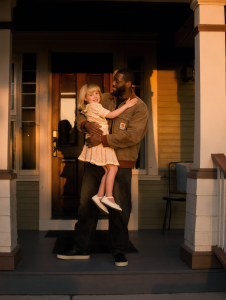
As he pulled into the driveway, the motion-sensor lights flickered on, illuminating the front porch. The front door opened before he had even turned off the engine.
A small figure stood in the doorway, framed by the warm, golden light of the hallway. Maya.
She was eight years old, with her mother’s bright, observant brown eyes and Marcus’s stubborn jawline. She was wearing a pair of faded denim overalls and an oversized, maroon Texas A&M sweatshirt that used to belong to Sarah. The sleeves were rolled up past her elbows, and her hair was pulled back into a messy, uneven ponytail that Marcus had attempted to tie that morning.
The moment Marcus stepped out of the truck, Maya bolted down the porch steps, her sneakers slapping against the cobblestone walkway.
“Daddy!”
The heavy, suffocating weight of the day vanished the second she hit his chest. Marcus caught her smoothly, lifting her into the air with a deep, rumbling laugh that echoed in the quiet evening air. He buried his face in her neck, inhaling the scent of strawberry shampoo and Crayola crayons.
“Hey, ladybug,” Marcus murmured, holding her tightly against him. For a moment, just for a moment, the world outside the willow trees ceased to exist. There were no zoning boards, no hostile residents, no billion-dollar contracts. There was only the steady, rapid beating of his daughter’s heart against his own.
“You’re late,” Maya said playfully, pulling back to look at him, her hands resting on his broad shoulders. She squinted, her small nose crinkling. “And you smell like dirt.”
“I was at the ridge site today,” Marcus said, setting her gently back down on her feet. “Had to make sure the foundation pour was setting right. And I’m only fifteen minutes late.”
“Fifteen minutes is a long time when you’re starving,” Maya declared, putting her hands on her hips in a gesture that was so fiercely reminiscent of Sarah that it made Marcus’s breath hitch. “Did you bring the cheese?”
“I am a man of my word,” Marcus said, reaching into the bed of the truck and pulling out a brown paper grocery bag. “Sharp cheddar, Gruyère, and the secret ingredient.”
Maya gasped, her eyes widening. “The smoked gouda?”
“The smoked gouda,” Marcus confirmed solemnly.
They walked into the house together, the heavy wooden door clicking shut behind them. The interior of the house was warm and inviting, filled with dark wood, soft rugs, and shelves overflowing with books. But there was a quietness to it, an empty space in the air that never quite seemed to fill.
The kitchen was the heart of the home, a massive, open space with soapstone countertops and a professional-grade gas range. Marcus set the groceries down and immediately went to the sink, rolling up the sleeves of his faded Carhartt jacket to wash his hands. He scrubbed the construction dust and the invisible grime of the Oakwood Heights lobby from his skin, watching the soap swirl down the drain.
“How was school?” Marcus asked, drying his hands on a towel.
Maya was already pulling a step stool up to the counter, eager to help grate the cheese. “It was okay. Mrs. Torres showed us how to make papier-mâché volcanoes today. Mine erupted the highest because I added extra baking soda when she wasn’t looking.”
Marcus chuckled, pulling a large cast-iron pot from the cabinet. Elena Torres was Maya’s third-grade teacher, a brilliant, fiercely dedicated woman in her late thirties. Elena had been a godsend over the past year. She was one of the few people at the prestigious private school who didn’t treat Maya like a fragile glass doll because her mother had died, or treat Marcus like an intimidating, walking bank account.
Elena had her own ghosts. She had confided in Marcus during a parent-teacher conference that she and her ex-husband had spent five years trying to have children before the marriage collapsed under the weight of the grief and the medical bills. She poured every ounce of her thwarted maternal love into her students, often staying until seven o’clock at night to build elaborate lesson plans. She was always exhausted, her fingers constantly stained with blue whiteboard marker ink, but her eyes held a fierce, protective fire that Marcus deeply respected.
“Mrs. Torres is going to catch onto your unauthorized chemical engineering eventually, Maya,” Marcus said, filling the pot with water and setting it on the heavy iron grates of the stove.
“She already knows,” Maya said casually, struggling with the block of cheddar. “She gave me a high-five under the desk.”
They cooked in a comfortable, synchronized rhythm that they had perfected over the last three years. Marcus handled the boiling water and the hot pans; Maya handled the cheese grating and the whisking of the roux. It was their ritual. It was the anchor that held them steady.
But as Marcus stirred the heavy, bubbling cheese sauce, his mind drifted back to the lobby. He saw Sammy’s terrified face. He saw Brenda’s finger. He felt the cold, hard weight of the phone in his hand.
I am not going to evict you today.
Had he done the right thing? He had spared her, yes. But he had also humiliated her in front of her peers. He had wielded his power like a blunt instrument. It was justified, certainly. But justification didn’t always wash away the moral residue of destroying someone’s pride, even a pride as ugly as Brenda’s.
“Dad?”
Marcus blinked, pulling himself out of the memory. Maya was looking up at him, the whisk resting still in the bowl. Her small brow was furrowed in concern.
“You went away,” she said softly. It was their shorthand. Going away meant the blank stare, the silent retreating into the past that Marcus sometimes fell into when the grief or the stress became too heavy.
“Sorry, bug,” Marcus murmured, reaching out to gently tap her nose with a flour-dusted finger. “Just thinking about work. It was a long day.”
Maya studied his face with an intuition that terrified him sometimes. She reached out and wrapped her small, warm hand around his massive wrist. “Did someone be mean to you again?”
The question hit him like a physical blow. Again. She knew. She was only eight, but she absorbed the world around her like a sponge. She had been with him at the grocery store when security guards had followed him down the aisles. She had been sitting in the backseat of the truck when police officers had pulled him over in their own neighborhood, shining bright flashlights in his face and asking for his ID with their hands resting on their holstered weapons. She knew that the world looked at her father differently than it looked at the other dads at her school.
“No,” Marcus lied smoothly, giving her a reassuring smile. “Nobody was mean to me. Just complicated paperwork. Now, are we going to eat this mac and cheese, or are we going to let it burn?”
Dinner was a quiet, comforting affair. They ate at the small wooden table in the breakfast nook, overlooking the dark backyard. Maya talked about her friends, her drawings, and a stray dog she had seen near the playground. Marcus listened, truly listened, soaking in the sound of her voice like oxygen.
By eight-thirty, Maya was bathed, in her pajamas, and tucked into bed. Her room was a chaotic masterpiece of childhood, the walls plastered with her crayon drawings of towering skyscrapers, suspension bridges, and sprawling houses. She had her father’s architectural mind, seeing the world in structures and foundations.
Marcus sat on the edge of her bed, holding a worn copy of The Hobbit. He read to her for twenty minutes, doing all the voices, until her breathing slowed and her eyelids fluttered shut.
He closed the book silently, setting it on the nightstand. He leaned down and kissed her forehead.
“I love you, Sarah,” he whispered accidentally.
He froze. The slip of the tongue hung in the quiet room. Maya didn’t stir, fast asleep. Marcus closed his eyes, a sudden, violent wave of grief washing over him so intensely he had to grip the edge of the mattress to steady himself. He opened his eyes, looking at his daughter’s sleeping face.
“I love you, Maya,” he corrected himself, his voice thick with emotion.
He stood up and quietly backed out of the room, leaving the door cracked open just an inch, the way she liked it.
The house was completely silent now. The silence, which usually brought him peace, suddenly felt oppressive. The encounter with Brenda Van Der Kamp had cracked open a vault inside him, stirring up memories and emotions he had spent years trying to bury under poured concrete and steel beams.
He walked down the hallway into the master bathroom. He turned on the cold water in the sink, splashed his face, and gripped the edges of the marble vanity, staring at his reflection in the mirror.
He looked tired. The lines around his eyes were deeper than they had been a year ago. The gray in his short-cropped beard was spreading. He looked like a man who carried the weight of a small city on his shoulders.
You’re letting them win if you let them make you angry, Sarah had told him.
The memory hit him vividly. It wasn’t a memory of her in her prime. It was a memory from the end.
The hospice room smelled of antiseptic and fading lilies. The machines hummed a steady, mechanical rhythm that Marcus would hear in his nightmares for the rest of his life. Sarah was so small, her vibrant, beautiful frame reduced to sharp angles beneath the thin hospital blanket. She had lost her hair months ago, and her skin had a pale, translucent quality, as if she were already halfway in another world.
Marcus was sitting in the plastic chair beside her bed, holding her fragile, bruised hand in both of his. He had been crying for hours, silent, wrenching sobs that shook his massive shoulders. “Marcus, look at me,” Sarah had whispered, her voice barely a breath. He had looked up, his eyes bloodshot, his face a mask of pure agony.
“You are going to build incredible things,” she had said, her thumb weakly tracing the rough callouses on his knuckles. “You are going to have so much power. More than you realize. People are going to be cruel to you. They are going to try to tear you down because they can’t understand how a man who looks like you got to where you are.”
Marcus had shaken his head, tears spilling down his cheeks. “I don’t care about the buildings, Sarah. I just want you. I’d burn it all down right now if it meant you could stay.”
Sarah had smiled, a sad, beautiful smile. “I know. But you can’t. You have to build it for Maya. You have to build it for the little boy you used to be, pushing that wheelbarrow in the sun.” She paused, coughing weakly, her face twisting in pain before she settled again. “Promise me something, Marcus.”
“Anything.”
“Promise me that no matter how ugly the world gets, you won’t let it turn you cruel. When you have the power to crush someone… promise me you’ll remember mercy. Vengeance is easy, Marcus. Grace… grace takes strength.”
Marcus exhaled a shaky breath, staring at his reflection in the mirror. “I’m trying, Sarah,” he whispered to the empty bathroom. “God, I’m trying.”
He reached for a towel to dry his face when his phone vibrated aggressively in his pocket. It wasn’t the soft chime of an email. It was his private emergency line.
He pulled the heavy black smartphone out. The caller ID flashed a name: DAVID REED.
David was Marcus’s site foreman, his right-hand man, and his closest friend. David was a forty-five-year-old former Marine Corps combat engineer who had done two tours in Fallujah before returning home with a shattered knee, severe PTSD, and a marriage that had dissolved before his plane even touched down on American soil. Marcus had met David twelve years ago at a VA job fair, recognized the quiet, simmering competence beneath the man’s broken exterior, and hired him on the spot.
David was intensely loyal, brutally honest, and famously allergic to bullshit. He was currently five years sober, a fact he maintained by constantly chewing on heavily splintered cinnamon toothpicks to keep his mouth busy. If David was calling the emergency line at 9:45 PM, the sky was falling.
Marcus swiped the screen and put the phone to his ear. “Dave. What’s wrong?”
“Are you watching the news?” David’s voice was tense, clipped, and devoid of his usual dry humor. In the background, Marcus could hear the frantic clicking of a keyboard.
“No, I was putting Maya to bed. What happened? Did we have a structural issue at the ridge?” Marcus’s mind instantly raced to the construction site. A collapsed trench? A fire?
“The ridge is fine. The concrete is setting,” David said. “Marcus, brother… it’s not the site. It’s you.”
Marcus frowned, his brow furrowing. “What do you mean, it’s me?”
“I’m sending you a link right now,” David said. “Someone in the lobby at Oakwood Heights recorded the entire altercation this afternoon. From the moment she started screaming at Sammy, right up to the point where she handed the phone back to you and walked out.”
Marcus felt the blood freeze in his veins. A cold spike of dread hammered into his stomach.
“Recorded it?” Marcus asked, his voice dangerously quiet. “Who?”
“Doesn’t matter who,” David sighed, the sound of a matchstick snapping between his teeth audible over the line. “What matters is they posted it on TikTok and Twitter two hours ago. Marcus… it’s everywhere. And I mean everywhere. It’s already crossed four million views. The local news affiliates just picked it up. CNN is calling the corporate office. The hashtag #CountryClubKaren is trending number one worldwide.”
Marcus pulled the phone away from his ear, put it on speaker, and opened his text messages. The link from David was sitting at the top. He clicked it.
His browser opened, instantly loading a video. The footage was slightly shaky, shot vertically from behind the plush leather sofa in the lobby. The audio was crystal clear, capturing the ambient jazz music and the piercing, shrill shriek of Brenda Van Der Kamp’s voice.
“Listen to me, you piece of trash… I know exactly what you are. You’re a nobody who managed to sneak his way past the front gate, and now you’re stinking up my lobby.”
Marcus watched himself on the tiny screen. He looked impassive, massive, and unbothered. He watched himself pull the phone out. He heard his own voice, echoing with cold authority.
“Take it. It’s for you.”
He watched Brenda’s absolute, humiliating meltdown. He watched her beg. He watched her cry.
“Did you watch it?” David asked through the speaker.
“I’m watching it,” Marcus said, his jaw locked so tight his teeth ached.
“Read the comments, Marcus,” David said. His voice was heavy. “It’s a bloodbath.”
Marcus scrolled down. The internet, in all its terrifying, instantaneous fury, had mobilized. The comments were a cascading waterfall of righteous indignation, digital vigilantism, and pure, unfiltered rage.
OMG the way he just handed her the phone like a BOSS. She called him a thug. Racist piece of garbage. Ruin her life. Who is this guy? Wait, someone said he’s the CEO of Hayes Development? He owns the whole city lmao! I found her LinkedIn. She’s an interior designer at a firm downtown. Here’s her employer’s number. Everyone call them tomorrow and get her fired. Does she have kids? Someone find her husband’s Facebook. Evict her! Throw her out on the street! Make her homeless!
Marcus stopped scrolling. The air in the bathroom suddenly felt thin. The digital mob wasn’t just cheering for his victory; they were forming a firing squad. They had doxxed her. They had found her employer. They were hunting down her estranged husband’s information.
“They found her,” Marcus said, his voice barely above a whisper.
“They found everything,” David confirmed grimly. “Her maiden name, her high school, the interior design firm she works for. Her company’s website just crashed because of the traffic. People are review-bombing them, demanding she be terminated by morning. Someone posted her home address at Oakwood, Marcus. The gated security team called me ten minutes ago. They’ve already had to turn away three cars of teenagers trying to drive past her house and film it.”
Marcus closed his eyes. Vengeance is easy, Marcus. Grace takes strength.
“She brought this on herself,” David said, his tone turning protective. “She attacked you, brother. She humiliated Sammy. She threw around racist dog whistles like confetti. The internet is just handing her the bill.”
“Dave,” Marcus said sharply, his voice cutting through the phone like a whip. “She’s a miserable, debt-ridden woman going through a divorce. She’s losing her mind, and she lashed out at the first target she saw. Yes, she was cruel. Yes, she was racist. But this… this is a public execution. If they post her address, some psycho might actually go to her house. Does she have children, Dave?”
There was a heavy pause on the line.
“She has a fourteen-year-old son,” David said quietly. “He goes to the local public high school.”
Marcus felt physically sick. A fourteen-year-old boy, waking up tomorrow to find his mother branded as the most hated woman in America, his home address plastered across the dark corners of the internet.
I am not going to evict you today. He had made a promise in that lobby. He had offered a brutal, conditional grace. But the internet was overriding him. The mob was taking his victory and turning it into a weapon of mass destruction.
“Marcus,” David said, sensing the shift in his friend’s silence. “Don’t do what I think you’re going to do. You don’t owe this woman anything. You stepped up, you protected Sammy, and you put a bully in her place. Let the internet do what the internet does. If you try to step in front of this train, it might run you over, too. You have a company to protect. You have a reputation. You have Maya.”
“That’s exactly why I have to do this, Dave,” Marcus said, opening his eyes. The exhaustion in his face was gone, replaced by the cold, forged steel of a man who had built empires from nothing. “If I sit back and watch them destroy her life, her son’s life, over a three-minute video… then I’m no better than she is. She used her perceived power to try and crush me. I’m not going to let a million strangers use my name to crush her.”
“You’re a stubborn son of a bitch, you know that?” David sighed. “What do you want me to do?”
“Call Elias. Wake him up if you have to,” Marcus commanded, his business persona fully engaged. The grief and the ghosts retreated, replaced by sheer operational focus. “Tell him to draft a press release from the CEO’s desk. We release it on all company socials at 6:00 AM. I want it stated clearly that the situation in the Oakwood Heights lobby was resolved internally, apologies were made and accepted, and Hayes Global Development strongly condemns any harassment, doxxing, or threats directed at Mrs. Van Der Kamp or her family.”
“They’re going to call you a sellout,” David warned. “They’re going to say you’re protecting a racist.”
“Let them,” Marcus said fiercely. “I don’t govern my life by the applause of a digital mob. Get the statement ready. And Dave?”
“Yeah, boss?”
“Call the Oakwood security chief. Tell him to post a static guard vehicle at the end of Brenda’s cul-de-sac. Nobody gets near that house who doesn’t live there. Not tonight. Not tomorrow.”
“Understood,” David said, the respect evident in his gruff voice. “I’ll make the calls. Get some sleep, Marcus. Tomorrow is going to be a zoo.”
“Goodnight, Dave.”
Marcus hung up the phone. He stood in the silent bathroom for a long time, staring down at the black screen of his phone. He had just thrown himself into the crossfire. He had just protected the very woman who had called him trash.
He didn’t feel victorious. He didn’t feel heroic. He just felt an overwhelming sense of responsibility.
He walked out of the bathroom, padding silently down the hallway until he reached Maya’s door. He pushed it open a fraction of an inch more, listening to the soft, rhythmic sound of her breathing.
I kept my promise, Sarah, he thought into the darkness. I remembered mercy.
He closed his eyes, leaning his head against the doorframe as the midnight hour approached, bracing himself for the storm that would inevitably break when the sun came up.
**Chapter 4**
The storm broke exactly at 6:01 AM.
Marcus was already awake. He had been awake since 4:00 AM, sitting in the dark kitchen of his Craftsman home, nursing a mug of black coffee that had gone cold an hour ago. The blue light from his laptop screen cast long, harsh shadows across his face.
At precisely 6:00 AM, Hayes Global Development had released the official statement across all platforms. It was brief, legally sterile, and aggressively neutral. It confirmed the incident, confirmed that the issue had been handled internally with apologies rendered, and then delivered the hammer blow: Hayes Global Development, and its CEO Marcus Hayes, firmly condemn the doxxing, harassment, and threats of violence directed at Mrs. Van Der Kamp and her family. We believe in accountability, not digital vigilantism.
For exactly sixty seconds, the internet was quiet. And then, the explosion happened.
Marcus watched the analytics dashboard on his screen light up like a Christmas tree catching fire. The comments poured in at a rate of hundreds per second. The collective fury of the internet, which had spent the last twelve hours crowning Marcus as a working-class hero, suddenly violently pivoted.
Wow. He sold out. Billionaires protect billionaires, I guess. Even the racist ones. He’s defending the Karen! Cancel him! #BoycottHayes
I guess the money made him forget where he came from.
Marcus read the words, his face an unreadable mask of stone. The coffee in his mug trembled slightly as a heavy F-250 diesel truck rumbled up his driveway. Marcus closed the laptop. He didn’t need to read anymore. He knew the anatomy of a mob. A mob didn’t want justice; a mob wanted blood. And when you stood between a mob and its target, you became the target.
The heavy oak front door opened, and David walked in. The site foreman looked like he hadn’t slept either. He was wearing a faded gray hoodie, his work boots leaving small wet tracks on the hardwood floor from the morning dew. He had a fresh, unlit cinnamon toothpick clamped firmly between his teeth.
“You’re trending,” David said, his voice a gravelly rumble as he walked into the kitchen and poured himself a cup of coffee. “And not the good kind. The PR department is having a collective aneurysm. Elias has been on the phone with the board since five-thirty. Three of our minority investors are threatening to pull out of the ridge project because they think you just committed brand suicide.”
“Let them pull out,” Marcus said, his voice perfectly calm. He stood up, taking his cold coffee to the sink and pouring it down the drain. “I own sixty percent of the voting shares. I can finance the ridge out of my own pocket if I have to. The board doesn’t dictate my morals, Dave. And neither does Twitter.”
David leaned against the soapstone counter, studying his friend. He saw the deep, bruised exhaustion under Marcus’s eyes. “I know why you did it, brother. I do. But you’re bleeding capital right now. CNN wants you for a live interview at noon. Fox wants you at one. They want you to explain why a Black CEO is throwing his body over a grenade to save a woman who called him a thug.”
“I’m not doing any interviews,” Marcus said, turning on the faucet to rinse his mug. “The statement is the statement. It stands.”
“Marcus, you have to control the narrative!” David argued, frustration bleeding into his tone. “They are actively rewriting who you are. They’re digging through our old permits, looking for dirt. They’re going to try and burn down everything you and Sarah built over a woman who wouldn’t spit on you if you were on fire!”
Marcus stopped. He turned off the water. The kitchen fell into a heavy, suffocating silence, broken only by the distant hum of the refrigerator.
He looked at David. “Do you think Sarah would want me to let a fourteen-year-old boy’s life get destroyed so I could keep my approval ratings high?”
David flinched. He looked down at his coffee mug, the fight instantly draining out of him. He slowly pulled the toothpick from his mouth and let out a long, ragged sigh. “No. No, she wouldn’t. She would have done exactly what you’re doing. And she would have made me feel like an idiot for questioning it.”
“Then the conversation is over,” Marcus said softly, picking up his keys from the counter. “Where is Maya?”
“Rosa is upstairs with her,” David said, referring to the warm, fiercely protective older woman who had been Maya’s nanny since Sarah passed. “Rosa said she’s going to keep her home from school today. Just in case there are cameras at the gates. Which there probably are.”
“Good. Tell Rosa I’ll be back by lunch.”
“Where are you going?” David asked, his brow furrowing. “The corporate office is a zoo right now. You shouldn’t go in.”
“I’m not going to the office,” Marcus said, slipping on his heavy, faded Carhartt jacket. “I’m going to Oakwood.”
David stared at him in disbelief. “Are you out of your damn mind? There are three news vans parked at the front gates of Oakwood right now. The security team is holding them back, but if you show up there, it’s going to be a feeding frenzy.”
“They can film my truck all they want,” Marcus said, his jaw setting into a hard, immovable line. “I put a guard on that house last night. I need to go see the wreckage for myself.”
The drive to Oakwood Estates was a tense, silent journey. The morning sky was the color of bruised iron, heavy with the threat of rain. When Marcus’s black F-150 Raptor approached the massive, wrought-iron gates of the community, he saw the circus.
Two white news vans with satellite dishes strapped to their roofs were parked on the shoulder of the road. A half-dozen reporters holding microphones and cameramen carrying heavy rigs were clustered near the guardhouse. The moment they saw the massive truck approaching, recognizing the license plate that had undoubtedly been leaked online, they surged forward like a school of piranhas hitting blood in the water.
Marcus didn’t slow down. He didn’t look at them. He pressed a button on his sun visor, transmitting a signal to the guardhouse. The heavy iron gates swung open just enough to let his truck slip through, and he accelerated, leaving the screaming reporters in a cloud of exhaust.
The sprawling, manicured streets of Oakwood Heights were eerily quiet. It was the kind of artificial, wealthy silence that only comes when people are hiding behind drawn silk curtains.
He turned onto Magnolia Drive. At the end of the cul-de-sac, parked aggressively across the driveway of number 402, was a black SUV with amber lights flashing on the dashboard. A massive man in a dark suit—Miller, the head of Marcus’s private security detail—was leaning against the hood.
Marcus pulled up behind the SUV and put his truck in park. He stepped out into the cool morning air.
“Morning, Boss,” Miller said, standing up straight. He was a retired Detroit homicide detective who rarely smiled and never missed a detail.
“Report, Miller,” Marcus said quietly, buttoning his canvas jacket against the wind.
“Quiet night, physically,” Miller grunted, adjusting his sunglasses. “Turned away two cars of teenagers around midnight trying to film the house. A pizza delivery guy tried to drop off ten unpaid pizzas at 2:00 AM—classic internet harassment tactic. I sent him packing. But digitally? The woman inside is getting butchered. Her phone has been ringing non-stop. I can hear it through the walls.”
“Is the boy inside?” Marcus asked.
“Yeah,” Miller said, his gruff voice softening just a fraction. “Saw him looking out the upstairs window an hour ago. Kid looks terrified.”
Marcus nodded slowly. The heavy weight of responsibility settled onto his broad shoulders. He walked past Miller, up the long, swept cobblestone driveway, and approached the massive, custom-carved oak front door. He didn’t ring the doorbell. He knocked, three solid, heavy raps that echoed through the quiet cul-de-sac.
He waited. For a long time, there was no answer. He was about to knock again when he heard the faint click of a deadbolt sliding back.
The door opened exactly two inches. Through the crack, a single, bloodshot eye looked out at him.
“Go away,” a hoarse, broken whisper came from the darkness inside.
“Brenda. Open the door. It’s Marcus Hayes.”
The door went perfectly still. Then, slowly, it creaked open, revealing the absolute, devastating ruin of Brenda Van Der Kamp.
The woman standing in the foyer bore absolutely no resemblance to the aggressively manicured, entitled terror who had cornered Sammy in the lobby yesterday. She had aged ten years in a single night. She was wearing loose, gray sweatpants and a wrinkled t-shirt. Her blonde hair was a matted, tangled mess. But it was her face that told the true story. It was stripped bare of all makeup, pale and blotchy, her eyes swollen completely shut from hours of violent sobbing.
She looked at Marcus, then looked past him at the security SUV, and finally, she looked at the ground. She couldn’t meet his eyes.
“Are you here to throw us out?” she whispered, her voice trembling so violently she could barely form the words. “Because I don’t know where to go. Richard cancelled my credit cards. My company… they fired me at 7:00 AM. They sent an email. I have nothing left. You won. Please, just tell me how much time I have to pack.”
Marcus stepped inside the house and gently pushed the heavy oak door shut behind him, plunging the foyer into dim, muted shadows.
The interior of the house was a monument to fake wealth. Massive crystal chandeliers hung over imported rugs, but the air felt stale, empty, and deeply unhappy.
“I didn’t come here to evict you,” Marcus said, his voice a low, resonant rumble in the quiet house.
Brenda looked up, confused, fresh tears welling in her ruined eyes. “Then why are you here? To gloat? To watch me suffer?”
“I don’t find joy in watching people suffer, Brenda. Even people who deserve it,” Marcus said flatly.
Before Brenda could respond, a shadow moved at the top of the grand sweeping staircase. Marcus looked up.
Standing on the landing was a boy. He was fourteen, skinny, with unkempt brown hair and a face pale with fear and exhaustion. He was wearing an oversized hoodie, his hands shoved deep into the pockets. He stared down at Marcus with a mixture of terror and defensive anger.
This was Tyler.
Marcus looked at the boy. He saw the way the kid’s shoulders were hunched, the way his jaw was clenched to keep from crying. Marcus thought of Maya. He thought of the sheer, unadulterated horror of a child watching the world suddenly turn their mother into a monster, watching their home become a target.
“Tyler,” Brenda choked out, turning and looking up at her son. “Go back to your room. Please.”
“No,” Marcus said, his voice suddenly carrying absolute authority. He didn’t shout, but the sheer weight of his tone froze Brenda in place. He looked back up at the boy. “Come down here, Tyler.”
The boy hesitated, looking at his mother, then slowly descended the stairs. He stopped on the bottom step, keeping his distance, his eyes locked on the massive man in the dirty work jacket.
Marcus took a step forward, pulling his hands out of his pockets.
“Do you know who I am, son?” Marcus asked quietly.
Tyler swallowed hard. “You’re the man from the video. The one my mom yelled at.”
“Yes,” Marcus said. “I’m also the man who put that security guard at the end of your driveway last night.”
Tyler’s eyes widened slightly in surprise. Brenda gasped, her hands flying up to cover her mouth.
“You… you did that?” Brenda whispered. “I thought… I thought the HOA sent him.”
“The HOA works for me,” Marcus said, not taking his eyes off the boy. “I sent him because I saw what the internet was doing. I saw them posting your address. I saw them hunting for your father’s information. And I knew that by the time the sun went down, there would be people driving by this house looking to hurt you.”
Marcus turned his gaze back to Brenda. The coldness in his eyes was gone, replaced by a fierce, terrifying intensity.
“I released a statement to the press this morning,” Marcus said, his voice echoing in the hollow foyer. “I told the world that the situation was resolved. I told them to back off. And right now, the same mob that wanted your head on a spike is tearing me apart. They are calling me a sellout. They are threatening my business. They are trying to drag my name through the mud because I refused to let them destroy you.”
Brenda’s knees buckled. She sank down onto the bottom step of the staircase, burying her face in her hands, her shoulders heaving with violent, wracking sobs. The dam had completely broken. The sheer, overwhelming weight of the grace she was being shown—grace she had entirely failed to earn—was crushing her.
“Why?” she sobbed into her hands, the sound agonizing and pathetic. “Why would you do that? I was so cruel to you. I called you… I said terrible things. I treated that boy behind the desk like garbage. I thought I was better than you. I thought I was untouchable. Why are you protecting me?”
Marcus looked down at her. He felt the heavy brass of his grandfather’s watch in his pocket.
Grace takes strength.
“I didn’t do it for you,” Marcus said. The truth hung in the air, absolute and unforgiving.
Brenda looked up, her face wet with tears.
Marcus pointed a thick, calloused finger at the boy standing on the stairs.
“I did it for him,” Marcus said, his voice dropping to a harsh, emotional whisper. “I lost my wife three years ago. I am raising a daughter by myself. I know how hard it is to protect a child from the ugliness of the world. What you did yesterday was ugly, Brenda. It was racist, it was entitled, and it was cruel. You looked at a man trying to do his job, and you tried to make him feel like dirt so you could feel tall.”
Brenda squeezed her eyes shut, unable to bear the weight of his words.
“But if I let them destroy your life,” Marcus continued, his voice echoing with profound, cinematic rhythm, “if I let them take your home, and your job, and your son’s safety… then I am teaching your boy that the only answer to cruelty is more cruelty. I am teaching him that power is only good for crushing people who make mistakes. I won’t do that.”
He stepped closer to the stairs, looking directly into Tyler’s eyes. The boy was crying silently now, tears tracking down his pale cheeks.
“Listen to me, Tyler,” Marcus said, his deep voice softening, carrying the warmth of a father. “Your mother made a terrible mistake. She let her stress and her pride turn her into someone she shouldn’t be. But the internet does not get to decide who she is for the rest of her life. Only she gets to do that. And you do not have to carry the weight of her mistakes. Do you understand me?”
Tyler nodded slowly, wiping his eyes with the sleeve of his hoodie. “Yes, sir.”
Marcus reached into his jacket pocket and pulled out a thick manila envelope. He dropped it onto the floor at Brenda’s feet. It landed with a heavy slap against the polished wood.
“Those are the new terms of your residency,” Marcus said coldly, stepping back. “Elias Vance drafted them last night. You are not being evicted. But you are going to be put on a strict, monitored payment plan for your back dues. Furthermore, the contract mandates that you complete two hundred hours of community service at the downtown housing shelter my company sponsors. You will serve meals to people who have lost everything. You will learn what real struggle looks like.”
Brenda stared at the envelope. Her hands were shaking so badly she couldn’t reach for it.
“If you fail to meet those terms,” Marcus finished, “I will foreclose on this house, and I will not lose a single second of sleep over it. This is your second chance, Brenda. There will not be a third.”
He didn’t wait for her to answer. He didn’t want her thanks. He turned around, his worn boots heavy on the floor, and opened the massive front door. The dull, gray morning light spilled into the foyer.
“Mr. Hayes?”
Marcus stopped, his hand on the doorknob. He didn’t turn around.
“Thank you,” Brenda whispered to his back. It wasn’t the frantic, panicked thank-you of a woman trying to save her skin. It was the quiet, broken gratitude of a human being who had finally hit the bottom and found solid ground.
Marcus walked out the door and pulled it shut behind him.
By 3:00 PM that afternoon, the cultural tide shifted again.
Marcus was back in his kitchen, pouring over blueprints, purposefully ignoring the ringing of his phone. David was sitting across from him, aggressively chewing on a toothpick, scrolling through a tablet.
“Well, I’ll be damned,” David suddenly breathed out, sitting back in his chair.
“What?” Marcus asked without looking up from the architectural drawings.
“It’s Sammy,” David said, a slow, disbelieving smile spreading across his face. “The kid from the lobby.”
Marcus dropped his pen. “What did he do?”
“He posted a video,” David said, turning the tablet around and sliding it across the island. “On his own TikTok account. He refused to talk to the news stations. He just posted this.”
Marcus hit play.
The video was shot in a cramped, brightly lit apartment kitchen. Sammy was sitting at a small table, still wearing his slightly oversized white uniform shirt. He looked nervous, but his eyes were clear and steady.
“Hi,” Sammy said to the camera, his voice shaking slightly before he took a deep breath to steady it. “My name is Sammy. I’m the clerk from the video that everyone is sharing. The one at Oakwood Heights.”
He paused, looking down at his hands, then back up at the lens.
“I’m making this video because I see everyone attacking Mr. Hayes for trying to protect the woman who yelled at me. I need you all to stop. You don’t know Mr. Hayes. You don’t know what he did for me yesterday.”
Sammy leaned closer to the camera, his youthful face deadly serious.
“When she was screaming at me, I felt like I was nothing. I was so scared I was going to lose my job. Mr. Hayes didn’t just step in. He didn’t just use his power to stop her. When it was all over, he stayed. He made sure she apologized to me. He made sure I got my dignity back.”
Sammy swallowed hard, emotion thickening his voice.
“You guys are mad because he didn’t destroy her life. But Mr. Hayes told me something yesterday. He said that if you tell someone who you are, they show you what you want to see. But if you let them think they have power, they show you who they really are. Mr. Hayes showed us exactly who he is. He’s a man who has the power to ruin someone, and chooses grace instead. He taught me what a real man looks like. So back off him. He’s a hero.”
The video ended.
Marcus sat in absolute silence, staring at the black screen. The knot of tension that had been sitting in his chest for twenty-four hours slowly, finally, began to untangle.
“Four million views in two hours,” David said quietly, his voice thick with respect. “The hashtag flipped, Marcus. The news anchors are retracting their statements. The investors who threatened to pull out just called Elias back and doubled their commitments. They’re calling it the greatest display of corporate leadership of the decade.”
Marcus closed his eyes. A profound, bone-deep weariness washed over him, but this time, it was a clean exhaustion. The armor could finally come off.
“Dave,” Marcus whispered, his voice cracking slightly.
“Yeah, brother?”
“Tell Elias to double Sammy’s salary. And find out what college he wants to go to. We’re paying for it.”
David smiled, a genuine, wide grin. “Already done, boss.”
The sun was setting by the time the house finally emptied out. David had left to secure the ridge site, the phones had stopped ringing, and the world outside the weeping willows seemed to finally hold its breath.
Marcus stood on the back porch, leaning against the wooden railing, watching the sky turn a deep, bruised purple. The air was cool, carrying the scent of impending rain and wet earth.
He reached into his pocket and pulled out the heavy brass pocket watch. He held it in his palm, feeling the familiar, grounding weight of it. His grandfather had carried this watch. A man who was forced to swallow his pride every day just to survive.
I didn’t swallow it today, Grandpa, Marcus thought, tracing the engraved casing. But I didn’t weaponize it, either.
“Daddy?”
The soft voice pulled him from his thoughts. He turned. Maya was standing in the doorway, wearing her oversized Texas A&M sweatshirt, her messy ponytail falling over her shoulder. She rubbed her eyes sleepily.
“Hey, ladybug,” Marcus said softly, putting the watch back in his pocket and opening his arms.
Maya ran to him, wrapping her small arms tightly around his waist. Marcus knelt down on the wooden deck, burying his face in her hair, breathing in the scent of her. She was safe. She was loved. And tomorrow, she would go to school in a world that her father had fought to keep just a little bit kinder.
“Are you still sad, Daddy?” Maya mumbled against his chest.
Marcus pulled back, looking into his daughter’s bright, beautiful eyes. He smiled, a true, deep smile that reached all the way to the broken pieces of his heart.
“No, baby,” Marcus whispered, lifting her up into his arms and standing tall. “I’m not sad anymore. Let’s go make some dinner.”
As he carried her back inside, the motion sensor lights flicked off, leaving the porch in peaceful darkness. The storm had passed, leaving behind a silence that no longer felt empty, but full.
**Author’s Note & Philosophies:**
Vengeance is the instinctive language of pain, but grace is the acquired dialect of the strong. We live in an era where public destruction is often disguised as justice, and where the digital mob demands a pound of flesh for every transgression. But true power is not measured by the ability to crush those who wrong us; it is measured by the restraint we show when their throats are finally bare.
Marcus Hayes reminds us that our greatest legacy is not the empires we build with concrete and steel, but the mercy we construct in the hearts of those watching us. When you hold the power to destroy a life, remember that the hammer you swing will inevitably shape the soul of the child watching you hold it.
Strength is raising your voice to protect the vulnerable. Mastery is lowering your hand when the enemy surrenders.
