

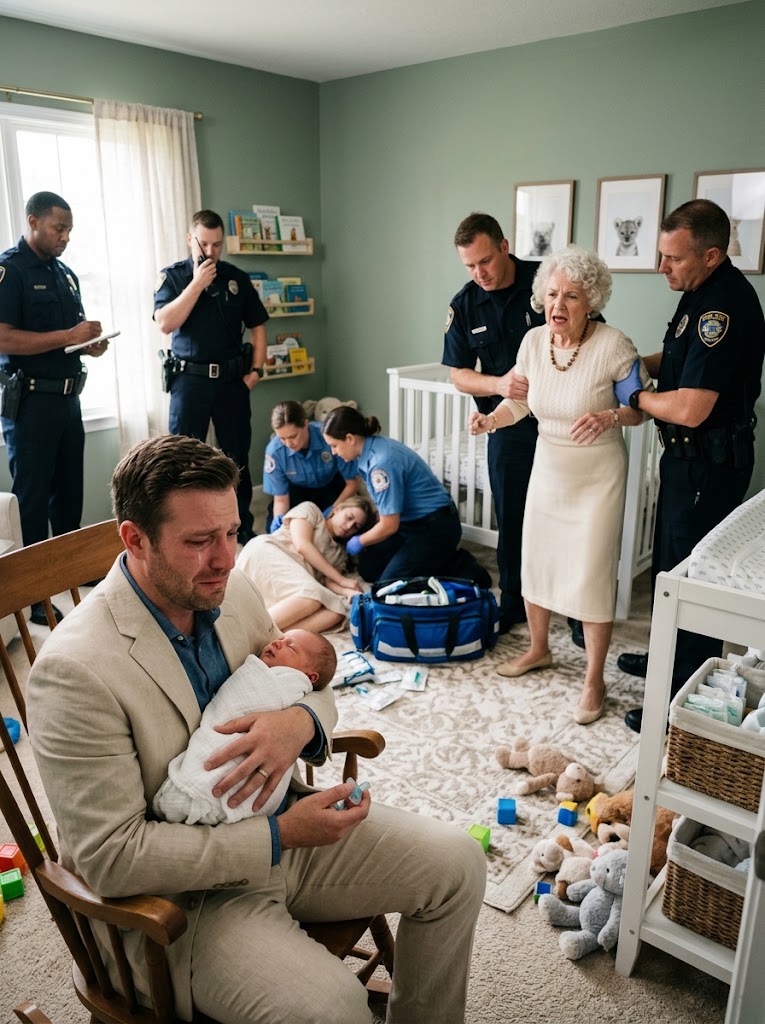
The Morning I Finally Understood the Truth
My name is Everett Shaw, and for almost twelve years I have worked as an operations manager for a regional trucking company in Boise, Idaho.
My job is to spot small issues before they turn into major disasters. I track delays, monitor lost shipments, and build contingency plans for situations most people never anticipate.
At work, I was the guy who always saw trouble before it arrived.
At home, though, I failed to see the person who was quietly causing it.
That person was my mother.
For years, Darlene Shaw had presented herself as the center of our family. She showed up at community events, never forgot a birthday, and filled her social media with heartfelt messages about kindness, loyalty, and family values.
People constantly told me how lucky I was to have such a devoted mother.
For a long time, I believed them.
Then my wife gave birth to our son, and everything I thought I knew started to unravel.
The Delivery That Changed Everything
My wife, Camille, had always been gentle, patient, and naturally warm.
She remembered small details about people. She sent thank-you notes after every dinner invitation. She stopped for lost animals and checked on elderly neighbors during winter storms.
When we found out we were expecting our first child, she cried with joy.
We picked the name Micah before we even knew if we were having a boy or a girl.
I got ready for his arrival the way I’d plan the most critical operation of my career. I researched pediatricians, installed safety locks, organized feeding supplies, and put together the crib months in advance.
I believed preparation could shield us from nearly anything.
But Micah’s birth didn’t go according to plan.
Shortly after he was born, Camille suffered a serious medical complication. The hospital room filled with nurses, urgent orders, and the sound of equipment being wheeled quickly to her bedside.
I stood nearby, powerless to do anything but watch and pray.
Camille pulled through, but only after several terrifying hours.
When she came home six days later, she was severely weak. Her doctor told her to rest, avoid housework, and lift nothing heavier than the baby.
Even crossing the room left her exhausted.
She needed medication, nourishing food, and a calm environment.
Instead, she got my mother.
The Perfect Offer
Darlene called the day before Camille was released from the hospital.
“You cannot manage this alone,” she told me. “Let me come stay for a few weeks. Camille needs another woman in the house, and you need someone who understands babies.”
At the time, her offer felt like a blessing.
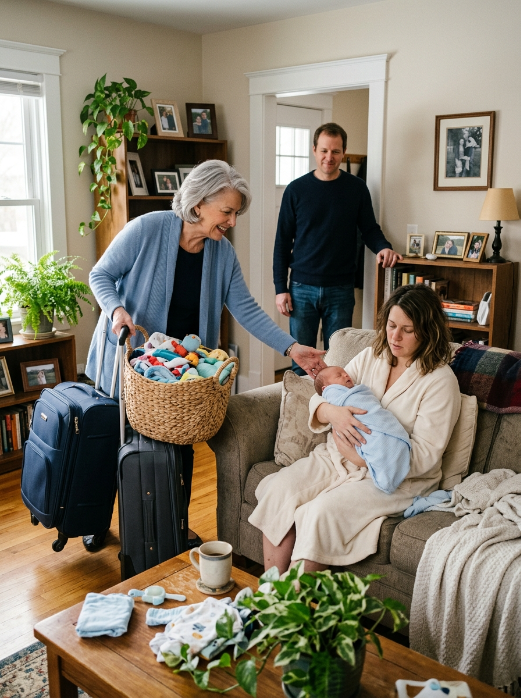
Darlene flew in from Missouri and arrived in a soft blue cardigan, carrying two suitcases and a large basket of baby supplies.
She hugged Camille gently and kissed Micah’s forehead.
“You rest,” she said warmly. “I will take care of everything.”
Within hours, she’d posted a photo of herself holding Micah near the living room window.
The caption said she’d flown across the country to support her beloved daughter-in-law and new grandson.
Friends showered her with praise.
“You are an amazing mother.”
“Camille is lucky to have you.”
“What a beautiful family.”
To everyone watching online, Darlene was the ideal grandmother.
Inside our house, though, something felt off.
The Small Things That Didn’t Add Up
At first, the issues seemed minor.
Darlene offered to cook dinner every night, yet she kept making meals Camille couldn’t stomach.
Camille’s stomach was still sensitive after delivery, but Darlene prepared heavily seasoned dishes and rich casseroles that made her feel worse.
Whenever I brought it up, my mother acted stunned.
“Oh, Everett, I completely forgot,” she would say. “I am doing so much around here that my mind is scattered.”
Then she’d turn to Camille and add, “You can have crackers tonight, sweetheart. Something light might be better for you anyway.”
Camille never complained.
“It is all right,” she’d whisper. “I am not very hungry.”
But I started noticing how worn out she looked whenever I got home from work.
Her eyes were often puffy. Her hands trembled when she held a cup. She grew quiet the moment Darlene walked into a room.
One night, while Camille rested beside me, I asked if my mother had upset her.
She quickly shook her head.
“She is helping us,” Camille said. “I do not want to sound ungrateful.”
Her answer didn’t put me at ease.
It scared me.
The Camera That Kept Going Offline
Before Micah arrived, I’d installed a nursery camera linked to my phone.
It let me check on Camille and the baby during the day.
During the second week of Darlene’s stay, the camera began losing connection every morning.
The first time, my mother said the internet must have gone down.
The second time, she claimed she might have accidentally bumped the power cord while cleaning.
By the fourth time, I knew something was off.
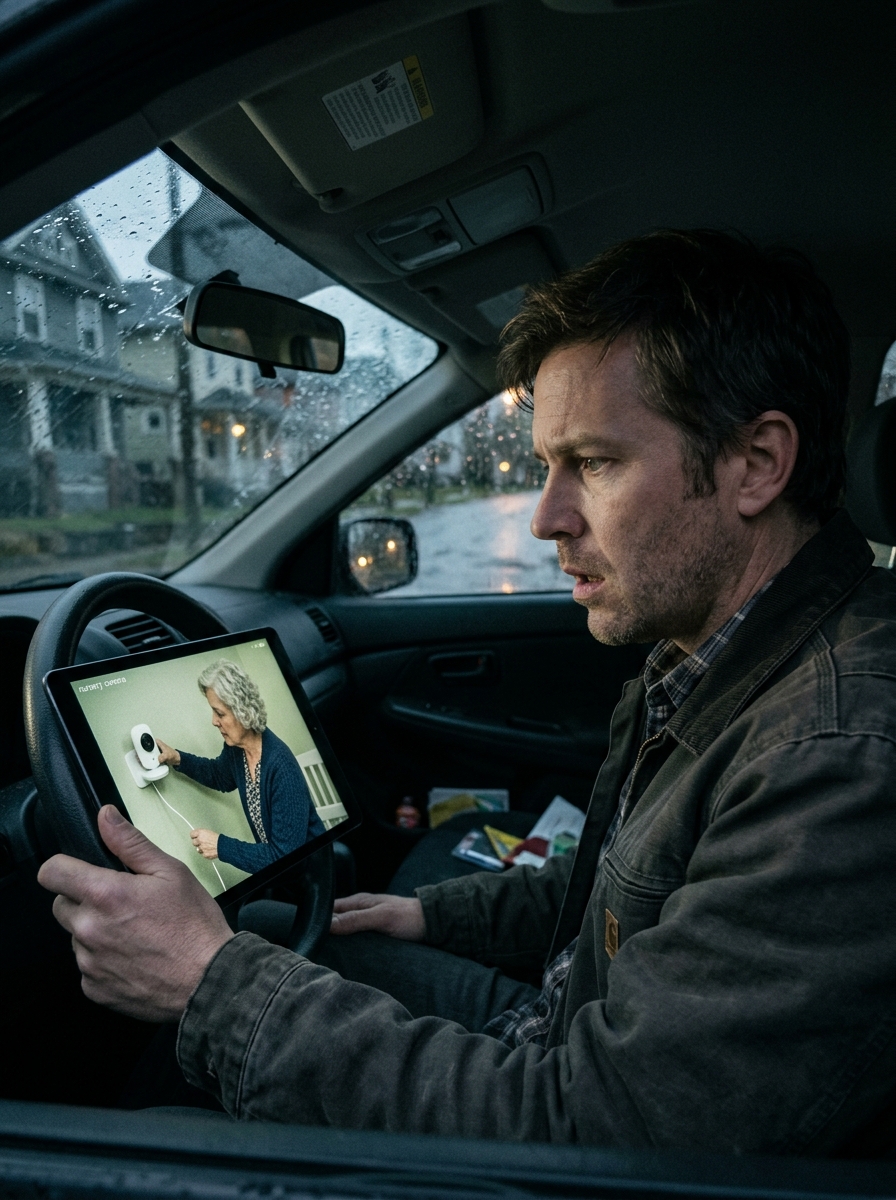
The camera was mounted high on the wall. Its cord ran behind a heavy cabinet. No one could unplug it by mistake.
I chose not to confront her without proof.
Instead, I bought a small battery-powered camera disguised as a digital clock. It kept its own connection and didn’t rely on our home network.
Late that night, once everyone was asleep, I set it on a bookshelf in the nursery.
The next morning, I told Darlene I had an important meeting and wouldn’t be reachable until late afternoon.
I kissed Camille, touched Micah’s tiny hand, and left the house.
But I didn’t go to work.
I drove a few streets away, parked near a quiet public garden, and pulled up the hidden camera feed on my tablet.
For nearly an hour, nothing happened.
Camille rested in the nursing chair while Micah slept nearby.
Then, at 9:12 a.m., my regular nursery camera sent an alert.
Connection lost.
On the hidden feed, the door opened.
My mother walked into the room.
She went straight to the wall camera, reached behind it, and pulled the cord.
There was nothing accidental about it.
My stomach tightened.
For the first time, I saw the look she wore when she thought no one was watching.
There was no warmth in her face.
The Woman Behind the Smile
Camille woke when Darlene came in.
She tried to sit up, but pain crossed her face.
My mother didn’t ask if she was okay.
Instead, she looked around the room and let out a dramatic sigh.
“You are still sitting here?” Darlene asked. “Micah was awake most of the night,” Camille replied softly. “I only fell asleep a little while ago.”
Darlene crossed her arms.
“Every new mother is tired. That does not mean the entire house should be neglected.”
Camille looked down.
“Everett said I should not worry about chores yet.”
“Everett is trying to protect you because you act helpless,” my mother replied. “He works all day, and you cannot even manage a basket of towels.”
Camille’s eyes welled up.
“The doctor told me to rest.”
“Doctors always say that,” Darlene answered dismissively. “You are using recovery as an excuse.”
I sat frozen in my car, listening through the tablet.
Every sentence felt surreal.
This wasn’t the woman who’d raised me to respect others.
This wasn’t the smiling grandmother from the photos.
Then Micah started crying.
Camille immediately tried to stand.
She gripped the arm of the chair and slowly pushed herself up.
“I need to feed him,” she said.
Darlene stepped between her and the crib.
“Sit down.”
Camille stared at her.
“Please move. He needs me.”
My mother reached for the water glass next to Camille’s medication.
With one sharp motion, she knocked it off the table.
The glass shattered across the wooden floor. Water spread beneath the chair, sweeping several pills with it.
Camille gasped.
Darlene looked down at the mess as though Camille had caused it.
“Look what happened because you became emotional,” she said.
Micah cried harder.
Darlene lifted him from the crib and held him out of Camille’s reach.
Camille reached toward them.
“Please give him to me.”
“Not until you clean this up,” Darlene replied.
Camille looked at the broken glass, then at my mother.
“I cannot kneel down safely.”
“Then perhaps you are not ready to care for a child,” Darlene said. “Clean the floor, and afterward you may hold him.”
Camille began crying.
She slowly lowered herself, one hand pressed against her stomach.
That was the moment something inside me shifted for good.
The Call to My Sister
My first instinct was to rush home.
But I knew my mother would immediately twist her story.
She’d claim Camille had dropped the glass. She’d say she was only protecting the baby.
I needed to get Camille and Micah out safely before confronting her.
I called my older sister, Mallory.
She lived twenty minutes away and had always stood up for our mother.
When she picked up, she sounded upbeat.
“Everett, I am shopping. Can I call you later?”
“No,” I said. “I need you to watch something.”
I sent her a short clip from the hidden camera.
At first, Mallory tried to explain it away.
“Mom can be demanding, but she probably did not mean—”
“Watch the entire clip,” I interrupted.
She went silent.
I heard the audio play through her phone.
Then I heard her start to cry.
“She used to do similar things to me,” Mallory whispered. “When Dad traveled for work, she would break something and blame me. She would make me apologize for things I had not done. I thought I remembered it incorrectly.”
My heart sank.
My mother hadn’t suddenly changed.
She’d simply found someone new she believed she could control.
“Mallory, I need your help,” I said. “Go to the house. Act normal. Tell Mom you are taking Camille to a recovery appointment. Get Camille and Micah into your car. Do not confront her yet.”
Mallory’s voice steadied.
“I understand.”
The Quiet Rescue
Fifteen minutes later, the doorbell rang.
Darlene’s expression shifted instantly.
The cold look vanished, replaced by a welcoming smile.
I listened through the hidden camera as she opened the front door.
“Mallory, what a wonderful surprise!”
“I came to take Camille out for a little while,” my sister replied.
Darlene hesitated.
“She is not feeling well today.”
“That is why I made an appointment for her,” Mallory said. “A friend recommended a postpartum recovery specialist. I thought it would be good for her.”
Mallory headed upstairs before our mother could stop her.
When she entered the nursery, she saw Camille sitting near the broken glass, pale and trembling.
For a split second, anger flashed across my sister’s face.
Then she reined it in.
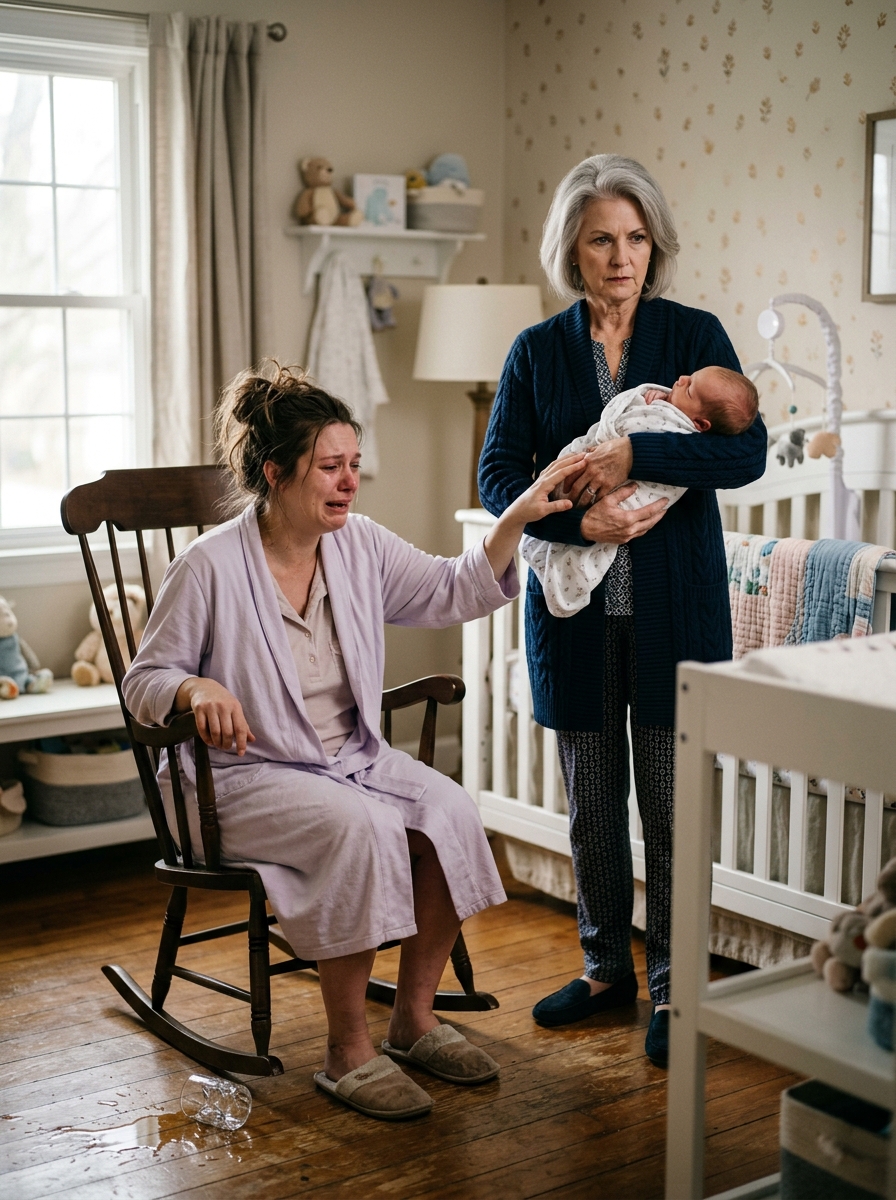
“Camille, I am taking you out,” she said gently.
Darlene stood in the doorway holding Micah.
“She made a mess and became overwhelmed,” my mother explained.
Mallory didn’t argue.
She helped Camille up, wrapped an arm around her waist, and turned to face Darlene.
“I will take the baby too.”
My mother tightened her grip. “He is comfortable with me.”
Mallory stepped closer.
“Give me my nephew, Mom.”
Her voice stayed calm, but firm.
Darlene glanced between them.
She cared too much about looking reasonable to make a scene.
Finally, she handed Micah over.
A few minutes later, my phone buzzed with a message.
We are in the car. Everyone is safe.
Only then did I finally breathe.
The Voice From the Bookshelf
Darlene went back to the nursery alone.
She looked at the wet floor and shook her head.
I pressed the microphone button on the hidden camera.
“You do not need to clean that up.”
My voice filled the room.
Darlene jumped and spun around.
“Everett?”
“I have been watching you.”
She spotted the digital clock on the shelf.
Her expression changed.
For several seconds, she said nothing.
Then she started talking fast.
“You misunderstood what happened. Camille became upset, and I was trying to calm her. She dropped the glass.”
“Stop,” I said. “I saw you unplug the other camera. I saw you knock the glass down. I heard every word.”
Her voice hardened.
“Your wife is too sensitive. Someone had to teach her responsibility.”
“She nearly lost her life giving birth to your grandson.”
“And now she uses that to control you!” Darlene shouted. “I was trying to make her stronger.”
For years, I’d let my mother define reality for everyone around her.
That stopped in that room.
“You were not helping her,” I said. “You were humiliating a vulnerable person because you believed no one would challenge you.”
Darlene started crying, but I no longer trusted her tears.
“I am your mother.”
“And Camille is my wife. Micah is my child. Protecting them is my responsibility.”
The Final Boundary
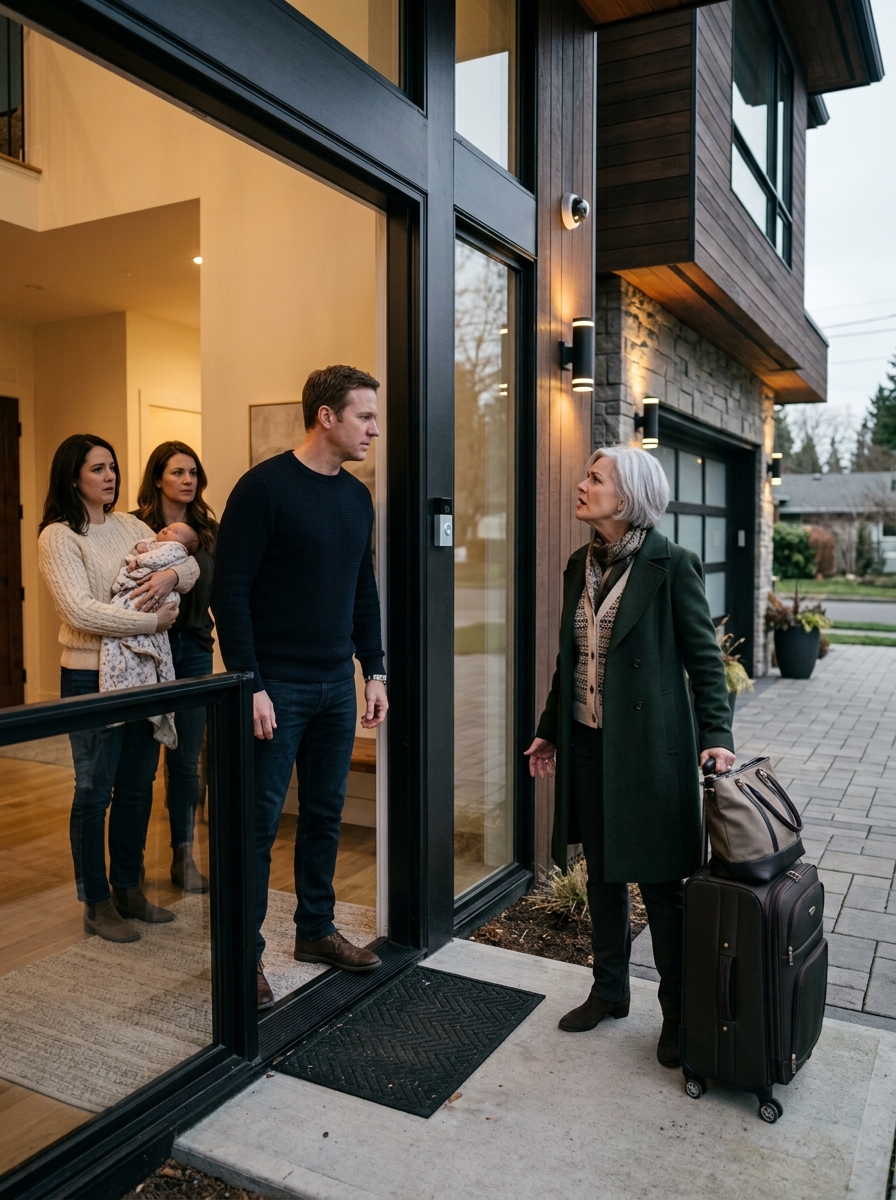
While Mallory drove Camille and Micah to a hotel, I called a locksmith.
By the time Darlene came downstairs, a service van was already pulling up.
Two workers began replacing the exterior locks.
My mother rushed to the front window.
“What are those men doing?”
“They are securing my home,” I replied through the doorbell camera.
“My belongings are still inside!”
“A packing service will place your suitcases outside. A car will take you to the airport. I booked you a flight home.”
Darlene’s anger flared again.
“You cannot remove your own mother from your life because of one disagreement.”
“This was not a disagreement,” I answered. “This was a pattern, and it ends today.”
She threatened to tell relatives that Camille had turned me against her.
I told her the recording had been saved in several places.
After that, she went quiet.
Thirty minutes later, she left the house.
I watched the car disappear down the street.
I felt grief, anger, and relief all at once.
I wasn’t mourning the mother who’d just left.
I was mourning the mother I’d believed she was.
Building a Safe Home Again
Camille’s recovery was slow.
The physical pain eased within a few months, but rebuilding her sense of safety took much longer.
She apologized again and again for not telling me what had been going on.
I reminded her that fear can silence people, especially when they believe speaking up will create more conflict.
We went to counseling together.
Mallory also started therapy and finally faced memories she’d buried for years.
Darlene tried to damage our reputation with relatives, but Mallory privately shared the recording with several family members who needed to know the truth.
The accusations stopped.
Two years have passed since that morning.
Micah is now an energetic little boy who fills every room with laughter.
The nursery was repainted in soft blue and white. The damaged rug was replaced, and the bookshelf now holds picture books instead of a hidden camera.
Sometimes I still open the security app while I’m at work.
Now I see Camille sitting on the floor, building towers with Micah.
I see her smiling without fear.
I see a home that finally feels peaceful.
I once believed family loyalty meant putting up with almost anything.
I understand now that real loyalty means protecting the people who trust you, even when the person causing harm shares your name.
A person’s public image may look warm and generous, but true character shows in how they treat vulnerable people when there’s no audience to impress.
Family ties should never be used as an excuse to control, shame, or silence someone who is physically weak, emotionally drained, or unable to defend themselves.
When a loved one suddenly grows withdrawn, anxious, or unusually quiet around a certain person, their behavior may be signaling something they aren’t yet ready to put into words.
Protecting your spouse and children sometimes means drawing a boundary that other relatives may criticize, but peace inside your home matters more than approval outside it.
Evidence can matter greatly when dealing with someone who keeps changing their story, denies clear events, or leans on a polished reputation to dodge responsibility.
Gentle people aren’t weak, and their kindness should never be mistaken for an invitation to disrespect them or take advantage of their patience.
It’s possible to love the idea of a family member while accepting that continued contact with their real behavior is unhealthy and unsafe.
Healing doesn’t happen the moment a harmful person leaves, because the people affected may still need time, support, patience, and professional guidance to feel secure again.
A strong partner doesn’t just solve practical problems but also listens closely, believes what their loved one is going through, and stays emotionally present during recovery.
Sometimes preserving a family’s future means ending an old pattern, telling the truth without apology, and choosing a peaceful home over a relationship built on fear and control.
