

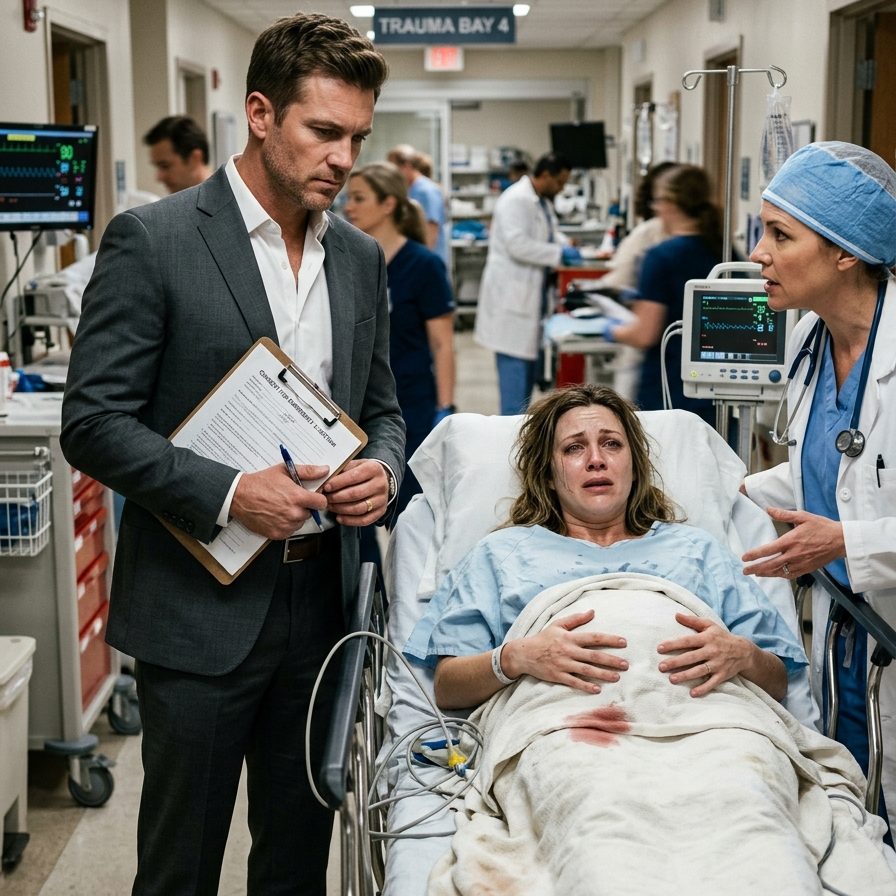
The contractions had stopped being contractions an hour ago. Now they were something with teeth.
Dana Reyes lay on the gurney in the third-floor corridor of Grace Memorial, watching the ceiling tiles slide past as two orderlies wheeled her toward Labor and Delivery, and thought, absurdly, that she should have called her brother first. Before the hospital. Before her husband. Before any of it.
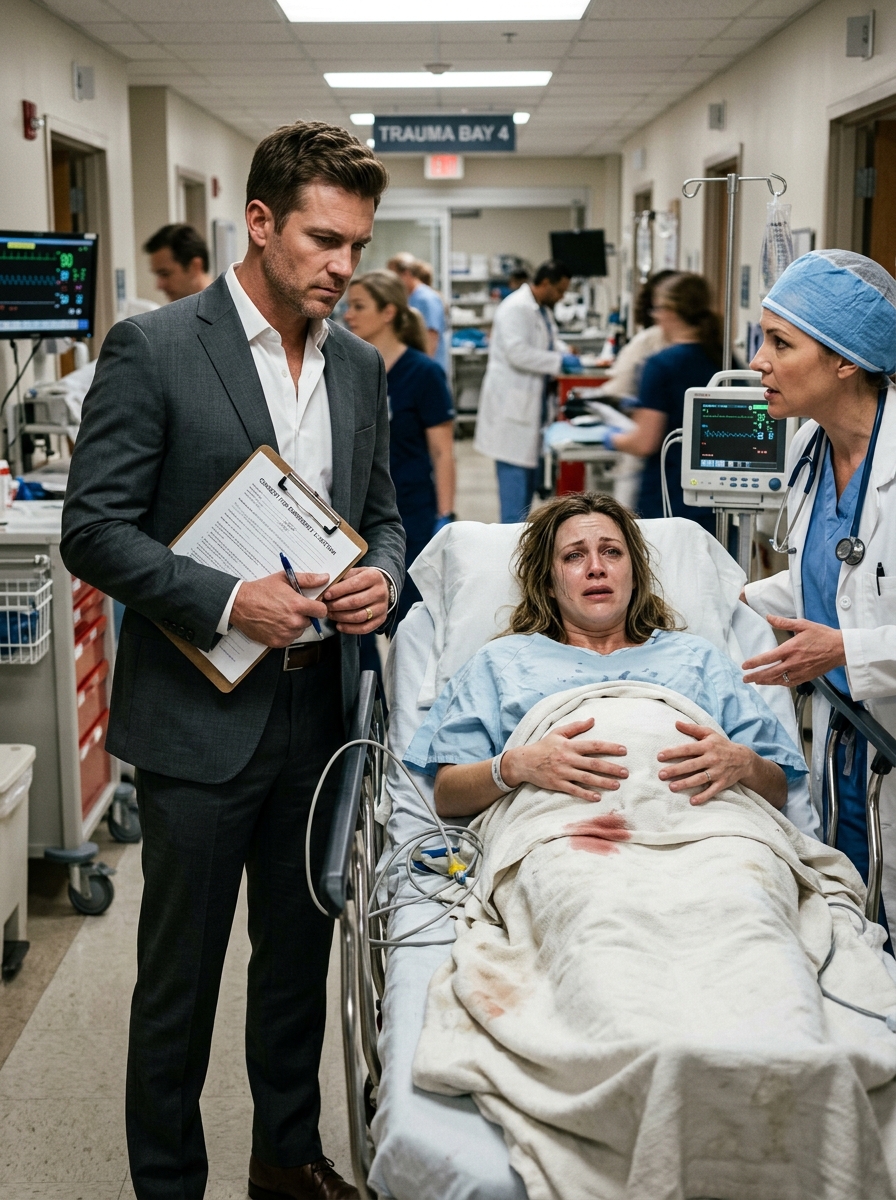
“Mrs. Okafor-Reyes.” Dr. Priya Anand walked alongside the gurney, reading a chart she didn’t need to read, the way doctors do when they need something to hold. “Your placenta has detached from the uterine wall. That’s called an abruption. You’re bleeding internally and the baby’s oxygen supply is compromised. We need to get you into surgery in the next fifteen minutes.”
“Okay,” Dana said, because there wasn’t another word for it.
“I need your husband to sign.”
Marcus Okafor stood three feet back from the gurney, hands in the pockets of his tailored coat, looking at the consent form like it was a term sheet he hadn’t had time to review. He was, by every visible measure, a calm man. That was what people always said about Marcus. So calm. So composed. Dana had once loved that about him. Now she understood it was the stillness of a man doing math.
“What are the risks,” Marcus said. Not a question. A stall.
“Mr. Okafor, every minute—”
“I’m aware of the clock, Doctor. I’d like to understand what I’m signing.”
Dana turned her head against the thin hospital pillow. “Marcus.”
He didn’t look at her.
“Marcus, sign it.”
“I heard you.” His voice was gentle, which was somehow worse than if it hadn’t been. “I just want to be careful. You know how these places love to upsell procedures.”
A nurse near the desk went very still.
Dana had spent eleven months learning to read the weather in her husband’s voice, the way sailors learn to read a sky that looks the same to everyone else. She knew this particular calm. It was the calm of a man protecting something that wasn’t her.
“There isn’t time to be careful,” Dr. Anand said. “There’s time to be fast.”
“Then let’s be fast about being careful.”
The monitor over Dana’s belly gave a small, irregular chirp, and for one second the whole hallway seemed to lean toward the sound like a room full of people listening for a knock.
“Nurse,” Dana said. Her voice came out steadier than she felt. “My phone.”
The nurse — her name tag said REBECCA — glanced at Marcus and then, deliberately, did not ask his permission. She pulled the phone from Dana’s bag and set it in her hand.
Marcus’s jaw tightened, just barely. “You don’t need to be making calls right now.”
“I need my brother.”
“Your brother,” Marcus repeated, with the particular flatness he used for anything involving Idris.
Dana dialed with a thumb that didn’t want to cooperate. It rang once.
“Dana.” Idris Reyes answered like he’d been holding the phone in his hand already, which, she would later learn, he had. “What’s wrong.”
“Placenta’s detached. They need to operate. Marcus won’t sign.”
There was a silence on the line that Dana recognized — not confusion, but recalibration. Her brother processing bad news the way he processed everything: quickly, and without wasted motion.
“Put him on,” Idris said.
She held the phone up. “It’s for you.”
Marcus looked at the screen like it might be contagious. “This isn’t the time, Idris.”
“You’re right,” her brother’s voice said, tinny and precise through the small speaker. “It’s really not. So sign the form.”
“This is a private medical matter.”
“It stopped being private the second you decided to gamble with it. I’m eleven minutes out. Don’t do anything in the next eleven minutes that I’ll have to spend the next eleven years undoing.”
Marcus’s mouth curved into something that wanted to be a smile and didn’t make it. “Eleven minutes. You’re not even in the state.”
“I was in the state an hour ago,” Idris said. “I’ve been in the state since Tuesday, Marcus. Ask yourself why.”
The line went dead. Marcus stared at the phone in Dana’s hand like it had said something in a language he almost understood.
“Mr. Okafor,” Dr. Anand said, “I am telling you, as her physician, that your wife is conscious and capable of consenting to her own care. She doesn’t require your signature. She requires your cooperation, or your absence.”
Something shifted behind Marcus’s eyes — not remorse. Recalculation.
“She’s exhausted,” he said, pivoting so smoothly that Dana almost admired the craftsmanship of it. “She hasn’t been sleeping. She’s been having episodes — anxiety, paranoia, since about week thirty. I’ve been managing it quietly because I didn’t want it in her file. I think before anyone does anything invasive, someone should evaluate her state of mind.”
The hallway went cold in a way that had nothing to do with the air conditioning.
“I have never had an anxiety episode in my life,” Dana said.
“You forget them,” Marcus said softly, gently, the way you’d correct a child. “That’s part of it.”
Rebecca the nurse looked at Dana, then at Marcus, and something settled behind her eyes — not belief, but recognition, the specific recognition of a woman who has worked nights in a hospital long enough to know exactly what this sounds like and exactly what it’s for.
Dana felt something in her chest go from frightened to furious, and fury, it turned out, was a much steadier fuel.
She took the pen Rebecca offered and signed the consent form herself, her signature dragging crooked across the line because her hand was shaking, but it was hers. Dana Amara Reyes. Not Okafor. She hadn’t taken his name, in the end — a small rebellion from eighteen months ago that she’d never told him the real reason for.
“Move,” Dr. Anand said.
The gurney lurched into motion. Marcus stepped in front of it.
“You can’t just railroad a man out of his own child’s delivery.”
“Sir, step back,” Rebecca said, “or I call security.”
“I own three units in this hospital’s parking structure,” Marcus said, and the absurdity of the sentence, spoken with total sincerity, was almost enough to make Dana laugh through the fear. “I know people on this board.”
“Then they’ll be very interested,” said a voice from the end of the hall, “in how you’ve been spending their goodwill.”
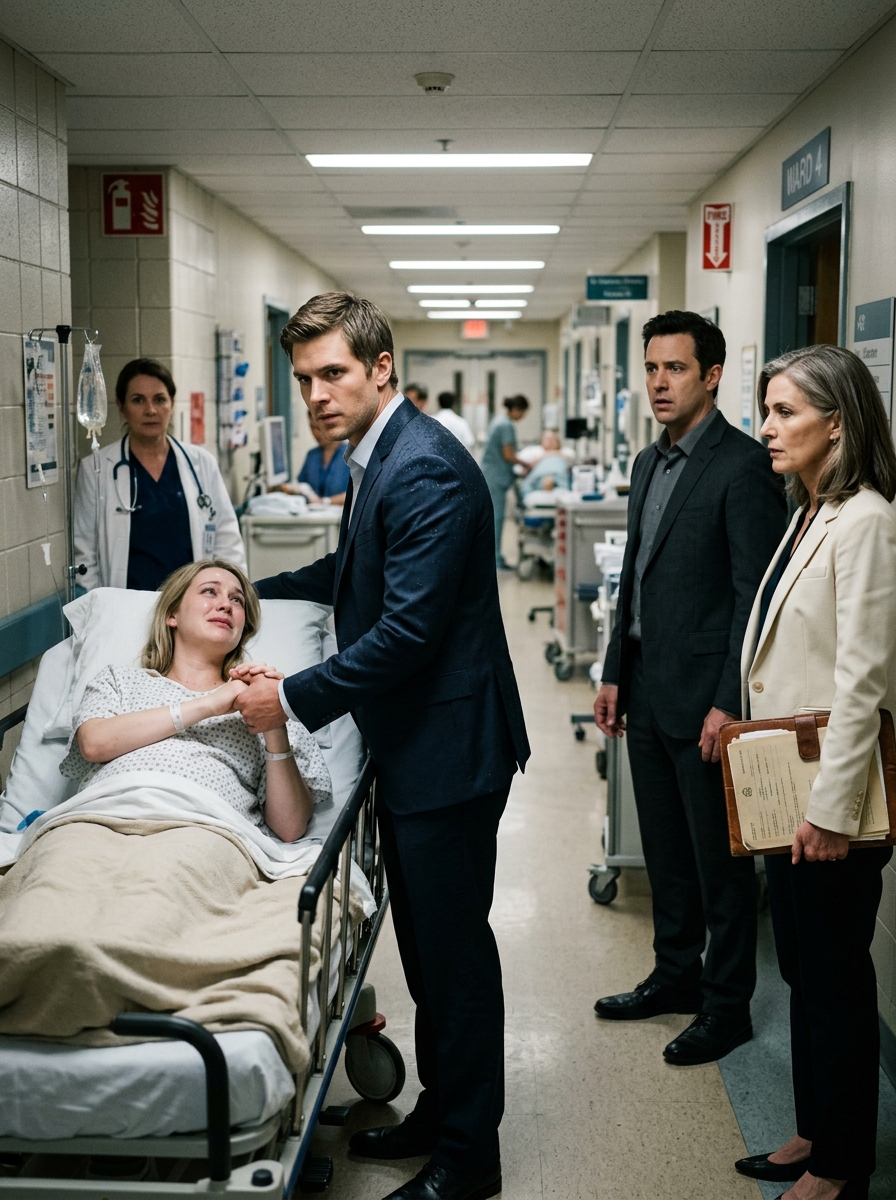
The doors banged open. Idris came through them still in a rumpled button-down, tie missing, hair wet from either rain or sweat, moving like a man who had run the last hundred yards. Behind him was a woman in a gray suit holding a leather folio, and behind her, a hospital security officer who’d clearly been intercepted in the lobby and recruited on the way up.
Marcus’s face did something complicated.
“Idris.”
“You didn’t sign it.” It wasn’t a question.
“She’s confused, she doesn’t need—”
“She called me herself, Marcus. Confused people don’t dial seven digits from memory under duress.” Idris reached the gurney and put his hand over his sister’s, and for a second the corridor, the monitors, the blood-soaked blanket, all of it fell away, and she was eleven years old again, hiding with him in the crawlspace under their grandmother’s porch while their parents fought two floors up.
“Hey,” he said, quiet now, just for her.
“Hey,” she said back.
“You’re going to be fine. Both of you.”
“I already signed it.”
“I know. I heard.” His mouth twitched, almost a smile. “Good girl.”
The woman in the gray suit stepped forward. “Dr. Anand? I’m Priya— sorry, no relation. Farah Nasser, counsel for Mrs. Reyes. Her healthcare proxy names her brother as decision-maker in the event her spouse is unavailable or acting against her expressed wishes. It was filed two weeks ago.”
“Two weeks,” Marcus said, and for the first time that morning his composure actually cracked, a hairline fracture right down the center of the calm. “You’ve had a lawyer for two weeks?”
“I’ve had a lawyer since I found the second bank account,” Dana said.
The gurney was already moving again, the doors to the OR swinging wide, and the last thing Dana saw before the fluorescent lights swallowed her was her brother’s face, and behind him, her husband’s — no longer calm at all.
Two hours later, Dr. Anand came through the OR doors with blood on her gown and Idris stood up so fast he knocked over a chair.
“She’s stable,” the doctor said. “Lost a lot of blood, but she’s stable. The baby’s in the NICU — she’s small, she’s on support, but she’s fighting.”
Idris exhaled like he’d been holding his breath since the phone call.
“Can I see her?”
“Recovery room in twenty minutes.”
Marcus, who had been pacing the far end of the hallway under the watch of the security officer, stepped forward. “And me?”
Dr. Anand looked at him for a long moment. “Given the circumstances, hospital administration is reviewing whether you’ll have unsupervised access to either patient.”
“She’s my wife. That’s my daughter.”
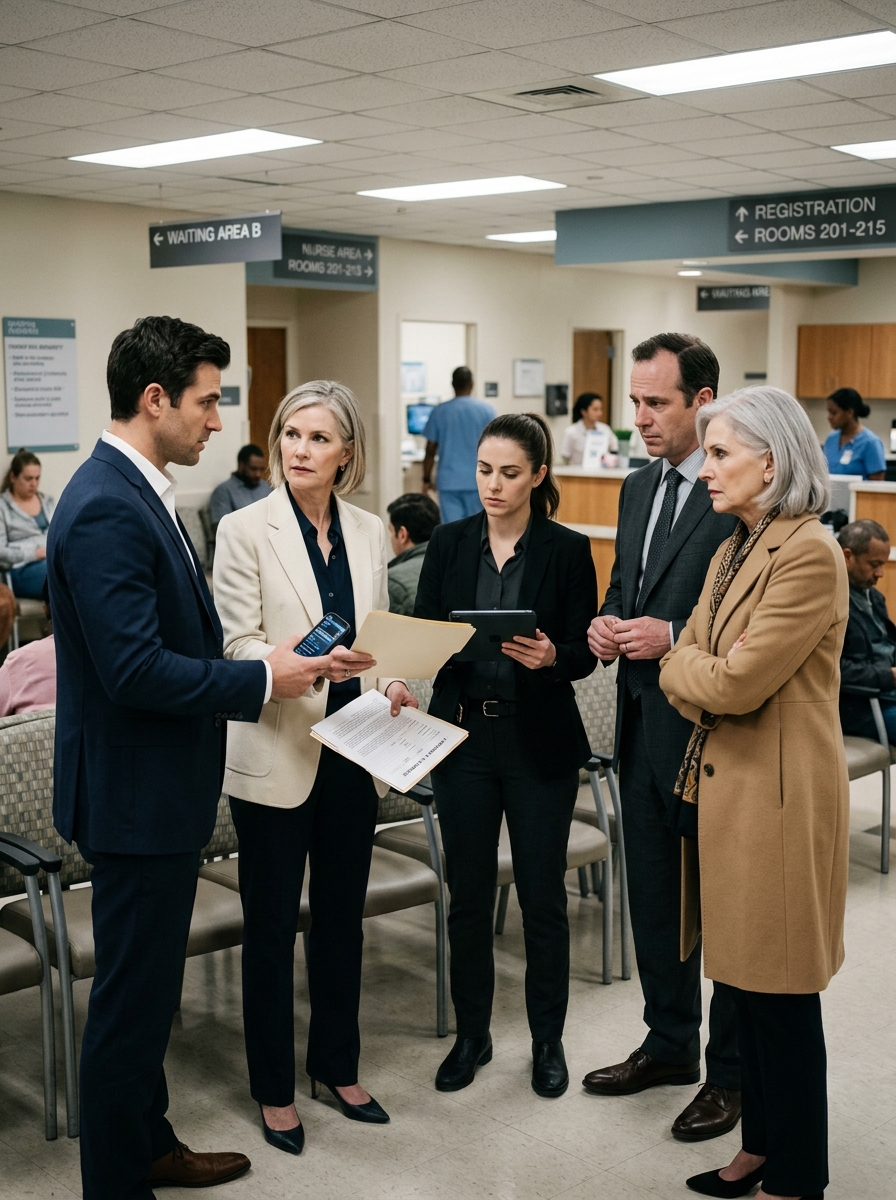
“That’s precisely what we’re reviewing,” Farah Nasser said, not unkindly, which somehow made it land harder.
Idris turned to his brother-in-law, and for the first time all morning, his anger had somewhere to go besides forward momentum.
“You said she was having episodes.”
“She was under stress—”
“She was under stress because you moved forty thousand dollars out of your joint account in March and told her it was for taxes. I’ve seen the statements, Marcus. I’ve seen the emails where you asked your assistant to find you, and I’m quoting, ‘the easiest legal path to sole custody if a spouse is deemed unfit.’ You didn’t invent a crisis this morning. You’ve been building one for months, and today you just needed the crisis to arrive on schedule.”
Marcus’s face had gone the color of the hallway tile.
“You don’t know what you’re talking about.”
“I know exactly what I’m talking about,” Idris said. “I’ve known for weeks. I just needed you to do it in front of witnesses.”
The elevator chimed. A young woman stepped out holding a gift bag with a silver ribbon, saw the security officer, saw Marcus’s face, and stopped walking entirely.
“You said we’d meet the baby by lunch,” she said quietly, to no one in particular, and the sentence hung in the air long enough for everyone in that hallway to understand exactly what kind of morning this had actually been all along.
Idris didn’t even look at her. He was watching his brother-in-law’s face, and what he saw there wasn’t guilt.
It was the look of a man doing math that no longer added up.
“Recovery room,” Idris said to Dr. Anand, turning his back on all of it. “I’d like to see my sister now.”
