

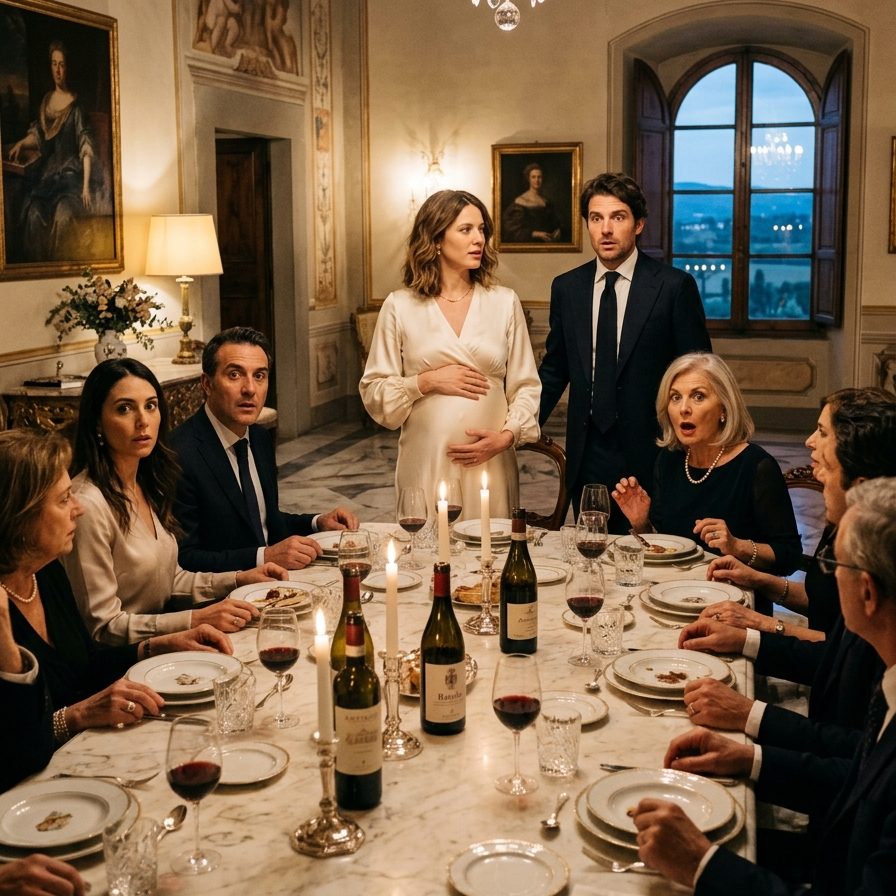
For five years, my Italian in-laws sneered at me in their native tongue, certain I was too dim to catch a single word. I smiled pleasantly, served dinner, and quietly filed away every insult. But the night I announced my pregnancy, my mother-in-law murmured, “Now we can secure the inheritance.” I laid my hand over my belly and answered in fluent Italian, “Please continue. I’d love to hear everything.”
They mistook my smile for foolishness.
For five years, my Italian in-laws picked me apart across dinner tables in a language they were sure I couldn’t follow.
The first time it happened, Matteo and I had only been married three months.
His mother, Bianca, filled my wine glass and said sweetly in English, “You are too thin, Elena. Eat.”
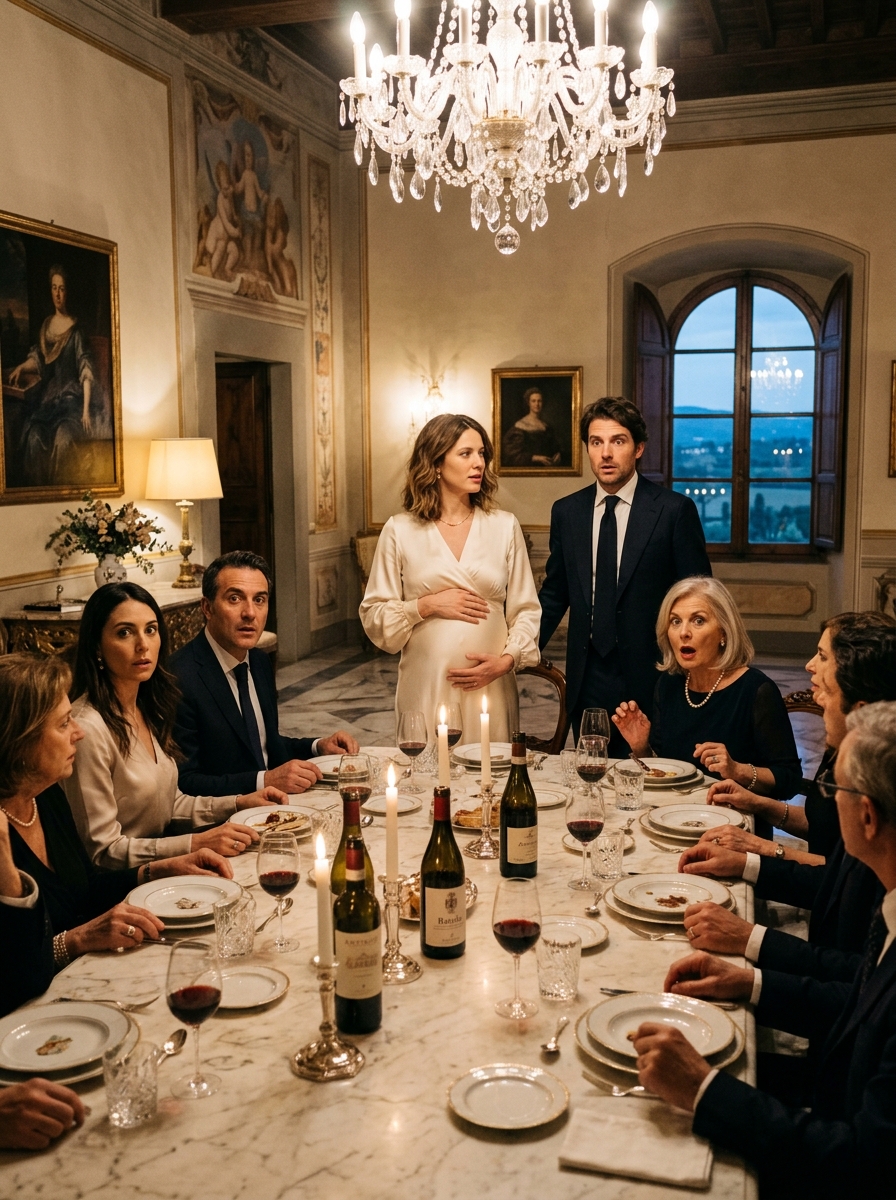
Then, shifting into Italian, she leaned toward her daughters and murmured, “At least she has a pretty face. Such a pity about the empty head.”
Laughter circled the table like something spilled that no one bothered to wipe up.
I lowered my eyes and cut into my lasagna.
Under the table, Matteo pressed his hand to my knee.
Not comfort.
A warning.
“Don’t be so sensitive,” he said later in the car, though I hadn’t said a word.
I stayed quiet because my grandmother had taught me Italian before she died. I stayed quiet because silence builds up. I stayed quiet because I wanted to see who they really were when they thought no one could understand them.
For five years, I collected it all.
Bianca mocked my accent, my clothes, my family, my career. Matteo’s brother Luca called me “the obedient foreign doll.” His wife Serena said I was lucky Matteo married me before “someone better came along.” At birthdays, christenings, and anniversaries, they smiled at me in English and tore me down in Italian.
Matteo never intervened.
Worse — he joined in.
“She’ll sign anything,” he said one night, swirling a glass of whiskey after Christmas dinner. “I handle the finances. She trusts me completely.”
Bianca laughed. “Good. A wife shouldn’t ask questions.”
I looked up from folding napkins and smiled.
Matteo mistook that smile for loyalty.
He didn’t know I was a forensic accountant. He didn’t know I’d stopped trusting him after our very first joint tax return, when the numbers shifted like shadows on the page. He didn’t know I’d been photographing financial records, taping conversations where the law allowed it, and working quietly with a lawyer named Ruth who wore gray suits and never flinched.
Then came the pregnancy announcement.
Bianca demanded the family gather at her villa outside Florence — marble floors, lemon trees, and oil paintings of dead men who looked eternally unimpressed with everything around them.
I stood beside Matteo under a chandelier as cold as winter light.
“We have news,” he said, pulling me close by the waist.
I placed a hand over my stomach.
“We’re expecting.”
For a moment, something in the room eased.
Then Bianca kissed both my cheeks and whispered in Italian, “At last. Now we can secure the inheritance.”
A chill ran through me.
Luca lifted his glass. “To the baby. And to moving Nonno’s property before she figures out what she married into.”
They laughed.
I smiled again.
But this time, Matteo felt my body freeze beneath his arm.
“Elena?” he asked, wary.
I looked at him.
Then at the rest of his family.
And in perfect Italian, I said, “Please continue. I’d love to hear the rest.”
For illustration purposes only
Part 2
The room fell so silent I could hear lemon branches scraping the windows.
Bianca’s smile broke first.
“You speak Italian?” Serena gasped.
I tilted my head. “Since I was a child.”
Matteo’s hand slid off my waist as if touching me had become painful.

“You never told me,” he said.
“No,” I said evenly. “I listened.”
Luca recovered first with a laugh pitched too high to sound natural. “Come on, it was just teasing. Family teasing.”
“Was the inheritance scheme just teasing too?”
His face went blank.
Bianca stepped toward me, her pearls shifting with her breath. “You’re pregnant. This stress isn’t good for the baby. Sit.”
There it was.
An order dressed up as concern.
Care used to smother control.
I sat.
Not because she told me to.
Because I wanted the clearest view of the room.
Matteo pulled me aside near the hallway. His voice dropped and hardened. “You humiliated me.”
I met his eyes calmly. “That’s what worries you?”
“What did you hear, exactly?”
“Enough.”
His gaze went cold. “Watch yourself, Elena.”
The woman I used to be might have cried.
Instead, I rested my hand on my stomach and said softly, “No, Matteo. You should watch yourself.”
Over the next two weeks, they grew reckless.
People hollowed out by arrogance can’t stand being seen clearly. It disgusts them so much that they start slipping up just trying to feel powerful again.
Bianca called me every day, her voice sweet as something spoiled.
“You misread our humor.”
“You’re just hormonal.”
“A child needs a united family.”
Then came the documents.
One morning, Matteo set a stack of papers beside my tea. “Just some estate planning. Since the baby’s coming.”
I flipped through the pages.
There it was.
Transfer forms for my shares in the Milan apartment, the investment account my father had gifted me, and future custody rights buried under thick legal wording. Sign it, and Matteo would take control of everything “for the child’s stability.”
My husband watched my face with the calm certainty of a man looking at a door he was sure he’d already locked from outside.
I picked up the pen.
His shoulders relaxed.
Then, across the signature line, I wrote one sentence.
Not today.
Matteo slammed his hand on the table so hard the tea sloshed.
“You think you’re smart?”
“No,” I said evenly. “I know I am.”
That night, I sent Ruth the final scan.
Her reply came eight minutes later.
Enough.
The next morning, I went to my bank, my doctor, and the police station. By evening, Ruth had filed emergency financial protections and drafted a civil fraud complaint. My doctor documented her concerns about coercion-related stress. My bank froze the suspicious transfers pending review.
Then I made one more call.
To Vittorio Bellini.
Matteo’s grandfather.
The family talked about him as though he were old, worn out, and easy to push around from his villa on Lake Como. They spoke of him the way people speak of furniture with a pulse. What they didn’t know was that Vittorio had been emailing me for years, asking me to review charity accounts because he trusted “quiet people who notice things.”
He had always known exactly who I was.
When I told him what his family was planning, he didn’t raise his voice.
He simply said, “Send me everything.”
So I did.
Audio recordings.
Bank statements.
Draft contracts.
Messages between Matteo and Luca outlining how to move assets before the baby arrived.
Bianca’s voice discussing how to “keep Elena dependent until she delivers.”
Two days later, Bianca sent an invitation to Sunday lunch.
Her message read: We should talk, woman to woman.
I knew exactly what that meant.
They thought they could corner me, rattle me, and shrink me back down to something manageable.
So I went.
But not alone.
They never noticed Ruth waiting in the car outside. They never saw Vittorio’s driver trailing mine through the iron gates. They had no idea the storm had already gathered over their roof.
Inside, the family sat around the long dining table.
Matteo was smiling.
Bianca was smiling.
Luca was smiling.
All wolves.
All teeth.
“Elena,” Bianca said, patting the chair beside her. “Sit. We’ve decided what’s best.”
I didn’t sit.
“So have I.”
Part 3
Bianca laughed with rehearsed ease. “This drama isn’t necessary.”
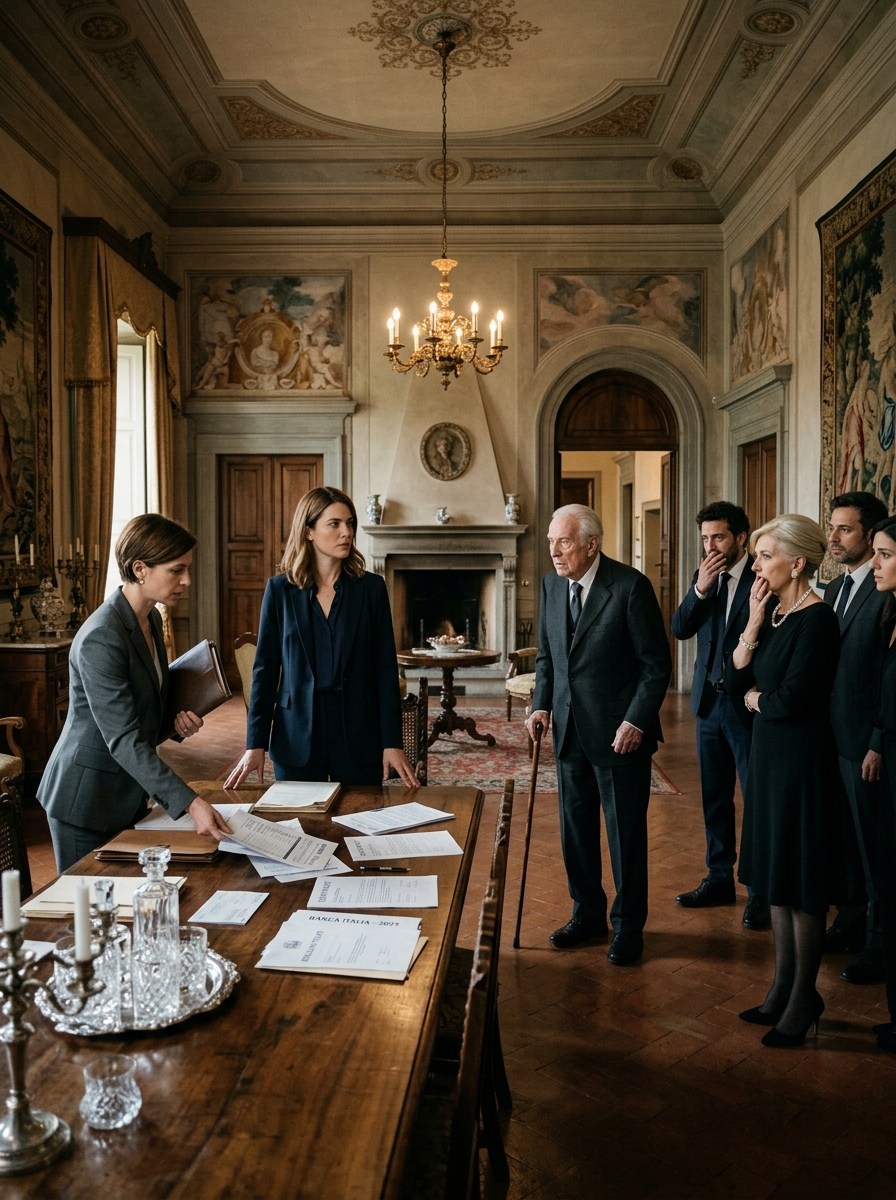
Then Ruth walked through the door behind me, gray suit crisp, leather folder in hand.
The laughter died.
Matteo stood abruptly. “Who the hell is this?”
“My attorney,” I said.
Luca pushed his chair back. “You brought a lawyer into our house?”
“No,” said a voice from the doorway. “She brought the truth into mine.”
Vittorio Bellini stepped in slowly, leaning on his cane, his driver beside him, his pale face carrying a calm that was quietly frightening.
Bianca shot up so fast her chair fell behind her.
“Papa.”
“Don’t call me that today.”
The silence turned harsh.
Ruth opened the folder. “Mr. Bellini has been shown evidence of attempted coercion, financial concealment, and planned misappropriation of marital and family assets.”
Serena’s hand flew to her mouth.
Matteo pointed at me. “She recorded private conversations.”
“Only where legally allowed,” Ruth said without hesitation. “And your written messages were extremely useful.”
Luca had turned the color of ash.
I looked straight at my husband. “You told them I’d sign anything. You were wrong.”
Vittorio lifted a trembling hand. “For years, you mocked this woman at my table.”
Bianca produced tears instantly.
Beautiful tears.
Perfectly rehearsed tears.
“She tricked us,” Bianca whispered. “She pretended not to understand.”
“No,” I said quietly. “I gave you privacy. You exposed yourselves.”
Matteo stepped toward me, his voice dropping low. “Think carefully. You’re carrying my child.”
I didn’t move back.
“That’s the only reason I didn’t ruin you sooner.”
Something cracked in his expression.
Vittorio struck his cane against the floor. “Enough.”
And then it all collapsed.
Vittorio announced Bianca’s removal from the family trust. Luca was let go from the family company pending investigation. Serena’s boutique — quietly funded through hidden transfers — would face an audit. Matteo’s access to every family account was cut off immediately.
Bianca pressed her hands to the table. “You can’t do this.”
“I already have,” Vittorio said.
Ruth placed a thick envelope in front of Matteo.
“Emergency petition. Asset freeze. Divorce filing. Protective orders for financial coercion. From now on, contact goes through counsel.”
Matteo stared at the pages as if they burned his hands.
“You’re divorcing me?”
Almost.
“Did you think I’d raise a child in a house where people mistake cruelty for tradition?”
He turned to Vittorio, desperate. “She’s taking my baby.”
I stepped closer then — close enough for him to see my hands weren’t shaking at all.
“Our baby will carry your name. Whether they respect it depends entirely on what you do next.”
For the first time in five years, Matteo had nothing to say.
Bianca had stopped performing. She cried now without any of the grace she’d always leaned on.
Luca stormed toward the door, cursing, but Vittorio’s driver stepped in and blocked him.
“Sit,” Vittorio said. “The accountants arrive in twenty minutes.”
That was when it truly sank in.
Not that they’d lost an argument.
That they’d lost the future.
Three months later, Bianca no longer ruled the villa like her own kingdom. Vittorio sold it and moved the proceeds into a protected trust for his great-grandchild, managed by an independent board and — at his own insistence — reviewed by me.
Luca faced criminal embezzlement charges. Serena’s boutique collapsed under unpaid debts and taxes. Bianca left the marble halls for a small apartment where no one cared what she thought anymore.
Matteo tried charm in court.
Then anger.
Then tears.
The judge preferred paperwork.
I was granted primary custody protections before my daughter was even born, full control over my premarital assets, and a settlement large enough that Matteo’s signature on the final page looked like surrender spelled out in ink.
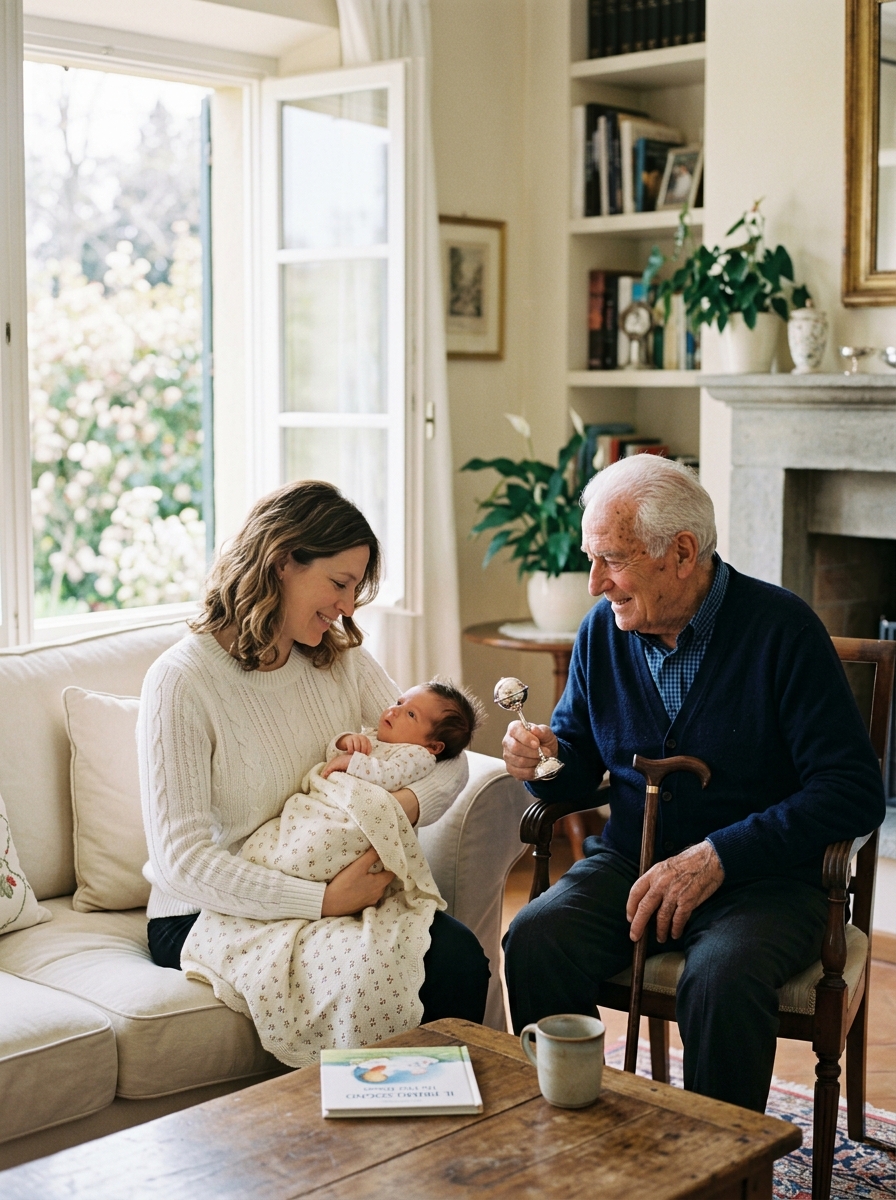
On a bright spring morning, I stood by an open window holding my daughter. She had Matteo’s dark hair and my grandmother’s fierce, curious eyes.
Vittorio came to visit, carrying a silver rattle in hands that trembled slightly.
“What will you teach her first?” he asked gently.
I smiled.
“English. Italian. And never to stay quiet out of fear.”
Outside, sunlight spilled across the floorboards.
For five years, they mistook my silence for weakness.
They never understood.
Silence was where I sharpened the blade.
