

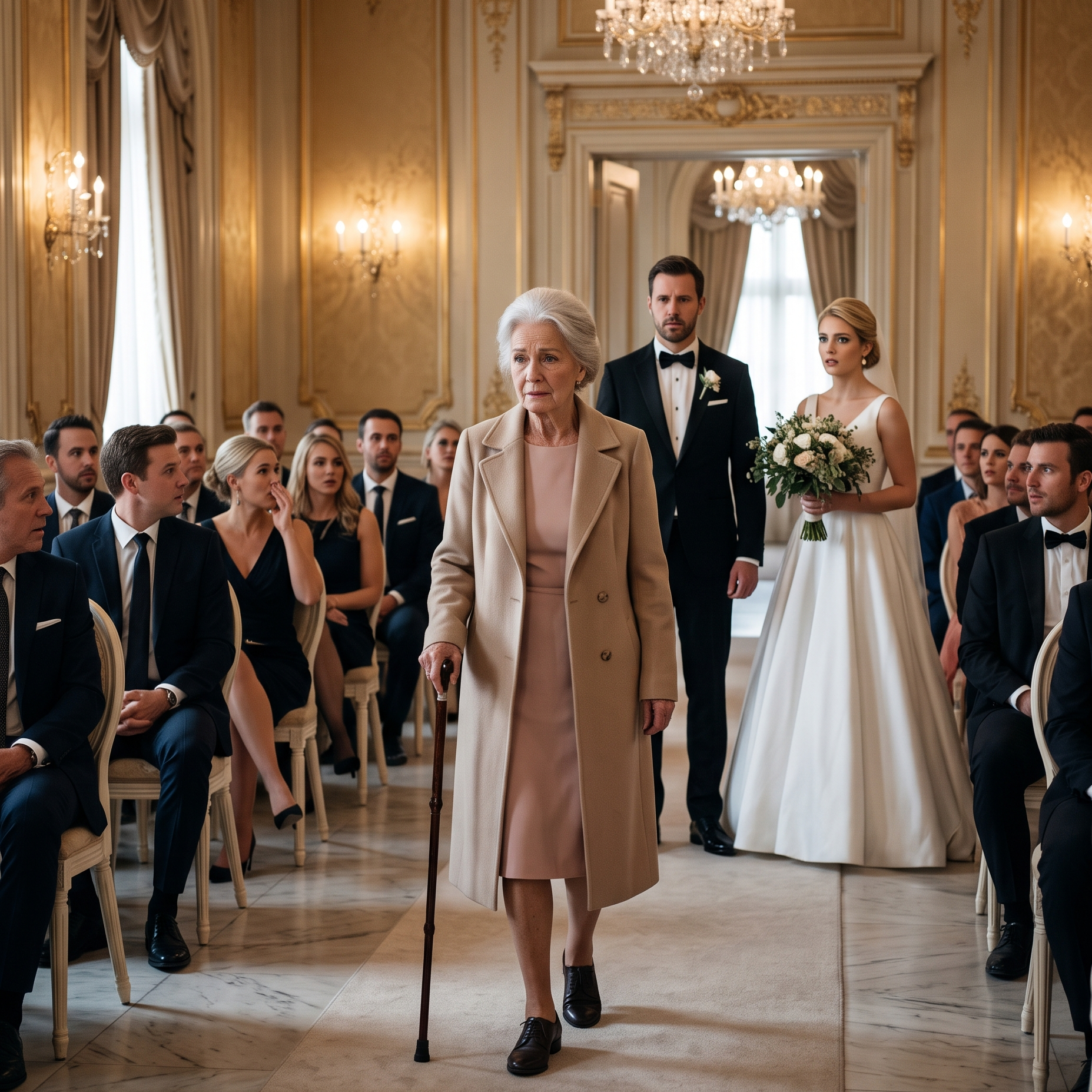
I attended my granddaughter’s wedding. Right at the entrance, my son blocked my path and said, “Mom, your name isn’t on the list.” Two hundred guests stood there, every one of them watching me. I answered, “It’s okay, son.” Then I turned, walked back to my car, went home, and phoned my lawyer. By the next morning, a letter was on its way to his house.
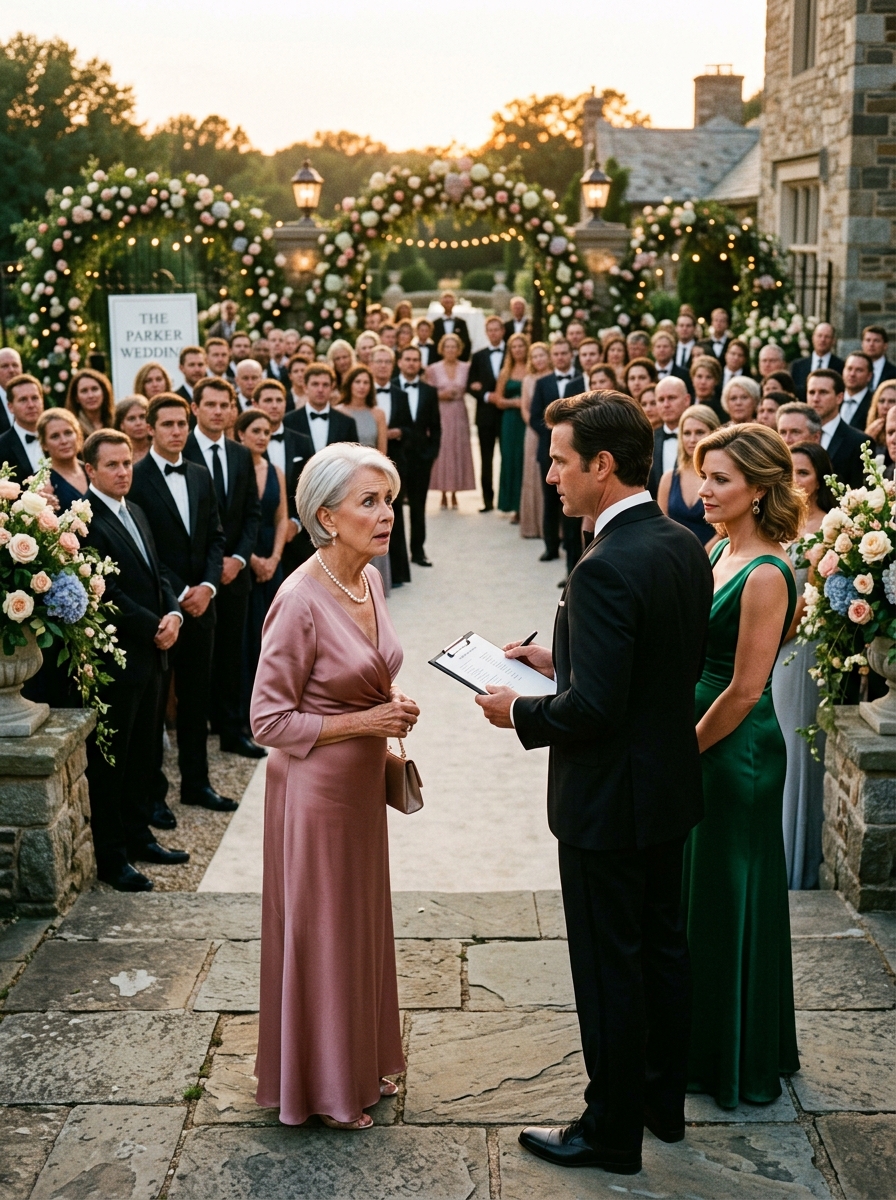
My name is Denise Parker. I’m seventy-two, a widow, and up until that evening I had still been naive enough to believe that love, given enough time and enough generosity, would eventually come back to me.
There was one thing Richard and Susan had overlooked when they decided to bar me from my own granddaughter’s wedding: I was the one who had funded the entire affair.
I’d spent the whole morning preparing. A granddaughter’s wedding is a day a grandmother holds onto for years. Clara was my eldest grandchild, the first infant I held long enough to feel the weight of the future settle in my chest. I remembered changing her diapers, showing her how to stir rice pudding without burning the milk, laughing when cinnamon dusted her nose. Robert, my late husband, adored rice pudding, and young Clara used to call it “Grandpa’s dessert.” Now she was marrying, and I wanted to look every bit the grandmother she deserved on that day — proud, elegant, joyful, composed.
I picked out a pink silk dress I’d kept aside for years, waiting for the right occasion. I clasped my mother’s pearls at my throat. I dabbed on the French perfume I saved for holidays, weddings, and anniversaries. Looking in the mirror, I didn’t see a woman fading into the background. I saw someone who had lived fully, built something lasting, endured, loved, and earned her seat at the front.
I wanted Clara to see me that way too.
What I didn’t realize was that in Richard’s eyes, I had long ago stopped being his mother and become something far more useful.
For six months, that wedding had consumed my life. Richard and Susan visited my apartment almost every week, perched on my velvet couch, sipping coffee I’d made, speaking in gentle, measured tones.
“You know, Mom, times are tough these days,” Richard would say.
Susan, wearing that polished smile she always brought out near money, would chime in, “We just want Clara to have her dream wedding.”
Foolishly, I gave freely — my heart and my checkbook both.
“How much does Clara’s dream wedding cost?” I asked.
They handed me brochures. The venue could’ve been lifted from a magazine spread. The catering menu featured lobster and imported wine. The gown cost as much as a used car. The florist worked out of Connecticut and specialized in extravagance. The string quartet was booked months in advance. Everything about it was grand, staged, dripping with the kind of costly polish people confuse for affection.
I covered every cent.
Over one hundred thousand dollars.
It came out of the savings Robert had left me — money set aside so I could live well and help my family when it truly counted. I signed every contract. I dealt with every vendor. I approved every invoice. My name sat on each receipt, each wire transfer, every document that made that gorgeous day possible.
That afternoon I hailed a cab, giddy and proud. The driver was a bright young man with Yankees air fresheners dangling from his vents. He caught my eye in the mirror and grinned.
“You look fancy, ma’am. Big party?”
I smiled back. “My granddaughter’s happiest day.”
When we pulled up to Green Valley Estate, it stole my breath. White floral arches marked the entrance. Fairy lights threaded through the trees. Classical music drifted through the warm air. Guests arrived in linen suits and pastel dresses, polished shoes, easy smiles. Two hundred people — family, friends, neighbors, business contacts, distant cousins. They greeted me kindly, praising the beauty of it all.
“It’s stunning, Denise.”
“Clara’s going to have a fairy-tale wedding.”
“You must be so proud.”
I was.
I headed for the main gate, head held high. Richard and Susan stood there greeting arrivals. My son looked sharp in a well-tailored suit. Susan shimmered in a bright emerald gown that caught every bit of light.
“Richard, my son, everything looks wonderful,” I said, moving in to embrace him.
He didn’t budge.
His eyes were cold — not angry, not embarrassed, just cold. Distant. Like someone who’d already written me out of the picture.
Susan spun away, suddenly absorbed in adjusting a flower arrangement.
“Mom,” Richard said, his voice flat, “what are you doing here?”
I laughed, certain this had to be a joke.
“What am I doing here? I’m here for my granddaughter’s wedding.”
He grabbed the guest list from the hostess stand and studied it far too long. Behind me, the music seemed to fade beneath the sudden hush. Two hundred people, so animated moments earlier, all went still.
Then Richard announced, loud enough for those nearby to hear, “Your name isn’t on the list.”
My smile fell away.
“What do you mean my name isn’t on the list? Is this some kind of joke?”
“It’s not a joke,” he said.
Susan finally faced me again, hands clasped in front of her, wearing the look of someone feigning discomfort while secretly savoring it.
“Probably a mix-up with the invitations,” Richard added.
“A mix-up?” I echoed. “I paid for those invitations. I helped Susan go through the list myself so no one would be left off.”
Shame washed over me like heat. I turned to Susan. She said nothing, just stood there with the faintest hint of satisfaction tugging at her mouth.
Every eye was on me. My neighbor of many years pressed a hand to her mouth. My nephew suddenly found his phone screen fascinating. Nobody intervened. Nobody said, Denise, this is absurd. Nobody said, Let her in. Nobody said, She paid for all of this.
In front of two hundred people, I was treated like a stranger who’d wandered in uninvited.
I drew a slow breath. A lifetime’s worth of dignity gathered itself inside me. I wasn’t going to let one thankless child strip that away in public.
I straightened my pearls and met my son’s gaze.
“All right, sweetheart,” I said evenly. “If I’m a mistake, I apologize for the trouble.”
Then I turned and left.
The crowd parted as I passed — not the respectful space given to someone honored, but the wary, uncertain gap people leave when they don’t want to get involved. No one reached for my arm. No one spoke. I walked back through the floral arch I had paid for, past the music I had chosen, away from the celebration I had built with my own two hands.
The cab driver was still waiting.
“Forget something, ma’am?” he asked.
“Yes,” I said, climbing back in. “I forgot what kind of son I raised.”
We drove home in silence.
Anger and humiliation sat like a stone in my chest. They had used me — drained every ounce of generosity I had, then cast me aside the second I stopped being useful. They wanted my money, not my company. My son had been embarrassed by his own aging mother — embarrassed enough to keep me out of the photographs, despite the fact that I’d financed the entire day.
Back home, the apartment felt unbearably still. The pink dress that had looked so elegant that morning now looked absurd, draped over the chair. My gaze drifted to Robert’s photo on the wall.
He never would have stood for this.
He’d have stared Richard down and said, “You will not treat your mother this way.”
But Robert was gone. Only I remained.
I could have wept. I could have phoned a friend and talked until I had no voice left. I could have taken something to knock myself out and let the whole evening dissolve into sleep. But the woman who walked through that door that night was not the same one who had left it hours earlier.
Humiliation had stirred something awake in me.
Long before I was Richard’s mother or Clara’s grandmother, I had been Robert Parker’s partner in every meaningful sense. For a decade after his death, I ran his logistics company on my own. I handled the books, negotiated with unions, managed staff, solved crises, and learned the value of a dollar down to the last cent. I understood exactly how power moved through a room, and exactly what people gave away once they assumed a woman had grown too old to matter.
I didn’t cry.
I marched straight to my office, pulled open the file cabinet, and retrieved a cream folder labeled Clara’s wedding.
Everything was inside. The venue contract, signed by me. Catering bills under my name. Decor receipts. Payment records. Wire transfers straight from my account to every vendor.
Then I picked up the phone.
My lawyer, Martin Hayes, had guided me legally for thirty years. He picked up on the second ring.
“Mrs. Parker,” he said warmly, “what a coincidence — isn’t today your granddaughter’s big day?”
I smiled, though there was no warmth behind it.
“Martin, I need your very best attorney by tomorrow morning. Have you got five minutes?”
“I’ve got the whole evening. What’s going on?”
I sank into my leather chair, opened the folder, and said slowly, “I was turned away from a wedding I paid for.”
Silence.
Then, in a different voice entirely, Martin said, “Tell me everything.”
“My son and his wife think they can spend my money and treat me like I don’t matter,” I said. “I need your help fixing that.”
By the time we hung up, the sting of humiliation hadn’t faded, but underneath it, something harder had taken shape. Richard believed he’d merely shut me out of a party. He didn’t realize he’d just slammed the door on the comfortable life he’d been living off me.
Come morning, he wouldn’t find an apology waiting. He’d find consequences.
I didn’t sleep that night. The pink dress lay abandoned on the floor like a discarded shell. The old clock ticked on steadily through the dark. Dawn arrived pale and hushed, and for once I skipped the coffee — even its smell would have tasted bitter.
At nine, the doorbell rang.
Martin stood there, coat draped over one arm, briefcase in hand. He’d been part of our family for so long he practically counted as one of us — Richard’s godfather, in fact. The moment he saw my face, he stopped short, anger flashing across his features.
“Good Lord, Denise.”
“I’m fine,” I said. “The files are on the table.”
He sat and began reading while I stood at the window, watching an ordinary bright American morning unfold — kids on bicycles, a man walking his dog in a baseball cap, a delivery truck idling curbside. The kind of morning where I should have been at brunch in some hotel ballroom, watching Clara laugh over wedding photos.
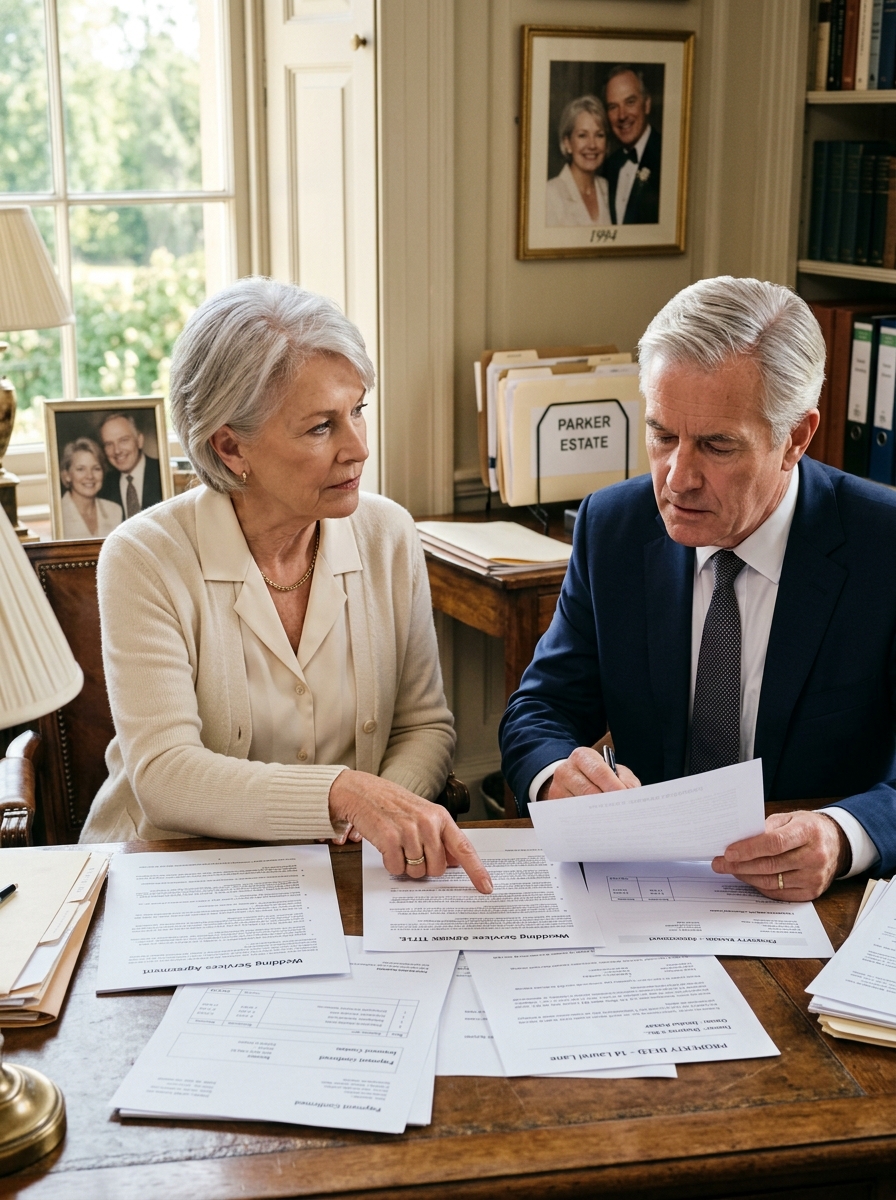
“Denise,” Martin finally said, “everything’s under your name. The contracts, the receipts, the wire transfers. Legally, you were the one hosting this event.”
I gave a bitter laugh. “The host. Turned away from her own party.”
“That’s more than ironic,” he said grimly. “It’s cruel.”
We both knew who we meant.
“What do you want to do?” Martin asked. “We could pursue emotional damages. You’ve got two hundred witnesses.”
I turned from the window. “Martin, what do you think I want? An apology? A check funded by my own money?”
He said nothing.
That’s when the truth crystallized into something I could finally put a name to.
This wasn’t just about humiliation. It was about power.
They had never truly seen me as a mother or grandmother — only as a wallet that never emptied. And when a wallet stops being needed, people snap it shut. Richard had simply shut me out of the wedding so I wouldn’t ruin the pictures.
Memories began surfacing — small slights I’d brushed off over the years, moments that had seemed merely rude at the time.
“Mom, you don’t understand real estate,” Richard had once told me, when I suggested he buy rental property instead of another flashy car.
“Mrs. Parker, this phone’s a bit much,” Susan had said once, all sugary patience, when I asked about the banking app.
Neither of them had a clue that after Robert’s death, I’d managed freight contracts, negotiated with unions, run payroll, tracked operating costs, filed taxes, and handled acquisitions. I’d sold the company five years back for a considerable sum. They assumed my retirement funds were modest. They believed the hundred thousand dollars for Clara’s wedding had cost me dearly.
The truth was far bigger than that.
I understood then that I hadn’t been treated like family in years.
I’d been the agreeable mother. The free babysitter whenever they wanted a night out. The one who wrote checks for tuition. The one who quietly covered Susan’s credit card “just this once.” The one who always stepped in so no one else had to feel uncomfortable.
I wasn’t family.
I was a service.
“Hold onto the wedding file,” I told Martin. “It’s evidence, not ammunition.”
He frowned. “Denise, what’s the plan?”
“Where are Richard and Susan now?”
“Off on their honeymoon, aren’t they? Paris, I believe. Clara mentioned it.”
“Good,” I said. “Let them have their fifteen days.”
Then I walked into Robert’s old office, opened the safe, and pulled out a blue folder.
I set it in front of Martin.
“This,” I said, “is power, rediscovered.”
Inside were two property deeds.
The first was for the apartment Richard and Susan lived in — three bedrooms, a wide balcony, full building amenities, underground parking.
Martin looked up, taken aback. “This is all in your name.”
“Of course. I bought it as an investment. Richard complained rent was too steep and the kids needed space. I let them stay — no lease, no rent, no fees of any kind. I covered it all.”
“And the second deed?”
“The beach house. The one they photograph every summer with those captions about family and gratitude. Also mine.”
I let that settle before continuing.
“And in my garage sits a gray car Richard drives as though it’s his. He calls it his company car. That company used to be mine. I sold the business, but the vehicles stayed registered under me. Insurance, taxes, all of it.”
Martin sat back slowly, studying it all like a general poring over a map.
“Denise Parker,” he said quietly, “what exactly would you like me to do?”
I started pacing, and with every step my thinking sharpened.
“They struck my name from the guest list,” I said. “Now it’s their turn.”
I ticked it off on my fingers.
“First, the apartment. I want a formal eviction notice ready. When they land from Paris, I want it posted on the door. Thirty days to clear out. That’s the legal standard, correct?”
“That’s correct.”
“If it were up to my feelings, I’d give them thirty minutes. But we’ll do this by the book.”
He nodded.
“Second, the beach house. Change the locks. Bring in security. If they attempt entry, treat it as trespassing.”
“Understood.”
“Third, the car. Send a registered letter demanding it back immediately. If they refuse, we escalate.”
I paused, pulled out my phone, and opened the banking app Susan once claimed was too complicated for me.
There it was.
Scheduled transfer: Richard Parker. Four thousand dollars, monthly.
I turned the screen toward Martin.
He let out a low whistle. “You send them four thousand a month?”
“Their allowance, as they call it. Susan doesn’t work — calls herself an influencer. Richard’s salary from that small ad agency barely covers his wardrobe.”
With one calm tap, I canceled it.
The screen flashed.
Scheduled transfer canceled.
“Done,” I said.
Martin sat quietly for a moment. When he finally looked up, there was no pity in his expression — only respect.
“They’re going to hate you, Denise.”
“They already do,” I said. “They’ve just hidden it well because they needed my money. They’re not angry that I was cruel. They’re angry that I’m old. They resent me because I remind them how little security they actually have.”
“And Clara?” he asked gently.
That one still stung.
“She knew I paid for her dress. She knew I got turned away at the door, and she said nothing. She chose the party. She chose her parents. She chose comfort. Now she can live with that choice without my protection.”
I took a steadying breath.
“Martin, we spend our lives watering the trees we plant ourselves. But when one grows twisted and keeps producing nothing but bitterness, eventually you have to admit it’s no longer healthy.”
He closed the blue folder and tucked it into his briefcase.
“I’ll have the notices ready today,” he said. “By the time they land, everything will already be in motion.”
At the door, he hesitated.
“Will you be all right?”
I looked toward Robert’s smiling photo on the wall.
“I’ll be more than all right. Last night I felt like a mistake. Today I feel like a beginning.”
After he left, quiet settled over the house — but it wasn’t the silence of defeat. It was the stillness before a plan takes shape. My son and his wife were somewhere over the Atlantic, sipping champagne, congratulating themselves on outsmarting a sentimental old woman.
They were headed toward the City of Light.
They had no idea that by the time they got home, every comfort in their world would be switching off, one by one.
The following fifteen days were among the strangest and clearest of my life. While Richard and Susan wandered Paris eating cheese, snapping photos, window-shopping past designer storefronts, I was in New York quietly taking apart the framework of privilege they’d mistaken for permanence.
Everything moved carefully and without noise.
Day one, Martin called. “Locks at the beach house are changed. Security’s posted around the clock.”
“Good,” I said. “Send me the bills and new keys.”
Then I handled things myself.
The pink dress still lay where I’d dropped it. I picked it up, took scissors to it, cut it into pieces — not out of rage, exactly, but finality. When I finished, I bagged the scraps and carried them down the service elevator myself.
Then I cleaned house.
I entered the guest room Richard and Susan had taken to calling “their room” whenever they stayed over. I stripped away the pricey sheets Susan had insisted I buy, the plush towels, the decorative candles, the spare throw — all the small touches that had turned my home into an extension of theirs. Some I donated, some I boxed, the rest I put away. By nightfall, the room was simply a room again.
In the living room, I found last Christmas’s framed family photo — Richard beaming with confidence, Susan polished and pleased, Clara leaning toward her mother, and me tucked in the corner, hands folded, worn but grateful just to be included. Studying Susan’s smile in that photo, I recognized it instantly — the same one she’d worn at the wedding entrance.
I put the frame away in a drawer.
In its place, I set out another photo: Robert and me the day we opened Parker Logistics. Younger then, standing in front of the warehouse, grease on our hands, sunlight in our eyes, looking like two people fully prepared to build something out of nothing.
“It’s done, Robert,” I said softly. “The house is clean again.”
A week passed. Then the first of the month arrived.
The day I usually wired Richard his four thousand dollars.
I woke early, brewed a strong pot of coffee, and settled into my armchair as the city stirred around me. Somewhere in Paris, Susan was likely browsing another boutique, sliding her card across the counter with the careless confidence of someone who’d never had to think about where the money came from. Richard was probably at some café, ordering breakfast like the world owed him ease.
I imagined the clerk swiping Susan’s card once, then again.
“Sorry, ma’am. It’s declined.”
I pictured confusion curdling into panic. I pictured Richard’s jaw tightening as his own card failed too — the first fracture in a life quietly propped up by me.
They didn’t call that day.
But by evening, a message landed on the old phone I’d kept just to watch, not to respond.
Mom, are you okay? The transfer didn’t come through. Did something happen?
Not, Mom, are you all right after what happened at the wedding?
Not, Mom, we’re sorry.
Just: Where’s the money?
My fingers itched to type back, to tell him exactly what I thought of that “concern.” But by then I understood something he didn’t.
Silence cuts deeper than words.
So I deleted the message.
While they sat in Paris staring at drained accounts and mounting dread, I kept moving.
Martin called again. “Eviction notice is filed. Posting’s set for the day they land. The vehicle retrieval letter went out to the apartment. The doorman has his instructions.”
Each severed thread made me feel a little lighter.
And something else happened during those days: I began to remember who I was.
I went to the salon and had my hair cut shorter, sleeker — the kind of style Susan once insisted only younger women could pull off. I softened the gray into a light brown that brightened my face without pretending I was thirty again. I went to the mall — not for gifts, not for grandchildren, not to stock a household someone else would enjoy. I bought myself a laptop, then hired a young tutor for private lessons.
“I want to learn all of it,” I told him. “Spreadsheets, investing, banking apps, everything.”
Susan thought I couldn’t handle a phone. Within a week, I’d shifted most of my liquid assets into secure accounts Richard knew nothing about. I opened a new digital account only I could access. In the old account — the one familiar to him — I left just enough to avoid a fuss, and nothing more.
For the first time in years, my money felt safe from family.
The day before Richard and Susan were due home, I did something I hadn’t done in a long while.
I drove myself to the beach house.
It stood exactly where it always had, near the water, quiet and solid under a wide sky. Martin had already couriered the new keys. When I opened the door, the place was still. No trace of Susan’s sweet perfume. No imported beer crammed in the fridge. No sandals scattered by the entrance. No sign of people treating someone else’s property like a backdrop.
It was mine again.
I sat on the porch and watched the water — calm, pale blue, endlessly patient. I cried then, but not from pain. From relief. I cried for the woman who’d let herself be used for so long she mistook exhaustion for love. I cried for Robert, because I’d allowed his son to become the kind of man who could humiliate his own mother in public and still expect his deposit on the first of the month.
“It’s over now, Robert,” I said to the wind. “From here on, I decide what stays and what goes.”
I spent the night there and drove back Sunday morning — the same day their flight was due.
I knew the Paris flight landed in New York that afternoon. Between customs, luggage, and traffic, they’d likely reach the apartment around eight that evening.
I drew a salt bath, changed into silk pajamas, brewed chamomile tea, and settled into my armchair facing the landline.
At 8:15, it rang.
Richard.
I let it ring a few times before answering.
“Hello,” I said, as calmly as I could manage.
The shouting on the other end was so loud I had to hold the receiver away from my ear.
“Mom, what is this? Have you lost your mind? Did you throw us out of the apartment?”
Susan’s voice rose and fell behind him. I waited for the noise to settle.
“Richard,” I said evenly, “lower your voice. I’m not deaf. What are you talking about?”
“There’s a notice on the door. Thirty days. Eviction. Is this some kind of joke?”
“Oh, that,” I said. “No, dear. It’s not a joke. It’s a legal notice.”
“Legal notice? You’re putting your own son on the street?”
“No,” I said. “I’m taking back what’s mine. That apartment belongs to me. You’ll need to find somewhere else.”
A stunned pause followed.
Then he shifted to the softer tone he always used when he wanted something.
“This is about the wedding, isn’t it? Mom, it was a misunderstanding. Susan was overwhelmed. The list got mixed up.”
I cut him off.
“Mixed up? The invitations I paid for? The list I reviewed myself? You looked me in the eye and told me I wasn’t on it. You turned me away from an event I funded.”
“Mom, please—”
“You and your wife made a public spectacle of me. And now I understand something.”
“Understand what?”
“That I don’t have the family I thought I did. I have a son and daughter-in-law who got very comfortable living off my money, in my apartment, driving my car, all while pretending it was respect.”
“That’s not fair,” Susan snapped, seizing the phone. “We love you.”
“You love what I gave you,” I said. “That’s not the same thing.”
Richard grabbed the phone back, panic cracking through the anger now.
“What about the transfer? It stopped. Why?”
“I’m seventy-two, Richard. I have expenses too — medical costs, insurance, life. I need that money for myself.”
“And the car?”
“I need to sell it.”
“That’s my car. I need it for work.”
“Then perhaps your job can support you,” I said. “Besides — thirty days, remember. To leave my apartment.”
That’s when he fully unraveled — threats, insults, legal posturing, even a suggestion that he could claim I wasn’t mentally fit and seize control of my assets.
I laughed, short and dry.
“Go right ahead,” I said. “Good lawyers cost money, and as I mentioned, yours is gone. Martin, on the other hand, is well paid and highly motivated.”
I drew one last breath and spoke as clearly as I ever have.
“You blocked me at that door by mistake, Richard. I’ve blocked you on purpose. Thirty days. The clock started the moment you read that notice. Good night — and welcome home from your honeymoon.”
Then I hung up.
The silence that followed was the most beautiful I’d ever known.
My house no longer felt too large or too empty. It felt exactly the right size for peace.
The phone rang again, and again. I let it. Then I unplugged it.
I slept eight uninterrupted hours that night, without a single dream.
The next morning, sunlight spilled through the windows. I brewed strong coffee, the kind Robert used to joke could raise the dead, and checked the old phone.
Thirty-seven messages.
The early ones pleaded.
Mom, please answer. This was a misunderstanding. Let’s talk.
Then the tone turned.
You’re destroying your son’s life.
Susan’s a wreck.
If something happens to her, that’s on you.
Then came the bargaining.
What will it take to stop this?
Half that apartment is mine by inheritance.
I laughed out loud at that one. Inheritance. I was very much alive.
I deleted them all, grabbed my bag, and left for computer class.
While I sat learning Excel and discovering, with quiet pride, that I had a real knack for it, Richard decided to prove he still held some power. He dressed in one of the fine suits my money had bought, went down to the garage, and tried driving off in the gray car I’d already reclaimed on paper.
What he hadn’t counted on was a doorman with orders.
Mr. George was posted by the booth as Richard approached.
“Morning, Mr. Richard. Welcome back,” he said politely.
“Morning. Open the gate. I’m running late.”
Richard clicked the fob. The car beeped. The gate stayed shut.
“George,” Richard said, sharper now, “open the gate.”
George stepped forward, clearly uneasy but resolute.
“I’m sorry, sir, but I have direct instructions from the owner, Mrs. Denise Parker. This vehicle is listed for recovery. Insurance has been informed. Any attempt to remove it without authorization has to be reported.”
Richard froze.
“What are you talking about?”
“The car isn’t registered to you, sir.”
I heard the rest later from Martha, my neighbor, who’d been walking her terrier across the street and caught the whole thing.
Susan, she said, came rushing down in oversized sunglasses, hurling every polished insult she could muster at George. Richard flushed red, yanked the child seat from the back, tossed some belongings onto the garage floor, and stormed off to flag a cab.
Public humiliation.
Not on the scale of what they’d done to me at the wedding, but visible enough to leave a mark.
That same afternoon, Susan hit her own wall. She tried to order lunch. Card declined. Tried another. Declined. Then Richard’s. Same result.
The four thousand dollars I’d wired every month hadn’t been extra spending money. It had been the floor beneath their entire lifestyle.
And I’d pulled it out from under them.
No spending. No car. No reaching me. So eventually, they came looking.
That afternoon, laptop in my tote, I left my computer lesson and reached my building’s entrance to find them waiting.
Richard and Susan looked nothing like the polished pair from the wedding.
Susan’s hair was a mess, her makeup smeared. Richard’s face was twisted with an anger so raw it almost made him unrecognizable.
“Mom!” he called, rushing toward me.
I stopped where I stood. Patrick, my doorman, straightened instantly, ready to step in, but I waved him off.
“Richard. Susan. What a surprise.”
“Open the door,” Richard snapped. “We need to talk.”
He reached for my arm. I stepped back.
“I have nothing to say to you, and you’re not coming into my home.”
“You can’t do this. I’m your son. I live here.”
“No, Richard. You’ve lived in my apartment for ten years without paying a cent. That’s a very different thing.”
Susan stepped forward, hands clasped for effect.
“Mrs. Denise, please, don’t be so harsh. We were wrong. We’re sorry. It was the receptionist’s mistake — she mixed up the list.”
I looked her dead in the eye.
“Susan, that act is beneath even you. You checked that list yourself. You watched my son turn me away, and you smiled while it happened.”
Her face went pale.
Richard shifted tactics again, this time toward threats.
“You’re going to regret this. You’re old. You’re confused. I’ll take this to court. I’ll prove you can’t handle your own finances.”
I looked at the man I’d once carried inside my own body, raised with my own two hands.
Then I laughed.
“Confused, Richard? Let me show you something.”
I pulled out my phone, opened the banking app, and held the screen up.
“See this? The same app Susan called too complicated for me. This morning I bought shares in two major companies and rebalanced an investment account. What exactly did you accomplish today besides trying to scare an old woman?”
My voice no longer sounded frail, even to my own ears. It sounded precise.
“You want to sue me? Go ahead. But lawsuits cost money, and you have none. And since you’re so worried about my mental state, you should know I already underwent a full professional evaluation last week. Martin has the paperwork. Any judge who reads it will see exactly what this is.”
Richard’s face drained of color.
They’d forgotten who I was.
They thought I was simply a tap they could open whenever cash ran low. They’d forgotten who installed the plumbing.
I looked between them.
“That three-bedroom apartment you’re clinging to, the car you’re chasing, the monthly allowance you counted on — none of that touched my actual fortune. It was barely a drop.”
Neither spoke.
“You assumed I sold Robert’s company and lived off some modest retirement fund? I sold the trucking side, yes — but I kept the warehouses. Six of them. One leased to Amazon. One to FedEx. One to a pharmaceutical company. Do you have any idea what that rent brings in each month?”
Silence.
“The hundred thousand dollars for Clara’s wedding?” I said. “That’s roughly what I pay in property taxes each year. I gave it out of love. You threw it back at me.”
Susan’s mouth fell open slightly. Richard aged a decade in the span of ten seconds.
“You underestimated me,” I said. “That was your biggest mistake.”
Then I turned to Patrick.
“Please call security. They’re not welcome here.”
“Wait, Mom—” Richard shouted, panic now overtaking him.
I looked back with the calm I’d earned the hard way.
“Don’t call me that. You lost that right at the wedding entrance.”
Then I walked through the glass doors of my building without a backward glance.
As the elevator climbed, my phone rang. Unknown number.
I answered.
“Hello, Grandma,” Clara said, her voice shaking.
For one brief, aching moment, my heart softened.
“Clara,” I said. “What a surprise. How was Paris? Was the wedding beautiful?”
She began to cry.
“Grandma, what’s going on? Mom and Dad said you’ve lost your mind and threw them out of their home.”
I closed my eyes.
“I haven’t lost my mind, Clara. I’ve never seen things more clearly. I’m simply taking back what’s mine.”
“But is this about the wedding?” she asked. “I swear I didn’t understand what was happening. It all moved so fast. I was so nervous.”
“You didn’t understand?” I echoed softly. “You didn’t notice your grandmother — the one who practically raised you while your parents were busy elsewhere — was missing from your own ceremony? You didn’t see the empty chair up front?”
Her breath caught.
“I was humiliated in front of two hundred people, Clara. Your father turned me away like I was nobody. You stood there and got married anyway. Then you spent fifteen days in Paris and never once called to check if I was all right.”
She was sobbing openly now.
“Grandma, please—”
“You’re only calling now because your parents ran out of money,” I said. “That’s the truth of it.”
Silence.
Then a small, fractured sound down the line.
“Your parents made their choices,” I said, more gently now. “And your silence made yours. I still love you, Clara. But the version of me who paid for everything and put up with everything — she ended at your wedding door.”
Then I ended the call.
The elevator opened.
Stepping back into my apartment, I understood the balance of power hadn’t just shifted. It had been permanently reset.
The thirty days I’d given Richard and Susan flew by for me, and — I suspect — dragged like a slow-motion collapse for them.
Eventually they stopped calling. Apparently they’d found a lawyer willing to hear them out, though not, ultimately, one willing to entertain their delusions.
Martin called one afternoon, chuckling under his breath.
“Just got a call from a colleague,” he said. “Richard and Susan wanted him to negotiate a settlement.”
“What did you say?”
“That Denise Parker doesn’t negotiate with people who humiliate her publicly and then expect comfort. There’s only one deal on the table: hand over the keys by day thirty, or face formal eviction.”
“And?”
“He went very quiet. I think they left out a few key details.”
“They always do,” I said.
“And the car’s been returned. Richard had it towed straight to my office garage.”
I smiled. “At least he followed proper procedure this once.”
On day thirty, a courier delivered a brown envelope.
Inside were the apartment keys and the beach house keys.
No note. No apology. No explanation. Just surrender.
Holding them in my palm, I didn’t feel triumph exactly — I felt clarity. The weight of the metal. The weight of consequence.
Martha, my neighbor with the sharpest unofficial gossip network on the Upper West Side, told me Richard and Susan couldn’t afford a hotel for long and ended up in a cramped one-bedroom rental in the suburbs, financed by a loan Richard barely qualified for. Susan, who’d once curated her social feed with designer bags and sponsored brunches, was quietly selling off the accessories she used to flaunt as proof of status.
Neither of them learned remorse — I don’t think it was in their nature. What they learned was dependency. They learned the money they worshipped had never truly been theirs. Once it stopped flowing, the whole performance of confidence crumbled.
Richard started taking the bus. Susan began shopping at discount stores.
But the real transformation wasn’t in them.
It was in me.
I sold the apartment within a week, for more than I expected. This time, I didn’t let the proceeds sit idle. Drawing on everything I’d sharpened in those computer lessons, I started investing more actively — not carelessly, Robert would never have forgiven that, but deliberately, with structure and room to grow.
I enrolled in the Italian class I’d always wanted to take.
“Buongiorno,” my teacher Lorenzo would greet me every Thursday evening with a grin, and I’d answer back, proving to myself that reinvention has no expiration date.
I also revived another dream — one Robert and I had once discussed in our early years, back when the business was thriving and weekends were still ours. We’d wanted to open a small rescue for abandoned dogs and cats, somewhere clean and simple where unwanted creatures could finally be safe.
With part of the money from the apartment sale, I purchased a modest plot of land outside the city and began construction. Martin handled the legal work free of charge, calling it the most meaningful case he’d taken on in years.
My home, once so silent it echoed, slowly filled with new life — new routines, new purpose. Neighbors who once regarded me with polite widow’s pity now looked at me with something closer to admiration.
One afternoon in the elevator, Martha squeezed my hand and said, “Denise, you didn’t just do this for yourself. You did it for every woman who’s ever been told to stay quiet.”
I smiled, though the truth was more personal than that.
I’d done it for myself.
But sometimes, when a woman finally refuses to fade away, other women take notice.
As for Clara, that wound took much longer to close.
She didn’t call again for almost two months.
Then one afternoon, the doorbell rang.
I checked the peephole and felt my chest tighten.
It was her.
She looked thinner, smaller somehow. No designer clothes, no bridal glow, no matching luggage at her feet — just jeans, a T-shirt, and the hollow, shellshocked expression of someone who’d learned too late how quickly appearances can fall apart.
I opened the door.
We stood there looking at each other for a long moment.
Then she broke down.
“Grandma,” she whispered.
“Come in, Clara.”
She sat on the very sofa where her parents had once asked me to fund a wedding.
“Grandma,” she said, once she’d steadied herself, “I’m divorced.”
I wasn’t surprised.
“What happened, sweetheart?”
“Money,” she said. “Once it disappeared, everything changed. Michael… he didn’t marry me for love. He married me because I was Denise Parker’s granddaughter. When he realized Mom and Dad had nothing left, he turned cold. Resentful. He said he wasn’t going to support an entire family with nothing to their name.”
Tears streamed down her face.
And suddenly, the pattern — so familiar and ugly — clicked into place.
I went to the kitchen and made chamomile tea with honey, the way I used to when she was small and had nightmares.
I handed her the cup. Her hands shook around it.
“What about your parents?” I asked.
She stared into the tea.

“They haven’t changed. Mom cries and blames Dad. Dad blames you. Neither one has asked how I’m doing. They only want to know if I’ve talked to you — if I’ve apologized on their behalf.”
She looked up, eyes red, ashamed.
“They don’t regret what happened at the wedding,” she said. “They only regret what they lost afterward.”
I said nothing.
“Grandma,” she whispered, “I know I was wrong. I saw Dad stop you. I did nothing because I was scared — scared of ruining the day, scared Mom would make a scene. I was a coward. And now I understand why you did what you did.”
Her grip on my hand tightened.
“You know, Clara,” I said gently, “women like us are taught from the start to smooth everything over. To keep the peace. To smile through the hurt. To call it dignity when really it’s fear. They tell us that growing older means growing softer and quieter, as if self-respect comes with an expiration date.”
She sat there, listening without a word.
“But dignity doesn’t age,” I said. “It doesn’t fade with gray hair. It doesn’t vanish because someone younger decides you’re inconvenient. What I did wasn’t revenge for its own sake. It was self-protection — because no one else there was willing to protect me.”
Her hand tightened further around mine.
“I have nowhere to go,” she admitted. “Michael told me to leave. I can’t go back to my parents.”
I glanced down the hall, toward the guest room I’d recently restored.
“The room at the end of the hall is still there,” I said. “It’s yours, as long as you’re willing to live honestly in it.”
Clara didn’t slip back into old habits, and neither did I. I didn’t hand her money freely or swoop in to rescue her. Instead, I gave her something harder, something worth more — a place to stay, a computer, internet access, and the expectation that she’d put both to responsible use.
She turned out to have real talent for design. She started picking up freelance work. Slowly, steadily, she began chipping in for utilities and groceries. Nothing dramatic. Nothing loud. Just something far more durable.
Independence.
And that became the last piece of my own transformation.
Not because I’d defeated my son, but because I’d finally stopped abandoning myself just to keep everyone else comfortable.
Today, I manage six warehouses, an animal rescue, and a portfolio I understand better than Richard ever could have imagined. I speak enough Italian to order dinner and hold a light conversation with my teacher. I invest. I travel now and then. I sleep soundly.
Richard and Susan never truly came back into my life. Martin mentioned once that they made a brief, doomed attempt to paint me as neglectful or unstable in a legal claim, but a judge dismissed it almost immediately.
Now they exist only as a faded footnote in a chapter I no longer live in.
When I think back on that night — the pink dress, the pearls, the music drifting through the trees, my own son telling me I didn’t belong — I no longer feel any shame.
I feel gratitude.
Because the moment I was shut out of the wedding I paid for was the very moment I was finally welcomed back into my own life.
And this is one celebration no one will ever again have the power to lock me out of.
