


PART 1
“Take one more step toward my daughter, and by tomorrow the whole neighborhood will know exactly who you really are.”
That’s what I told Rodrigo Salazar at 11:26 p.m., drenched from the rain, standing outside the home of Claudia, my only daughter, in an upscale part of Querétaro where the polished exteriors hid far too many secrets.

Twenty minutes before, I’d been in my garage sanding a cedar chest. The radio played softly, my dog Pancho dozed by the door, and rain drummed on the roof. Then my phone buzzed.
“Blue lantern.”
Then Claudia’s location came through.
My whole body went cold. My daughter hadn’t used those words since she was fourteen, the year her father died of a heart attack at a family lunch. Ever since, she’d carried a fear that something terrible could happen without anyone noticing. We’d built that code together for emergencies: if she couldn’t explain, she’d send “Blue lantern.” It meant: don’t ask questions, just come.
I tried calling her three times. Nothing.
I grabbed my keys and phoned Esteban Morales, an old friend, retired from the state investigative police.
“On my way,” he said.
When I arrived, I found Sofía’s pink bike knocked over near the bushes. Shouting spilled out into the street — not the kind between two people arguing, but the kind from someone who felt he owned another person’s fear. Then I heard Sofía crying.
I pushed the door open without knocking.
The house reeked of tequila, burnt food, and panic.
Claudia stood near the dining table, bent to one side, lip split, hair matted to her face. Sofía, eight years old, hid behind her in dolphin-print pajamas. Rodrigo stood in the kitchen, shirt pristine, glass in hand, like this was all some sophisticated misunderstanding.
“Doña Margarita,” he said, “it’s not what it looks like.”
Liars always assume that line still holds up.
Esteban came in behind me. Sofía ran into my arms and shook against my chest.
“It was just a fight,” Rodrigo insisted. “Claudia gets worked up. You know how she is.”
My daughter wouldn’t meet my eyes. That scared me more than the blood did.
“Did he hit you?” I asked.
Claudia swallowed hard. Before answering, she glanced at Rodrigo.
That glance shattered me.
Rodrigo took a step toward her.
“Don’t start.”
Esteban called from the living room:
“Patrol’s on the way.”
Rodrigo’s expression shifted. Not guilt. Fear — fear that someone might stop taking his word for it.
When the officers arrived, one pulled Claudia aside. I overheard from the hallway:
“Ma’am, I need to know — did your husband hit you tonight?”
Claudia glanced back toward the living room. Rodrigo gave a small, almost invisible shake of his head.
“We both got heated,” she murmured.
Sofía wrapped herself around her mother’s waist as if she were the one holding Claudia together. That’s when it hit me: my granddaughter wasn’t reacting to one bad night. She was behaving like a child who already knew the drill.
At midnight, I brought Claudia and Sofía back to my place. Rodrigo stayed behind since Claudia refused to file a report.
In my kitchen, coffee going cold in her hands, my daughter finally broke down in silence.
“Do you think I’m weak, Mom?”
I looked at the bruise forming along her jaw.
“Surviving isn’t weakness.”
Then she said the thing that gutted me:
“The first time he pushed me, Sofía was three.”
Five years. Five years of living in fear while the rest of us admired family photos.
But the worst part was still coming.
Claudia’s voice dropped.
“He also drained Sofía’s college savings account.”
“How much?”
She didn’t answer. The silence said it for her.
I had no idea what I was about to uncover.
PART 2
At nine the next morning, Esteban showed up with coffee, a yellow folder, and the expression of a man who’d seen far too much. Sofía was still asleep in the guest room. Claudia sat at my table, wrapped in one of my old sweatshirts, lip swollen, carrying shame that was never hers to carry.
“Checked public records,” Esteban said. “Nothing illegal, technically. Just what surfaces when you know where to dig.”
He spread several pages across the table: hotel bookings, wire transfers, luxury purchases, flights to Cancún, a rented apartment in Roma Norte. Rodrigo had spent months insisting they were barely scraping by, that Claudia couldn’t manage money, that even Sofía’s needs were “excessive.” Yet here it all was — restaurant tabs, watches, jewelry.
Then he slid over a photograph.
Rodrigo, arm around an elegant, dark-haired woman, standing on a terrace. She laughed like she’d already claimed my daughter’s place.
“Verónica Paredes,” Esteban said. “Commercial director at a real estate firm. Married.”
Claudia pressed a hand to her mouth.
“I thought I was losing my mind.”
She wasn’t. She’d simply been conditioned to distrust her own perception.
That day, attorney Teresa Villalobos arrived — a family law specialist. She combed through contracts, statements, signed authorizations, Rodrigo’s messages. Each document seemed to peel away another layer of guilt Claudia had been carrying that wasn’t hers.
“This is financial abuse, likely fraud, and coercive control,” Teresa said. “Your husband wasn’t just planning to leave. He was planning to strip you of resources and make you look unstable in the process.”
Claudia dropped her gaze.
“I signed some of it.”
“After arguments. Exhausted. Late at night — am I right?”
My daughter looked up, startled. Teresa wasn’t guessing. She recognized the pattern.
Over the days that followed, Rodrigo cycled through personas. Mornings brought tearful texts: “I lost it, forgive me.” By noon he’d accuse her: “Your mother’s poisoning you against me.” Afternoons, he’d beg to see Sofía. Nights brought threats: “Everyone’s going to find out you’re the crazy one.”
Sofía stopped asking about him. That hurt more than any insult he’d thrown. A child doesn’t stop asking about her father because she’s stopped loving him. She stops when even asking has become frightening.
One afternoon, Claudia showed me a text.
“If you don’t come home, I’m going for full custody. No job, no stability, and your mother’s got you brainwashed.”
Teresa requested screenshots of everything. Esteban brought in a forensic accountant. The whole structure began collapsing: Rodrigo had falsified receipts at his firm, blended tax paperwork with personal loans, and drained nearly all of Sofía’s fund. He’d also assembled a file meant to paint Claudia as an unfit, emotionally unstable mother.
The breaking point came with a hotel bill.
The date lined up exactly with the night Rodrigo claimed he was in Monterrey for an urgent meeting. But the booking showed both his name and Verónica’s. The notes read: “anniversary celebration.”
Claudia let out a dry, humorless laugh.
“While I was apologizing for suspecting him, he was celebrating with her.”
Teresa shut the folder.
“Tomorrow’s the Niños del Bajío Foundation gala. Rodrigo will be there with partners, donors, board members. I’ve already forwarded the evidence to his company’s legal team.”
Claudia paled.
“I don’t want to cause a scene.”
“You won’t be causing anything,” Teresa said. “You’ll just stop shielding his.”
That night, Rodrigo texted: “Show up tomorrow and you’ll regret it.”
Claudia read it and, for the first time in years, her hands stayed steady.
“Then I’m going.”
Advertisement
And nobody could have predicted what would come out in front of everyone at that gala.
PART 3
Rodrigo Salazar walked into the gala still convinced he could salvage his reputation. That’s typical of men used to owning every room they enter: even with the truth already closing in, they believe a smile, a tailored suit, and a drink in hand can set the world right again.
The venue was an upscale hotel in Juriquilla, garden-view windows, white floral arrangements, soft background music. The crowd included business owners, physicians, local officials, women with prominent surnames, and young guests filming content for social media. Everything gleamed a little too brightly — the way places tend to shine when nobody wants to acknowledge what’s actually happening beneath the surface.
Claudia left my house in a simple navy dress, hair pulled back, expression calm. Not happy — resolved. Before we left, she slid off her wedding ring and set it on a clay dish on my dresser.
Neither of us said a word. Sometimes a quiet gesture speaks louder than any speech could.
Inside, Rodrigo stood beside Verónica Paredes. She wore silver and borrowed confidence. Rodrigo made his rounds, backslapping, talking growth, projects, “new opportunities.” But cracks were already showing: two executives avoided eye contact, a woman slipped her phone away as he approached, conversations went quiet whenever he passed.
The truth had beaten us there.
That morning, Teresa had sent over altered invoices, duplicated reimbursements, hotel charges dressed up as business meetings, and personal spending billed to company accounts. A copy had also reached Verónica’s husband, Andrés Luján — a reserved man who, according to Esteban, never raised his voice even when he had every reason to.
At 8:20, Andrés entered the ballroom. He walked straight to Verónica. No shouting — just a stillness that cut through the noise.
“We need to talk. Outside.”
Verónica went pale.
Rodrigo attempted a smile. “Andrés, this isn’t the moment.”
Andrés regarded him with disgust and something like grief. “You used company funds to sleep with my wife for eight months. Any moment works.”
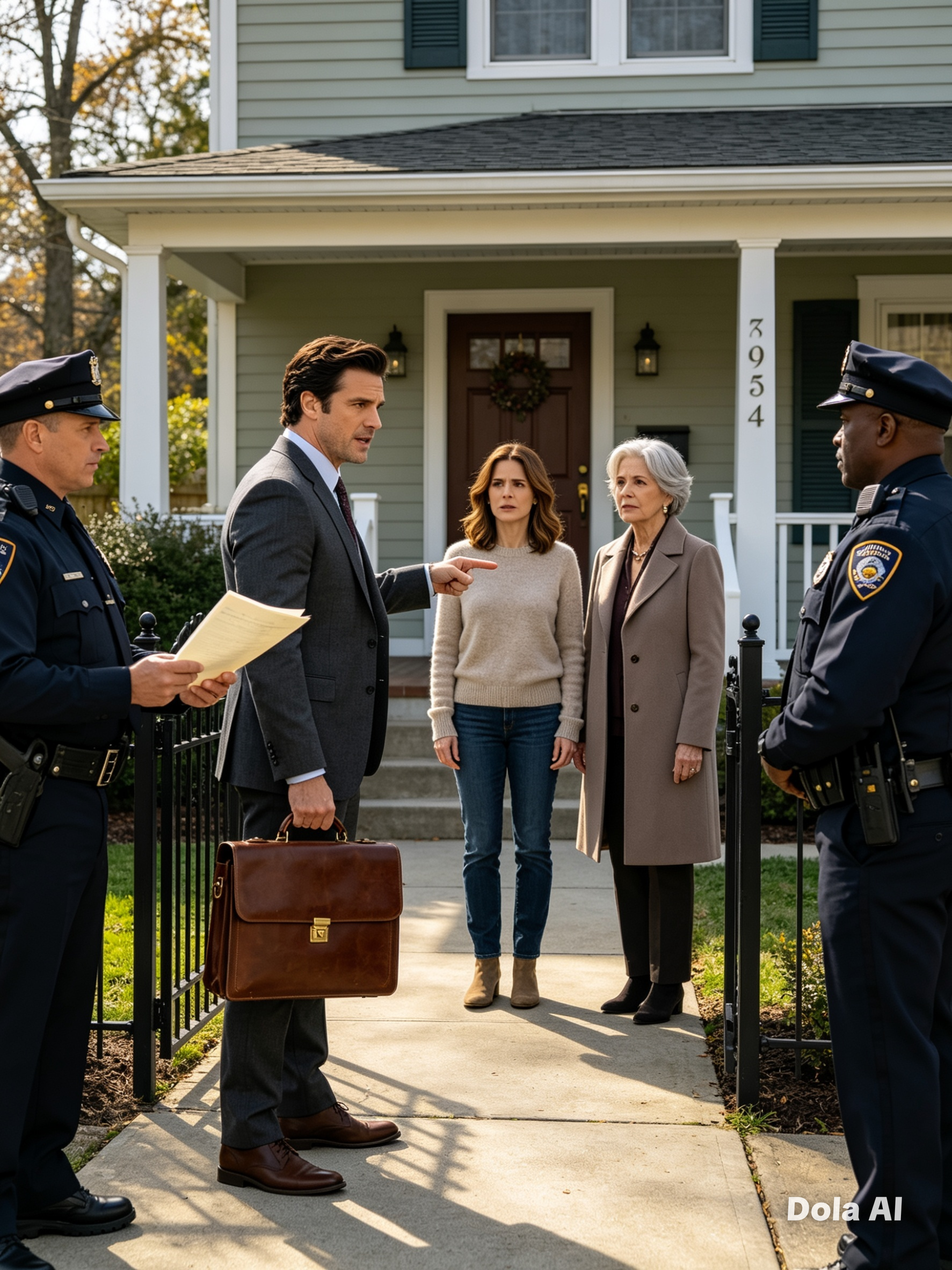
The room went silent. Even a waiter froze mid-step, tray in hand.
Then two men in dark suits entered. Internal audit.
“Mr. Salazar, we need a word in private.”
Rodrigo laughed too loudly.
Advertisement
“Right now?”
“Unauthorized reimbursements. Falsified billing. Misuse of corporate accounts.”
Wealthy, polished people have a fast reflex for distancing themselves the second disgrace starts spreading. No one stepped up to defend him.
Rodrigo spotted us. Me first, with contempt. Then Claudia. That’s when the color drained from his face — because my daughter wasn’t crying, wasn’t pleading, wasn’t shrinking. She stood there, steady, hands calm at her sides.
“Claudia,” he said, moving closer, “tell them this is absurd.”
She said nothing.
“Your mother filled your head with this.”
I felt the urge to speak but held back. This time it wasn’t mine to say.
Rodrigo’s voice climbed. “You always do this! You get emotional, cry, then regret it later. Tell them we just had normal couple problems.”
Claudia looked at him the way someone finally sets down something they’ve carried too long.
“I covered for you for years.”
“Keep your voice down,” he ordered.
That command, said in front of everyone, revealed more than any stack of documents ever could.
Claudia inhaled.
“No. Not anymore.”
Two words. Small. Massive.
Teresa handed the auditors her documents. Rodrigo lunged to grab them, but security intervened.
“You have no idea what you’re doing,” he told Claudia.
“I know exactly what I’m doing. I’m done lying for you.”
Then he made his final, fatal mistake. He pointed at my daughter and shouted:
“She’s sick! She’s always been unstable!”
Nobody moved. Nobody backed him.
That’s when Sofía appeared by the entrance.
She wasn’t supposed to be there. The neighbor watching her had walked her to the lobby because she’d insisted on giving her mom a drawing. The commotion drew them into the ballroom, and Sofía caught the tail end of it.
Rodrigo saw her. “Sofi, sweetheart…”
She didn’t run to him. She ducked behind the neighbor and said, small but unmistakably clear:
“My mom isn’t crazy. You’re the one who makes her cry.”
That landed harder than any audit report.
Claudia dropped to her knees and pulled her daughter close, offering no excuses for anyone, no “your dad didn’t mean it,” no apology for speaking the truth. She simply held her.
Security escorted Rodrigo to a private room. As he passed me, he muttered:
“You destroyed my family.”
I met his eyes, voice level.
“No, Rodrigo. You mistook her for something you owned.”
That night didn’t end with applause. It ended with Claudia trembling in the car, Sofía asleep across her lap, and me driving through wet streets. It ended with a half-asleep little girl asking if her dad was going to yell again. It ended with my daughter’s answer:
“Not here, baby. Not here.”
The months after were rough. No perfect justice, no cinematic closure. There were lawyers, therapy sessions, uncomfortable phone calls, bank statements, custody arrangements, nights Claudia woke up sweating from dreams of Rodrigo walking in uninvited. There were mornings she couldn’t get out of bed, and I’d just keep the coffee going until she finally shuffled out barefoot, face swollen from exhaustion. Healing never moves in a straight line. One day she’d laugh at a cartoon with Sofía; the next she’d break down over an old shirt of his found in a bag. We learned to stop rushing her.
Claudia and I had hard conversations too. One night she apologized for not telling me sooner. I apologized for not pushing harder to ask. Neither answer was perfect. We just came to understand that silence shields the abuser — but it also grows out of fear, not a lack of love.
The company let him go once the falsified reimbursements were confirmed. Andrés filed for divorce. Teresa secured protective orders and launched an effort to recover part of Sofía’s stolen funds. Not everything came back. Money tangled up with fear and coerced signatures returns slowly, sometimes only partially. But Claudia stopped asking permission to live her own life.
She opened a bank account in her name alone. Changed every password. Reconnected with friends Rodrigo used to dismiss as “bad influences.” Landed a part-time job at a children’s art studio. Came home the first day with green paint smudged on her wrist and a tired but genuine smile. I shut myself in the garage and cried for ten minutes straight.
It wasn’t full happiness. It was progress. And sometimes an inch of distance from fear counts as a massive win.
Sofía came back to herself gradually too. First, she started singing in the shower again. Then she stopped hiding her drawings. Eventually she began sleeping with her door open.
“I like hearing the house,” she told me one morning.
I nodded like that sentence hadn’t cracked something open in my chest.
The house had dependable sounds now: coffee brewing, Pancho snoring, Claudia laughing quietly, Sofía pouring cereal, rain tapping the windows without anyone mistaking it for footsteps closing in.
One Saturday in July, Claudia dug up an old Christmas photo. Rodrigo, smiling, arm around them both. At a glance, it looked like a happy family. But now I could see my daughter’s rigid shoulders, Sofía’s fist clenched in her dress, the polite smile that never touched her eyes.
“I hate this picture,” Claudia said.
“So don’t keep it.”
She looked at me like the option had genuinely never occurred to her. Then she walked outside and dropped the frame straight into the trash bin. No speech. Just the flat crack of glass against plastic. Healing sometimes arrives exactly like that — no fanfare, no witnesses, almost soundless.
One August afternoon, Rodrigo called from an unknown number. I picked up without thinking.
“Doña Margarita,” he said.
His voice sounded smaller now, worn thin.
“I need to talk to Claudia.”
I glanced out at the patio. Sofía was practicing on her bike without training wheels. Claudia sat on the steps, pretending to read but really tracking every wobble with a watchful smile.
“She doesn’t want to talk to you.”
Silence.
“I lost everything.”
“You lost what you were exploiting. Not the same thing.”
“I loved her.”
Advertisement
Maybe that part was true. That’s the uncomfortable truth these revenge stories tend to skip: some people love in a selfish, consuming, harmful way. But labeling a need as “love” doesn’t turn damage into care.
“Maybe,” I said. “But your love never gave Sofía back the nights she spent listening to her mother cry.”
He exhaled.
“Tell her I’m sorry.”
“No. If you ever manage to apologize without a middleman, you’ll say it to her face — and accept that she might not want to hear it.”
Claudia glanced up. She already knew who it was. I walked over and asked with a look. She glanced at Sofía, then shook her head.
I hung up.
“What did he want?” she asked.
I told her most of it. Not all of it. Not every sentence deserves to become baggage for someone learning to let go.
She took it in calmly.
“I don’t hate him,” she said finally.
That caught me off guard.
“I don’t forgive him either. I just don’t want to keep hauling him around with me every day.”
That’s when I realized my daughter had drifted further from Rodrigo than ever — not because she’d raised her voice louder, but because she no longer needed to prove anything to him.
That evening, Sofía and I sat on the curb eating mango popsicles as the sky turned orange. Her knees were scraped from the bike, but she was grinning like she’d just conquered the world.
“Abuela, were you a hero in the Army?”
I smiled. Thirty years in uniform teaches you plenty, but not how to explain to a child that rescuing someone rarely looks the way it does in movies.
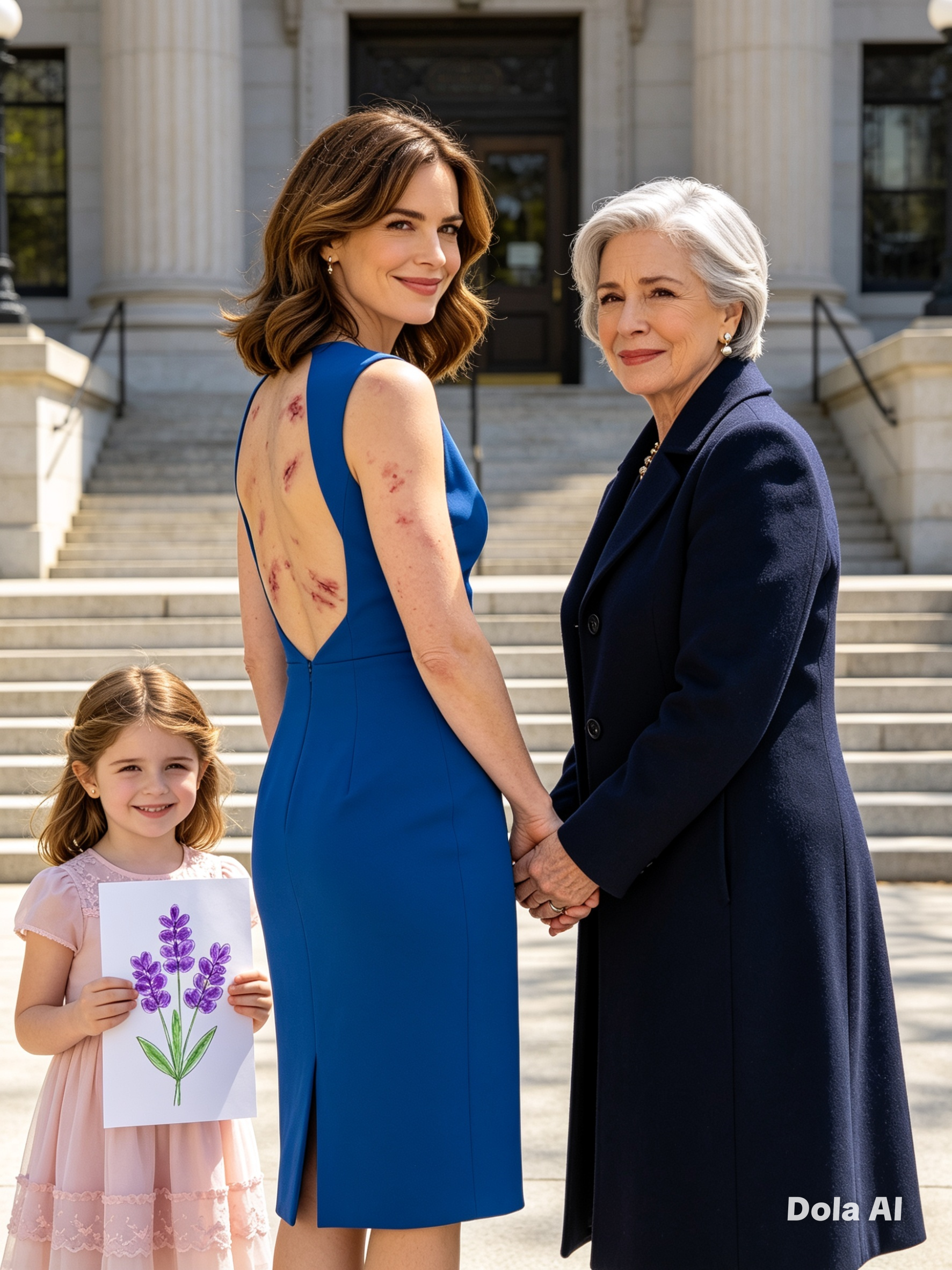
“Not quite how you’re picturing it, sweetheart.”
“But Mom says you saved us.”
I looked toward the lit-up house. Claudia was on the phone with Teresa, her voice no longer edged with fear but pointed toward what came next. Pancho barked at nothing in particular.
“Sometimes heroes are just people who show up when someone scared asks for help,” I told her.
Later, once everyone was asleep, I sat alone with coffee gone lukewarm. The house was quiet, but it wasn’t the kind of quiet that used to hide wounds. It was quiet that had been earned.
I thought about all the signs I hadn’t pushed hard enough to see: canceled dinners, apologies over nothing, Sofía freezing up whenever Rodrigo walked into a room. I thought about how many families label as “relationship problems” what’s actually fear, administered carefully, in small doses.
If this story reaches someone who recognizes that particular silence, let it mean something. Ask. Call. Show up. Don’t wait until someone you love has to invent a secret code just to ask for help.
Because sometimes what separates a home from a prison isn’t the walls — it’s who’s too afraid to speak inside them. And sometimes saving someone doesn’t require constant bravery. It just takes believing them the moment they finally say: come.
Disclaimer: This content may be created by AI for entertainment purposes. Any resemblance to real persons, events, or places is coincidental.
