


The days that followed felt unreal.
For three years, Room 412 had been a place of mourning — a space where hope slowly decayed beneath fluorescent lights and whispered condolences.
Now it overflowed with life.
Doctors came and went constantly, running scans, tests, neurological evaluations. Specialists from other hospitals requested access to Sofia’s records. The medical staff spoke in stunned, cautious tones, unable to explain what they were witnessing.
Every result contradicted logic.
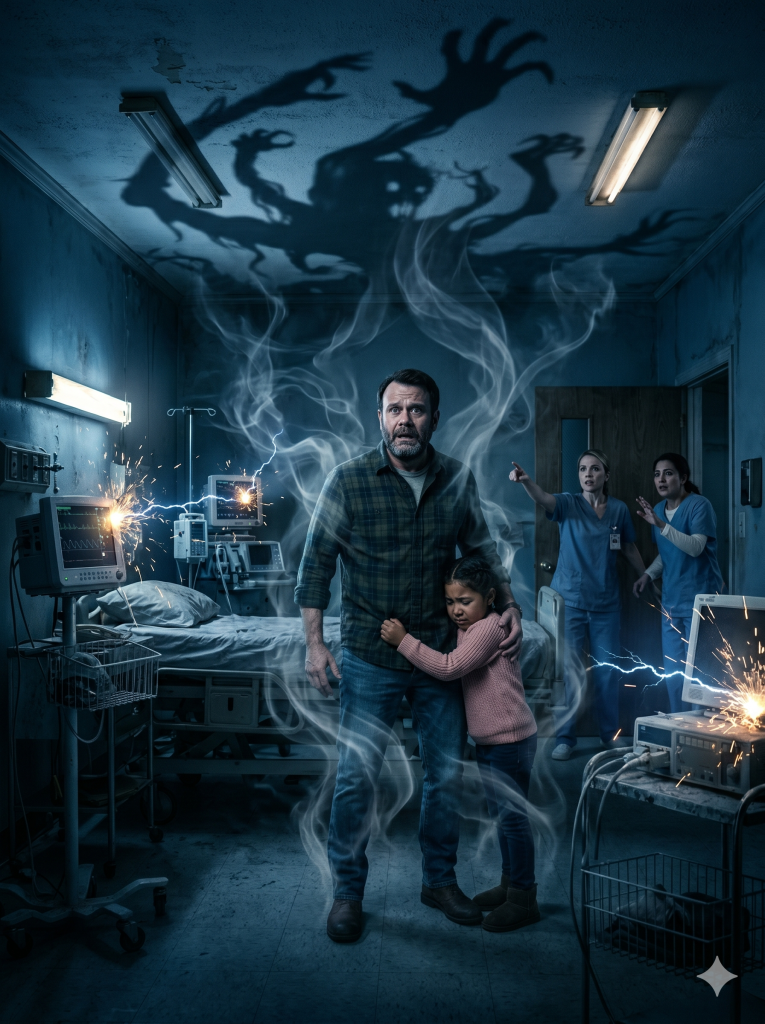
Sofia’s brain activity had returned not gradually, but almost instantly. Damaged neural pathways appeared active again. Her organs, once failing, stabilized within hours.
The senior neurologist eventually stopped pretending science had answers.
“I don’t understand it,” he admitted quietly to Michael on the third morning. “But your daughter is recovering.”
Recovering.
The word felt sacred.
Michael barely left the hospital room except to shower and change clothes. Every few minutes he found himself glancing toward Sofia just to make sure she was truly awake.
Sometimes he still panicked when she slept too long.
But then she would stir and groan dramatically.
“Daddy, you’re staring again.”
And he would laugh like a man rediscovering oxygen.
Daniel, however, remained a mystery.
The boy refused medical examinations. The moment doctors approached him with questions, he became guarded and distant.
So Michael stopped pushing.
Instead, he brought him food.
Warm clothes.
Shoes that actually fit.
The first time Daniel saw the neatly folded sneakers beside the hospital couch, he stared at them as though they belonged to someone else.
“You don’t have to keep buying me things,” he said softly.
Michael looked up from the coffee in his hands.
“Yes,” he replied firmly, “I do.”
Daniel frowned faintly. “Why?”
Because Michael knew guilt when he saw it.
The child carried it everywhere.
“You spent your whole life surviving alone,” Michael said quietly. “Someone should’ve taken care of you a long time ago.”
Daniel looked away immediately, uncomfortable with kindness.
That broke Michael’s heart more than anything.
Sofia adapted to Daniel’s presence effortlessly.
Children accepted miracles more easily than adults.
By the end of the week, she had already decided several important facts:
Daniel was family.
Daniel hated oatmeal.
Daniel smiled more when people weren’t looking directly at him.
And Daniel had nightmares.
That last discovery happened around two in the morning.
Michael had fallen asleep in the chair beside Sofia’s bed when he heard muffled sounds from the small adjoining room the hospital had provided for Daniel.
At first he thought the boy was crying.
Then he heard pleading.
“No… please… I brought her back…”
Michael was on his feet instantly.
He opened the door to find Daniel thrashing violently beneath the blankets, sweat soaking his hair despite the cold room.
“They’re angry,” the boy whispered in his sleep. “I didn’t mean to leave them there…”
Michael crossed the room quickly and knelt beside him.
“Daniel.”
The child jerked awake with a gasp.
For one terrified second, Daniel looked around wildly like someone expecting monsters in the dark.
Then he recognized Michael.
The fear didn’t disappear completely.
But it softened.
“You’re safe,” Michael said gently.
Daniel lowered his eyes.
“Sorry.”
“You don’t apologize for nightmares.”
Daniel hugged his knees silently.
Michael hesitated before sitting beside him on the edge of the bed.
“I used to have them too,” he admitted.
Daniel looked surprised.
“About Sofia?”
Michael nodded slowly.
“Every night after the accident.” His jaw tightened. “Sometimes I’d wake up hearing the crash all over again.”
Rain.
Twisted metal.
His daughter screaming.
The memories still lived inside him like buried glass.
Daniel studied him quietly.
“You blamed yourself.”
Michael let out a bitter laugh. “I still do.”
The boy shook his head.
“But she doesn’t.”
Michael frowned.
“What do you mean?”
Daniel’s expression turned distant again, as though listening to something far away.
“In the dark place… people carry feelings.” He looked toward Sofia’s sleeping room beyond the wall. “She never blamed you. She was just scared you’d stop talking to her.”
Michael’s throat closed painfully.
Three years.
Three years wondering whether his words reached her.
And somehow they had.
“She heard me the whole time?” he whispered.
Daniel nodded once.
Michael covered his eyes briefly, overcome again.
“You saved both of us,” he said hoarsely.
Daniel became very still.
“No,” he whispered after a moment. “You saved her.”
Michael looked confused.
Daniel glanced toward the doorway.
“Most people let go.”
The words landed heavily.
“They stop visiting,” Daniel continued softly. “They stop talking. Some get tired. Some are too hurt. But you stayed.”
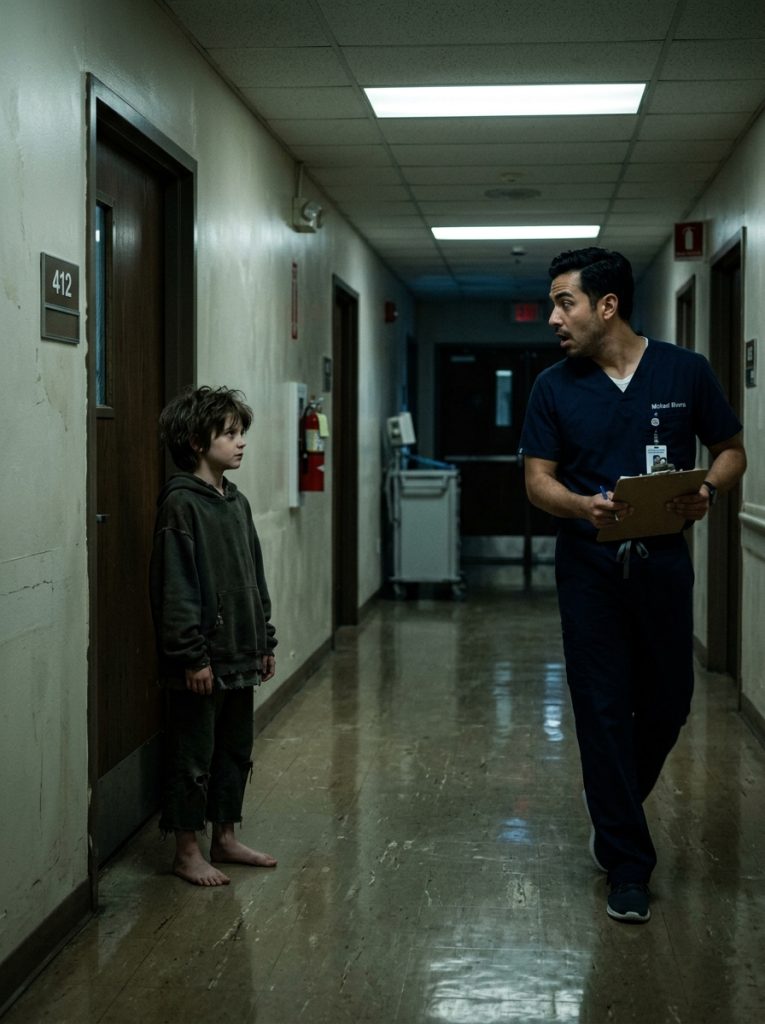
Michael swallowed hard.
“I almost gave up.”
“But you didn’t.”
Silence settled between them.
Not awkward.
Just honest.
Then, very quietly, Daniel asked, “What was her mom like?”
Michael blinked.
No one had asked about Elena in a long time.
The mention of her still carried an ache sharp enough to steal breath.
“She was…” He smiled faintly despite himself. “Impossible.”
Daniel tilted his head.
“She sang constantly even though she couldn’t stay on key. She adopted every stray animal she found. She once spent two hours crying over a pigeon with an injured wing.”
A tiny smile appeared on Daniel’s face.
“She sounds nice.”
“She was.” Michael’s eyes grew distant. “Sofia has her laugh.”
Daniel looked down at his hands.
“I don’t really remember my mom’s voice anymore.”
The confession was so quiet Michael almost missed it.
Pain moved through him instantly.
No child should lose memories that early.
Without thinking, he reached over and squeezed Daniel’s shoulder.
“You won’t lose it forever,” he said softly. “Not if someone keeps saying her name.”
Daniel stared at him.
Then, unexpectedly, tears filled his eyes.
He turned away quickly, embarrassed.
Michael pretended not to notice.
The next morning, Sofia demanded pancakes.
The neurologist nearly fainted from excitement because appetite was an excellent sign of neurological recovery.
Michael would have bought the entire hospital kitchen if she asked.
By afternoon, Sofia was sitting upright in bed surrounded by coloring books, stuffed animals, and enough balloons to terrify hospital administrators.
Daniel sat cross-legged on the floor nearby, quietly helping her build crooked paper cranes.
“You fold them wrong,” Sofia informed him seriously.
Daniel looked offended. “There is no wrong way.”
“Yes there is.”
“No there isn’t.”
“You made yours look like a potato.”
Michael watched them from the window, smiling for what felt like the first genuine time in years.
Then Sofia looked up suddenly.
“Daddy?”
“Yeah?”
“Can Daniel live with us forever?”
The room went silent.
Daniel froze instantly, eyes fixed on the paper in his hands.
Michael looked at the boy.
Really looked at him.
At the constant readiness to run.
At the caution whenever adults raised their voices nearby.
At the instinct to apologize for existing.
Something inside Michael shifted permanently.
“You know,” he said slowly, “I was thinking the exact same thing.”
Daniel’s head snapped upward.
Michael crouched beside him.
“I don’t know everything about this world,” he admitted quietly. “And honestly, after last week, I’m not sure I understand anything anymore.” A faint smile touched his face. “But I do know one thing.”
Daniel stared at him silently.
“No kid should ever feel unwanted.”
Emotion flickered across Daniel’s face so quickly it almost hurt to witness.
Hope.
Fear.
Disbelief.
“All this,” Daniel whispered, glancing around the hospital room, “it won’t disappear?”
“No.”
“You mean that?”
Michael answered without hesitation.
“Yes.”
Daniel’s lips trembled slightly.
Nobody spoke for several seconds.
Then Sofia grinned brightly from the bed.
“Good. Because you’re already my brother and I don’t want to redo introductions.”
Daniel laughed.
A real laugh this time.
Not cautious.
Not guarded.
Just a child laughing because someone wanted him there.
And the sound changed the room completely.
Weeks later, on the day Sofia was finally discharged, nearly the entire hospital staff gathered near the entrance.
Nurses hugged her carefully.
Doctors shook their heads in amazement.
The neurologist pulled Michael aside before they left.
“I spent thirty years believing medicine explained everything,” he admitted quietly. “Now I’m not so sure.”
Michael glanced toward Sofia and Daniel waiting nearby.
Neither child noticed the attention they drew.
Sofia was teaching Daniel how to properly wave goodbye “like royalty.”
Michael smiled faintly.
“Maybe some things aren’t meant to be explained.”
Outside, sunlight spilled across the hospital steps.
Fresh air.
Life.
Movement.
Things Michael once thought he might never experience again beside his daughter.
Sofia reached for one of his hands.
Daniel hesitated only briefly before taking the other.
For a moment, Michael simply stood there between them.
The weight of grief that had crushed him for years hadn’t vanished completely.
Maybe it never would.
But now something else existed beside it.
Hope.
Warm and terrifying and alive.
As they walked toward the waiting car together, Sofia looked up at the sky thoughtfully.
“The dark place feels far away now,” she said softly.
Daniel nodded.
“It is.”
Michael squeezed both their hands tighter.
And for the first time since the storm that nearly destroyed his life, the future no longer felt like something to survive.
It felt like something worth reaching for.
