

I WAS ALREADY DRESSED FOR DINNER WHEN MY SON SENT TWO TEXTS IN UNDER A MINUTE
I was already dressed for dinner when my son sent two messages within less than a minute.
I was already dressed for dinner when my son sent two texts in under a minute—first saying plans at the new townhouse had shifted, and then the truth: I had not been invited at all because his wife didn’t want me there. That was the instant I stopped confusing usefulness with love. I opened the folder holding years of checks, tuition, insurance, mortgage support, club dues, and “temporary” emergencies, contacted the bank, and quietly froze 174 recurring payments before dawn. No arguments. No family scenes. Just signatures, revoked access, and one elderly woman discovering exactly how much of her son’s world still depended on her consent. By the time declined-charge alerts began and their calls turned frantic, I was back in my own kitchen with a proper teacup in hand—right before I heard tires in the driveway and saw my daughter-in-law arrive with backup…
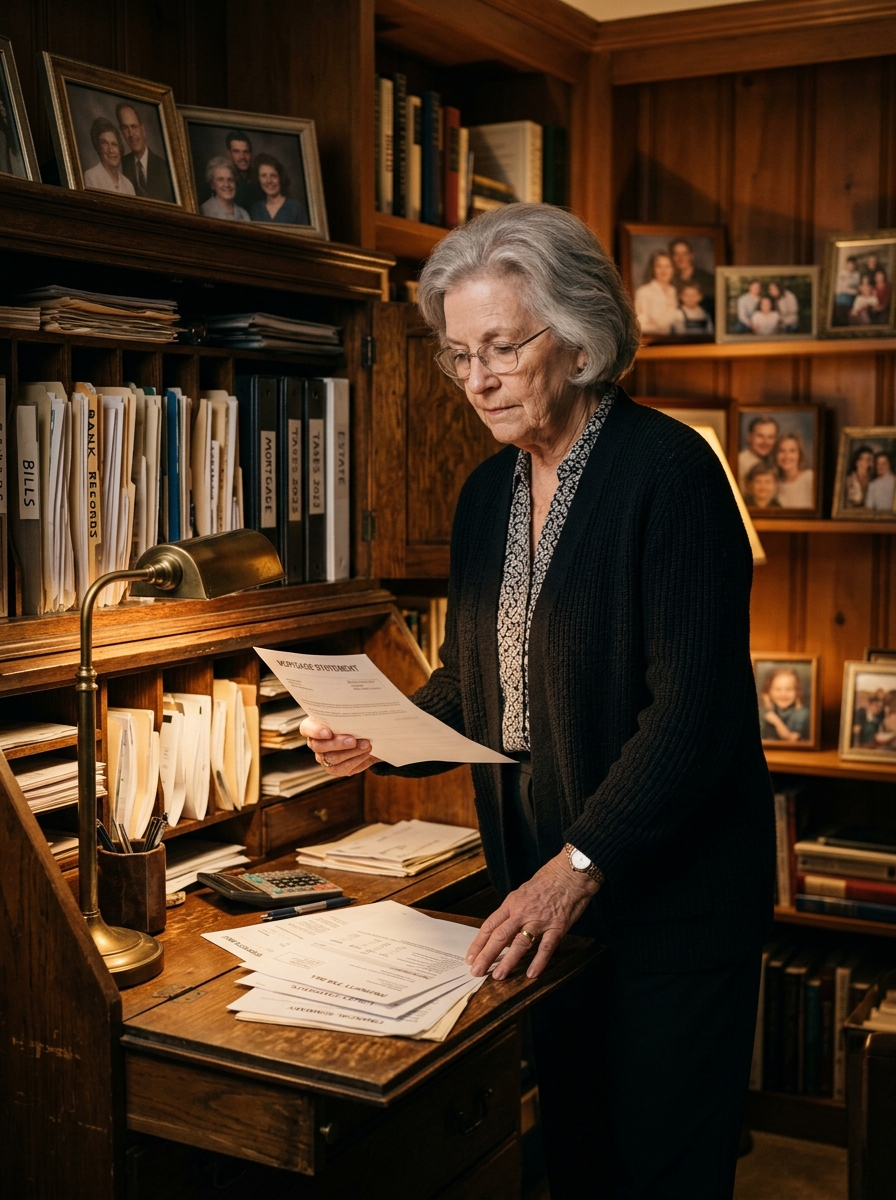
I smoothed the navy dress for the third time and told myself to stop fussing.
It was the kind of dress I wore to family dinners: proper, subdued, careful. Not polished enough for Marissa to offer one of her thin smiles and say, “Well, somebody got fancy,” but not so plain that I looked like I had given up on myself. At seventy-seven, I had stopped following fashion years ago. Still, I believed in showing up neatly where I was expected.
Garrett had said dinner was at seven. I still had an hour.
The house sat in deep stillness, the kind old homes settle into at dusk, as if listening. Rain tapped softly against the porch rail. The grandfather clock in the hall ticked with the same patient rhythm it had kept for thirty years. On the mantel, James smiled at me from a silver frame in the tuxedo he wore at our fiftieth anniversary. Beside it was Garrett at six, grinning with missing front teeth, holding up a fishing line with a tiny bluegill like he had conquered the world.
I looked at James’s photograph longer than usual.
“What would you say?” I murmured.
I already knew.
James had been steady in our marriage. Kind, but never weak in the wrong places. He used to say there was a difference between helping people and teaching them to lean so heavily they forget how to stand. I had always resented that when it came to Garrett. It felt too sharp, too harsh, too much like a future I refused to accept.
Fifteen years after James’s death, I still spoke to him in my mind. Widowhood does that. You keep a marriage alive in silence.
My phone buzzed on the side table.
I smiled faintly and reached for my glasses. Garrett, likely confirming directions. Or asking me to come early to help set the table. He had sounded almost like a boy again the day before.
“Mom, you have to be there,” he had said. “It’s important. We’ve got a special announcement.”
I opened the message.
Mom, plans changed. Marissa is having some coworkers over. We’ll do family dinner another night.
I read it twice. Then a third time.
My smile faded.
Something about it felt immediately off. Garrett had insisted I come. He had called twice to make sure I remembered. He had even joked about bringing the pecan pie I only made for holidays. Why would Marissa suddenly plan coworkers the same night?
Before I could respond, the phone buzzed again.
You weren’t invited to dinner. My wife doesn’t want you there.
For a moment, I genuinely thought I had misread it. The words sat there with such bluntness they almost felt unreal, like a cruel joke. Then my heart dropped sharply, the way it does when your foot misses a step in the dark.
May you like
My Groom Replaced Me While I Was Saving A Child’s Life—And His Entire Family Laughed As They Blocked Me From My Own Wedding. They Told Me He Had Married Another Woman 010
At My Sister-in-Law’s Wedding, My Husband Told the Staff, “She’s Just the Driver” — Then I Handed Them a Gift They’ll Never Forget 010
They mocked my mother as a beggar and threw her out of the bank—less than 24 hours later, I came back for the surveillance footage as the man who slapped her realized I owned the power he feared. 010
I lowered myself slowly into the armchair beside the lamp, still holding the phone.
The room was unchanged. The rain was unchanged. James still smiled from the mantel. Yet everything in my life had shifted slightly, and at my age even a small shift is enough to unbalance you.
I stared at Garrett’s name on the screen.
Not confusion. Not error. Not a mistake.
My son.
My own son.
Memory arrived all at once the way pain does. Garrett at five, feverish against my shoulder while I sat upright all night so he could breathe easier. Garrett at sixteen, heartbroken, asking if something was wrong with him. Garrett at thirty, bringing Marissa home, proud and hopeful, and me telling myself I would love whoever made that look appear in his eyes.
And now this.
You weren’t invited.
My wife doesn’t want you there.
I looked across at the glossy brochure still on the coffee table from River Ridge Estates, the riverside development where Garrett and Marissa had bought their townhouse six months earlier. The cover showed white trim, brick walkways, flower boxes, and soft blue water in the distance like a promise.
A promise I had helped fund.
I picked up the brochure, turned it over, and saw again Garrett walking me through it before closing—kitchen island, guest suite, patio facing the river.
“Mom, it’s perfect,” he had said. “For us, but for you too. Holidays, Sunday dinners, birthdays. We’ll finally have enough room for everybody.”
For you too.
I let out a quiet laugh that wasn’t mine.
Then I stood.
There was a secretary desk in the dining room that had belonged to my mother. After James died, I became obsessively organized. Paper was easier than grief. Receipts easier than silence. Inside were labeled folders: taxes, insurance, estate papers, medical files, donations, property records, church contributions.
The thickest was marked GARRETT.
I pulled it out.
The clasp opened sharply. Checks, statements, wire confirmations, tuition notices, bills, authorizations. Years of support arranged neatly.
A $20,000 cashier’s check from eight years ago for a failed franchise.
Roof repairs.
Real-estate licensing courses.
Two semesters of college tuition.
Insurance drafts.
Tennis lessons.
A florist bill for a charity event.
A down payment for the townhouse.
My hand rested there.
A woman can spend years mistaking usefulness for love.
That thought came clean and unforgiving.
I had not been buying affection. I was too proud to name it that. But every payment had been a way to remain necessary. After James died, Garrett became my anchor. If supporting him kept me close, I told myself it was worth it.
I had not been buying closeness.
I had been renting access.
My phone buzzed again. Rebecca.
Grandma, are you still coming? Dad said you had to be here by 7.
I closed my eyes.
She didn’t know.
I typed slowly.
Sweetheart, it seems I’m not wanted there tonight after all.
The reply came instantly.
What? That’s not true. Dad told us yesterday this dinner was partly for you.
Partly for you.
Something in me hardened—not anger, but clarity.
I set the phone down and called Fayetteville Community Bank.
After two rings, a voice answered.
“Good evening, Fayetteville Community Bank. How can I help you?”
“My name is Edith Wembley,” I said. “I need to suspend recurring payments and remove an authorized user.”
“Of course, Mrs. Wembley. Let me verify—”
I answered each question calmly.
“Thank you,” she said. “How can I help?”
“I want every automatic payment, transfer, and bill-pay suspended tonight. And I want Garrett Wembley removed from all accounts.”
A pause.
“All of them, Mrs. Wembley?”
“Yes.”
“We can place temporary holds immediately. Permanent changes require forms in person.”
“I’ll be there in the morning.”
I waited.
“Mrs. Wembley, there are one hundred seventy-four recurring transactions affected.”
One hundred seventy-four.
The number settled heavily.
When I hung up, I sat still.
Then I reopened Garrett’s message.
You weren’t invited to dinner. My wife doesn’t want you there.
Okay. Then you and Marissa can start paying your own way.
I sent it, turned the phone off, and made tea.
I sat with a book I never opened, listening to rain and the clock, feeling something unfamiliar.
Not joy.
Not yet.
But relief.
The bank opened at nine. I arrived at 8:38.

Linda Howard met me at the door.
“Edith,” she said softly. “Come in.”
Her office smelled of paper and coffee. She studied me with quiet understanding.
“I was briefed,” she said. “Are you sure?”
“I’m sure.”
She didn’t argue.
Forms came one after another. I signed.
Then she hesitated.
Then she hesitated.
“There’s one more thing,” Linda said.
She had not moved the final folder forward. That alone changed the room.
“Go on,” I said.
She removed her glasses. “Three weeks ago, Garrett asked about a bridge loan.”
“A loan,” I repeated.
“He implied you knew.”
“I didn’t.”
“I suspected.”
Silence filled the room.
“How much?”
“One hundred twenty thousand.”
The number landed hard.
“Did he get it?”
“No. He didn’t have collateral. But he expected to return.”
“With what?”
“Your backing.”
I exhaled slowly.
“Was Marissa there?”
“No. But her name came up.”
Of course it did.
Linda added, “There’s more.”
I almost laughed.
“Tell me.”
“He asked about your estate documents.”
A cold clarity settled.
“I assume you told him nothing.”
“Correct.”
She added quietly, “People don’t ask that unless they’re under pressure.”
“I know.”
But I already knew where pressure came from.
Linda said, “You may want to review your will.”
“I already do.”
When I left, I turned my phone back on.
Missed calls filled the screen.
Mom, call me now. You’ve made your point.
My point.
As if this were performance.
Another message.
Edith, coming over now so we can fix this.
I stared at it.
Misunderstanding.
A word that hides everything.
I drove home.
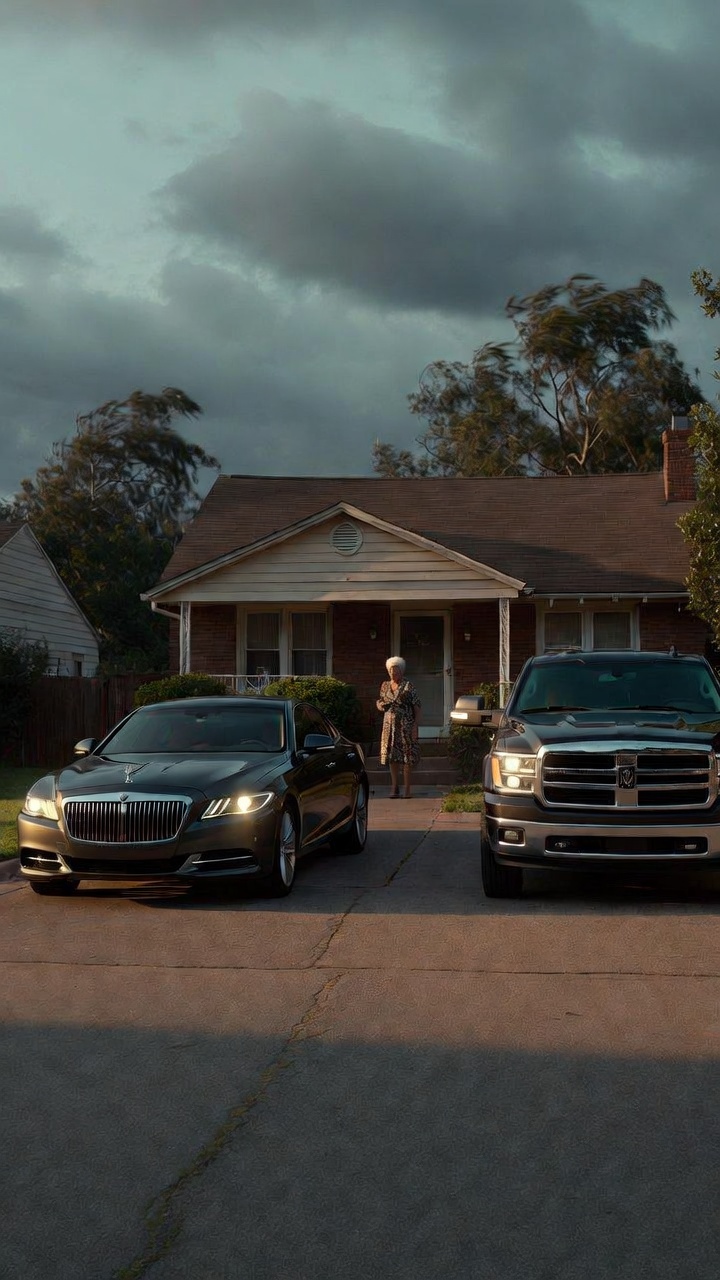
Two cars were already there.
Marissa’s Lexus. Garrett’s truck. Toby’s BMW.
I sat for a moment before getting out.
The house stood unchanged.
I stepped inside.
They had let themselves in.
Marissa stood in the doorway.
“Edith,” she said smoothly. “We’ve all been trying to reach you.”
I walked past her.
“Garrett said it was fine,” he added quickly.
I stopped.
“You used my spare key.”
Garrett answered, “We didn’t want to wait.”
I moved into the kitchen.
They followed.
Marissa spoke carefully. “You’re upset.”
“You do not understand what upset is.”
Toby muttered, “This is extreme.”
I looked at him.
“With all due respect,” I said, “nothing that comes after that phrase has ever contained any.”
Garrett pleaded, “Mom, we’re under pressure.”
“The mortgage bounced. Everything is locked,” he said.
“The club called Marissa,” I replied.
Her expression tightened.
“There’s no need for cruelty,” she said.
Cruel.
The word landed strangely.
I placed my purse on the table.
“I was told I wasn’t invited because my son’s wife didn’t want me there. Which part is wrong?”
Silence.
I set the documents down.
“I am done being useful in silence.”
Garrett stiffened.
Marissa said, “You’re overreacting.”
Something inside me steadied.
“At ten-thirty this morning,” I said, “I signed new legal documents. The townhouse was never a gift.”
The room changed.
Garrett froze.
Marissa went pale.
Toby frowned. “What does that mean?”
I looked at them.
“It means,” I said, “that your home is the first thing I can take.”
