

The teller stared at the screen, unable to speak.
Just seconds earlier, she had been smiling confidently. Now her fingers trembled above the keyboard as a cold wave of dread washed over her. The digital display glowed harshly under the fluorescent lights of the busy bank lobby, the bold red letters burning into her vision like an accusation.

The old veteran stood quietly on the other side of the counter, his worn jacket still zipped halfway up his chest, the faded fabric showing years of careful mending. His old duffel bag rested beside his weathered hand, scuffed and frayed at the edges from decades of use. He carried himself with a quiet dignity that now seemed almost painful in the heavy silence that had fallen across the entire branch.
The branch manager rushed over, his polished shoes clicking sharply against the marble floor. His face, usually composed and professional, had gone pale with shock. “Sir,” the manager said, his voice suddenly respectful and laced with urgency, “I am so sorry. Please come with me.” He gestured toward the private offices at the back of the bank, his hand trembling slightly as he tried to maintain control.
The teller whispered, barely audible even to herself, “I didn’t know…” Her voice cracked, the earlier smugness completely evaporated.
The old man looked at her calmly, his steady gray eyes revealing nothing of the humiliation he had just endured.
“That was the problem,” he said. “You decided before you knew anything.”
The manager quickly asked for the full transaction record and leaned in to study the screen again. The black-and-gold card was no ordinary piece of plastic. It did not just show wealth — it confirmed ownership. The old veteran was one of the bank’s majority shareholders, a quiet investor whose name had been on internal records for years but rarely appeared in the day-to-day operations. The realization hit the staff like a thunderclap.
The customers who had laughed earlier now stood in complete silence, shifting uncomfortably from foot to foot. A few looked away, embarrassed by their own quick judgment. Whispers rippled through the crowd, but no one dared speak loudly. The once-bustling lobby felt frozen in time.
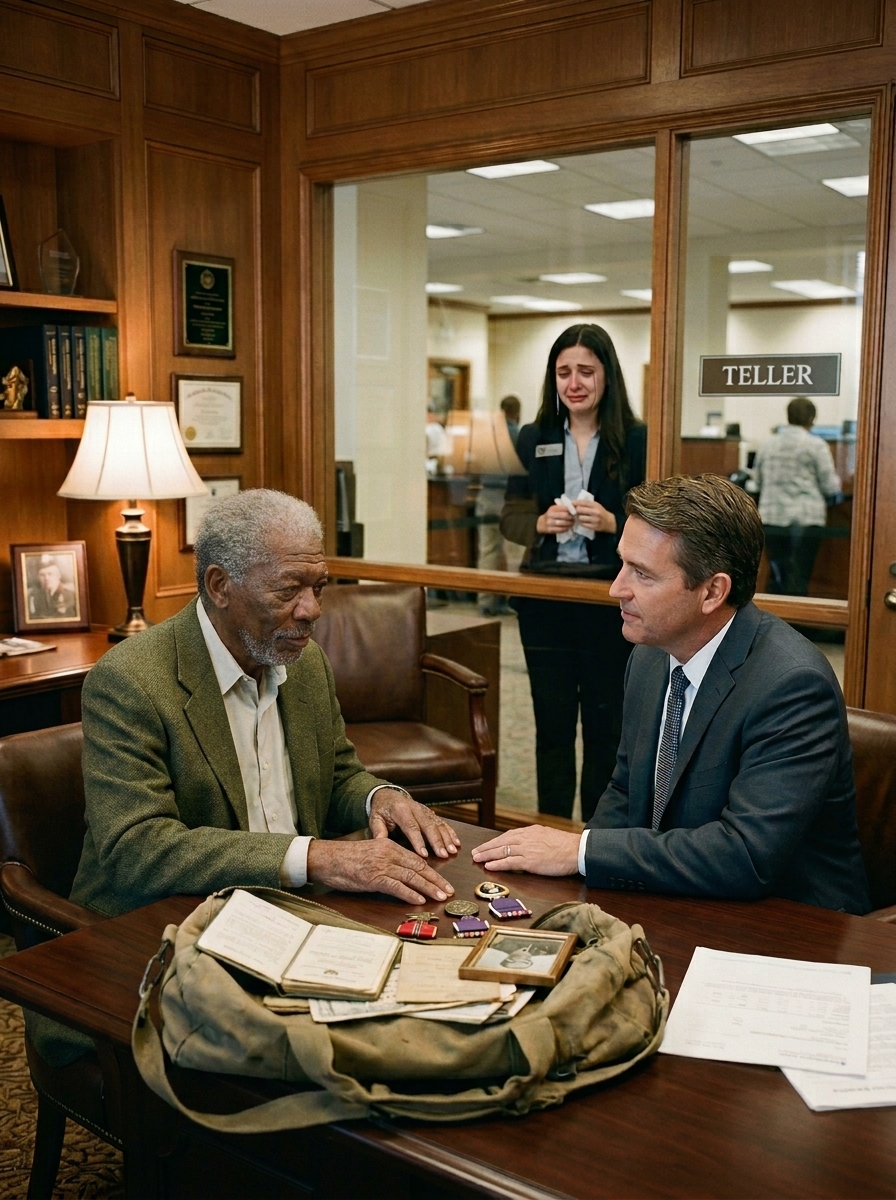
The manager personally escorted the veteran into a spacious private office, closing the heavy wooden door behind them to shut out the prying eyes. Soft lighting and leather furniture created a stark contrast to the veteran’s humble appearance. Inside the duffel bag were old documents, military service medals carefully wrapped in cloth, and financial papers tied to an investment he had made many years earlier when the bank was still a small regional institution.
He had not come to show off his money.
He had come to withdraw two million dollars to donate to a veterans’ housing project across the city — a cause close to his heart after his own difficult return from service. The manager listened intently as the veteran explained his intentions in a measured, low voice. When he heard the reason behind the large withdrawal, the manager’s expression changed from embarrassment to deep respect. His shoulders straightened, and he nodded slowly, processing the profound generosity before him.
“You came here to help others?” he asked, genuine admiration coloring his tone.
The old man nodded, his face softening for the first time that morning.
“Many people helped me when I returned home with nothing. Now it’s my turn.”
The words hung in the air, simple yet powerful. The veteran’s story, though briefly shared, painted a picture of resilience: years spent rebuilding his life after war, quiet investments made with hard-earned savings, and a lifelong commitment to serving those who had served alongside him.
Outside the office, the young teller stood near her desk with tears in her eyes. Her name was Emily, a recent college graduate who had always prided herself on being efficient and professional. Today, that pride had shattered. She knew everyone in the lobby had seen what happened. Colleagues glanced at her with a mix of pity and disapproval. The worst part was the crushing realization that she had judged a man who truly deserved respect before giving him even the smallest chance to explain himself. Her cheeks burned with shame as she replayed the moment in her mind — the cold tone, the smirk, the dismissive words.
After the transaction was completed with meticulous care, the veteran returned to the lobby. His posture remained upright, but there was a visible weariness in his steps, the weight of decades pressing gently on his shoulders.
The manager turned to face the gathered staff and curious customers, his voice firm and authoritative. “What happened here today is unacceptable,” he said. “Every customer must be treated with dignity, regardless of how they look, dress, or speak. We are better than this. This bank exists to serve people, not to judge them.”
He then looked directly at the teller.
“You are suspended pending review.”
The teller lowered her head, tears slipping down her cheeks.
“I’m sorry, sir,” she said to the veteran, her voice thick with emotion. “I should have treated you better.”
The old man picked up his bag and paused beside her counter one last time. The entire room watched in hushed anticipation.
“Respect should not depend on a card,” he said softly. “It should come first.”
No one in the bank said a word. The silence was profound, broken only by the faint hum of the air conditioning.
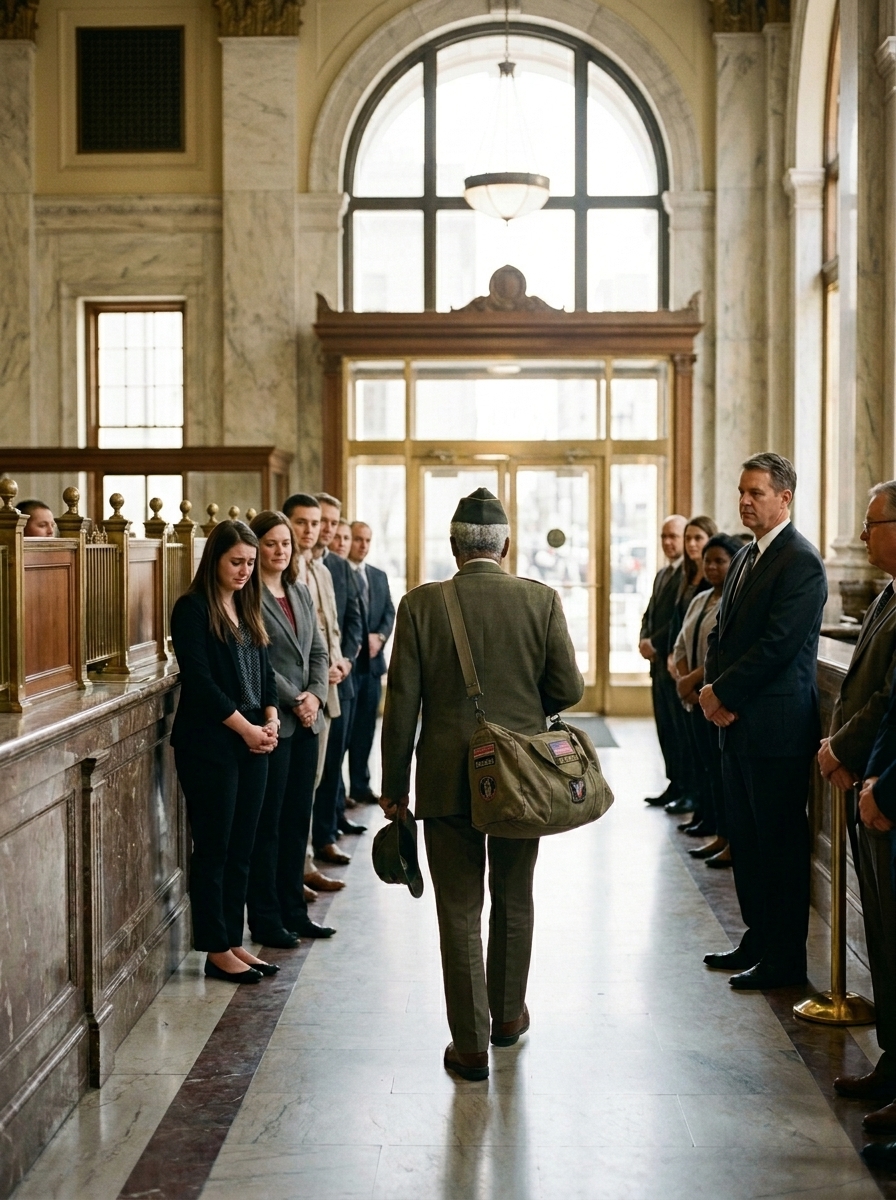
He walked toward the exit, slower than before, his footsteps echoing softly across the marble. But this time every person watched him with different eyes — eyes filled with reflection rather than mockery. Not because he was rich. Not because he was powerful. But because he had remained calm and dignified when others had tried to humiliate him. His quiet strength left a deeper impression than any display of wealth ever could.
By the end of that day, word of the incident had spread through the bank’s management. Policies were reviewed and updated within hours. New training sessions on empathy, unconscious bias, and customer dignity were scheduled for all staff members starting the following week. The veteran’s generous donation was processed smoothly and helped accelerate the opening of new housing units for veterans who had nowhere else to go.
In the weeks that followed, the branch transformed. Emily, after her suspension and mandatory training, returned as a changed person. She greeted every customer with genuine warmth, remembering the old veteran’s words every time she felt tempted to judge. The manager made it a point to share the story anonymously in staff meetings as a powerful lesson in humility.
The old veteran never returned to boast or demand special treatment. He simply continued living his quiet life, occasionally checking on the progress of the housing project from afar. For him, the day had never been about proving a point. It had been about doing what was right — honoring the past by building a better future for those who followed.
And in that small city bank, one man’s calm dignity sparked a lasting change that rippled far beyond the marble lobby.
**END.**
