

CHAPTER 1: THE INCIDENT

The leather on seat 2A felt like a deception—too soft, too cold, and far too quiet.
I was seated there, seventeen years old, wearing a thrifted blazer that pulled tight across my shoulders, gripping my backpack like it was the only thing keeping me steady. Around me, the first-class cabin of Delta Flight 1847 buzzed with quiet luxury—the delicate clink of glassware, the soft rustle of high-end newspapers, and the faint, clinical scent of citrus wipes.
I shouldn’t have been there. At least, that’s what the looks told me. Every time someone walked past me toward the rear of the plane, their gaze lingered a little too long on my navy Morehouse hoodie and short twists.
I kept my head lowered. I kept my hands visible. I followed everything my dad taught me about existing in places where people assume you don’t belong.
Then Patricia arrived.
She didn’t simply walk; she took over space. Wrapped in a cream cashmere shawl that likely cost more than my first car, her silver bob cut into a sharp, precise line. She paused at row 2, checked her ticket, then looked at me. Not at me—through me.
“Honey,” she said, her voice polished and carrying across the cabin. “I think you’ve made a mistake. The ‘Comfy’ seats are further back.”
I looked up, my heart pounding hard. “I’m in 2A, ma’am. Here’s my boarding pass.”
I extended it. The name wasn’t mine. It was Denise Bennett. My mother. She booked it nineteen days before cancer took her voice, using every mile she had saved for years. She wanted me to reach D.C. looking like I belonged when I accepted my scholarship.
Patricia didn’t even look at it. She let out a dry laugh. Then she turned to the lead flight attendant, Tasha, who was adjusting a suit jacket.
“Tasha, dear,” Patricia said, her tone dripping false concern. “We seem to have a bit of a… situation. This young man is clearly in the wrong section. I assume he’s part of that ‘Youth Outreach’ group that boarded earlier? It’s lovely that the airline does these diversity seats, but surely he’d be more comfortable with his peers.”
The cabin went completely still. A man in 1B wearing an Army veteran cap looked up from his book. Two rows behind, I felt the air shift, that familiar pressure settling in, but I didn’t turn. I couldn’t.
“Ma’am,” Tasha said, tense. “If he has a boarding pass for 2A, he is in the correct seat.”
Patricia’s smile stayed, but her eyes turned to ice. She looked back at me, landing on my silver over-ear headphones—old, scratched, held together by a strip of blue electrical tape on one hinge.
“Those are quite nice,” she said, her voice dropping. “A bit much for a student, don’t you think? Did they come with the ‘diversity’ package, or did you… find them?”
“They’re mine,” I whispered, my throat dry and tight.
“I don’t think they are,” she said. She reached out so fast I barely registered it. Her red nails hooked the headband and yanked.
I gasped as the headphones were torn from my ears. My hands shot up instinctively—not for the value, but for what was playing.
Inside them, seconds before they were ripped away, was a raw audio file. My mother’s voice. The last clean recording I had for my documentary. “Keep your head high, Micah. Don’t you ever let them make you small.”
“Give them back!” I said, my voice breaking.
“He’s being aggressive!” Patricia shrieked, stepping into the aisle, clutching my headphones like evidence. “Tasha, he just tried to assault me! This is exactly what I was worried about. He’s stolen these, I’m sure of it. Look at the tape! Who puts tape on luxury gear unless they’ve snatched it?”
The veteran in 1B lifted his phone. Tasha reached for her radio.
Then, from 4C, a man stood.
A tall, quiet Black man who had spent the last twenty minutes reading without looking up. He wore a dark navy windbreaker zipped to his chin. He didn’t rush. He didn’t shout. He simply stepped into the aisle, blocking the path forward.
Patricia didn’t even acknowledge him. “Sir, stay back. This boy is dangerous.”
He didn’t move back. He walked closer until he was inches away, then gently took the headphones from her shaking hand.
They slipped. The jack loosened. As they hit his chest, the volume from my phone was still at maximum.
The distorted, fragile, unmistakable voice of a woman gone three weeks now filled the silent cabin.
“Micah, I am so proud of the man you are becoming. Don’t let the world dim your light…”
My father, Deputy U.S. Marshal Elijah Bennett, closed his eyes for a brief second at the sound of his late wife. When he opened them, grief had hardened into federal fury that silenced the cabin.
He didn’t look at me. He looked at Patricia.
Slowly, his hand moved to his jacket zipper.
“Ma’am,” he said, his voice a low, controlled storm. “You have exactly ten seconds to tell me why you just put your hands on my son.”
The aircraft door was still open. Airport police were already coming down the jet bridge. And Patricia Caldwell was about to learn that ‘diversity’ wasn’t why we were on that plane.
CHAPTER 2
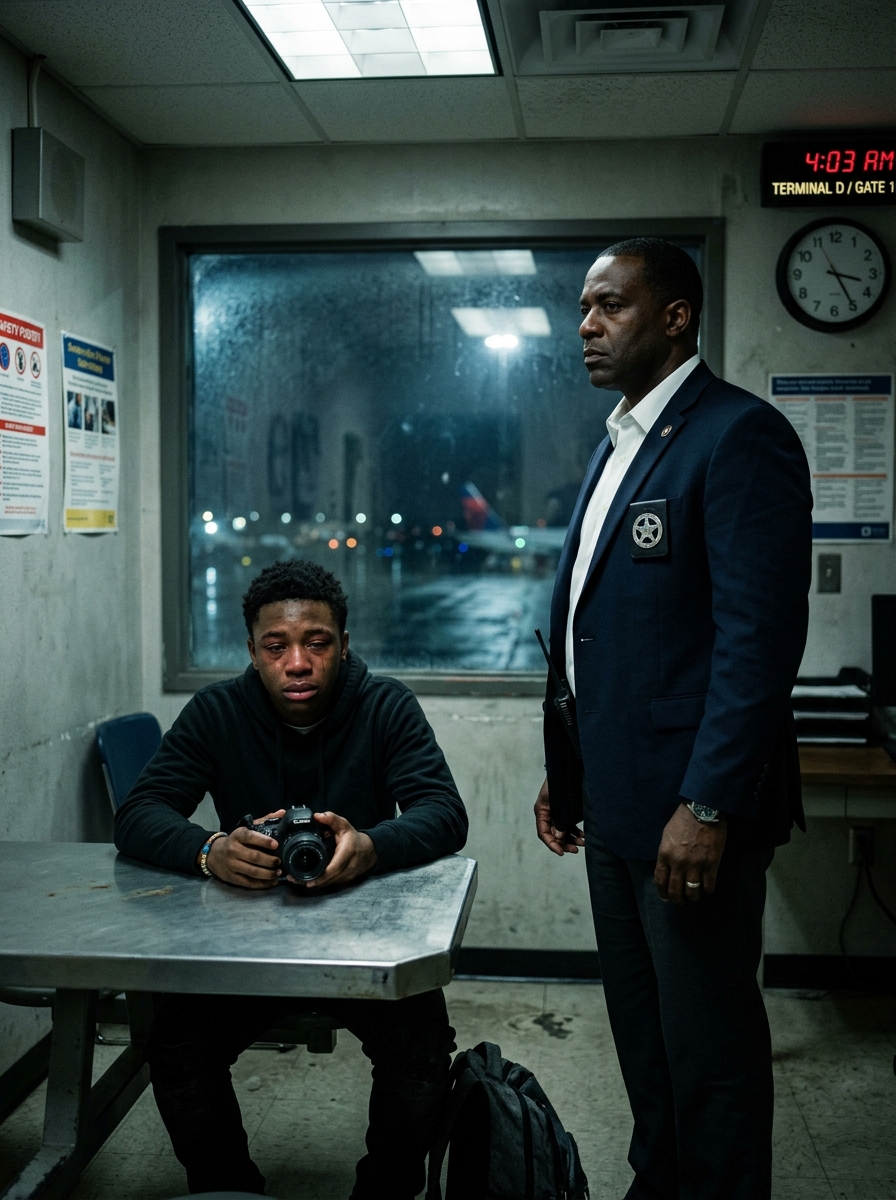
The silence after my mother’s voice weighed more than everything before it.
For a moment, the first-class cabin held only the distant engine hum and soft airflow clicks. Everyone was still. Tasha had her hand frozen above her radio, face drained of color. Jordan Ellis, the veteran in 1B, kept his phone raised, jaw tight.
And Patricia.
Patricia Caldwell looked like she had swallowed ash. Her red nails trembled as her hand hovered, as if she could undo what she had just done.
Then she shifted. The shock hardened into defensive pride. She pulled her cashmere wrap tighter, chin lifting sharply.
“That… that was incredibly manipulative,” she stammered, voice thin but rising. “Using a recording like that to create a scene? It’s theatrics. It doesn’t change the fact that this boy was being disruptive. He reached for me. I felt threatened. Tasha, I am a Platinum Medallion member. I fly two hundred thousand miles a year with this airline. I expect my safety—and my sanity—to be prioritized over a… a scholarship project.”
She turned away, as if ending the matter by force of will alone.
My father didn’t move. He stood in the aisle like something immovable. He still held my headphones, thumb resting on the blue tape. His knuckles were white.
“Micah,” he said calmly. “Sit down.”
“Dad—”
“Sit. Down.”
I sat back into 2A. The leather felt even colder. My heartbeat echoed in my fingers. I stared out the window at the moving baggage carts, wishing I could disappear into the glass.
My father turned to Tasha. “Is the door closed?”
“No, sir,” she whispered. “We’re still in a boarding delay. They’re… finishing the manifest.”
“Good,” my father said. “Because we aren’t going anywhere until the authorities get here.”
“Authorities?” Patricia snapped, spinning back. “Don’t be ridiculous. This is a minor cabin dispute. I’ve already requested the boy be moved. If anyone is staying behind, it’s him.”
“Ma’am,” my father said, locking eyes with her. “You didn’t just request a move. You accused a passenger of theft. You physically grabbed his property. And you referred to a legal traveler as a ‘diversity seat’ in front of witnesses.”
He pulled out his phone. It was already recording.
“I don’t care how often you fly,” he continued. “But I care about the law. And I care about my son. You’re going to stay in 1A, and you’re going to wait for Port Authority. If you move, speak to him again, or attempt to leave this aircraft before they arrive, this will become a very different situation.”
Patricia’s face shifted from pale to a mottled, furious red. “You can’t talk to me like that! Who do you think you are? You’re just another passenger in a cheap windbreaker. I have the Senator’s office on speed dial. I’ve built careers for people more powerful than you could ever dream of being.”
My father didn’t react. He only leaned forward slightly. “I’m the man giving you ten seconds to sit down before I turn this into a federal matter instead of a local one.”
For the first time, real fear flickered across Patricia’s eyes. She saw something in him—a professional stillness, an unwavering certainty—that her wealth couldn’t influence. She let out a sharp, offended huff and dropped back into seat 1A, clutching her designer bag like a shield.
Tasha looked toward my father, her expression pleading. “Sir, I… I have to inform the captain. If law enforcement boards the aircraft, we’ll have to cancel the flight. Everyone will deplane. The delay… the paperwork…”
“I understand,” my father said. “But my son is a minor. He was assaulted. I’m not allowing this plane to take off with that woman sitting three feet from him like nothing happened.”
Tasha nodded slowly, her professional composure slipping just enough to show how drained she was by the entitlement in first class. She turned and disappeared into the cockpit.
The cabin settled into a tense, suffocating wait.
Whispers began to spread among the passengers. I caught fragments of it. “…did you hear what she said?” “…that man in the back looks serious…” “…I hope we don’t miss our connection.”
I felt the pressure of it all settle on me. I felt like the “problem.” Even though I had been the one targeted, even though it was my mother’s voice that had been disrespected, I still carried that familiar weight—the guilt of being a Black boy at the center of attention.
I reached for the armrest. My mind drifted to my mom sitting at the kitchen table, head wrapped in a silk scarf, hands trembling as she typed. She had taken extra shifts at the library even while chemo made her sick, just to make this trip possible.
“The world is going to try to tell you where you belong, Micah,” she had told me. “They’ll try to fit you into a box because it’s easier for them to carry. But you aren’t a box. You’re the whole damn sky. Don’t you dare come down for anyone.”
My eyes burned. I blinked hard and stared forward.
Jordan Ellis, the veteran in 1B, leaned across the aisle. He was broad-shouldered, grey-bearded, with a division tattoo on his forearm. He held out a small pack of pretzels.
“Hey, kid,” he whispered. “Don’t let her get inside your head. I got all of it on video. From when she stood over you to when she grabbed those headphones. I’m not deleting it. If the cops ask, I’ll back you up.”
“Thank you,” I said quietly.
“Don’t thank me,” he muttered, glancing at Patricia with disgust. “I didn’t serve twenty years to watch a kid get bullied on a plane over a hoodie. That woman’s got a storm coming. Just stay steady.”
Ten minutes passed. Then fifteen.
The cabin air turned stale. The seatbelt sign chimed twice.
Finally, the cockpit door opened. A pilot with salt-and-pepper hair stepped out, his expression tight. Behind him, two Port Authority officers entered the aircraft, dark uniforms heavy with gear, faces unreadable.
“Alright,” the taller officer said, voice carrying through the galley. “We’ve got a report of a disruptive passenger and alleged physical contact. Who’s involved?”
Patricia shot up instantly. “Finally! Officers, thank goodness. This young man—” she pointed at me with a shaking finger “—was extremely aggressive. He stole property, and when I tried to confirm it, he became violent. His… accomplice over there,” she gestured toward my father, “has been threatening me and obstructing the crew.”
Both officers looked at me. That familiar cold feeling returned—the one that tells you appearance often speaks louder than truth. My shoulders instinctively tightened.
Then my father stepped forward.
He moved without urgency, without hesitation, standing in the aisle as the cabin light cut across his dark windbreaker.
“Officers,” he said calmly, professionally, almost chillingly controlled. “I’m the ‘accomplice.’ Elijah Bennett. The boy in 2A is my son, Micah. He was seated legally when this woman approached him, used racial language, and physically grabbed his headphones from his neck.”
“He’s lying!” Patricia shouted. “He’s just trying to protect him!”
The taller officer studied my father, then Patricia, weighing both accounts. “Sir, step out into the jet bridge so we can speak.”
“I have a better idea,” my father said.
He reached for his jacket zipper.
Patricia scoffed. “Oh, what is this now? Credentials as a concerned parent? Officers, just remove them so we can leave. I have a dinner in D.C. with—”
My father pulled the jacket open.
Underneath was a tactical vest. Bold reflective letters across the chest read:
U.S. MARSHAL
The cabin went completely silent.
Both Port Authority officers straightened immediately, their posture shifting from authority to deference.
“Marshal,” the lead officer said quietly.
Patricia froze. Her hand dropped from its accusatory point. She stared at the vest, then at my father, then back again, as if the reality refused to align.
“I’m currently on duty,” my father said, voice carrying through the silence. “Transporting a secured federal file to D.C. My son is accompanying me for a national scholarship ceremony. This entire interaction has been recorded. I have a witness in 1B with video evidence of the physical contact.”
He turned his gaze to Patricia.
“Now,” he said, “I want her removed from this aircraft. I want charges reviewed for battery and false reporting. And I want corporate notified that a federal marshal’s son was assaulted in a seat purchased by a dying mother using every mile she had.”
Then he looked at me, and the shift was immediate—federal agent gone, father returned.
“Micah,” he said gently. “Get your bag.”
“Are we leaving?” I whispered.
“No,” he said, turning back to Patricia, whose face had drained completely. “She is.”
The lead officer stepped forward. “Ma’am, please stand up. You’re coming with us.”
“You can’t be serious,” Patricia stammered. “I have status. I’m a partner at—”
“Ma’am,” the officer interrupted firmly. “Stand up. Now. Or we escort you off in restraints.”
The entire cabin watched in stunned silence as Patricia gathered her things with shaking hands. She tried to hold her head high, but her eyes wouldn’t meet anyone’s.
As she passed my row, she hesitated, as if searching for one last word.
My father stepped into her view without speaking, the marshal insignia catching the light.
She broke eye contact immediately and hurried toward the exit.
The moment she disappeared into the jet bridge, the cabin exhaled. Tasha leaned against the galley wall, visibly shaken. Jordan gave me a quiet nod of support.
But the situation wasn’t finished yet.
Because just as the plane door finally hissed shut, I realized my phone—the only device holding my mother’s voice—had dropped to 1% battery. The charger was still in the overhead bin, buried under layers of luggage.
I turned to my father. He had taken the seat Patricia had just left—1A. He looked drained in a way I had never seen before. Not simply tired, but like someone who had been holding up something massive for too long and was finally allowed to let go.
“Dad?” I said.
“Yeah, son?”
“You were back there the whole time?”
He nodded. “I didn’t want to hover, Micah. I wanted you to have your moment. I wanted you to feel like you were doing this on your own. But…” he glanced toward the empty aisle where Patricia had been. “I should have stepped in sooner. I’m sorry.”
“It’s okay,” I said. “You got her.”
“No,” he said, motioning toward the headphones resting in his lap. “Your mom got her. That voice… that’s what stopped her.”
He handed them back to me.
I slipped them on and pressed play.
But just as the first syllable of my mother’s voice began, the phone screen flickered and went black.
The battery was dead.
As the plane began to push back, realization settled over me. I had the footage. I had the memory. But the police would need that audio as evidence. The airline would need it to justify banning her.
And without a charger, without a backup, and with the aircraft already taxiing toward a two-hour flight, I was holding the most important thing in the world—and it was trapped behind a dead screen.
I looked at my father. He was staring out the window, one hand resting on his badge.
“Dad,” I whispered. “The phone died. The recording… I can’t access it.”
He turned to me, brow tightening. “We’ll charge it when we land, Micah. It’s fine.”
“No,” I said, my voice shaking. “The file got corrupted during the struggle. I saw the error right before it shut off. If I don’t get it onto power and run the recovery script in the next ten minutes… it’s gone. All of it. Her voice. Everything.”
My father went pale. His eyes flicked to the cockpit door, then toward the windows. We were moving. Taxiing.
“Tasha!” he called.
The flight attendant rushed over. “Yes, Marshal?”
“I need a high-speed data charger. Now. And I need to know if this aircraft has a secure local server I can tether to.”
Tasha hesitated. “Sir, we’re taxiing for departure. All electronics must be—”
“This isn’t an electronic,” my father snapped, his Marshal voice cutting through her. “This is evidence in a federal investigation. If we don’t power this phone in five minutes, a criminal walks free and my son loses the last recording of his mother. Get me the captain.”
Tasha didn’t argue. She turned and hurried toward the cockpit.
But before she reached the door, the plane jolted to a sudden, hard stop. A violent braking that sent a loose drink can rolling down the aisle.
The captain’s voice came over the intercom, strained.
“Ladies and gentlemen, please remain seated. We have a… security issue at the rear of the aircraft. Ground crew is returning us to the gate immediately.”
My father and I exchanged a look.
The rear of the aircraft. Patricia was gone. The officers were at the front.
So what was happening back there?
Then I heard it—a faint, rhythmic thudding from behind the first-class curtain. Not shouting.
Chanting.
I looked at my father. His hand was already near his holster.
“Micah,” he said quietly. “Stay seated. No matter what happens.”
He stood and pulled the curtain aside.
And that was when everything changed.
CHAPTER 3
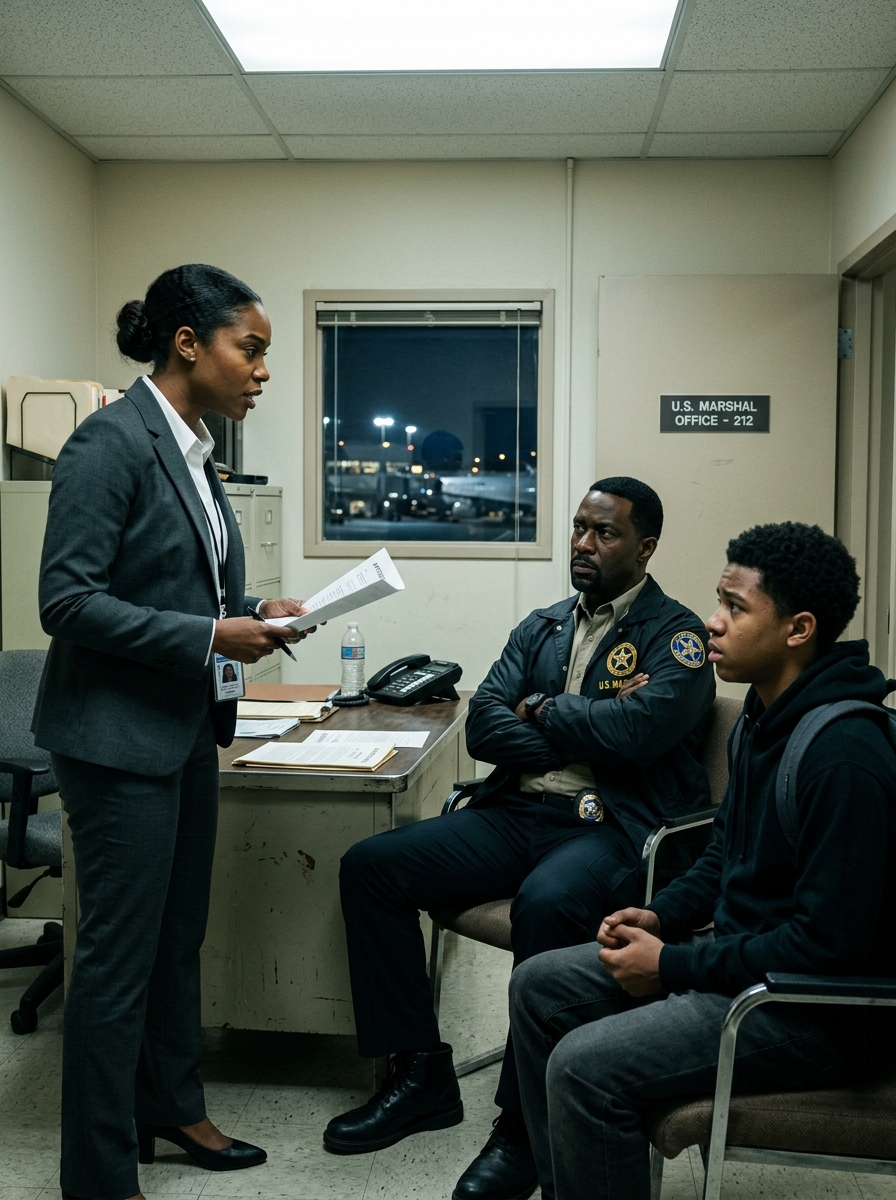
The curtain separating first class from the rest of the plane didn’t just divide seating—it divided reality.
When my father, Elijah, pulled it back, the temperature in the cabin seemed to drop. I didn’t stay seated. I couldn’t. I was seventeen, I was grieving, and my entire world was currently locked inside a dead phone burning a hole in my pocket. And I had just seen my father reach for his weapon.
The “security issue” wasn’t a bomb or a malfunction. It was a man.
He stood in the aisle near row 32, arms raised, clutching a thick leather-bound book. He wasn’t shouting in anger—he was wailing, a broken rhythmic sound that seemed to shake the floor. Passengers were pressed against windows, some crying, others filming with shaking hands.
“Nobody moves!” the man screamed. “The cycle is broken! The voice has been silenced!”
My father froze. I saw his posture lock—not at the man’s hands, but at the book. Then he looked at me behind the curtain, his expression shifting from control to sudden realization.
“Micah,” he said quietly. “The recording.”
“What?” I asked.
“The audio from the headphones,” he said, tense. “The woman’s voice. He heard it.”
I turned toward the aisle. The man’s eyes were locked on us. His suit hung loose, his face strained, but his focus was absolute.
“The mother speaks!” he shouted, voice cracking. “I heard the promise! Why did you take it? Why did the silver lady take the voice?”
It hit me hard. This man, lost in something fragile and unstable, had been sitting in the back when my mother’s voice leaked through my headphones during the struggle. To him, it wasn’t a file. It was something sacred. And when Patricia tore the headphones away and the sound stopped, something inside him broke.
The plane continued taxiing slowly, but the pilot had reduced speed. Through the windows, flashing airport police lights moved alongside us on the runway.
“Sir,” my father called, stepping forward with his hands raised, palms open. Not reaching for anything. “My name is Elijah. I’m the father of the boy with the voice. It’s still here.”
The man stopped swaying. His eyes locked onto my father. “The silver lady took it. I saw her. She broke the light.”
“She’s gone,” my father said carefully, taking one step forward. “The police removed her. My son still has the voice. It’s safe with him.”
I felt the gaze of every passenger from rows 1 through 10 lock onto me. In my pocket, the dead weight of my phone pressed against my leg. It was a lie now. The file was corrupted. The battery was gone. If this man insisted on hearing it, I had nothing but a dark, useless screen to offer him.
“Show me,” the man begged, his voice breaking into a sob. “I need to hear the promise again. The world is too loud. Her voice… it was the only thing that was quiet.”
My father looked back at me. It wasn’t a request. It was a silent order.
Make it work, Micah.
I pulled the phone out and pressed the power button. Nothing. Only the faint reflection of my own frightened face on the glass.
Tasha, the flight attendant, stood near the galley, frozen as she watched everything unfold. She noticed my struggle. She noticed the man at the rear growing more unstable again, his grip tightening around the book.
“The charger,” I whispered to her. “Please.”
She rushed into the galley storage. “We don’t have high-speed ones, Micah, just the standard USB-A ports in the seats, but they don’t provide enough power to boot a dead battery during taxiing—the draw is too low.”
“There has to be something,” I said, panic rising in my voice.
The man in the back saw my distress. His expression twisted. “He’s lying! The voice is dead! The silver lady killed it!”
He started moving—not toward us, but toward the emergency exit above the wing.
“Don’t!” my father shouted, sprinting down the aisle.
The cabin broke into chaos. Passengers screamed as my father tackled the man just as his hand reached the red handle. They crashed to the floor in a tangle of limbs and fabric. My father tried to restrain him without hurting him, but the man fought with desperate, fractured grief.
“It’s gone! It’s all gone!” the man wailed.
I stood frozen, holding a dead phone while my father fought to protect people who had mostly stayed silent when I was being humiliated minutes earlier.
Then a hand landed on my shoulder.
It was Jordan Ellis, the Army veteran from 1B. He wasn’t watching the struggle. He was staring at my phone.
“I’m a tech officer in the Reserves, kid,” he said, steady and rough. “Give me the phone. And Tasha—bring me the medical kit. Now.”
“The medical kit?” Tasha stammered.
“The AED,” Jordan snapped. “The heart-starter. It’s got a high-output lithium battery pack with a diagnostic port. If I bridge the pins, I can force a jump-start into the charging coil. It’s risky—might fry it—but it’s the only way to get enough voltage to boot this in ten seconds.”
Tasha didn’t hesitate. She ran and pulled the AED from the emergency cabinet.
Jordan placed my phone on the tray table at 1B. The scene felt unreal: my father wrestling a man in crisis down the aisle, while an old soldier wired a defibrillator to try to revive my mother’s voice.
“Hold this,” Jordan said, handing me a wire. “When I say ‘now,’ hold the power button. If you see smoke, let go immediately.”
I looked toward my father. He had pinned the man’s arms, but the man was still screaming about “the lost voice.” Outside the windows, police vehicles had surrounded the plane. SWAT teams were approaching.
“Ready?” Jordan asked.
I nodded, finger trembling over the power button.
“Now!”
A sharp crack snapped through the air. A blue spark jumped between the wire and the phone’s port. Heat spread through the device.
One second. Two seconds.
The screen stayed black.
“More!” Jordan growled, adjusting the AED output.
Three seconds. Four seconds.
Then the Apple logo appeared—faint at first, then brightening.
“It’s working! It’s turning on!” I shouted.
But at that exact moment, a voice thundered from outside: “This is the police! Open the door immediately! Put the weapon down!”
The man let out a final, broken scream and ripped free from my father’s grip with shocking force. He lunged toward the first-class curtain. My father was thrown backward into the seats, his head striking the wall of the aircraft.
The man stopped directly in front of me. His breath was heavy, desperate. His eyes locked onto the phone lighting up in my hands.
“Listen,” I said, my voice suddenly steady. “Just listen.”
The phone reached the home screen. I didn’t search. I went straight to the latest voicemail. I tapped Mom.
In that instant—sirens outside, police pounding the door, my father staggering up with blood on his forehead, and the entire cabin frozen—my mother’s voice filled the speaker. Clear. Warm. Alive.
“Micah, I know you’re scared. I know sometimes the world feels like it wants to swallow you whole. But you have the heart of a warrior and the soul of a storyteller. Take a deep breath. Everything is going to be okay. I love you.”
The man went still. His shoulders collapsed. The book slipped from his hands and hit the floor with a heavy sound. He sank to his knees in the aisle, buried his face in his hands, and cried—not wildly, but in the exhausted sorrow of someone who had finally come back to himself.
My father stepped closer and rested a hand on his shoulder. This time, the man didn’t resist.
The aircraft door burst open. Officers rushed in with flashlights raised.
“Marshal, drop your weapon! Police!” they shouted.
“I’m Marshal Bennett!” my father called back, hands raised, still watching the kneeling man. “Situation is contained. We need medical and psychiatric support immediately.”
I stood there, the phone warm in my hand, my mother’s voice fading away.
When I looked down again, a red warning flashed across the screen:
“File Corrupted. Permanent Data Loss Imminent.”
Jordan’s jump-start had saved the moment—but it had destroyed the memory. The voice I had just heard was gone forever.
I looked at my father. He saw the tear on my cheek, the broken phone in my hand.
We didn’t reach D.C. that night. The aircraft was held for investigation.
At 3 a.m., in a quiet airport office, a police officer entered holding a tablet.
“Marshal Bennett? Micah?” he said. “Someone wants to see you.”
It was Jordan Ellis. He wasn’t alone. Tasha was with him. So was the man from the back of the plane—calmer now, under medication.
“I’ve got something for you, kid,” Jordan said, placing the tablet down.
He pressed play.
The audio wasn’t from my phone. It came from Jordan’s recording of the earlier incident—captured when Patricia first caused the scene, the sound of my mother’s voice leaking from my headphones through the struggle. Tasha’s cockpit recording had added more.
My mother’s voice wasn’t gone. It had been preserved by strangers I had assumed would never matter to my story.
“We pieced it together,” Jordan said quietly. “It’s cleaner than your original.”
I lowered my head onto the table and finally broke—fully, completely, without restraint. My father pulled me close, his hand shaking.
But the moment didn’t last.
The police chief entered, expression tight.
“Marshal, we have a problem. Patricia Caldwell has been released on bail. Her firm is filing countercharges—defamation and fabricated digital evidence. They’re claiming the recording is AI-generated.”
My father stood instantly. “Fabricated?”
“They’ve brought experts to testify it’s voice-cloning software,” the officer said. “And because the phone memory is damaged, there’s no original file to compare.”
My chest tightened. She wasn’t just defending herself—she was trying to erase everything.
“What do we do?” I asked quietly.
My father picked up his Marshal jacket and put it on. His eyes had changed.
“We’re not fighting this on a plane anymore,” he said. “We’re taking it to the only place where her money doesn’t get the final word.”
He turned to the officer. “Call the Department of Justice. Tell them Deputy U.S. Marshal Elijah Bennett is requesting a federal investigation into obstruction and civil rights violations.”
Then he looked at me. “Micah, remember your camera.”
I nodded.
“Turn it on. We finish your documentary properly. And this time, Patricia Caldwell gives us the ending herself.”
The real fight had only just begun.
And the cost might be everything my family stood for.
CHAPTER 4
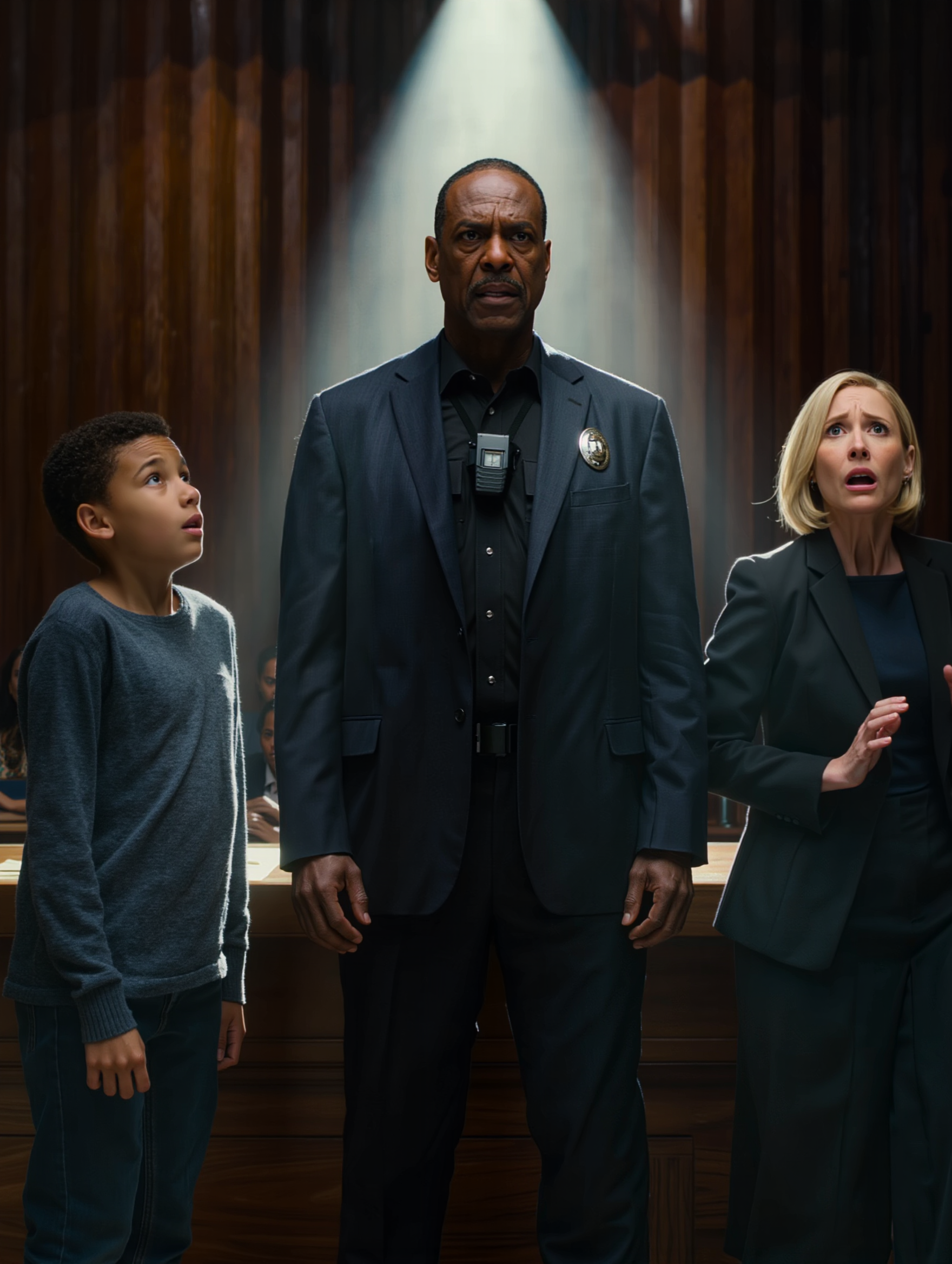
The fluorescent lights inside the Atlanta airport security office buzzed faintly, almost vibrating. It was 4:00 AM. Beyond the frosted glass door, the world was beginning to stir, but inside this room, time felt suspended.
My father, Deputy U.S. Marshal Elijah Bennett, wasn’t just a dad anymore. He was a barrier. He stood near the window, his silhouette carved against the dim runway lights. He hadn’t slept. Neither had I. My eyes felt gritty, like they were packed with sand, and my chest carried a hollow, lingering fear.
The Police Chief’s words still rang like a verdict: Vu khống. Dàn dựng. Giả mạo AI.
Patricia Caldwell wasn’t merely an unpleasant passenger; she was a threat backed by a legal machine. By the time we were deplaned and debriefed, her attorneys had already filed a countersuit. They claimed I, a “tech-savvy teenager,” had used deepfake audio to humiliate an innocent woman for attention online. They even alleged the struggle over the headphones was me “assaulting” her to stage a viral moment.
And the worst part? The evidence was gone. The AED jump-start that saved the flight had also fried my phone’s internal storage. The final clean recording of my mother’s voice was reduced to damaged silicon.
“Dad,” I whispered, my voice breaking. “What if they believe her?”
My father turned. The bruise on his forehead from the earlier struggle had darkened into a heavy purple mark. But his eyes stayed steady.
“They believe money, Micah,” he said. “And they believe status. Patricia is counting on the idea that a Black kid from a working-class family and a Marshal from a quiet precinct can’t challenge a firm billing a thousand dollars an hour.”
He crossed the room and picked up my camera—the DSLR I had used for the documentary interviews.
“But she made a mistake,” he continued. “She thinks this is about a ‘diversity seat.’ She thinks it’s about a ticket. She doesn’t realize she attacked a federal officer and his family. I’ve spent twenty years protecting people who didn’t deserve it. Tonight, I’m protecting what matters most.”
The door opened. A woman in a sharp grey suit entered. She wasn’t law enforcement. She looked like a predator in heels.
“Marshal Bennett,” she said smoothly. “I’m Sarah Jenkins, lead counsel for Caldwell & Associates. I’m here to offer a resolution before this damages your son’s record permanently. We will drop the battery charges if you sign a nondisclosure agreement and issue a public apology stating the audio was a ‘social experiment’ gone wrong.”
My stomach dropped. An apology? For calling me a “diversity seat”? For trying to take my mother’s voice?
My father didn’t even glance at the document she extended.
“Sarah,” he said quietly, almost gently. “Call Patricia. Ask her to check the tail number of that aircraft again.”
The lawyer frowned. “I beg your pardon?”
“That wasn’t a standard Delta flight,” my father said, leaning forward. “That aircraft is part of the Civil Reserve Air Fleet. Because I was on official transport duty with a high-value file, the entire cabin was under federal surveillance protocol. Not just airline cameras. Mine.”
He reached into his jacket lining and produced a small black device—a tactical lapel camera.
“I wasn’t only recording on my phone, Sarah. I was recording for the Department of Justice. I have raw, unedited 4K footage of your client grabbing my son. I have audio of her racial slurs. And unlike a civilian device, this uses a tamper-proof blockchain timestamp.”
Her expression drained from smug confidence to shock in seconds.
“And the AI claim?” he continued, stepping closer. “My son’s documentary footage is backed up on a secure cloud server with the Charles R. Drew Scholarship Foundation. We don’t need the phone. We have the master record. Your client didn’t just lie—she filed false statements in a federal incident report.”
The room fell into a suffocating silence.
“Now,” my father said, “here’s what happens next. You return to Patricia. You tell her she is facing felony battery, false reporting, and civil rights violations. And if she ever mentions my wife or my son’s seat again, I will dedicate myself to ensuring her firm never practices again.”
The lawyer said nothing. She turned sharply and left.
I stared at my father, stunned. “You had a lapel cam? The whole time?”
He looked at it, then back at me, a faint exhaustion in his expression. “The battery on it died an hour before boarding, Micah.”
I blinked. “What?”
“It was a bluff,” he said softly. “But she doesn’t know that. And by the time she figures it out, the scholarship foundation and Jordan’s recording will already have released the truth. I just needed her to hesitate.”
A shaky laugh escaped me before turning into something closer to a sob. My father pulled me into a tight hug.
EPILOGUE: THE ARRIVAL
Two days later. Washington, D.C.
The Smithsonian ballroom was filled with soft light, lilies, and quiet anticipation. I stood backstage in a new suit my father had insisted on buying. My silver headphones rested around my neck, the blue tape still visible like a mark of survival.
Jordan Ellis’s recording had spread everywhere. It was no longer just an incident—it had become a national conversation. Patricia Caldwell’s firm had severed ties within hours of the footage going public. The “diversity seat” story had transformed into something much larger.
“And now,” the announcer said, “the Charles R. Drew Award for Civic Storytelling goes to… Micah Bennett.”
I stepped into the light. The applause was overwhelming. In the front row, I saw my father. No Marshal jacket—just a simple suit, his eyes shining with tears he didn’t hide. Next to him sat an empty chair, holding my mother’s silk scarf.
I reached the microphone. I didn’t need a recording anymore.
“A few days ago,” I said steadily, “someone told me I didn’t belong in my seat. That I was just optics. They tried to take the voice of the woman who raised me.”
I looked at my father.
“But dignity isn’t something you’re given. It’s something you carry. And my mother… made sure I carried enough for everyone on that plane.”
I put on my headphones and pressed play on the podium laptop.
My mother’s voice filled the hall—restored, reconstructed, alive through Jordan and Tasha’s recordings.
“Keep your head high, Micah. Don’t you ever let them make you small.”
Looking out at the audience, I realized I didn’t feel like a boy trying to be strong anymore. I felt like I already was.
After the ceremony, my father and I stepped into the cool D.C. night.
“You did good, kid,” he said, patting my shoulder.
“We did good, Dad,” I replied.
As we walked, people recognized us and began to clap. A young boy ran up and pointed at my headphones.
“Is that the ‘Voice’?” he asked.
I placed them over his ears and pressed play.
His face lit up. “She sounds like a queen,” he whispered.
“She was,” I said. “And remember—don’t ever let them make you small.”
We got into the car. Neither of us spoke much on the way to the hotel. We didn’t need to.
The silence wasn’t heavy anymore.
It was calm.
Because for the first time since my mother died, we weren’t just surviving.
We were flying.
THE END.
